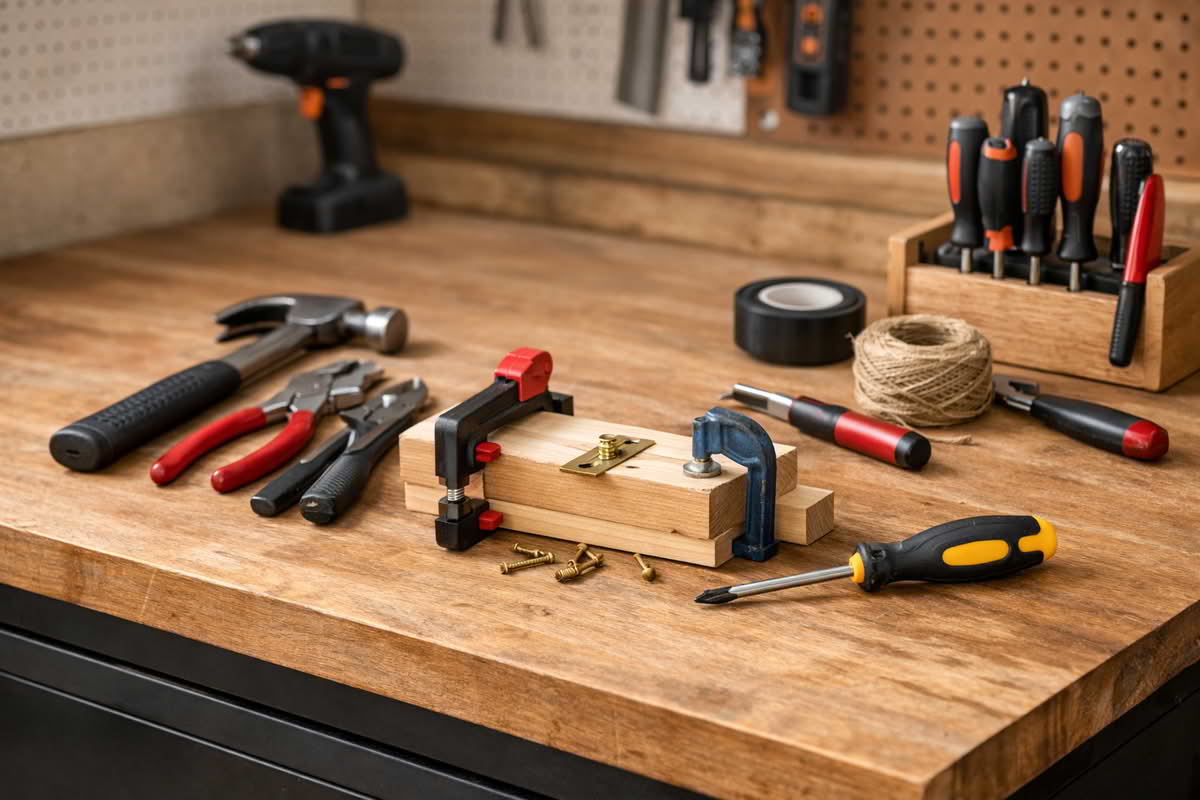
Workbench Buying Guide for Garages, DIY Projects, Repairs, and Everyday Home Workshop Use
A workbench looks like simple furniture until you try to complete projects without one. Then the problems become obvious very quickly: tools pile up on the floor, parts roll off folding tables, clamps have nowhere secure to bite, and even basic repairs feel more awkward than they should. At the same time, workbenches are easy to overbuy. Many shoppers are drawn to heavy industrial designs, oversized hardwood tops, or elaborate storage features without asking whether the bench actually fits their garage, their projects, or the way they work. Others go too small or too light and end up with a surface that wobbles, sags, or becomes cluttered the moment a real project begins. The best workbench is not simply the heaviest, largest, or most workshop-looking model. It is the one that gives you enough stability, surface area, and practical storage to support repeated home projects without taking over the space or creating more bulk than your workflow justifies.
What a workbench needs to do well
A good workbench should make ordinary project work feel more controlled. That includes repairs, layout work, small builds, sanding, gluing, clamping, assembly, hardware sorting, tool setup, and the many in-between tasks that happen before and after the more visible part of a project. In practical terms, the bench becomes the place where work stops being improvised. Instead of balancing boards on storage bins or using the floor as a staging area, you get a surface designed to hold both the materials and the process.
Stability is the first requirement because it affects almost every kind of task. A bench that shakes while you tighten hardware, flexes under moderate weight, or slides when you apply sideways force will quickly become frustrating, even if the dimensions looked ideal at purchase. This matters more than some buyers expect because many garage and home-shop jobs are not especially dramatic. They involve controlled pressure rather than huge loads: drilling into wood, cutting small stock, clamping a board, repairing a tool, sorting fasteners, or assembling shelves. Those ordinary tasks are exactly where a weak bench starts to feel disappointing.
Surface usability matters just as much as raw sturdiness. A bench top should provide enough room to set tools down without immediately crowding out the workpiece. That does not automatically mean the bench needs to be huge. It means the surface should fit the scale of projects you actually do. Many homeowners do better with a bench that supports one active project plus a little tool staging rather than a massive bench that eats too much garage space and turns into a clutter shelf between projects.
A workbench should make common project tasks feel more stable and more organized, not just provide a flat place to stack items.
Rigidity matters because many ordinary repair and assembly tasks become frustrating when the bench moves under load.
Useful surface area depends on the size of your actual projects, not on the biggest bench you can fit through the garage door.
The best workbench helps turn a garage or workshop into a working zone rather than a storage spillover area.
Height also affects comfort more than many buyers realize. A bench that is too low can make repetitive tasks feel tiring on the back and shoulders. A bench that is too high can make heavier hand-tool work feel awkward or reduce leverage for tasks that need body weight behind them. The right height depends partly on the kind of work you do most often. Detail work, electronics, small repairs, and light assembly may benefit from a slightly different setup than sawing, clamping, sanding, or heavier mechanical work. Even if you are not customizing exact dimensions, it helps to think about whether the bench will mostly support fine handling or broader physical tasks.
Another important quality is whether the bench encourages maintenance of the space. Some benches make it easier to keep chargers, bits, clamps, and small tools in a controlled area, while others become magnet surfaces for every loose object in the garage. This is one reason layout and storage design matter. A bench should support work, but it should also support recovery from work. When the project is finished, the space should still be easy enough to reset that the bench remains usable for the next task.
The strongest workbench purchase is usually the one that becomes the default project surface instead of just another horizontal area in the garage. If it feels steady, proportionate to the space, and practical enough to keep clear, it is likely doing what a home workbench should do.
A useful workbench should provide a stable, clear project surface that supports repairs, assembly, and tool staging without becoming immediate clutter.
Size, surface, and storage tradeoffs
The biggest mistake in this category is assuming that larger automatically means better. More width and depth can certainly help, especially if you build furniture, stage multiple tools at once, or handle bigger materials. But a larger bench also consumes valuable floor space, reduces movement room around vehicles or shelves, and can encourage the bench to become a catchall for overflow storage. In many home garages, the best bench is not the biggest one that physically fits. It is the one that leaves enough room for you to stand, move, clamp, and work comfortably without compromising the rest of the space.
Compact benches solve a different problem. They preserve floor area and are often easier to integrate into shared garages, utility areas, or smaller workshops. They can be excellent for homeowners whose projects are mostly repair-oriented, moderate in size, and intermittent. Their limitation is obvious: surface area runs out faster. Once you add a drill, small organizer, project parts, and a workpiece, a compact bench can feel full very quickly. That does not make it a bad choice. It simply means the bench should match the scale of your real work instead of an idealized future workshop.
Folding and collapsible benches take that logic one step further by prioritizing space recovery. These can be strong choices when garage space must regularly return to vehicle parking or general household use. Their tradeoff is that even good folding benches may feel less substantial than fixed benches, especially under heavier clamping or repeated side pressure. For many home users, that is perfectly acceptable because the convenience of reclaiming space matters more than maximum mass. But buyers should be honest about whether they need a true project bench or a flexible temporary work surface.
Larger benches provide more working room, but they also take up more permanent garage or workshop space.
Compact benches often fit shared spaces better, though they can fill up quickly during active projects.
Folding benches are strongest when reclaiming floor space matters as much as having a project surface.
The right size depends on both your project scale and how much non-project use the room still needs to support.
Storage features create another set of tradeoffs. Drawers, shelves, pegboard backs, and cabinet sections can make a bench feel much more complete, especially in garages that need both a work zone and a storage hub. But built-in storage only helps when it supports the tools and habits you actually have. A bench packed with shallow drawers may look organized, yet feel restrictive if your tools are bulkier. A wide open shelf may add capacity, but it can also become a dumping ground for power tools, extension cords, and unfinished project parts. Storage should support the workbench, not turn the bench into a storage unit with a work surface attached.
Top material and finish also matter, though mostly through durability and work style. Some surfaces are better suited to rougher clamping, cutting, and general garage use, while others feel more appropriate for lighter assembly, organization, and cleaner project work. The key is to match surface expectations to the tasks. Buyers sometimes choose a nice-looking top and then hesitate to use it hard, or they choose a rougher industrial bench when their projects are mainly light repairs and organization. A bench should feel usable, not precious or overbuilt for the wrong reasons.
Another overlooked issue is access around the bench. A deep bench can feel useful until you realize that tools stored against the back wall become harder to reach, or that the bench intrudes into the lane where you need to move lumber, boxes, or bikes. This is especially important in garages with mixed functions. A slightly shallower or narrower bench may support real work more effectively simply because it keeps the room navigable.
The central tradeoff is straightforward: bigger benches buy more surface, folding benches buy more space flexibility, and storage-heavy benches buy more organizational support. The right combination depends on whether your main problem is lack of workspace, lack of room, or lack of order around the workspace you already have.
Choosing for garages, folding setups, and growing home workshops
For most homeowners, the best workbench is one that creates a dependable project zone without requiring the entire garage to behave like a dedicated shop. That often means a moderate-size fixed bench or a practical storage bench that fits along one wall and still leaves room for everything else the garage must do. If your projects are mostly repairs, light builds, maintenance, and assembly, the lower-regret path is usually a bench that is steady enough to trust and big enough to work on, but not so large that it dominates the room.
Folding setups make the most sense when a permanent bench would create too much conflict with parking, household storage, or multipurpose garage use. These are strong choices for people who genuinely need a project surface but do not need it all the time. The main benefit is not just portability. It is the ability to claim workspace when needed and return the space afterward. That can be a major advantage in townhouses, smaller garages, or shared utility areas. The tradeoff is that the bench may feel less substantial or require a little more setup before each project begins.
Growing home workshops are the clearest case for a more deliberate bench purchase. Once you are doing enough repeated work that the bench becomes the center of the space rather than an occasional convenience, sturdier fixed benches and more thoughtful storage integration start to make much more sense. This is especially true if you already know your projects involve repeated clamping, layout, sanding, tool setup, and bench-based repair work. In that context, a bigger or more substantial bench can be the right choice because it supports a real workflow rather than a hypothetical one.
General homeowners usually do best with a moderate-size bench that supports recurring projects without overwhelming shared garage space.
Folding benches are most useful when workspace needs to appear and disappear rather than remain permanent.
Growing home workshops can justify more substantial benches because the work surface becomes central to the workflow.
The best bench depends on whether you need a project station, a temporary surface, or the foundation of a larger garage workshop.
Buyers should also think about whether the bench will live alongside rolling tool storage, wall systems, and portable kits, or whether it must carry more of the organizational burden alone. If you already have drawers, chest storage, and wall-mounted tool access, the bench can stay simpler and more surface-focused. If the bench must also absorb chargers, hand tools, hardware, and project accessories, then integrated storage and shelf support start to matter more. That larger system context changes what “enough” looks like.
Another useful question is whether you actually complete projects at the bench or merely stage items there. Some buyers mainly need a surface for sorting, measuring, and quick repairs. Others need a bench that can anchor clamps, take moderate force, and stay stable through longer sessions. These are not the same use case, and they do not always point to the same purchase. A lighter organization bench can work well for the first pattern. A sturdier work-first bench is usually better for the second.
The lowest-regret buying path is usually to choose the bench that fits the next few years of realistic project behavior. If it supports the way you actually build, repair, and organize, and still fits the room without turning the garage into a permanent obstacle course, it will almost always provide more value than a larger or more elaborate bench chosen mainly because it looked more workshop-ready.
Final Recommendations — choose the bench that supports your work, not just your garage fantasy
A good workbench should make projects easier to start, easier to manage, and easier to clean up after. For most readers, the best choice is the one that balances stability, useful surface area, and realistic garage fit. The right bench is not the biggest or most industrial-looking one on the floor. It is the one that matches your project scale, your storage setup, and the amount of permanent workspace your home can truly support.
Choose a moderate fixed bench if you want a dependable project surface for recurring repairs, small builds, and garage organization without taking over the room.
Choose a folding workbench if your garage or utility space must regularly shift back to parking or general household use.
Choose a storage-integrated bench if the work surface also needs to support chargers, hand tools, and project accessories in one organized zone.
Prioritize stability, realistic size, and actual workflow fit over buying the largest bench for a workshop style you may not truly use.
The lowest-regret workbench is usually the one that gets cleared and used again and again. If it feels sturdy under real tasks, fits the space without resentment, and supports the kind of work you actually do, it will provide far more long-term value than a larger bench chosen mainly because it looked like the “serious” option at the time.