Pegboard and Wall Tool Storage Buying Guide for Garages, Workshops, and Organized Home Tool Setups
Wall tool storage looks deceptively simple. Hang a board, add hooks, and the garage suddenly feels organized. In practice, the difference between wall storage that genuinely improves a workspace and wall storage that becomes visual clutter comes down to layout, load support, flexibility, and how well the system matches the tools you actually reach for. Many buyers choose the first pegboard or wall organizer that looks tidy in product photos, only to discover that hooks loosen, spacing feels inefficient, or the system works well for screwdrivers but poorly for power tools, batteries, and awkward hand tools. The right setup should do more than put tools on the wall. It should make them easier to see, easier to return, and easier to keep grouped in a way that supports real work. This guide focuses on the tradeoffs between pegboard styles, metal panels, modular wall systems, and specialized organizers so you can build wall storage that stays useful after the initial cleanup is over.
What wall tool storage needs to do well
Good wall storage should make the workspace more legible. That means the tools you use most often should be visible, easy to grab, and easy to return without much thought. A wall system works best when it reduces drawer searching and cuts down on the slow buildup of tool piles on benches, carts, and shelves. If the system looks organized but still makes you dig for common pliers, a tape measure, a level, or a drill battery, then it is performing more as decoration than as storage.
The most effective setups also reflect frequency of use. Everyday hand tools should usually live in the easiest positions to reach and return. Less common tools can sit higher, lower, or farther from the main work area. This sounds obvious, but many disappointing wall-storage setups fail because they are arranged around symmetry instead of workflow. A perfectly balanced visual grid can look clean at first and still create friction if the most-used tools are not placed where the hand naturally goes during real projects.
Another important job is protecting bench space. In smaller garages and workshops, the wall often becomes the difference between a usable workspace and a cluttered one. Moving tools vertically frees horizontal room for layout, repair, assembly, and charging stations. That makes wall storage especially useful for homeowners who do not have unlimited cabinet or drawer capacity. A good system should feel like it creates workspace, not just like it decorates unused wall area.
Wall storage should improve visibility and retrieval, not just make the space look tidier.
Frequently used tools should be the easiest to reach and the easiest to return.
The best layouts are built around workflow rather than purely visual symmetry.
Effective wall storage often creates more usable bench and shelf space by moving tools vertically.
Stability matters just as much as layout. Hooks, holders, and shelves should feel dependable enough that you do not hesitate to place tools back on them. A wall system that constantly shifts, rattles, or drops accessories undermines confidence and makes the area harder to maintain. This is where low-cost systems sometimes disappoint. They may be adequate for a few light tools but become annoying when the collection expands into heavier pliers, hammers, cordless tools, chargers, or organizers filled with hardware.
Wall storage should also support change over time. Tool collections evolve. You may add a drill and driver set, more hand tools, a socket rail, a glue gun, battery chargers, or measuring tools that did not exist in the original plan. A rigid system that looks good for one exact tool arrangement may become frustrating once the collection grows. The best wall storage usually leaves enough flexibility that the layout can be revised without feeling like a complete rebuild.
The strongest wall-storage purchase is usually the one that makes your most-used tools feel like part of the workspace instead of objects stored somewhere nearby. If the system supports quick access, quick return, and logical grouping, it is doing more than organizing the wall. It is organizing how you work.
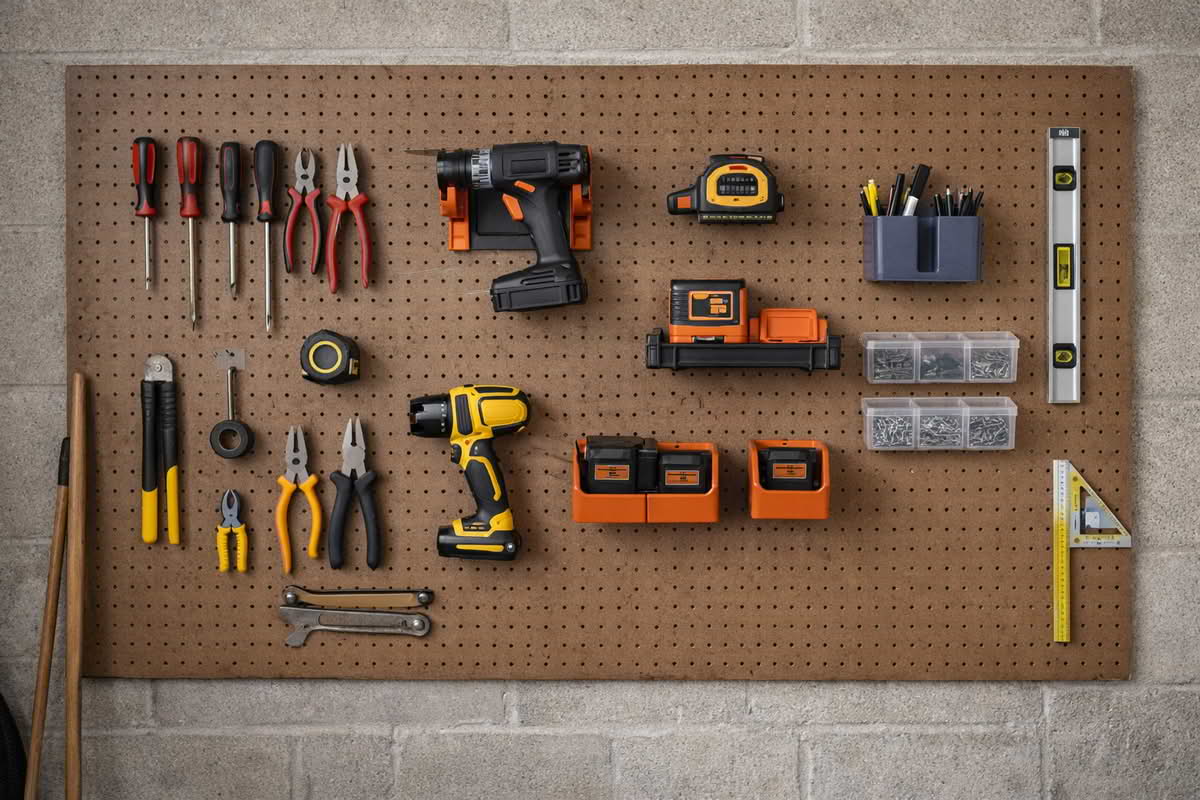
A useful wall storage system keeps everyday tools visible and grouped by task so the workspace feels cleaner and faster to use.
Pegboard material, layout, and modularity tradeoffs
The first big decision in this category is usually material and panel type. Traditional pegboard systems appeal because they are familiar, flexible, and often affordable. They can be a strong starting point for general hand-tool organization when the goal is to get tools off shelves and onto the wall quickly. Their tradeoff is that lighter hook systems and simpler boards can feel less substantial once the tool mix becomes heavier or more varied. A basic pegboard may work well for screwdrivers, pliers, and measuring tools, but feel less satisfying when you begin asking it to support power tool accessories, heavier hammers, or more specialized holders.
Metal pegboards and more rigid wall panels often solve that problem by offering a sturdier foundation and a more secure feel for hooks, bins, shelves, and dedicated holders. They usually make more sense when buyers know the wall system will become a long-term part of a garage or workshop rather than a quick cleanup fix. The tradeoff is often cost and, sometimes, less casual flexibility in how accessories are chosen. A stronger system can be worth it when the workspace is active enough that lighter wall storage would feel temporary or underbuilt.
Modular wall systems take the idea one step further. Instead of simply hanging tools on hooks, they often support shelves, bins, charging stations, racks, and tool-specific modules. This can be extremely useful when the collection includes cordless tools, batteries, chargers, small organizers, and project-specific accessories that do not sit neatly on classic peg hooks. But modular systems also ask more of the buyer. They require more planning, and they work best when the wall is treated as a real organizational zone rather than just a spare surface for hand tools.
Basic pegboard systems are often a strong first step for light-to-moderate hand-tool organization.
Metal and more rigid wall panels usually make more sense when the setup needs to support heavier tools or longer-term garage use.
Modular systems are most useful when the wall must handle more than just hooks, including bins, chargers, and tool-specific racks.
The right material choice depends on whether the setup is mainly for general hand tools or for a broader workshop ecosystem.
Layout density is another important tradeoff. It is tempting to fill every available inch of wall space once the storage system is installed, but tightly packed walls often become visually noisy and harder to maintain. Tools are easier to retrieve and return when there is enough spacing to see handle shapes clearly and enough room to remove one item without disturbing several others. A slightly looser layout can feel less efficient in the moment, but it often creates better long-term usability because the system stays readable as the collection changes.
Dedicated power tool wall racks are a good example of this. They can be extremely effective when cordless tools, chargers, and batteries are a central part of the workshop or garage. They create a clean visual zone and reduce bench clutter quickly. But they also commit wall space to one tool family. That is great when the tool collection is stable and battery-platform based. It is less ideal if the collection is still changing or if wall space is limited enough that flexibility matters more than a specialized look.
Small bins and shelves add another layer of usefulness, especially for drill bits, anchors, screws, fasteners, pencils, blades, and layout tools. Yet they also bring the risk of turning the wall into a shallow shelving system instead of a fast-access tool wall. This is where moderation matters. A few bins placed near the main work zone can be genuinely helpful. Too many can make the wall feel crowded and reduce the clarity that wall storage is supposed to create.
The core tradeoff is straightforward: simpler pegboard buys affordability and flexibility, stronger panels buy stability, and modular systems buy broader organizational power at the cost of more planning. The best answer depends on whether your wall storage needs to solve a basic clutter problem or become a long-term workshop system.
Choosing for basic garages, growing workshops, and power tool setups
For basic garages and casual homeowner workshops, the best wall-storage setup is often the one that creates quick visual order without requiring a full redesign of the space. If your main goal is to get everyday hand tools, a tape measure, a level, a hammer, pliers, screwdrivers, and a few accessories off the bench and out of random drawers, a straightforward pegboard or simple wall-organizer system can work very well. In this use case, simplicity is a strength. The system does not need to support every future category at once. It needs to create a cleaner, more usable workspace now.
Growing workshops are different. Once the tool collection starts expanding into cordless systems, battery chargers, deeper hand-tool assortments, specialty measuring tools, fastener bins, and task-specific accessories, the wall often needs to do more than hang pliers and screwdrivers. This is where sturdier metal panels, stronger organizers, and more deliberate layout planning become easier to justify. A growing workshop benefits from a system that can evolve without constantly outgrowing its own accessories.
Power tool setups deserve their own consideration because cordless tools create a different storage problem than hand tools. Drills, impacts, batteries, chargers, and accessory cases take up awkward amounts of shelf and bench space, and they are often used in clusters. Dedicated wall racks and modular systems can make these setups feel much more organized, especially when the goal is to keep one battery platform accessible and charged. But these systems are strongest when your tool family is already stable. If you are still piecing together brands, storage styles, or tool categories, a more flexible wall approach may age better.
Basic garage users usually benefit most from a simple wall system that clears clutter without demanding complex planning.
Growing workshops often justify sturdier and more expandable systems because the tool mix broadens quickly.
Dedicated power tool wall storage works best when cordless tools and batteries are a major, stable part of the setup.
The best system depends on whether you are solving a present clutter problem or building a longer-term organizational structure.
It is also useful to think about whether the wall storage will stand alone or work alongside drawers, chests, and portable kits. A wall does not have to hold everything to be successful. In fact, wall systems usually perform best when they hold the most-used tools and accessories while heavier reserve tools, duplicate items, and specialty gear stay in drawers or cabinets. This mixed-storage approach often creates the most realistic ownership outcome because it keeps the wall fast and visually clean instead of overloading it with every single tool in the collection.
Another practical question is how much time you are willing to spend maintaining the layout. Some people enjoy regularly refining a wall system. Others want to install it once, make a few adjustments, and then mostly leave it alone. If you fall in the second group, a simpler and more forgiving system may provide better long-term satisfaction than a highly structured setup that only feels optimal when constantly updated. Ease of maintenance is part of usefulness.
The lowest-regret buying path is usually to choose the wall system that matches your actual tool density, your available wall space, and the degree of change you expect in the next few years. If it improves access today and still leaves room for the collection to grow without becoming chaotic, it will likely stay useful much longer than a system chosen mainly because it looked polished in a workshop photo.
Final Recommendations — choose the wall system that supports your workflow, not just your wall
A good pegboard or wall-storage setup should make your workspace faster to use, easier to maintain, and less dependent on bench piles and overflowing drawers. For most readers, the best choice is the one that balances visibility, support strength, and adaptability in a way that fits the actual tool collection. The wall should become a working zone, not just a display surface.
Choose a basic pegboard or simple wall organizer if your main goal is to clear everyday hand tools and create fast-access order in a garage or utility workspace.
Choose stronger metal panels or more robust wall organizers if heavier tools and longer-term garage use demand more support and durability.
Choose modular wall systems or dedicated power tool racks if cordless tools, batteries, chargers, and bins are a central part of your workshop setup.
Prioritize tool visibility, realistic spacing, and future flexibility over filling every inch of wall space as quickly as possible.
The lowest-regret wall-storage purchase is usually the one that makes the workspace feel calmer and more obvious to use. If your most-used tools are visible, the system feels secure, and the layout can evolve without becoming messy, it will deliver more lasting value than a more ambitious setup chosen mainly because it looked perfectly organized on day one.