Portable Tool Storage Buying Guide for Home Repairs, Garage Work, and Everyday Organization
Portable tool storage seems straightforward until your tools start spreading across drawers, buckets, car trunks, and half-finished project piles. Many buyers assume any bag or box will solve the problem, but the wrong storage format usually creates a new layer of friction instead. A soft bag can become a black hole for small parts. A hard box can feel organized until you need quick access to one screwdriver buried under everything else. A modular organizer may look efficient in photos but prove awkward if your tool mix changes from room to room. The real question is not simply how to carry tools. It is how to keep the tools you actually use accessible, protected, and easy to move without turning every repair into a sorting session. The best portable storage system is the one that matches your typical projects, the size of your kit, and the way you work around the house, garage, and yard. This guide focuses on carry comfort, organization, durability, and low-regret ownership so you can choose storage that supports the work instead of constantly interrupting it.
What portable tool storage needs to do well
Portable tool storage has one basic purpose: it should help you bring the right tools to the job without adding confusion, wasted motion, or avoidable wear. That sounds simple, but in real home use the category has to solve several competing needs at once. Storage should make tools easier to carry, faster to find, and more likely to stay together. At the same time, it should not become so bulky, overbuilt, or rigid that it feels more like a cargo problem than a tool solution. The right system should reduce the distance between “I need to fix this” and “I have what I need in reach.”
The first test is access. If you cannot find a tape measure, screwdriver, utility knife, pliers, or fastener box quickly, the storage system is already failing at a basic level. This is why portable storage is about more than capacity. Many people buy the largest bag or box they can afford, then discover that everything important ends up layered under everything else. A storage solution becomes much more useful when it separates daily-use tools from occasional tools and keeps the most common items visible enough to grab without unpacking half the container.
The second test is carry comfort. Portable storage is not stationary workshop furniture. It moves from the garage to the hallway, from the driveway to the backyard, from one floor of the house to another. That means handle shape, overall weight, balance, and how the storage behaves while walking matter more than many buyers initially expect. A full container that is awkward to lift or digs into your hand quickly becomes something you avoid filling properly, which defeats part of the point.
A good portable storage system should keep everyday tools easy to reach without forcing a full unpack every time.
Carry comfort matters because tool storage is often moved farther and more often than buyers expect.
Capacity only adds value when the layout still allows quick tool recognition and retrieval.
The best storage reduces project friction instead of turning every repair into a small search exercise.
Protection matters too, though it should be judged realistically. A homeowner carrying hand tools, a drill, bits, and a few hardware assortments may not need the same level of impact resistance as a professional carrying tools in and out of vehicles all day. But even ordinary home use can be rough enough to matter. Storage gets set on concrete, dragged across garage floors, dropped into trunks, and exposed to dust or damp conditions. A slightly stronger base, better zipper, or more rigid structure can make the difference between storage that remains dependable and storage that starts failing at the corners after a short stretch of normal ownership.
Another overlooked quality is adaptability. Tool collections change. A portable kit that feels perfect when it holds a hammer, screwdriver set, pliers, and tape measure may become less logical once you add a compact drill, driver bits, anchors, wire connectors, or specialty hand tools. Good storage should allow some growth or reorganization without forcing a total restart. That does not mean every system needs to be endlessly modular. It means the layout should not be so narrow that one small change in your project habits makes the whole setup feel wrong.
The best portable storage purchase is usually the one that helps your most-used tools stay ready and your less-used tools stay contained. If it supports quick access, comfortable transport, and enough organization to stop tools from migrating into random household drawers, it is likely doing its job well.
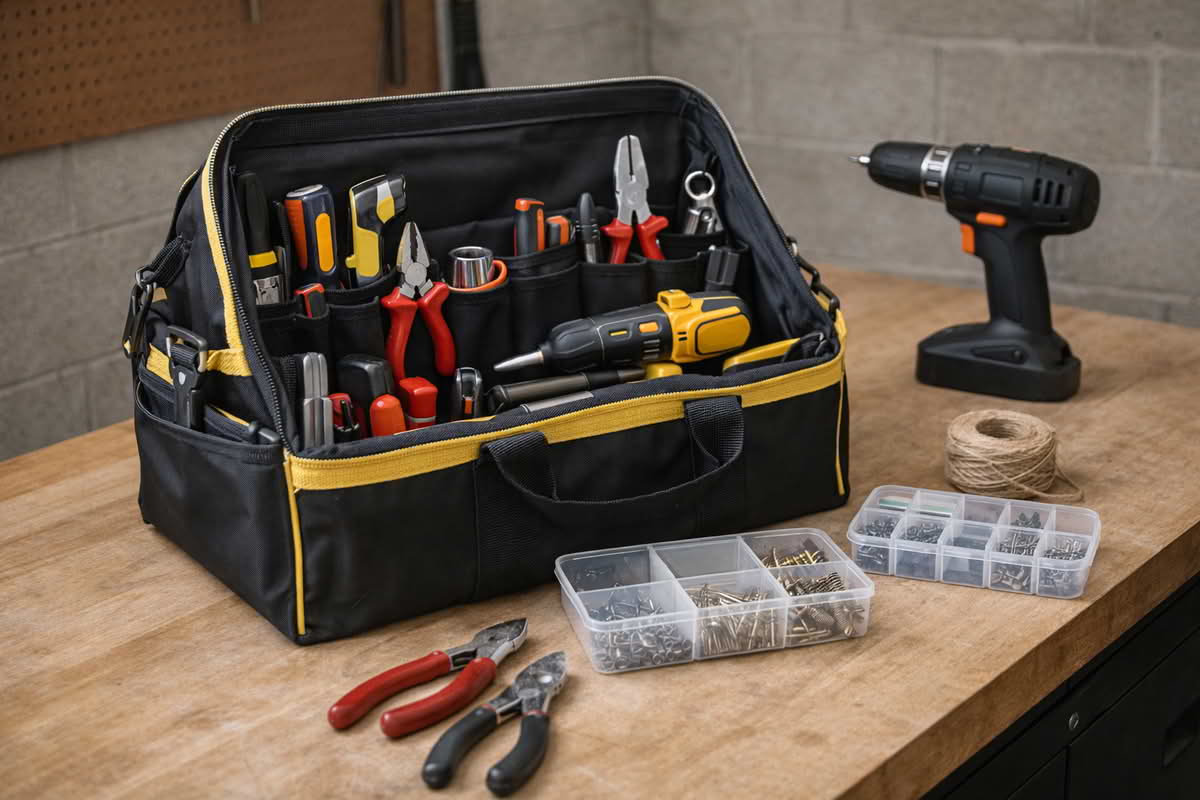
Useful portable tool storage keeps the most common repair tools visible and easy to carry without turning the container into a cluttered catchall.
Bags, boxes, and organizer tradeoffs
Most portable tool storage falls into a few broad formats: soft tool bags, hard tool boxes, modular organizers, and smaller dedicated parts organizers. Each format solves a different problem, and many disappointing purchases happen because buyers choose the format that looks most complete rather than the one that best matches their tool mix. Tool bags are often appealing because they are flexible, easy to carry, and able to hold a varied mix of shapes. They are especially useful when your projects require a blend of hand tools, a compact power tool, bits, small accessories, and room for one or two unplanned additions. Their weakness is that they can become messy quickly if the internal organization is too shallow or the tool mix becomes too dense.
Hard tool boxes solve a different problem. They offer more structure and often protect tools better during transport or rougher storage conditions. They can feel more orderly for heavier hand tools and can be a good fit for garage users who want a simple portable container that stacks or stores neatly. The tradeoff is that hard boxes sometimes hide tools in layers. If the interior layout is too basic, access becomes slower because everything below the top layer is effectively buried. A hard box is often strongest when the tool set is relatively stable and the user values containment more than instant visibility.
Modular organizers and compact parts organizers are best when small-item control matters as much as tool carrying. Screws, anchors, connectors, drill bits, utility blades, fuses, wire terminals, picture-hanging hardware, and other project parts can quickly undermine a simple bag or box. That is why organizer-based systems have real appeal. They can make small items far easier to sort and far harder to lose. But organizers work best when your projects actually generate repeated part-sorting needs. If your tool kit is still mostly basic hand tools, a heavily compartmentalized storage system may feel more rigid than helpful.
Tool bags are strongest when you need flexible carrying for mixed tool types and changing project needs.
Hard boxes favor containment and structure, but they can slow access if the interior becomes layered and crowded.
Modular organizers are most useful when fasteners, bits, and small hardware are a major part of the workflow.
The right storage format depends on whether your main problem is carrying tools, containing tools, or organizing many small parts.
Compact parts organizers deserve special attention because they often work best as companions rather than standalone solutions. A homeowner may not want to carry every hand tool in a compartment case, but they may greatly benefit from keeping anchors, screws, wire nuts, picture hooks, or specialty bits organized separately inside a larger system. This layered approach can be more effective than trying to force one container to do everything. The main advantage is clarity: tools stay in one section of your kit and project consumables stay in another.
Another important tradeoff is openness versus protection. Open-top bags and wide-mouth designs make tools easy to see and grab, which is extremely useful during active work. Their downside is that they expose tools to dust, debris, moisture, and a greater chance of items tipping out if the container is jostled. Closed boxes and latching organizer systems protect contents better, but they add one more step to every access. Buyers should think about whether their projects are fast-paced and repetitive or whether the kit spends more time in storage and transit than open on the floor beside them.
The core tradeoff is straightforward: bags buy flexibility, boxes buy containment, and organizers buy small-part control. The best ownership path often combines those benefits in proportion to how you actually work, rather than forcing one format to solve every tool-storage problem at once.
Choosing for homeowners, garage users, and mobile project work
For most homeowners, the best portable tool storage is the system that keeps common repair tools together and easy to move through the house. That usually means storage that is not too large, not too specialized, and not so heavy when loaded that it becomes a garage-only object. If your typical jobs involve tightening hardware, patching, hanging, minor plumbing or electrical fixes, furniture assembly, and seasonal upkeep, a balanced portable system often matters more than raw capacity. The real goal is to have a dependable core kit that can move where the job is.
Garage and workshop users often need a slightly different balance. Their portable storage may serve as a grab-and-go layer beneath larger stationary storage. In that environment, harder-sided boxes or more structured systems can make sense because portability is still useful, but the kit may spend more time returning to a stable home base between projects. These users may also benefit more from modular organizers because fasteners, hardware assortments, and drill bits tend to be a larger part of the workflow than they are in a purely household repair kit.
Mobile project work within the property creates another use case. If you regularly carry tools from the garage to the yard, fence line, attic access point, vehicle, shed, or upper floors, comfort and secure organization become more important than desktop neatness. A storage solution that is slightly less rigid but much easier to carry can be the better choice because it supports real movement. This is especially true when the work involves both hand tools and a compact power tool, since those mixed kits can become awkward quickly if the storage format is too compartment-specific.
Homeowners usually benefit most from a balanced core storage system that keeps common repair tools together and easy to carry around the house.
Garage users often get more value from structured systems and companion organizers because their workflows include more hardware and accessories.
Mobile project users should prioritize carry comfort and secure layout because tools move farther and more often.
The best portable storage depends on whether the kit serves as your main tool system or as a movable layer beneath a larger workshop setup.
It is also worth thinking about project duration and setup style. Some people work best with an open container beside them where tools can be dropped back in quickly. Others prefer closed, more organized cases that protect contents between shorter bursts of work. Neither approach is inherently better. The right answer depends on whether your frustration comes more from tools getting lost during the job or from tools getting scattered in storage between jobs.
Growth path matters as well. A first portable storage system often becomes the foundation of a broader organization strategy. If you expect your kit to grow into more hand tools, a cordless drill system, more hardware organizers, or category-specific kits, it makes sense to choose storage that can either expand with you or remain useful as a dedicated everyday kit later. The weakest purchase is often the one that feels full too quickly and has no obvious next role once the collection expands.
The lowest-regret buying path is usually to choose the format that fits the way you actually move through projects now, while leaving some room for your tool kit to become more organized later. If the storage feels natural in your hand, logical in layout, and useful across the rooms and spaces where work actually happens, it will do more for your productivity than a more impressive-looking system that never quite fits your routine.
Final Recommendations — choose the storage that keeps your real tools ready
A good portable tool storage system should make it easier to start repairs, carry the right tools, and put everything back where it belongs when the job is done. For most readers, the best choice is not the biggest container or the most elaborate organizer stack. It is the format that fits the tools you actually use, the amount of mobility your projects require, and the level of organization that helps you rather than slowing you down.
Choose a flexible tool bag if your projects involve a mixed kit of hand tools, a compact power tool, and changing job needs from room to room.
Choose a hard tool box if you want more structure, stronger containment, and a portable kit that returns to a garage or workshop base.
Choose modular or compact parts organizers if small hardware, bits, anchors, and accessories are creating more confusion than the tools themselves.
Prioritize carry comfort, quick access, and realistic everyday layout over buying the largest storage system for a tool collection you do not yet have.
The lowest-regret portable storage purchase is usually the one that feels invisible once the project begins. If it keeps your main tools ready, your small parts under control, and your setup easy to move, it will provide more lasting value than a larger or more complicated system chosen mainly because it looked more complete at the time of purchase.