Tape Measure Buying Guide for Home Projects, Layout Work, and Everyday Repairs
Tape measures look interchangeable until you spend enough time fighting one that bends too early, retracts too harshly, reads poorly in low light, or feels bulky enough that you stop carrying it. This is one of the most universal tools in a home kit, which makes it surprisingly easy to buy on autopilot. Many people assume any tape measure is fine because the basic function is obvious, but the details that separate a satisfying tape from an annoying one show up quickly in real work. Blade reach, print clarity, case size, hook movement, durability, and whether the tape feels easy to control with one hand all matter more than many casual buyers expect. The best tape measure is not always the biggest or the heaviest-duty model on the shelf. It is the one that fits the kinds of measuring you actually do, stays readable, and makes ordinary home layout work calmer rather than more awkward.
What matters most in everyday tape measure use
A tape measure earns its value through repeated small interactions. It gets clipped to a pocket, dropped into drawers, pulled across rooms, used one-handed on ladders, pressed against walls, and extended awkwardly while holding a board with the other hand. That means the best tape measure is usually the one that reduces those small points of friction. In practical home use, blade readability and control often matter just as much as total length. If the markings are hard to read, the hook feels unreliable, or the blade collapses too early when extended, even a well-built tape can become frustrating quickly.
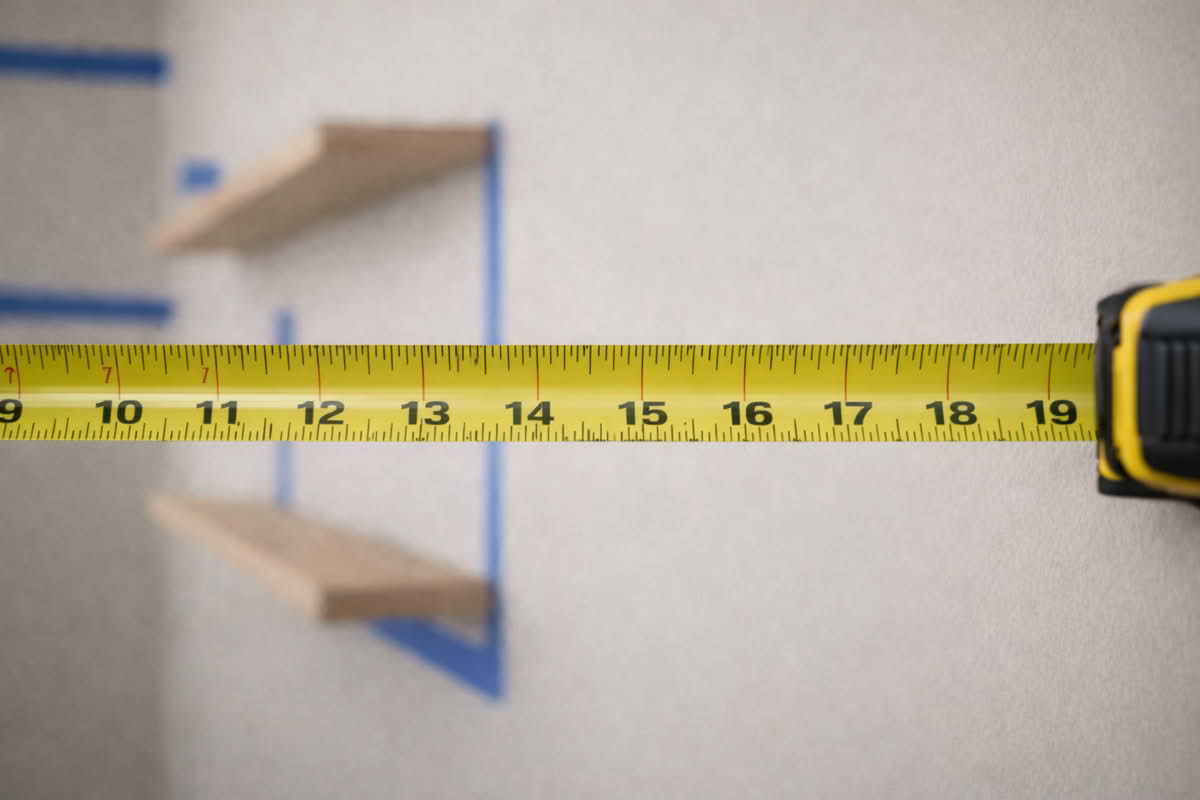
Readability starts with contrast and layout. Bold markings, clear fractions, and sensible spacing help more than decorative feature lists. This matters because many measurements happen in less-than-ideal conditions: garages, hallways, closets, outdoor light, or overhead work where the tape is not perfectly positioned. A tape that lets you confirm a number quickly reduces mistakes and hesitation. This is especially important for homeowners and casual DIY users who may not measure all day and therefore benefit more from legibility than from specialized jobsite-oriented features.
Hook performance is another surprisingly important detail. The hook should feel sturdy and move appropriately to account for inside and outside measurements. A loose or poorly riveted hook can undermine confidence because it makes repeat measurements feel inconsistent. Most buyers never think about this at the point of purchase, yet it becomes obvious during trim work, shelving, furniture layout, or any task where precision matters enough that you measure twice because you do not entirely trust the first reading.
Clear markings and easy readability often matter more in daily use than maximum blade length.
A tape measure should feel easy to extend, control, and retract without excessive fighting or snapping.
Hook stability plays a major role in measurement confidence, especially for repeat cuts and layout work.
The best everyday tape is usually the one that stays predictable under ordinary awkward conditions.
Retraction behavior also separates good ownership from annoying ownership. A tape that retracts too aggressively can feel unsafe around fingers and easier to damage during routine use. One that retracts too weakly can feel sloppy and slow. The best tapes tend to strike a useful middle ground: fast enough to stay efficient, controlled enough to avoid punishment. In practical home use, that matters because the tape is handled frequently and often in positions where your attention is split between the measurement and the material being held.
Case shape deserves more respect than it usually gets. An oversized tape may promise more durability or reach, but if it feels awkward in the hand or too bulky on the belt, it may be less pleasant to use for routine jobs. Many homeowners do not need a tape measure that feels like a dedicated framing-site tool. They need one that fits comfortably in a drawer, tool bag, or pocket and still feels substantial enough to trust during indoor and outdoor projects.
The most useful way to judge a tape measure is not by the biggest headline number on the package. It is by whether it helps you move quickly through repeated measuring without second-guessing. If the tape reads easily, stays controllable, and handles normal household awkwardness without drama, it is probably doing its job well.
A practical tape measure should make ordinary home layout work easier through readable markings, manageable extension, and dependable hook behavior.
Size, reach, and durability tradeoffs
The main tradeoff in tape measures is between compactness and reach. Smaller tapes are easier to carry, store, and use casually, which makes them very appealing for homeowners, apartment dwellers, and general household tasks. They fit comfortably in a pocket, kitchen drawer, utility bin, or light tool bag. But smaller tapes often give up some blade standout and overall reach. That may not matter when measuring furniture, wall spacing, closet shelves, and normal interior dimensions. It becomes more noticeable when working alone across larger spans or trying to measure framing and layout distances without support.
Longer-reach tapes buy a kind of independence. They are easier to extend farther before the blade folds, which is useful for larger room layout, deck boards, sheet goods, framing stock, and solo measuring where one end of the tape is not easily held by another person. The tradeoff is bulk. Greater standout and stronger blade construction often produce a larger, heavier case that feels less graceful in routine use. This is why bigger is not automatically better. The right reach depends on how often you actually work across larger spans rather than how reassuring the number sounds in the aisle.
Durability is connected to this tradeoff. Heavier-duty tapes often have stronger blade coatings, sturdier housings, and more robust hook design, which can help in rougher environments. But durability features usually add size and weight. For some users, especially those working around framing lumber, outdoor structures, garage projects, and repeated site-style measuring, that is worth it. For others, a lighter tape that is simply easy to live with may be the better ownership choice. A tape measure that feels slightly less armored but gets used constantly can be more valuable than a tougher model that feels awkward enough to stay in the toolbox.
Compact tape measures are easier to carry and store, but they often give up blade reach and standalone extension.
Longer-reach tapes are more useful for solo measuring and larger materials, though they usually add bulk.
Heavier-duty construction improves resilience, but it may reduce everyday comfort and portability.
The best balance depends on whether your measuring is mostly indoor and moderate or larger and more repetitive.
Magnetic hooks add another useful but situational tradeoff. They can be extremely helpful when measuring metal framing members, steel surfaces, or hardware where the hook can attach instead of slipping. That convenience can be meaningful in some layout and installation contexts. At the same time, not every homeowner needs it, and magnetic features can be overvalued if the majority of work happens on wood, drywall, cabinets, and household surfaces. Like many tape features, it is most valuable when it solves a repeated annoyance rather than when it simply sounds more advanced.
Blade coating and print protection also matter because tape measures age through abrasion more than dramatic failure. As the blade rubs against materials, edges, and repeated retraction cycles, markings can wear and performance can degrade. A slightly stronger blade treatment may extend the useful life of the tape in rougher project environments. But again, the right level of durability should be matched to use. Buyers doing occasional household work may not need the same blade toughness as someone repeatedly measuring lumber outdoors or working around abrasive surfaces.
One-handed usability is another subtle but important factor. The lock should be easy to engage, the case should feel stable in the hand, and the blade should not buckle immediately under moderate extension. These are the details that shape whether a tape measure feels supportive during real tasks. Since so many home measurements are made while holding the material, reaching overhead, or balancing on a stool, usability under imperfect conditions matters more than idealized spec comparisons.
The core tradeoff is simple: small tapes favor convenience, larger tapes favor unsupported reach, and tougher tapes favor jobsite resilience. The best choice comes from matching those strengths to how and where the tool will actually be used.
Choosing for homeowners, layout work, and heavier-duty use
For most homeowners, the best tape measure is one that feels comfortable enough to keep nearby and capable enough to handle common room, furniture, shelving, repair, and project measurements. That often points toward a compact or mid-size tape with strong readability and enough standout for solo indoor use. A homeowner tape should not feel disposable, but it also does not need to be built like a dedicated framing-site tool if the actual work is mostly inside the house, in the garage, or around moderate DIY projects.
Layout-focused users need to care more about consistent standout, visible markings, and line-following convenience. If your projects involve repeated room measurement, flooring prep, trim layout, shelving placement, or working from marks on longer material, then control and reach become more important. In that context, a tape that extends farther without collapsing and remains easy to read at a glance will usually be more helpful than a very compact model. This is especially true for solo DIY work, where the tape often has to do more of the stabilizing on its own.
Heavier-duty users, including those doing rougher carpentry, outdoor builds, repeated garage projects, or more demanding jobsite-style work, can justify larger and more durable tapes because wear and repeated extension become real parts of ownership. A stronger case, tougher blade coating, and more confident standout may all pay off in this kind of use. The key is that those benefits should be earned by actual workload. A large heavy-duty tape bought mainly because it sounds more professional can easily become an everyday annoyance if most measurements are still smaller and more casual.
Homeowners usually benefit most from a tape that balances readability, moderate reach, and comfortable everyday carry.
Layout-heavy users should prioritize standout and fast visual clarity over minimum case size.
Heavier-duty users can justify more durable tapes when repeated rough handling and larger-scale measuring are routine.
The best tape depends on whether the tool spends more time in a drawer, on a belt, or stretched across longer material.
It is also worth thinking about measurement environment. Indoor users often benefit from compactness and smooth control because the measurements happen around cabinets, walls, appliances, furniture, and fixtures. Outdoor users or garage-based builders may place more value on standout, hook grip, and resilience against drops and rough surfaces. A tape measure that feels excellent in a kitchen remodel may not be the most satisfying tape for a deck build, and vice versa.
Another practical question is whether the tape will be your only measuring tool or part of a larger measuring setup. If it is the main everyday tape, versatility matters more. If you also keep longer layout tools, laser devices, or specialty measuring tools around, your tape can be chosen more specifically for carry comfort or quick general use. That broader context changes the right choice in ways buyers often overlook.
The lowest-regret buying path is to choose the tape measure that will feel naturally useful ten times a week, not the one that seems most impressive once in the store. If the case fits your hand, the blade reads clearly, and the tape stays calm under ordinary use, it will usually outperform a more extreme model in the daily life of most homes.
Final Recommendations — choose the tape that makes repeated measuring easier
A good tape measure should support quick, readable, confident measurements without making ordinary tasks feel harder than they need to be. For most readers, the best choice is one that balances case comfort, moderate standout, and clear markings rather than chasing the biggest reach or the most aggressive durability profile. The right tape is the one that fits the way you actually measure.
Choose a compact or mid-size tape if your work is mostly indoor, household, and centered on furniture, shelves, rooms, and repairs.
Choose a longer-reach tape if solo layout work, larger materials, or repeated project measuring make unsupported extension genuinely useful.
Choose a magnetic or heavier-duty tape only when those features solve recurring problems rather than simply sounding more advanced.
Prioritize readability, hook confidence, and one-handed usability over buying the largest tape for occasional bigger jobs.
The lowest-regret tape measure is usually the one that disappears into your workflow. If it is easy to carry, easy to trust, and easy to read when your hands are busy and the project is already awkward, it will provide more real value than a larger or tougher model chosen mainly because it looked more capable on the packaging.