Pliers Buying Guide for Grip, Reach, Adjustability, and Everyday Repairs
Pliers look simple, but they are one of the easiest hand tools to buy poorly. Many households end up with one random pair that is asked to do everything: gripping, twisting, pulling, clamping, turning, cutting, and reaching into tight places. That usually works until it does not. The wrong jaw shape slips on rounded hardware, the wrong handle becomes uncomfortable under pressure, and the wrong size makes a small repair feel harder than it should. In practice, pliers are less about brand promises and more about matching grip style to the type of work you actually do. A useful choice should help with common household repairs, light DIY tasks, hardware adjustments, and awkward reach problems without feeling oversized, flimsy, or overly specialized. This guide explains the major plier types, the tradeoffs between sets and single-purpose tools, and how to avoid buying a pair that looks versatile but turns out to be frustrating the moment real leverage or control is needed.
Which type of pliers solves which problem
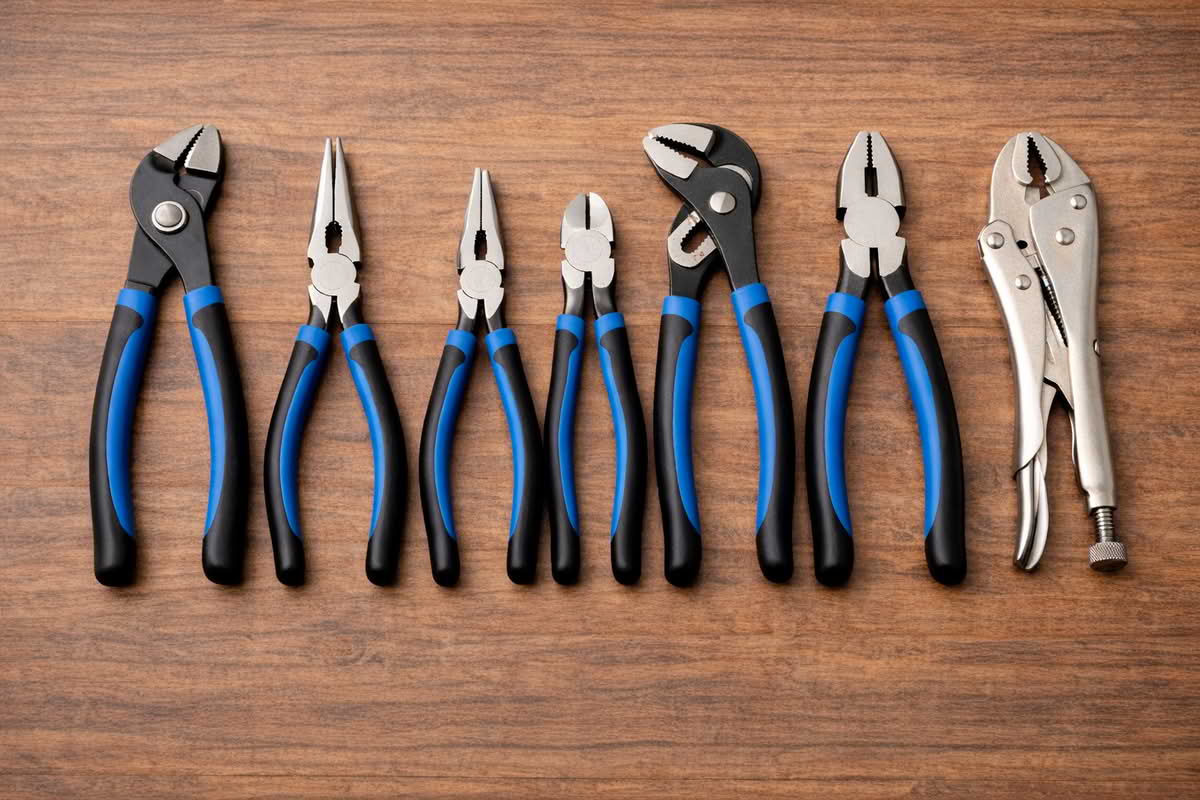
The first mistake most buyers make is thinking of pliers as one category instead of several tool types that happen to share handles and pivoting jaws. A general household user will usually encounter four main formats first: slip-joint or general-purpose pliers, needle-nose pliers, groove-joint pliers, and locking pliers. Each one solves a different problem. The better you match the shape of the jaws to the task, the less likely you are to slip, damage hardware, or use too much force in the wrong place.
Slip-joint pliers are often the broadest starting point because they handle light gripping, turning, and holding without being too specialized. They make sense for general home use, especially when space is limited and you want one pair that can handle a range of small tasks. Their weakness is that they are rarely the best tool for stubborn, rounded, or awkwardly positioned objects. They work because they are flexible, not because they are optimized.
Needle-nose pliers do a different job. Their value comes from reach and control, not raw force. They are useful when you need to hold small hardware, bend wire, retrieve dropped pieces from narrow spaces, or guide components in places your fingers cannot comfortably reach. For furniture assembly, electronics-adjacent fixes, and small fastening tasks, they are often more practical than bulkier pliers. Their limitation is that the long, narrow jaw shape is not ideal for high-torque turning or heavy gripping.
Groove-joint pliers are more capable when the job involves larger fittings, irregular shapes, or plumbing-adjacent adjustments. Their adjustable jaws help them grip objects of different diameters, which makes them more useful than standard pliers for many household maintenance tasks. At the same time, they are bulkier and can feel excessive for delicate work. This is why they work best as a second layer or as part of a broader set rather than as the only pliers in a home.
Slip-joint pliers are a practical generalist tool for light gripping and turning tasks.
Needle-nose pliers are best when access, precision, or narrow reach matters more than force.
Groove-joint pliers are more useful for larger fittings, irregular objects, and adjustable gripping.
Locking pliers are strongest when clamping and holding power matter more than speed or finesse.
Locking pliers solve yet another problem. They are not primarily about convenience. They are about holding power. When adjusted correctly, they clamp onto a fastener or object and stay there, which can help with stubborn hardware, stripped bolts, light clamping, or situations where you need an extra hand. That makes them valuable, but also easy to overestimate. They are not the right first choice for every home because they are slower to adjust and can easily mark surfaces if used carelessly.
Different plier types solve different problems, so usefulness depends less on the label and more on matching jaw shape to the work.
For many households, the most useful insight is that pliers are not interchangeable once real tasks begin. A single pair may get you through occasional jobs, but the better long-term question is which type fails least often for the problems you actually face. That is why a buyer who mostly assembles furniture and handles small repairs may get more value from a general-purpose pair plus needle-nose pliers, while a buyer handling hose fittings, clamps, or plumbing-related tasks may benefit much more from groove-joint pliers. The goal is not maximum versatility in theory. It is minimum frustration in ordinary use.
Size, jaw design, and handle tradeoffs
Once you understand the major categories, the next layer is size and control. Bigger pliers often create the impression of strength, but size is not always an advantage in a household setting. Oversized pliers can feel clumsy in cabinets, utility closets, under sinks, and around small fasteners. Smaller pliers are easier to control, store, and use in tight spaces, but they provide less leverage when gripping stubborn fittings or pulling against resistance. Choosing the right size is often a matter of balancing access against force rather than simply choosing the largest tool that fits the budget.
Jaw design shapes how the pliers behave under pressure. Fine serrations can improve grip on smooth objects, but they may also mark finished surfaces more easily. Broader jaws distribute force more evenly and feel steadier on larger hardware, while narrow jaws can reach into confined areas but may twist if pushed beyond their intended use. This is one reason cheap multipurpose pliers often disappoint. They try to combine too many functions into one shape, which leaves them merely acceptable across several tasks instead of genuinely good at any one of them.
Handle comfort also matters more than many buyers expect. Pliers are used under compression, which means poorly shaped or overly hard handles become uncomfortable quickly. That may not matter during a five-second grip, but it matters during repetitive work or when extra force is required. A handle that feels secure and natural reduces fatigue and lowers the temptation to regrip awkwardly. In real home use, that can mean the difference between feeling in control and feeling like the tool is fighting you.
Large pliers offer leverage, but they can be harder to control in tight household spaces.
Smaller pliers are easier to maneuver, though they are less effective for stubborn or oversized hardware.
Jaw texture and shape affect both grip quality and the likelihood of damaging surfaces.
Comfortable handles matter because pliers are often used under sustained hand pressure.
Adjustment quality is another subtle but important difference. On groove-joint pliers, the adjustment mechanism should feel stable and easy to set without constant slipping. On locking pliers, the screw adjustment and release lever should operate predictably rather than turning every clamp into a small argument with the tool. When adjustment is crude, the tool may still work eventually, but it adds friction to every task. For occasional users, that often leads to avoiding the tool altogether or substituting the wrong one.
Build quality reveals itself quickly in alignment and grip consistency. Jaws that do not meet evenly or handles that flex more than expected can make the pliers feel unreliable even on light work. This is especially noticeable with needle-nose models, where tip alignment affects how well you can hold small parts, and with locking pliers, where poor alignment reduces clamp confidence. A household buyer does not need industrial-grade tools for every task, but they do need pliers that feel controlled and trustworthy the first time pressure is applied.
The long-term ownership issue is that pliers are often exposed to exactly the kinds of tasks that punish weak tools: rust-prone spaces, damp storage, awkward leverage, and hardware that does not want to move. That does not mean every home needs premium models. It does mean that a slight increase in quality can pay off in reliability and comfort over many years. A decent pair of pliers often remains useful long after cheaper alternatives have become the tool you avoid unless you have no other option.
When to buy one pair or a set
Whether you should buy one pair of pliers or a set depends less on budget alone and more on how varied your repair and maintenance work tends to be. If you are building a very basic home tool kit, a single versatile pair can make sense as a starting point. For many readers, that means a general-purpose slip-joint pair or a medium-size groove-joint pair, depending on whether the likely jobs lean toward small indoor fixes or slightly heavier gripping and adjustment. A single good pair is often a better first purchase than a low-quality set built to hit a price point.
Sets become more useful when they solve distinct task categories rather than repeating similar tools with minor size changes. A practical household set might combine general-purpose pliers, needle-nose pliers, and groove-joint pliers because each one adds a meaningful capability. A weak set, by contrast, may include several tools that overlap too much, leaving the buyer with quantity instead of range. This is especially common in low-cost kits where the appeal is visual completeness rather than actual problem coverage.
Buyers with apartments, limited storage, or light repair needs are often better served by one or two carefully chosen pairs. Buyers who own a home, expect more recurring maintenance, or already know they deal with a mix of fittings, small hardware, clamps, and awkward reach tasks may benefit more from a set. The advantage of a set is not only coverage. It is speed. When you already have the right pliers available, you are less likely to improvise with the wrong tool and less likely to damage hardware or create extra frustration.
Start with one pair if your tasks are limited, storage is tight, or you are still building a basic tool kit.
Choose a set when the included tools solve meaningfully different gripping and reach problems.
A low-quality set with overlapping tools is often worse than one reliable pair.
Households with more varied repairs usually benefit from having at least two plier types on hand.
There is also a psychological trap worth avoiding: buying pliers for imagined future complexity instead of present needs. Many people buy sets that include locking pliers, cutters, miniature precision shapes, and larger adjustable jaws before they have any real use for half of them. The result is often clutter rather than readiness. A more durable approach is to build outward from the tasks that recur. If you keep handling wire, add a tool suited to that. If you keep dealing with small recessed hardware, add needle-nose pliers. If hose fittings and larger fasteners show up repeatedly, add groove-joint pliers.
Sets can also work well as a second-stage purchase after a basic hand tool kit is already in place. At that point, you have more experience with which repairs feel awkward and which tool shapes you keep wishing you had. That information is more valuable than most packaging claims. It leads to buying pliers based on actual failure points instead of generic marketing about versatility.
In long-term use, the best plier purchase is the one that improves your ability to control a job without overcomplicating storage or creating redundancy. A single strong pair can be enough for a renter or casual user. A compact, well-chosen set can be more efficient for a homeowner dealing with a wider mix of maintenance tasks. The common thread is the same: usefulness comes from distinct capability, not just from having more handles in the drawer.
Final Recommendations — buy for grip problems, not for packaging claims
The right pliers are the ones that solve the jobs you actually face with better control and less slipping, not the ones that promise the broadest possible versatility. For most readers, a thoughtful starting point is either one reliable general-purpose pair or a small set built around genuinely different functions such as general gripping, narrow reach, and adjustable larger-object grip. That creates a more practical foundation than buying the biggest set or the most aggressive-looking tool.
Choose one versatile pair first if you mainly handle light repairs, small hardware, and occasional household tasks.
Add needle-nose pliers when reach, detail work, or retrieving small parts is a regular annoyance.
Add groove-joint or locking pliers when fittings, clamps, or stubborn hardware show up often enough to justify them.
Prioritize alignment, grip comfort, and task-specific usefulness over oversized jaws or overlapping set pieces.
The lowest-regret plier purchase is usually the one that feels calm and obvious in use. If the jaws fit the work, the handles stay comfortable, and the tool fills a real gap in your home kit, it will remain useful long after the appeal of a larger set or lower price has faded.