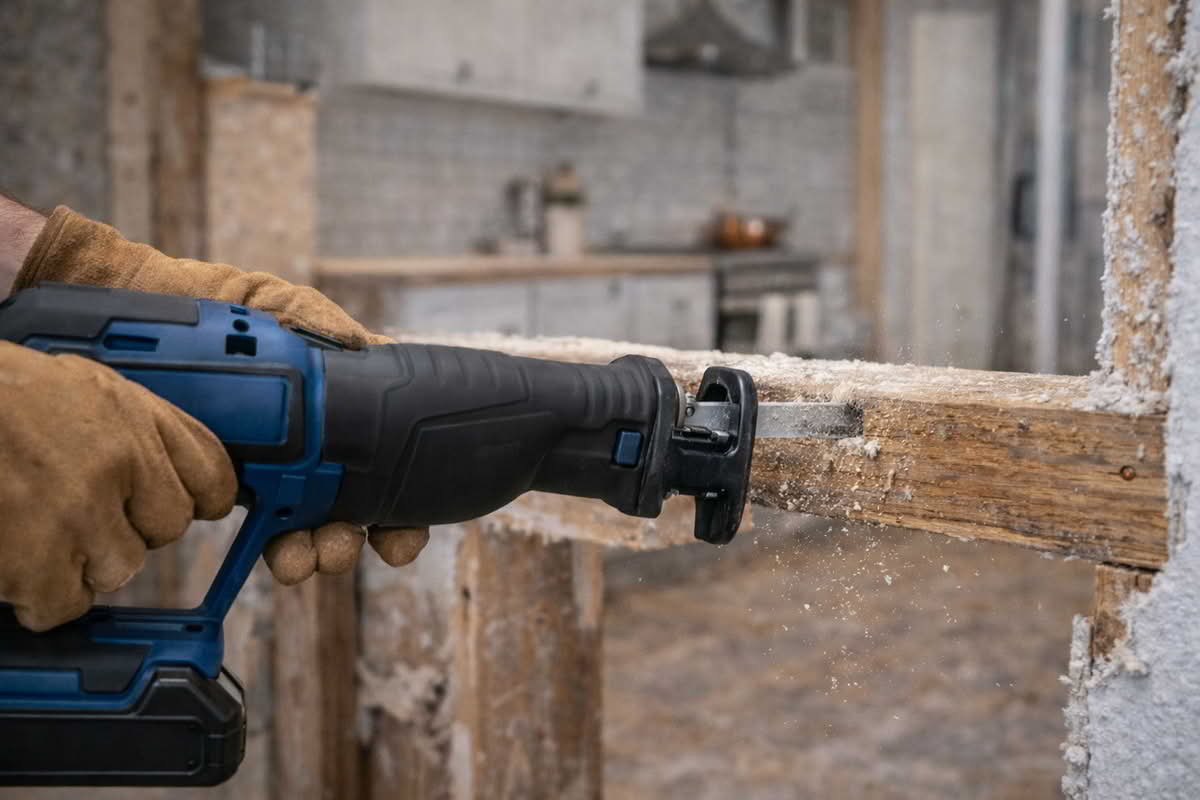
Reciprocating Saw Buying Guide for Demolition, Remodeling, and Tough Cut Access
A reciprocating saw tends to enter the picture when cleaner, more controlled cutting tools stop being the right answer. It is the tool people reach for when material needs to come out, when access is awkward, or when a repair turns into partial demolition. That makes it extremely useful, but also easy to buy on the wrong assumptions. Many shoppers focus on sheer power or assume every reciprocating saw is basically the same, when the real ownership differences show up in size, vibration, maneuverability, blade changes, and whether the tool feels controllable in cramped and messy work. In real projects, a reciprocating saw is rarely judged by finesse. It is judged by whether it can cut through old lumber, nails, pipe, branches, framing scraps, or damaged material without becoming exhausting, unpredictable, or too bulky to position where the cut actually needs to happen. The best model is not simply the most aggressive one. It is the one that matches the kind of demolition, repair, and rough-access cutting you are most likely to face.
What a reciprocating saw is actually good at
A reciprocating saw is best understood as an access-and-removal tool. It is not meant to produce the prettiest cut in the workshop, and it is not usually the fastest way to process clean new stock on a bench. Its real strength is that it can get into places other saws cannot, cut through mixed materials, and help remove what needs to go away without demanding perfect conditions. That makes it especially useful during remodeling, repair, demolition, pruning of thicker branches with the right blade, cutting old framing, trimming embedded nails, removing damaged boards, and opening up problem areas where cleaner saws do not fit well.
This matters because many buyers misjudge the category as either a pure demolition tool or a general substitute for every other saw. Neither view is quite right. A reciprocating saw can absolutely help with demolition, but it also plays a practical role in repair and renovation work where a cut has to happen in an installed, awkward, or partially obstructed location. At the same time, it is usually a poor replacement for tools designed for cleaner straight cuts, finish cuts, or careful layout work. The category makes the most sense when the job is rough, hard to access, or physically inconvenient.
One of the most useful ways to think about it is in terms of tolerance. A circular saw wants setup. A miter saw wants support and repeatability. A jigsaw wants line-following control. A reciprocating saw tolerates mess. It tolerates materials that are still partly attached, boards with old nails in them, demolition environments with limited space, and cuts that matter more for access or removal than appearance. That is why it is such a practical addition to a home tool kit once projects move from assembly into repair, replacement, or teardown.
Reciprocating saws are strongest when material must be removed, trimmed in place, or cut in awkward conditions.
The category is especially useful for remodeling, repair, demolition, pruning, and rough-access cutting.
It complements cleaner cutting tools rather than replacing them.
The real value is not finish quality, but access, speed of removal, and tolerance for messy work.
Blade choice matters heavily here, often more than first-time buyers expect. A reciprocating saw can cut wood, metal, plastic, PVC, nails, branches, or mixed demolition material, but only if the blade matches the job. That means the tool itself should not be judged in isolation. A saw that feels harsh or slow with the wrong blade can feel dramatically more useful with one suited to demolition wood, metal pipe, pruning, or general-purpose tear-out. This is one reason the category sometimes frustrates new users: the saw seems simple, but performance depends strongly on pairing the right blade with the material and letting the tool work at an appropriate pace.
Another important reality is body control. Reciprocating saws transmit more motion and roughness than many other saws, especially when working one-handed or in unstable positions. That means comfort, front grip design, and vibration behavior matter a great deal. A saw can be powerful enough on paper yet still feel unpleasant or tiring if the motion is too harsh for the kinds of cuts you actually make. For homeowners, that often matters more than peak stroke or speed claims.
The best reciprocating saw purchase is usually the one that makes ugly jobs feel more manageable. If it can get into repair zones, handle rough cuts without a lot of setup, and stay controllable while doing it, it will prove useful far beyond demolition day.
A reciprocating saw earns its place when projects involve demolition, repair access, and rough cuts through installed or obstructed material.
Corded, cordless, and size tradeoffs
The biggest decision in this category usually comes down to corded versus cordless, with full-size versus compact design closely tied to that choice. Corded reciprocating saws still make strong practical sense for buyers who want sustained cutting power, lower entry cost, and freedom from battery management during tougher or longer demolition sessions. If the tool will mostly be used in garages, sheds, renovation zones with power available, or outdoor work areas where extension cords are manageable, a corded model can be a rational low-regret purchase.
Cordless reciprocating saws solve a different set of problems. They are often easier to position in attics, crawlspaces, yards, rooftops, utility corners, and half-demolished rooms where a cord is one more hazard or annoyance. That freedom matters because many reciprocating saw jobs happen in less controlled environments than bench cutting. When you are cutting out old material, reaching around plumbing, or working outdoors on fence or branch removal, portability can be more than a convenience. It can make the tool significantly easier to use.
The tradeoff is that cordless models bring battery weight, runtime limits, and platform commitment. In a category that already produces more motion and physical feedback, added battery bulk can change balance noticeably. Some users will gladly accept that because not managing a cord is such a practical gain. Others may find that a corded tool feels more stable or economical for their pattern of use. The better choice depends on whether mobility solves a recurring problem or merely sounds appealing in theory.
Corded reciprocating saws are often the strongest value for longer sessions and heavier demolition where power access is easy.
Cordless models are most useful when cutting happens in awkward, outdoor, or hard-to-reach places where cords become a liability.
Battery weight affects handling more in this category than many buyers expect.
The best power format depends on whether your real jobs are defined more by mobility or by sustained cutting demand.
Size is just as important. Full-size reciprocating saws usually offer broader capability and can feel more confidence-inspiring on heavier cuts, but they also take up more space, demand more arm strength, and can be cumbersome in tight areas. Compact and one-handed models solve the opposite problem. They are easier to maneuver between studs, under sinks, around branches, behind fixtures, and in repair zones where two-handed body position is awkward. Their limitation is that they are usually not as comfortable for prolonged heavy demolition or repeated tougher cuts.
This is why compact one-handed saws are so appealing for homeowners. They often match the actual jobs people encounter: trimming old PVC, cutting a damaged stud section, pruning moderate branches, opening access around a repair, or removing hardware and small materials without committing to a bigger demolition tool. For more serious renovation or contractor-style work, though, a compact saw can start to feel like the wrong kind of convenience if the workload repeatedly exceeds its best use case.
Vibration management and grip position should also influence the decision. A reciprocating saw will never feel delicate, but some tools manage the motion better than others. Front grip design, body shape, and overall balance determine whether the saw feels like something you can brace and guide or something you are merely holding on to. In messy work, that difference matters because unstable tools increase fatigue and make cuts less predictable.
Blade change systems deserve attention too. Since reciprocating saws are often used across several materials, you may switch from wood demolition blades to metal-cutting blades or pruning blades fairly often. A simple, glove-friendly blade release can make the tool feel much more usable in actual job conditions. That is especially true when the saw is being used in dirty environments where convenience stops being a minor luxury and starts affecting whether you bother changing to the right blade.
The core tradeoff pattern is straightforward: corded and full-size models favor heavier sustained work, while cordless and compact models favor access and flexibility. The right answer depends on whether your typical cut is defined more by demolition demand or by awkward positioning.
Choosing for home repairs, remodeling, and heavier demolition
For general home repairs, a reciprocating saw is most useful when it feels manageable enough to pull out for smaller ugly tasks, not just major tear-outs. That usually points toward a lighter or more compact model, especially for homeowners who do not expect to spend whole days in demolition mode. If your likely use includes occasional plumbing-access cuts, branch trimming, damaged board removal, hardware-cutting, and minor renovation work, a compact or one-handed saw often makes a lot of sense. It is easier to store, easier to position, and less intimidating when the job is awkward but not huge.
Remodeling users need to think more about endurance and versatility. Once projects involve cutting through old framing, opening walls, removing installed materials, trimming pipe, or dealing with mixed-material teardown, the reciprocating saw stops being an occasional helper and becomes one of the main problem-solving tools on site. In that context, stronger full-size models or robust cordless platform options become easier to justify. The question is not just whether they can cut faster, but whether they remain comfortable and capable across repeated rough cuts without feeling underbuilt.
Heavier demolition users should be the most careful about overvaluing convenience at the expense of stamina. Compact saws can be excellent, but if you already know the work will include repeated stud cuts, substantial framing tear-out, exterior demolition, or long sessions on renovation sites, a heavier-duty tool may be the lower-regret choice. That does not mean every buyer needs the most aggressive model in the aisle. It means the tool should match the physical reality of the workload rather than the appeal of easier storage.
Home repair users usually benefit from a compact or lighter reciprocating saw that is easy to position and easy to store.
Remodeling users often need broader versatility and better endurance across wood, metal, and installed material.
Heavier demolition users can justify full-size or more robust platform-based saws when the workload is repeated and physically demanding.
The right model depends on whether your cuts are occasional access jobs or a regular part of renovation work.
There is also a difference between emergency usefulness and regular usefulness. A reciprocating saw can absolutely be a smart “insurance” tool in a home shop because when it is needed, very little else substitutes cleanly. But buyers should still ask whether they want that tool optimized for occasional awkward rescue jobs or for active remodeling and demolition. Those are not always the same purchase. The occasional-use buyer may gain more from maneuverability and easy storage. The active-renovation buyer may gain more from stroke confidence, endurance, and sturdier overall feel.
Another practical issue is cleanup and finish expectations. Because reciprocating saws are often used in dirtier jobs, a model that is simple to wipe down, easy to blade-swap, and straightforward to put away tends to stay more pleasant to own. That may sound minor, but rough-cut tools often live or die by whether they still feel usable after messy projects. Likewise, if the saw will be used around finished areas, better control and smaller size may matter more than maximum output because collateral damage becomes a bigger concern than cut speed.
The lowest-regret buying approach is usually to match the saw to the ugliest jobs you actually expect, not to the most dramatic demolition scenario you can imagine. If the tool feels proportionate to your likely projects, stays controllable under awkward access, and supports the blades and workflow you will really use, it will almost always be more satisfying than a more extreme model purchased mainly because it seemed safer.
Final Recommendations — choose the saw that matches your demolition reality
A good reciprocating saw should make removal work, awkward cuts, and repair access feel more manageable without forcing you to own more bulk than your projects justify. For most readers, the best choice depends less on absolute power and more on whether the saw fits the physical context of the work: tight access, occasional repairs, active remodeling, or repeated demolition. The category works best when the tool is matched to the mess you actually deal with.
Choose a compact or one-handed reciprocating saw if your jobs are mostly home repairs, pruning, access cuts, and lighter demolition in tight spaces.
Choose a cordless model if mobility and easier positioning around outdoor or awkward work areas solve a real recurring problem.
Choose a corded or larger full-size model if your projects include longer demolition sessions and more demanding repeated cuts.
Prioritize balance, vibration control, and real-world maneuverability over buying the most aggressive saw for rare worst-case scenarios.
The lowest-regret reciprocating saw is usually the one that feels useful the next time a repair turns messy, not the one that simply looks toughest in the store. If it can get where the cut needs to happen, stay controllable while doing rough work, and fit the kinds of jobs your home actually produces, it will earn its place quickly.