Jigsaw Buying Guide for Curves, Cutouts, Trim Work, and Everyday DIY Projects
A jigsaw is often the tool people buy after realizing that straight cuts are only part of DIY work. The moment you need to cut a sink opening, shape a shelf corner, follow a curve, trim around an obstacle, or make lighter finish-oriented cuts without dragging out a larger saw, the category starts to make sense quickly. But jigsaws are also easy to buy on assumptions that do not hold up in real use. More speed does not always mean better control, extra features do not always improve cut accuracy, and a tool that looks versatile on the box can still feel awkward if it vibrates too much, wanders off the line, or becomes hard to guide through tighter cuts. The right jigsaw is less about raw force and more about control, visibility, and how naturally it handles the kinds of shapes and materials you actually work with. This guide focuses on what a jigsaw does well, where it fits in a home tool kit, and how to choose one that stays useful instead of becoming a rarely used specialty purchase.
What a jigsaw is best at
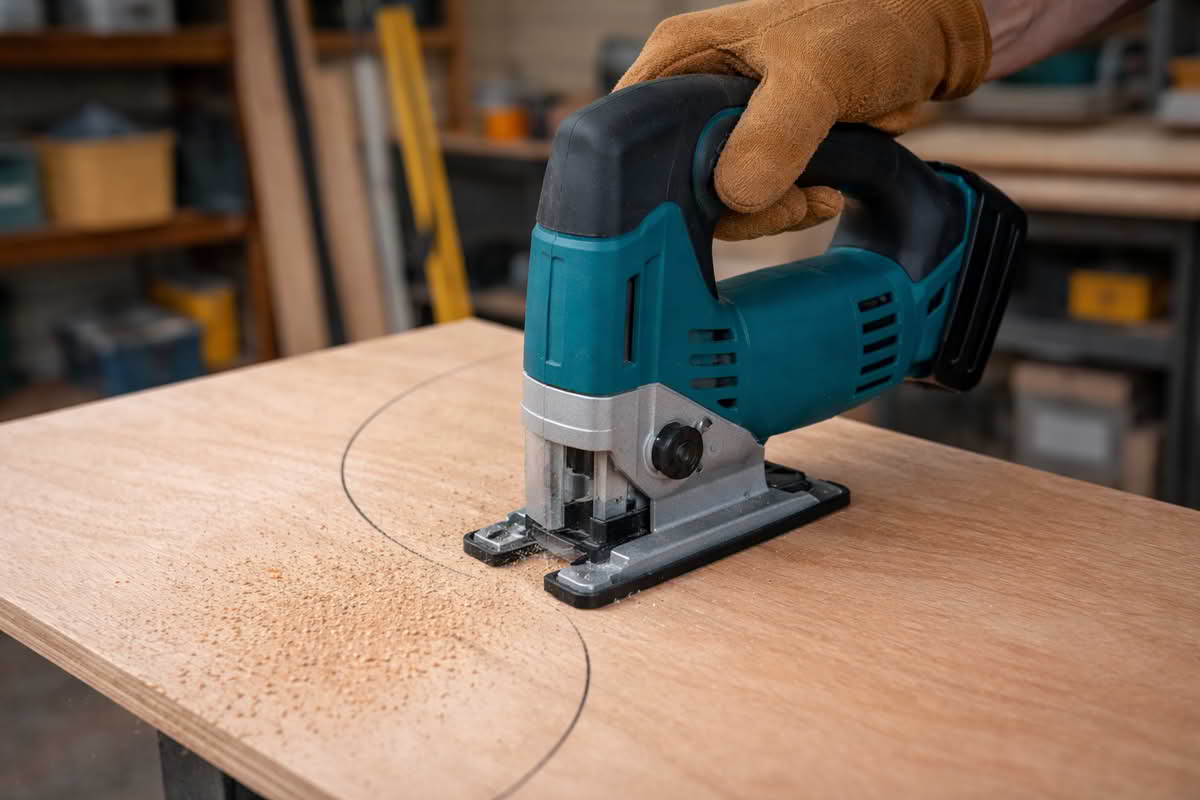
A jigsaw is most valuable when the cut is not simple enough for a circular saw and not small enough for a hand tool to feel efficient. Its core strengths are curves, inside cutouts, irregular trimming, and lighter project work where maneuverability matters more than brute cutting speed. This makes it especially useful for projects such as sink and countertop openings, rounded shelf corners, decorative or shaped boards, flooring and trim adjustments around obstacles, and general problem-solving cuts where a straight-line saw would be either clumsy or impossible to use well.
The category works best when you understand its real role. A jigsaw is not usually the fastest choice for long straight cuts, and it is not meant to replace a circular saw or miter saw for stock processing. Its advantage is flexibility. When the material must be shaped, not just divided, the jigsaw becomes much more important. That is why it often shows up as a practical second or third cutting tool rather than a first saw purchase. Once you own one, it tends to become the tool you reach for when a project stops being simple.
Control matters more than power here. A jigsaw that feels jumpy, obscures the cut line, or allows the blade to wander can make even soft material feel frustrating. For most homeowners, the quality question is not whether the tool can move the blade fast enough. It is whether the saw feels stable while following a line and whether it gives enough visual confidence to handle curves and cutouts without constant hesitation. That is why ergonomics and line-of-sight matter more in this category than many first-time buyers expect.
Jigsaws are strongest when the cut involves curves, cutouts, corners, or irregular shapes.
They complement straight-cut saws rather than replacing them.
Control and visibility usually matter more than raw speed in everyday use.
A good jigsaw should make shaping work feel manageable instead of unpredictable.
Blade choice also shapes performance dramatically. A jigsaw can feel rough or surprisingly refined depending on the blade matched to the material and desired finish. That makes it important not to judge the whole category from a poor blade pairing. Cleaner finish work, tighter curves, and reduced tear-out often depend as much on blade selection as on the saw itself. This is one reason jigsaws can frustrate beginners: the tool looks simple, but the result depends on setup, feed pace, and blade choice more than the category initially suggests.
Another reason the category remains useful is access. Many cuts happen in awkward places where a larger saw simply does not fit well or cannot begin the cut without extra setup. A jigsaw is often the tool that solves those gaps. It can enter from a drilled starter hole, move through confined shapes, and adapt to material that is already partly installed. For repair, fitting, and adjustment work, that flexibility can matter more than speed.
The best jigsaw purchase is usually the one that feels calm in motion. If it tracks visibly enough to follow your line, handles expected materials without excessive vibration, and does not make every irregular cut feel like guesswork, it will stay relevant long after the novelty of the purchase wears off.
A jigsaw earns its place when projects require curves, inside cutouts, and shape-following cuts that larger straight-cut saws handle poorly.
Corded, cordless, and orbital tradeoffs
The first major choice in this category is usually corded versus cordless. Corded jigsaws still make a lot of sense because they are often used for slower, more deliberate cutting sessions where consistent power and lower cost matter more than total freedom of movement. If most of your work happens in a garage, workshop, or near accessible power, a corded model can be a practical low-regret option. It avoids battery management, often costs less for similar performance, and works well for users who treat the jigsaw as a deliberate project tool rather than a quick-grab roaming saw.
Cordless jigsaws solve a different set of problems. They are useful when projects happen outdoors, around installed fixtures, in unfinished spaces, or anywhere a cord becomes one more thing to route around while following a shape. That convenience is especially noticeable when working on larger panels, awkward cutouts, or jobs where moving the material is harder than moving the tool. But cordless ownership carries the same familiar tradeoffs: more weight, higher entry cost if the battery platform is new, and the need to think about runtime and charging even if jigsaw sessions are often moderate rather than continuous.
Orbital action is another important consideration. In simple terms, orbital motion makes the blade move more aggressively, which can speed cutting in some materials, especially wood. The tradeoff is that it can produce rougher results and reduce the refined control that many buyers actually need from a jigsaw. This is why orbital action should be viewed as a situational feature rather than an automatic upgrade. It is useful when faster material removal matters more than finish quality, but less helpful when tighter curves, cleaner cuts, or more careful shaping are the priority.
Corded jigsaws are often the strongest value when work happens near outlets and runtime consistency matters more than mobility.
Cordless models are most useful when cords complicate shape-following cuts or project setup.
Orbital action can improve cutting speed, but it may reduce finish quality and smooth control.
The best feature set depends on whether you value portability, cut refinement, or material removal speed most.
Weight and grip design matter more here than in some other saw categories because a jigsaw is guided through shapes rather than simply pushed along a line. A tool that feels top-heavy or vibrates excessively becomes tiring faster and can undermine cut accuracy. This is one reason smaller or well-balanced models often feel better in ordinary home use than feature-heavy tools that look more advanced on paper. The right balance can make curved and detail cuts feel more deliberate and less like constant correction.
Base plate quality and adjustment should not be ignored either. The saw needs a stable base that glides well enough to guide the cut without wobbling across the material. If bevel adjustments are difficult or feel vague, angled cuts can become more frustrating than they need to be. Even buyers who do not expect to use bevel settings often should care whether the adjustment system feels secure, because looseness in that area can affect overall confidence in the tool.
Dust management and line visibility also influence the experience. Since jigsaws are often used for shape work and cutouts, being able to see the line matters a great deal. Some tools manage sawdust and sightlines better than others, and that difference can be more meaningful in daily use than another incremental speed setting. A jigsaw is easiest to trust when the tool lets you see what the blade is doing without constantly shifting your stance or pausing to clear dust.
The main tradeoff pattern is this: corded models tend to favor value and consistency, cordless models favor flexibility, and orbital action favors faster cutting when finish quality matters less. The right combination depends on where and how you plan to use the tool, not on whether one option sounds more advanced in isolation.
Choosing for beginners, finish work, and general home projects
Beginners usually do best with a jigsaw that emphasizes control, clear sightlines, and easy adjustments over aggressive feature lists. A first-time user benefits more from a tool that tracks calmly and makes the line readable than from one that promises maximum cutting speed. Since many beginner projects involve shelves, simple cutouts, laminate or panel fitting, and small shape cuts, the safest path is often a model that feels approachable and stable rather than overly forceful.
For finish-oriented work, the priorities shift slightly. Clean edges, low tear-out, and manageable vibration become more important than rapid cutting. This is where a jigsaw with smoother behavior and sensible speed control tends to matter more than raw power. The buyer who expects to cut visible panels, trim pieces, shelving ends, or decorative project components should care more about cut refinement than about how quickly the saw can move through rough stock. A jigsaw does not need to feel weak to be good at this kind of work. It needs to feel precise enough that the user can trust it near finished material.
General home-project users often need a middle-ground option. Their work may include occasional cutouts, some curves, a few rougher cuts, and repair-oriented adjustments where portability and flexibility matter. For this group, a broad all-around jigsaw makes the most sense. It should be comfortable enough for irregular cuts, versatile enough for different household materials, and simple enough that it can sit for a few weeks and still feel intuitive the next time it comes out. That kind of everyday usability often matters more than premium-level refinement.
Beginners usually benefit most from a jigsaw that feels stable, visible, and easy to guide through simple curves and cutouts.
Finish-oriented users should prioritize cut refinement, smoother operation, and better line control.
General home-project users need a balanced tool that handles both occasional rough work and more careful shaping tasks.
The best jigsaw category depends on whether your cuts lean toward convenience, refinement, or frequent mixed-use flexibility.
It is also worth being honest about frequency of use. A jigsaw is extremely helpful when needed, but many homeowners do not use one weekly. That does not make the category a poor choice. It means that approachability matters. A tool that requires too much relearning every time you pick it up tends to stay on the shelf. A simpler, more intuitive jigsaw may deliver better long-term value than a model chosen mainly for features you will not use often enough to internalize.
Buyers should also think about project sequence. If the jigsaw will be your only cutting tool for a while, choosing a more versatile and stable model becomes more important. If it will sit alongside a circular saw or miter saw, then it can be selected more specifically for curves, cutouts, and trim adjustments. That broader tool context changes what “best” means. A jigsaw does not have to do everything well. It has to do its particular jobs reliably enough that you trust it when those jobs appear.
The lowest-regret purchase is usually the one that aligns with how often you really need irregular cuts and how much finish quality matters in those moments. If the tool tracks well, stores easily, and feels useful rather than fussy, it will hold its place in the tool kit far more effectively than a feature-heavy model chosen mainly because it seemed more complete.
Final Recommendations — choose the jigsaw that makes shape work feel predictable
A good jigsaw should make curves, cutouts, and awkward trimming jobs feel more manageable, not more uncertain. For most readers, the best choice is a model that balances visibility, smooth handling, and enough cutting flexibility to handle normal home materials without excessive vibration or unnecessary complexity. Speed and feature count matter, but they should support control rather than replace it.
Choose a beginner-friendly jigsaw if you mainly want calmer handling for shelves, cutouts, panel fitting, and first-time shaped cuts.
Choose a corded model if most work happens near power and you want straightforward value with fewer battery tradeoffs.
Choose a cordless model if mobility and easier positioning around installed materials or outdoor projects matter more.
Prioritize line visibility, manageable vibration, and cut control over buying the most feature-heavy saw in the category.
The lowest-regret jigsaw is usually the one that feels readable in motion. If it helps you follow the line, adapt to awkward shapes, and stay calm around visible cuts, it will be far more valuable over time than a more aggressive model purchased mainly because it sounded more capable at the point of sale.