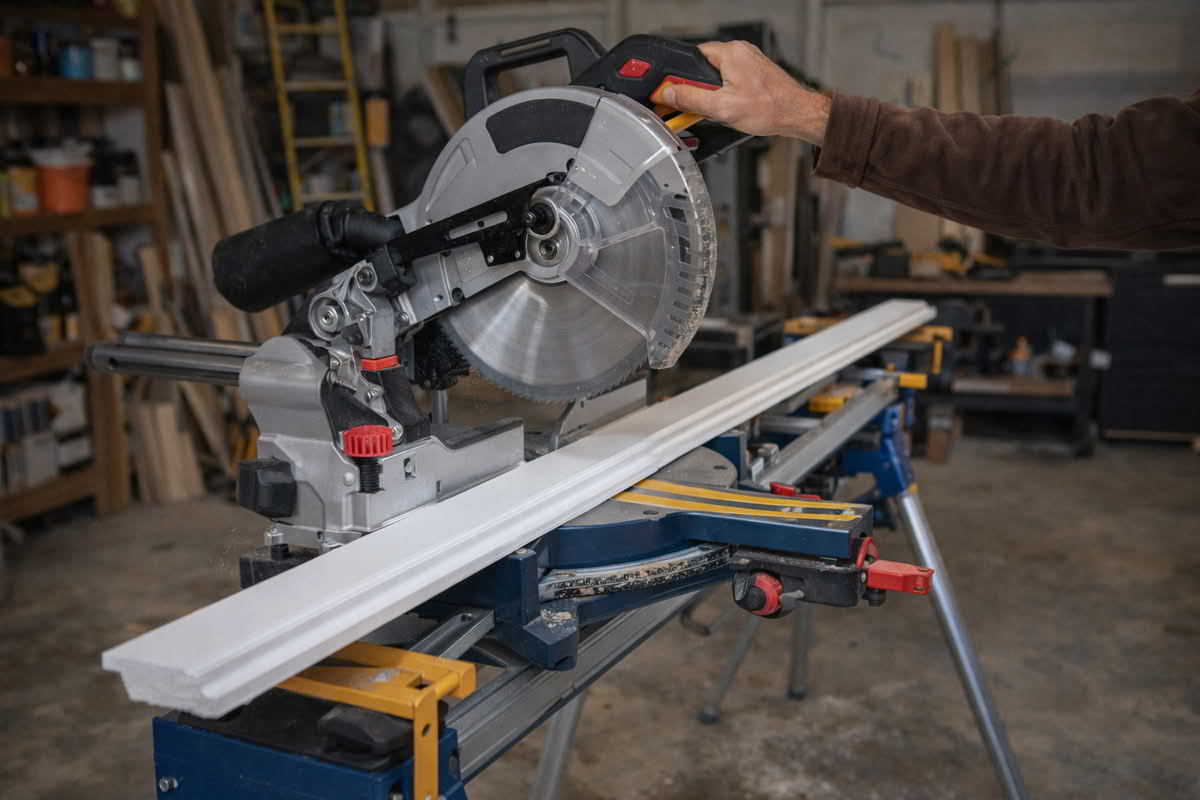
Miter Saw Buying Guide for Trim, Framing, and Home Workshop Projects
A miter saw is one of the clearest “step-up” purchases in a home tool setup because it solves a very specific kind of frustration: making repeatable crosscuts and angle cuts without wrestling longer boards through less suitable tools. That makes it powerful, but it also makes it easy to overbuy. Many shoppers assume they need the largest blade, the widest slide, or the heaviest saw they can afford because the category feels workshop-oriented and serious. In practice, the better question is whether the saw fits the kinds of trim work, framing cuts, shelving builds, deck repairs, and home projects you are actually likely to do. A miter saw takes up space, shapes your work area, and often becomes a semi-permanent part of a garage or workshop. The best purchase is not simply the saw with the biggest reach. It is the one that gives you enough capacity, accuracy, and usability without turning storage, setup, or day-to-day ownership into a burden.
What a miter saw is best used for
A miter saw earns its place when a project involves repeated crosscuts, angled cuts, and stock that benefits from fast, predictable setup. That makes it especially useful for trim, molding, framing components, decking boards, shelving parts, simple furniture builds, and home improvement work where you want cleaner repeatability than a circular saw usually offers on its own. The category makes sense because it turns many common measuring-and-cutting tasks into a much more efficient workflow. Instead of marking, aligning, and free-guiding each cut with a handheld saw, you bring the material to a fixed cutting point and repeat the process with more consistency.
That consistency is the real value. Many buyers focus on the blade or motor first, but what makes a miter saw feel worth owning is how much easier it becomes to make accurate repeat cuts once the tool is set up. When you are cutting several trim boards to related lengths, repeatedly crosscutting framing stock, or dialing in angle cuts for corners, that repeatability saves time and reduces error in a way that smaller cutting tools usually do not. It also lowers the mental load of the project. You spend less time improvising cut setups and more time moving through the work.
This is also why the tool is not automatically ideal for every cutting job. A miter saw is not the best answer for breaking down full sheet goods, navigating curves, or handling installed material in tight spaces. It shines when the stock can be carried to the saw and supported well. That means its usefulness depends partly on your project style. Buyers who mostly do repair cuts in place may not benefit as much as buyers who repeatedly process boards, trim, and project lumber in a garage, driveway, or dedicated work area.
Miter saws are strongest when a project involves repeated crosscuts and angle cuts on boards, trim, or dimensional stock.
The main advantage is repeatability, not just raw cutting speed.
The category works best when material can be brought to the saw and supported properly.
A miter saw complements other saws rather than replacing sheet-goods or shape-cutting tools.
Accuracy expectations should also stay realistic. A miter saw should feel dependable and easy to set, but many project outcomes still depend on material support, blade choice, measuring discipline, and how carefully the workpiece is held in place. The best buying decision will support accuracy, but it cannot replace setup habits. That is why practical features like stable fences, readable scales, and adjustments that lock cleanly matter more than flashy claims about precision. They help ordinary users make fewer avoidable mistakes.
Another reason the category is appealing is project confidence. Certain jobs feel awkward or slow until a miter saw is involved. Baseboard, casing, deck boards, simple framing, and garage shelving are all examples where the tool can make the work feel more structured and less improvised. That change in workflow is often what justifies the purchase. A good miter saw does not merely cut faster. It makes repetitive board work feel organized.
The best miter saw purchase is usually the one that aligns with the types of stock you actually cut and the frequency with which repeated angle and crosscuts show up in your projects. If that pattern is real, the tool becomes far more than a niche workshop item. It becomes one of the clearest ways to reduce friction in home project work.
A miter saw is most valuable when projects involve repeated trim, framing, or board cuts that benefit from stable setup and repeatable angles.
Size, slide, and workspace tradeoffs
The largest buying mistake in this category is assuming maximum capacity is automatically the best long-term value. More capacity often means more bulk, more weight, more cost, and greater demand on your work area. A large sliding saw may sound like the safest choice because it can handle wider boards and more ambitious future projects. Sometimes that is true. But it can also create a daily ownership penalty if your actual work area is limited, if the saw must be moved often, or if most of your cuts involve more modest stock.
Sliding versus non-sliding is usually the central decision. A sliding design expands crosscut capacity and makes the saw more flexible for wider material. That matters if shelving parts, wider boards, deck components, or larger trim pieces are regularly part of your projects. The tradeoff is footprint. Sliding saws generally need more rear clearance or a design that still demands more overall space, and they add weight and complexity. A non-sliding saw is often simpler, more compact, and easier to live with, especially when the project mix is built around narrower stock, common trim, and ordinary homeowner work.
Blade size follows the same pattern. Larger blades usually increase cut capacity, but they also increase saw bulk and can push buyers into a tool category better suited to heavier workshop use than everyday home projects. Smaller or more compact saws often feel more approachable, easier to store, and easier to place on a bench or stand. For many households, the right question is not whether the saw can cut the widest board imaginable. It is whether it covers the material you actually use while fitting your workspace without constant compromise.
More capacity only adds value when your real project material actually needs it.
Sliding saws offer more versatility, but they also require more space, weight tolerance, and storage commitment.
Compact non-sliding models often make more sense for narrower stock and lighter homeowner use.
Blade size should be chosen around typical work, not around the most ambitious cut you might one day attempt.
Workspace fit matters more with miter saws than with many other tools because the saw influences the entire area around it. You need room not only for the tool itself, but also for material support to the left and right, front clearance for handling boards, and enough space to operate comfortably. A saw that is theoretically capable but awkward in your actual garage or shop can become frustrating enough that you avoid using it for smaller jobs. That is a real ownership cost, and many buyers underestimate it.
Portability is another tradeoff. Some buyers need a saw that can be moved onto a bench, stand, driveway, or patio and then packed away again. Others can leave the tool semi-permanently set up. If the saw will move often, weight and compactness become much more important. A larger sliding model may offer more reach, but it also becomes more of a commitment every time you want to take it out or store it. In contrast, a smaller saw may be used more often simply because setup feels less burdensome.
Fence stability, detent clarity, and bevel or miter adjustment feel should also influence the decision. These are the details that shape whether a saw feels precise in day-to-day use. A saw does not need every advanced feature to be useful, but it does need settings that are readable, predictable, and easy to lock with confidence. A machine that is technically capable but annoying to set will create more errors than one that is slightly simpler but easier to trust.
The big-picture tradeoff is straightforward: sliding and larger saws buy more capacity, while smaller and non-sliding saws usually buy easier ownership. The right balance depends on whether your projects regularly justify the added reach or whether the simpler tool would be more practical for the work you actually do most.
Choosing for homeowners, trim projects, and heavier shop use
Homeowners with a broad mix of weekend projects usually benefit most from a miter saw that feels capable but not excessive. If you expect shelving builds, garage work, deck repairs, closet upgrades, trim replacement, or occasional molding work, a compact or mid-size saw often makes the most sense. It gives you the core advantage of repeatable crosscuts and angle cuts without demanding the kind of space and carrying effort that larger shop-oriented saws impose. In this ownership profile, convenience and readiness matter almost as much as capacity.
Buyers focused on trim and finish work should care more about adjustment confidence, stable support, and predictable cut behavior than sheer size alone. Trim projects reward consistency. That means the saw should be easy to dial in and comfortable to use repeatedly rather than simply broad in specification. A trim-focused buyer may still want sliding capacity depending on board width and project scope, but the emphasis should remain on how cleanly the saw supports careful work instead of how much stock it can theoretically process.
Heavier workshop or remodeling users have a different threshold. If your projects regularly include framing components, larger stock, repeated angle work, wider boards, or sustained project volume, then greater capacity becomes easier to justify. A larger sliding saw may genuinely save time and reduce workaround cuts in that environment. The key difference is frequency. A feature that is merely reassuring in occasional home use can become genuinely valuable when it solves the same problem over and over again.
General homeowners usually benefit from a saw that balances repeatable accuracy with manageable size and storage demands.
Trim-focused buyers should prioritize adjustment confidence, stable support, and consistent cut behavior.
Heavier shop or remodeling users can justify larger sliding saws when wider stock and repeated capacity demands are routine.
The best saw category depends on how often project volume actually turns more capacity into less friction.
Another important question is whether the saw is likely to stay set up. If you have a bench, stand, or dedicated zone where the tool can remain ready, a larger model becomes more realistic. If the saw must be carried out for each project and stored after every session, practicality changes. A smaller model that gets used often may deliver more value than a larger one that always feels like a setup event. This is one of the most common sources of buying regret in the category: underestimating how much physical and spatial commitment the saw creates.
There is also an upgrade-path question. Some buyers eventually add roller stands, support wings, better blades, dust control, and dedicated benches. Others simply need a saw that handles ordinary board work a few times a month. The right purchase should reflect which ownership path is more likely. A homeowner saw can remain useful for years if it matches the actual rhythm of projects. A larger workshop saw only becomes the better value when the workflow around it is real, not aspirational.
The lowest-regret buying approach is to choose a miter saw for the projects you are actually prepared to do, not for the imaginary workshop life you may or may not build later. If the saw fits your space, supports the stock you truly cut, and feels easy enough to use that it becomes part of your normal workflow, it will almost always be the smarter purchase.
Final Recommendations — choose the saw that fits both your cuts and your workspace
A good miter saw should reduce friction in board work by making repeated crosscuts and angle cuts more predictable, not by simply adding maximum capacity to your garage. For most readers, the best choice is a saw that covers common home project material, fits the available workspace, and stays usable enough that setup does not feel like a project of its own. Capacity matters, but only when it matches the work you actually do.
Choose a compact or homeowner-focused miter saw if your projects center on trim, shelves, deck boards, and general board cutting without a dedicated shop setup.
Choose a sliding saw if wider stock and repeated crosscut capacity genuinely show up often enough to justify the added footprint and weight.
Choose a larger workshop-oriented model only when your project volume and material width make the extra capacity a repeated advantage.
Prioritize workspace fit, adjustment confidence, and everyday usability over buying the largest saw for occasional future ambitions.
The lowest-regret miter saw is usually the one that feels integrated into your actual project life. If it handles your normal stock, fits your setup, and makes repeated cuts calmer and more accurate, it will provide far more real value than a bigger model chosen mainly because it seemed like the safer long-term bet.