Wire Shelving Buying Guide: How to Choose Practical Shelves for Real-World Storage
Wire shelving is one of the most adaptable storage categories in the home, but that flexibility can make it deceptively easy to buy the wrong setup. Many buyers assume all wire shelves are basically interchangeable, then end up with units that wobble under load, rust in damp areas, waste vertical space, or fail to fit the bins and supplies they actually need to store. Good wire shelving is not just about finding a rack with enough tiers. It is about matching finish, shelf spacing, load support, and footprint to the room and the way the shelves will be used over time. Whether the goal is better pantry storage, a cleaner utility area, or tougher organization in a garage or laundry room, the right choice is the one that stays stable, adapts to changing categories, and remains easy to live with after the first organizing project is done.
Construction and Load Logic Matter More Than Shelf Count
The most common mistake in this category is shopping by appearance and tier count instead of by structural quality. Wire shelving often looks visually similar across price points, which leads many buyers to assume the cheaper unit will perform close enough to the better one. In practice, small differences in steel thickness, connector design, post stability, and shelf rigidity can create very different results once the shelves are actually loaded. A unit that seems acceptable when empty may feel much less reassuring after it holds pantry staples, cleaning supplies, tools, appliance boxes, or stacked storage bins.
Load capacity should be treated as a practical guide, not just a headline number. Some shelving units advertise generous limits, but those figures usually assume evenly distributed weight and correct assembly on a stable floor. Real households rarely load shelves so neatly. Weight tends to cluster in bins, canned goods, detergent bottles, small appliances, paper goods, or awkward utility items. What matters is not only the maximum amount the shelf can hold, but how confidently it supports concentrated everyday loads without sagging, shifting, or becoming awkward to trust.
Shelf construction changes that experience. Heavier-duty wire shelves tend to feel more planted and less springy under real use. Lighter units may still be perfectly acceptable for linens, paper products, or lightly loaded household overflow, but they can become frustrating when buyers expect them to perform like utility shelving for denser storage. This is one reason wire shelving works well across many rooms but should not be chosen as though every room creates the same demands. A pantry, a garage, and a laundry area may all use wire shelves, but they do not ask the same things of them.
Choose heavier-duty wire shelving when you expect dense loads such as canned goods, cleaning chemicals, tools, or stacked bins.
Choose lighter-duty systems only when the shelf contents are truly modest and unlikely to become heavier later.
Choose structural margin over advertised maximum capacity if the shelves will see mixed household use over time.
Post and connection design also deserve more attention than many buyers give them. Shelving that relies on simple snap-together collars or adjustable sleeves can be very practical, but build quality varies. Better systems feel secure once assembled and leveled. Weaker ones may remain slightly unsettled, especially on imperfect floors or when weight is added unevenly. This does not always show up immediately. Sometimes the disappointment arrives after a few months, once the shelf is fully integrated into daily storage and no longer easy to replace.
Another issue is shelf surface behavior. Wire construction improves airflow and visibility, which is one of the category's core strengths. But open grids also mean smaller items can tip, snag, or rest unevenly if the shelf spacing and storage containers are poorly matched. Buyers who plan to store loose household goods, small bottles, or irregular packages may eventually need liners, trays, or bins to make the system work more cleanly. That does not make wire shelving a bad choice. It simply means the shelving should be evaluated as part of a full storage system rather than as a stand-alone object.
Wire shelving performs best when shelf strength matches the actual storage load, not just the visual size of the unit.
Finish, Fit, and Environment Determine Where Wire Shelving Works Best
One reason wire shelving appears in so many homes is that it can adapt to different rooms without feeling overly specialized. But the environment matters. A chrome finish may look clean and bright in a pantry, closet, or utility room, yet a darker coated finish may feel better suited to garages, laundry spaces, or work areas where visual polish matters less than reduced glare and a more subdued look. Appearance is only part of the decision, though. Finish also affects how the shelving holds up in humidity, dust, moisture, and rougher day-to-day handling.
Moisture exposure is especially important. Wire shelving is often recommended for damp or variable spaces because it allows airflow and tends to collect less trapped dust than solid shelves. That is useful, but it does not mean every finish performs equally well everywhere. In laundry areas, utility rooms, basements, mud-adjacent spaces, or garages with temperature swings, corrosion resistance becomes more relevant than it might be in a dry pantry. Buyers who ignore this often end up with shelving that still functions, but no longer feels as clean or durable as expected.
Footprint and depth are just as important as finish. Deep shelves can appear efficient because they hold more, but excess depth often creates dead storage at the back. Narrower units may actually work better in hall-adjacent spaces, closets, smaller pantries, or tight utility rooms because they preserve reach and visibility. In broader spaces, deeper units can make sense for bins or bulk supplies, but only if the storage categories justify that depth. Wire shelving tends to work best when the shelf dimensions are chosen around actual storage containers and access habits rather than around the biggest unit that fits the wall.
Choose finishes based on both appearance and room conditions, especially where humidity or rough utility use is part of daily life.
Choose shelf depth around what you need to see and reach easily, not just around theoretical capacity.
Choose proportions that preserve circulation space in pantries, laundry rooms, garages, and other narrow working areas.
Height can also create tradeoffs. Tall wire shelving makes excellent use of vertical space, but only if the upper tiers are reserved for lower-frequency items and the lower shelves remain usable for everyday categories. A unit that is technically spacious may still perform poorly if the most useful shelves end up blocked by oversized items or if the top levels become difficult to manage. This is especially true when buyers try to solve too many storage problems with one oversized rack.
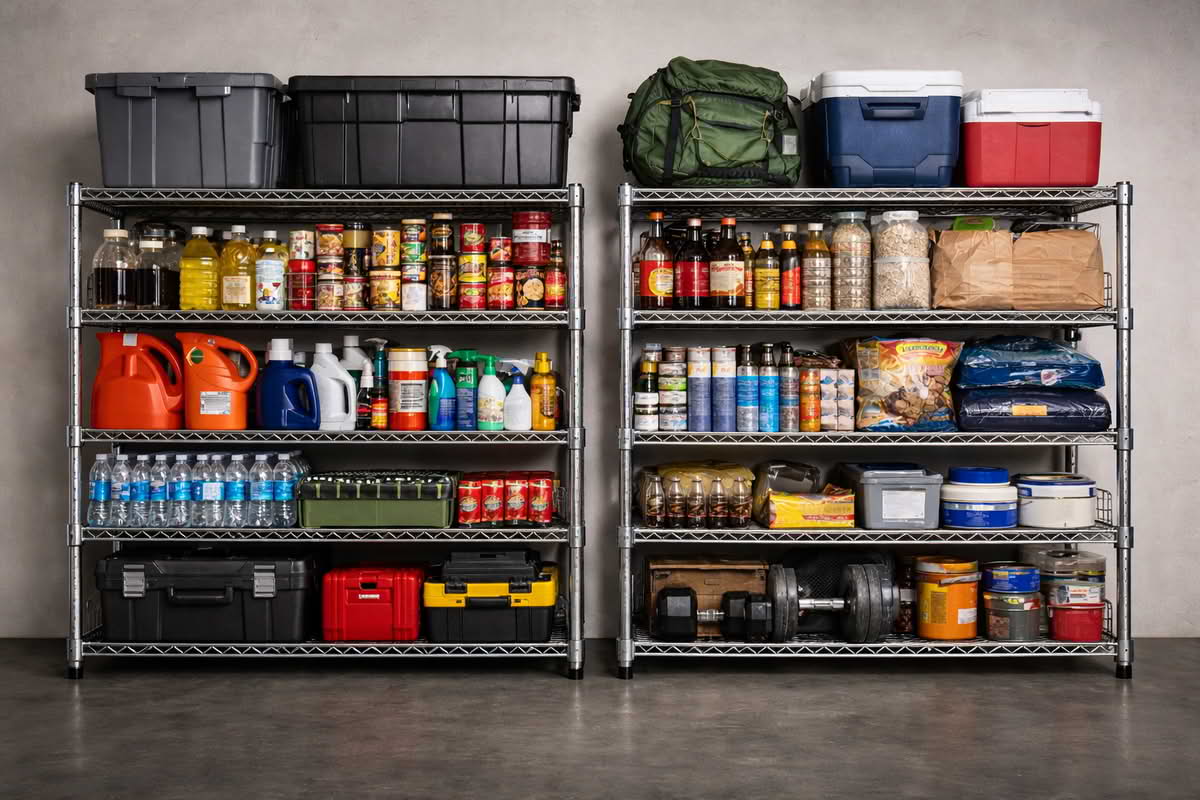
The room itself should shape the decision. In a pantry, wire shelving often works best when it supports visual inventory and clean category separation. In a laundry area, it may need to handle bottles, folded linens, baskets, and cleaning tools. In a garage, it may shift toward bulkier bins and more rugged household overflow. These are all valid uses, but they point to different ideal sizes, finishes, and strength levels. The best results usually come from treating wire shelving as room-specific infrastructure, not as a generic universal rack.
Shelf depth, finish, and room placement often determine whether wire shelving feels efficient and easy to maintain or simply oversized.
Adjustability, Access, and Long-Term Use Separate Good Systems From Temporary Fixes
The strongest reason to choose wire shelving is adaptability. Adjustable shelf positions allow a single unit to handle cans, baskets, folded linens, paper goods, small appliances, utility containers, or general storage bins without forcing everything into fixed vertical slots. That flexibility matters because most storage zones evolve. A shelf purchased for pantry overflow may later support kitchen appliances. A garage rack may eventually become a gardening station or a backup household storage wall. Buyers who choose a rigid layout often discover that the shelving solves today's problem but not the next one.
Shelf adjustability is especially useful when the storage mix is uneven. Tall cereal containers, short spice bins, cleaning jugs, and boxed supplies do not all need the same vertical clearance. When spacing can be changed with minimal effort, the shelving remains more relevant and less frustrating over time. It is one of the simplest ways to reduce wasted air space and avoid the common problem of one shelf being too cramped while the next has too much empty room.
Access matters just as much as adjustability. Wire shelving should make storage easier to see, sort, and maintain. If a unit is too deep, too crowded, or placed where items are hard to retrieve, it may still look organized while quietly making the room harder to use. This is especially common in pantries and utility zones where buyers focus on adding more storage volume without thinking enough about retrieval. Shelving should not force everything into layered stacks that have to be moved around to reach basic items.
Choose adjustable shelf spacing when the storage mix includes containers, loose goods, and categories that may change over time.
Choose layouts that keep frequently used items between easy reach levels instead of burying them on the floor or overhead.
Choose wire shelving when visibility and airflow are strengths, not when full concealment or dust isolation is the main goal.
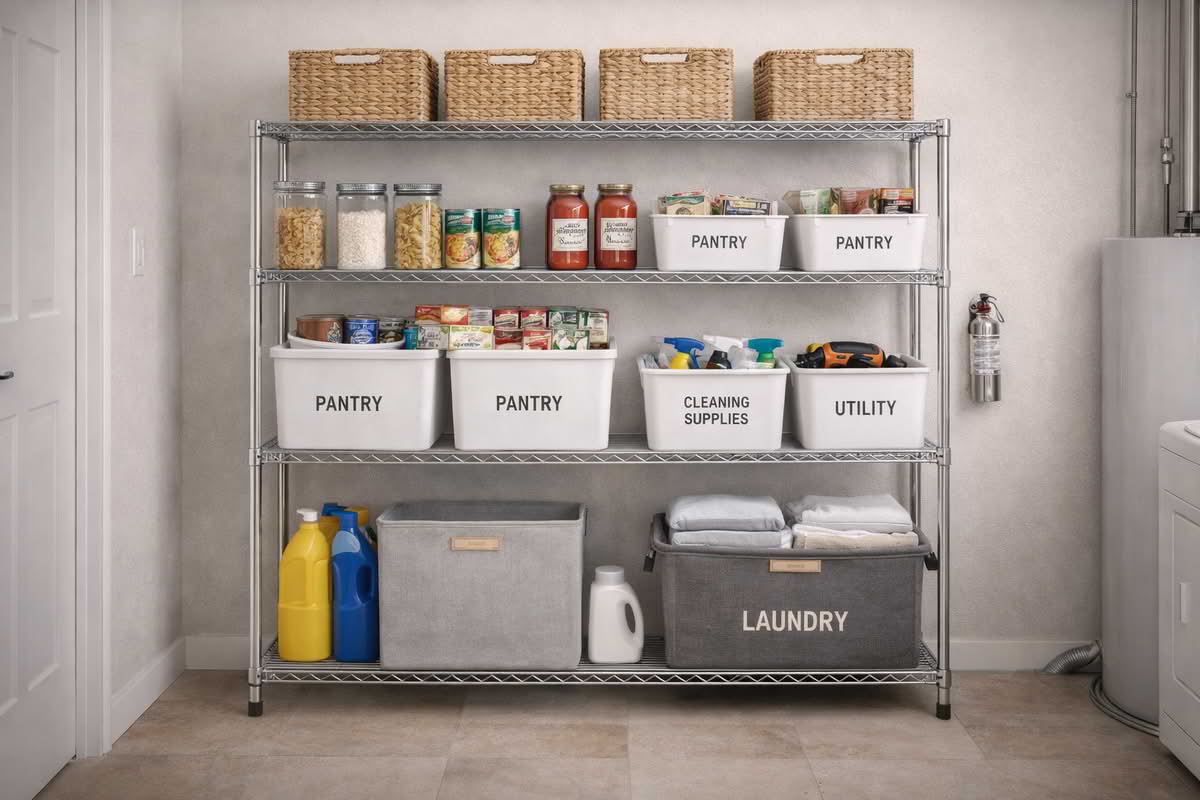
Another long-term question is how the shelves interact with the rest of the storage system. Wire shelving rarely does all the work by itself. It often performs best when paired with bins, labels, trays, or baskets that create category boundaries. Buyers sometimes blame the shelving when the real issue is that the storage plan never defined where smaller items should go. Wire shelves are excellent at holding organized groups, but less effective when asked to control loose clutter without any containment.
This is also where aesthetics meet function. Some households are perfectly comfortable with visible storage. Others prefer a cleaner, calmer appearance. Wire shelving can support both, but the difference usually comes down to discipline and container choice. Matching bins or baskets can make an open shelf system feel deliberate rather than messy. Without that supporting logic, open storage can turn visually noisy even when it is technically organized. The right purchase decision considers not just what the shelves can hold, but whether the household will maintain open storage well.
In the long run, the best wire shelving purchases usually share three traits: enough strength for the real load, enough adjustability to stay useful, and a footprint that fits the room without making it harder to navigate. When those conditions are met, wire shelving works as reliable infrastructure rather than temporary organizing hardware. It becomes the kind of storage that quietly keeps serving new purposes as the household changes.
Final Recommendations — Choosing Wire Shelving With Fewer Regrets Later
The best wire shelving is the unit that matches the room, the load, and the storage behavior it needs to support. Buyers usually get better results when they stop thinking in terms of generic shelf tiers and start thinking in terms of real categories, real containers, and real daily access. A shelf that is slightly better matched to how you live will usually outperform a larger or cheaper unit that only looks right in isolation.
Choose heavy-duty wire shelving when you need dependable support for dense household goods, bins, or utility storage.
Choose more compact wire shelving when visibility, reach, and room clearance matter as much as total capacity.
Choose corrosion-resistant finishes when the shelves will live in damp, variable, or rougher utility environments.
Choose adjustable systems when you want storage that can evolve instead of locking one room into a fixed shelf layout.
A low-regret wire shelving decision usually leaves room to adapt. It supports current storage needs without becoming obsolete as categories shift or rooms change function. When strength, fit, and adjustability all work together, wire shelving becomes one of the most useful and durable storage tools in the home.