Plastic and Resin Shelving Buying Guide: How to Choose Practical Storage for Damp and Utility Spaces
Plastic and resin shelving is often chosen for the right reason but the wrong expectations. Buyers usually want something affordable, easy to assemble, and less vulnerable to moisture than wood-based shelving. Those are real advantages, especially in laundry rooms, basements, garages, and utility areas. The problem is that many people assume all plastic shelving works the same, then load it like heavy-duty steel storage or expect it to feel rigid under awkward household weight. Good plastic and resin shelving is not about squeezing the lowest-cost shelf into any open corner. It is about matching shelf size, material thickness, load expectations, and room conditions to the type of storage you actually need. The best choice usually delivers dependable utility in damp or messy spaces without overpromising strength it was never designed to provide.
Where Plastic and Resin Shelving Makes Sense — and Where It Does Not
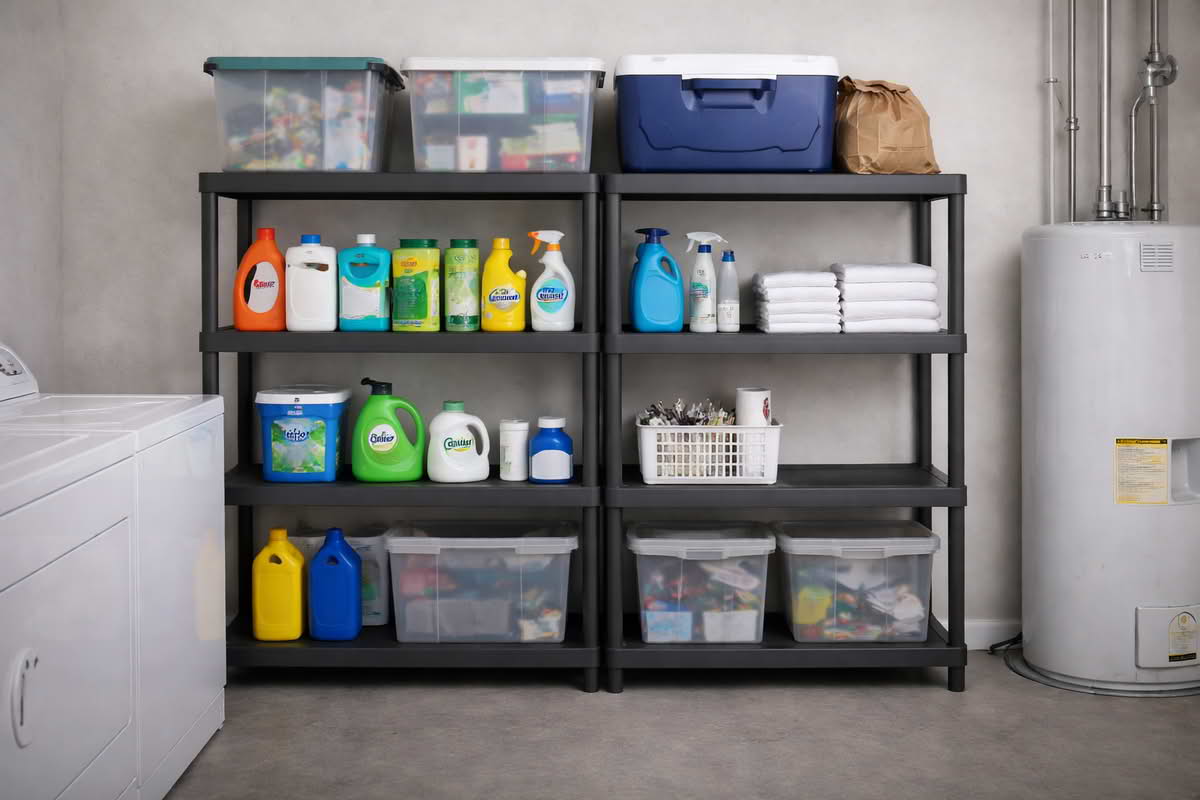
Plastic and resin shelving works best when the environment is harder on traditional materials than the stored items are on the shelf itself. That distinction matters. In damp basements, laundry areas, mud-adjacent utility spaces, or garages where moisture, dirt, and temperature changes are part of everyday life, plastic shelving can be a more practical choice than wood composites or lower-quality metal finishes. It is often easy to wipe down, less likely to rust, and less vulnerable to swelling or surface damage from ordinary moisture exposure. That makes it useful in spaces where maintenance simplicity matters as much as appearance.
The problem begins when buyers treat plastic shelving as a universal solution instead of a room-specific one. A shelf that performs well for detergents, paper goods, cleaning products, gardening supplies, or light household overflow may perform poorly if it is suddenly asked to hold dense tools, stacked canned goods, heavy fluid containers, or tightly packed storage totes. Resin shelving is often selected because it feels low-stress and convenient, but convenience does not erase material limits. When the storage load grows heavier over time, disappointment usually follows.
This is why the category is strongest in lighter-duty and medium-duty roles. Utility rooms, laundry areas, covered outdoor zones, pantry overflow, pool storage, and general household organization are often good matches. A workshop wall full of concentrated hardware or a garage corner loaded with automotive supplies may not be. The smarter question is not whether plastic shelving can hold your current items one afternoon. It is whether it will still feel trustworthy after repeated use, shifting categories, and the tendency of storage zones to accumulate more weight than originally planned.
Choose plastic or resin shelving when moisture resistance and easy cleanup are central to the room.
Choose it for lighter and medium household categories rather than dense, tool-heavy, or heavily concentrated storage loads.
Choose it when the environment is more challenging than the stored items, not when both conditions are demanding.
Another reason this category appeals to many households is ease of assembly. Plastic shelving is often less intimidating to build and reposition than heavier metal systems. That can be a real advantage in flexible storage areas where you may want to move or rework the layout later. But easy assembly can create false confidence. Just because a shelf goes together quickly does not mean it should be expected to behave like a rigid permanent rack. The best results come when buyers appreciate the category for what it does well rather than asking it to imitate heavier-duty storage infrastructure.
Room visibility also matters. Open plastic shelving is usually more functional than decorative. In some homes, that is perfectly fine, especially in spaces where durability and cleanup matter more than visual refinement. In others, it can look more utilitarian than expected. That is not necessarily a problem, but it does mean the shelf may work best in secondary spaces rather than in highly visible living areas unless paired with baskets, matching bins, or a more disciplined organization plan.
Plastic and resin shelving often performs best in utility-focused spaces where wipe-clean surfaces and moisture tolerance matter more than premium appearance.
Strength, Size, and Shelf Design Determine Whether It Feels Reliable
Once the room fit makes sense, the next question is whether the shelf design matches the actual storage behavior. Buyers often underestimate how quickly storage weight adds up. A few detergent bottles, stacked paper towels, pet supplies, a bucket of cleaning tools, and a couple of bins can push a supposedly simple shelf system into a much more demanding role. This is where design details become more important than the category label itself.
Shelf thickness and support geometry play a major role in how confident the unit feels. Some plastic shelving uses broader molded shapes and better under-shelf reinforcement that help reduce flex. Others rely on thinner shelf planes and lighter posts that may be adequate for modest use but feel less stable once fully loaded. The difference may not be obvious in listing photos. It often appears only after assembly, when one unit feels planted and the other feels like it should be treated cautiously.
Shelf size also changes the experience. Wider shelves can hold larger bins and bulkier supplies, but they also increase the chance of noticeable flex if the construction is not strong enough. Deeper shelves offer more volume, yet they can turn into clutter catchers when used for mixed small items. As with most shelving categories, bigger is not automatically better. A somewhat smaller shelf with better rigidity and more appropriate depth often outperforms a larger one that encourages overloading or hides too much material at the back.
Choose shelf dimensions that match actual container sizes and common household categories rather than the biggest unit that fits the wall.
Choose better-supported shelf designs when you expect mixed loads that may become heavier over time.
Choose modest depth when visibility and easy retrieval matter more than raw volume.
Post stability and floor contact matter too. Plastic shelving often ends up in garages, basements, and utility rooms where floors are not perfectly even. A design that looks acceptable in a product image may wobble slightly once placed on concrete or tile with minor irregularities. That does not make the shelf unusable, but it changes how comfortable people feel loading it. A shelf that never quite settles tends to invite underuse on higher tiers and skepticism around anything breakable or moderately heavy.
Adjustable shelves can improve long-term usefulness, but not all plastic systems offer the same flexibility. Fixed shelf spacing is workable for predictable categories, yet many households eventually want to store tall bottles, short bins, folded linens, boxed supplies, or gardening items in the same unit. When spacing is locked, one tier often becomes too cramped while another wastes vertical room. Adjustability is particularly valuable in a category where the shelf is often chosen for general-purpose use rather than for one narrow storage task.
Another overlooked point is temperature and environmental stress. While plastic and resin are often favored in moisture-prone spaces, not all shelves handle prolonged heat, cold, or rough impact equally well. A sheltered laundry room is different from a detached garage or semi-exposed covered area. Buyers should be realistic about whether the shelf will live in a stable indoor environment or a more demanding one where material rigidity and long-term wear may matter more.
Plastic shelving tends to work better when loads are organized into predictable categories and shelf spacing is matched to real container sizes.
Moisture Resistance, Maintenance, and Long-Term Use Are the Real Value Drivers
The real strength of plastic and resin shelving is not that it is universally strong. It is that it often remains practical in spaces where simpler maintenance and moisture tolerance matter more than premium structural performance. This makes it especially attractive for households that need shelves in areas exposed to humidity, routine spills, muddy shoes, wet cleaning tools, plant supplies, or laundry overflow. In those environments, a shelf that is easy to wipe clean and less fussy about moisture can be the better long-term decision even if it is not the strongest option available.
That advantage becomes more meaningful over time. Wood-based shelves can swell, stain, or deteriorate in damp conditions. Some metal finishes may show wear or corrosion in challenging environments. Plastic and resin often avoid those specific headaches, which is why buyers tend to remain satisfied when they choose the category for the right reason. It solves a maintenance problem while still providing enough storage utility for the room.
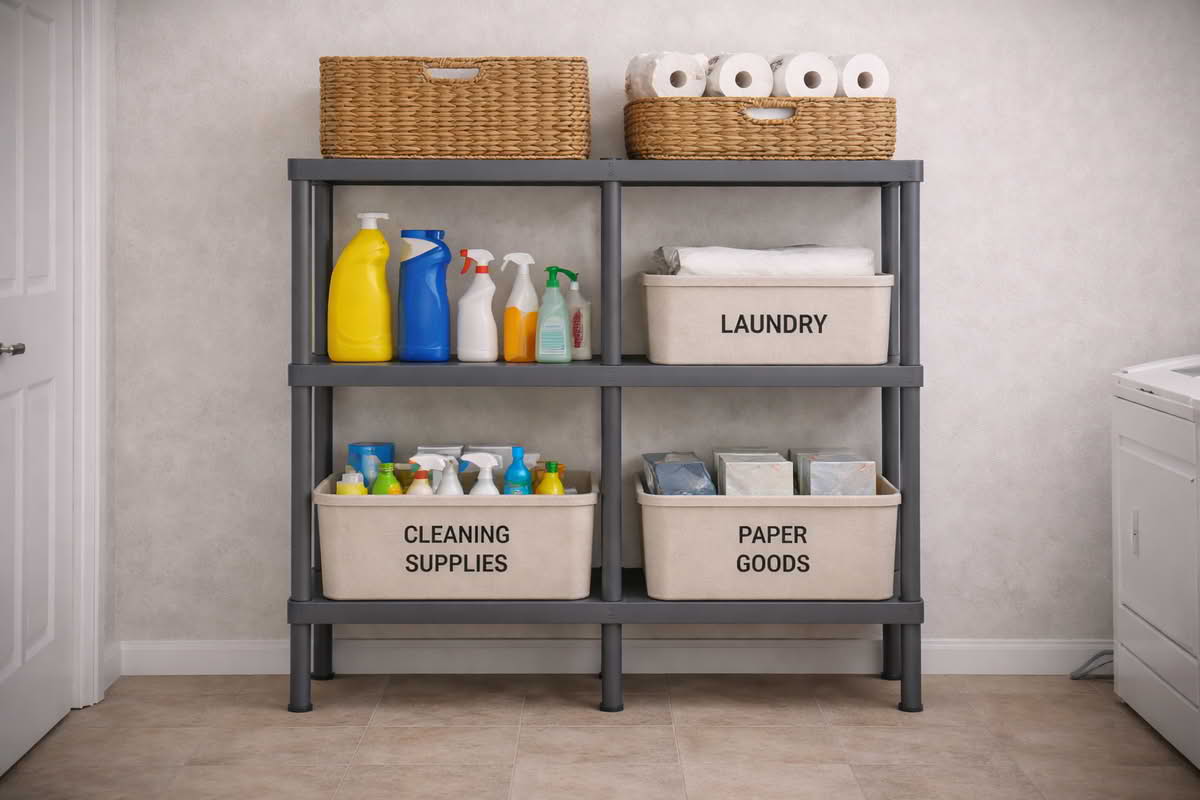
But long-term success still depends on category discipline. Plastic shelving is at its best when used for items that are reasonably light, consistent, and easy to group. Laundry supplies, paper products, pet-care items, cleaning products, garden accessories, pool supplies, or labeled household bins usually fit that logic well. The shelf stays cleaner, the categories remain visible, and the system is easy to reset after use. Problems usually begin when the shelving becomes a catch-all for everything the home does not know where to put.
Use plastic shelving where cleaning ease and moisture tolerance are meaningful daily benefits.
Use consistent bins or baskets when small loose items would otherwise create visual clutter or uneven loading.
Use other shelving materials when the main challenge is heavy weight rather than room conditions.
There is also a maintenance psychology advantage to simpler shelving. Shelves that are easy to wipe down and reorganize are more likely to stay functional because they create less resistance to routine upkeep. This matters in spaces like laundry rooms and utility corners, where clutter tends to return gradually. A storage system that is technically durable but irritating to clean or reset can lose the organizational battle through friction alone. Plastic shelving often succeeds by being uncomplicated rather than impressive.
Visual calm is another long-term consideration. Open resin shelving can either look clean and useful or visibly busy, depending on what is stored and how consistently it is contained. Matching bins, labeled baskets, and intentional category groupings can make the shelf feel orderly even in a workhorse space. Without that support, open shelves may look temporary, even when they are functioning well. Buyers who want a tidier appearance should evaluate not just the shelf but the total system surrounding it.
In the end, the best plastic and resin shelving purchases are rarely the most ambitious ones. They are the ones that understand the category's lane. They take advantage of moisture resistance, easy cleanup, and straightforward utility without overloading the shelf physically or asking it to serve as high-capacity heavy storage. When that balance is right, the shelf feels sensible, low-maintenance, and more durable in practice than many buyers initially expect.
Final Recommendations — Choosing Plastic and Resin Shelving With Realistic Expectations
The best plastic and resin shelving is the option that fits the room conditions and the storage load at the same time. Buyers usually get the strongest result when they choose this category for what it genuinely does well: moisture-friendly, low-maintenance organization in lighter-duty and medium-duty spaces where wipe-clean practicality matters.
Choose plastic and resin shelving for laundry rooms, basements, garages, and utility spaces where damp conditions or messy use are part of normal life.
Choose stronger, better-supported models when the shelf will hold bulk household goods, larger bins, or moderately heavier supplies.
Choose more compact or shallower units when reach, visibility, and clean category separation matter more than maximum capacity.
Choose another shelving material when your real need is dense-load support rather than moisture resistance or easy cleanup.
A low-regret purchase in this category comes from staying honest about both the room and the load. When plastic shelving is used in the spaces and roles it actually suits, it can become one of the easiest storage tools in the home to maintain over the long term.