Wall-Mounted Shelving Buying Guide: How to Add Storage Without Losing Floor Space
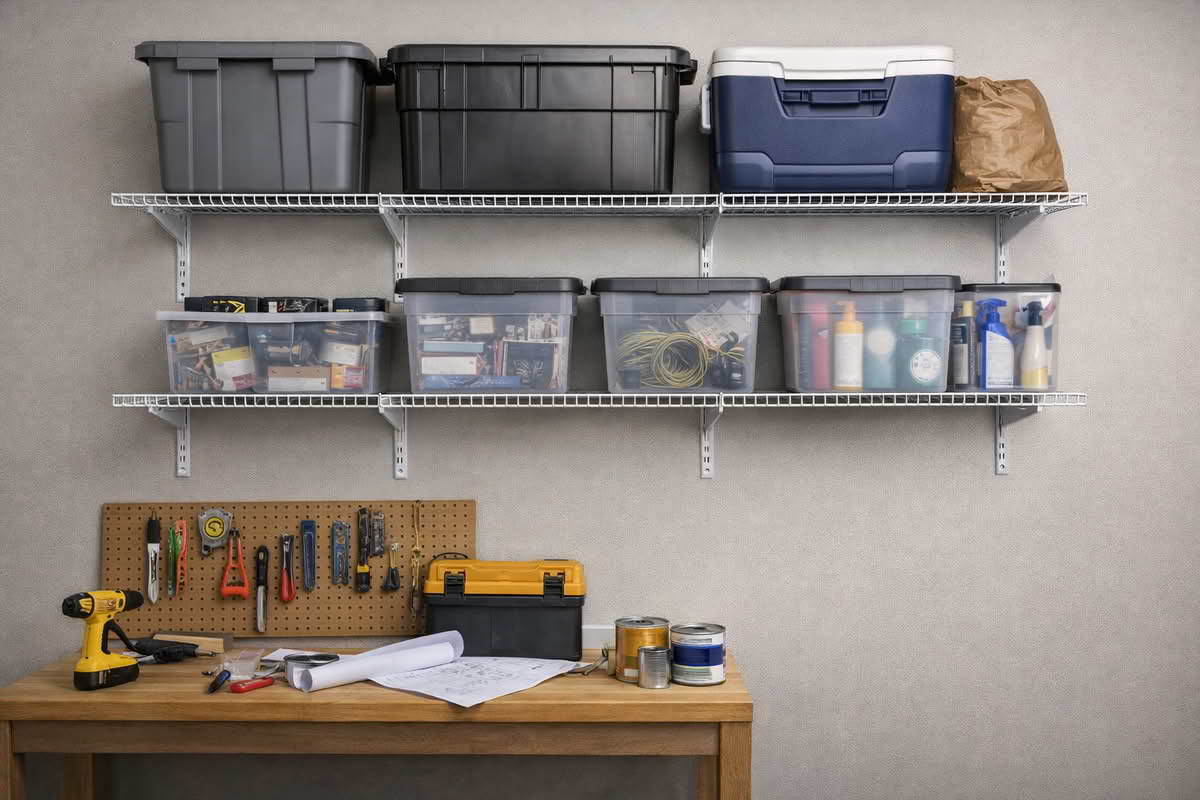
Wall-mounted shelving is often the first solution people consider when a room feels cramped, but it is also one of the easiest categories to misjudge. Buyers see an empty wall and assume almost any shelf will turn it into useful storage. Then the reality arrives: brackets interfere with what they want to store, shelves project too far into the room, the wall cannot support the intended load the way they expected, or the finished setup looks neat but functions poorly. Good wall-mounted shelving does more than hold objects above the floor. It has to suit the wall, the room, the weight, and the access pattern at the same time. Whether you are trying to improve garage organization, add utility shelving in a laundry room, or create compact storage in a smaller home, the right shelf is the one that adds usable capacity without creating new clearance, stability, or clutter problems.
Support, Load, and Wall Conditions Decide Whether the Shelf Is Actually Practical
The most important question in wall-mounted shelving is not what the shelf looks like. It is what the wall can support and how the load will behave once the shelf is in real use. Buyers often underestimate how quickly a few ordinary items can create meaningful weight. Cleaning supplies, pantry overflow, garage containers, books, tools, paint cans, baskets, or small appliances may not seem extreme individually, but together they create a very different demand than a staged shelf holding a few lightweight objects.
This is why bracket design and mounting logic matter more than surface style. A shelf board or platform can appear sturdy, but the true system strength comes from how the load transfers into the wall. In practical terms, wall-mounted shelving is only as dependable as its bracket spacing, mounting points, and the structure behind the wall surface. Buyers who focus on finish and overlook support often end up with shelves that technically work but never feel fully trustworthy. That uncertainty tends to change behavior. People avoid loading the shelf properly, underuse the upper space, or start treating it as decorative rather than functional storage.
Wall type also shapes what is realistic. A clean, uninterrupted section of wall in one room may accept a shelf layout easily, while another wall is interrupted by outlets, trim, plumbing access, or framing limitations that force awkward compromises. In garages and utility areas especially, a shelf that looks universal in a product listing may fit less cleanly once the actual wall conditions are considered. This is one reason a slightly smaller or simpler system often performs better than a larger one that pushes the wall layout too hard.
Choose wall-mounted shelving only after thinking through the real weight of the items you plan to store, not just the visual size of the shelf.
Choose support and bracket quality with the wall structure in mind, especially for utility, garage, or mixed household loads.
Choose shelf systems that fit the actual wall conditions instead of forcing an idealized layout into an interrupted space.
The type of load matters as much as the total amount. Evenly spaced bins or folded linens behave differently from dense tools, stacked canned goods, or awkwardly shaped utility supplies. Heavier concentrated loads create more stress than lighter items spread across the span. That difference often explains why two households can have very different experiences with shelves that share similar published capacity claims. The safer assumption is that real storage is rarely perfectly balanced, so structural margin matters.
Another practical issue is shelf rigidity. Some wall-mounted systems work well for lighter, stable categories, while others are better suited to more demanding household storage. The best decision usually comes from matching the shelf to the category rather than choosing a shelf and hoping the category will fit. Wall storage is most successful when it is deliberate. A shelf meant for light utility overflow should not be expected to quietly become heavy-duty garage infrastructure later.
Wall-mounted shelving depends on the whole support system. Bracket placement, wall fit, and realistic loading determine whether the shelf feels secure in daily use.
Depth, Placement, and Room Behavior Matter More Than Extra Shelf Length
Wall-mounted shelving is often purchased to recover space, but poor depth and placement decisions can quietly reduce the usability of the room. This happens when shelves extend too far into circulation areas, sit at inconvenient heights, or occupy wall space that would be better used for hooks, cabinets, or more flexible storage. A shelf can add storage volume while still making the room feel tighter and harder to use. That is why placement should be treated as a room-planning decision, not just a product decision.
Depth is especially important. Deeper shelves seem attractive because they can hold more, yet they often create a familiar problem: the back becomes forgotten storage while the front collects a second row of items that block easy access. In smaller rooms, deep wall-mounted shelves can also make walkways feel narrower or more visually crowded than expected. Shallower shelves often perform better because they encourage visibility, limit clutter layering, and reduce how much the shelf intrudes into the room. They are not always the right choice, but they are often the lower-regret one.
Height affects usability in the same way. Wall-mounted storage is at its best when it preserves the easiest reach zone for frequently used items while placing lower-frequency categories above or below that range. Shelves installed too high often become low-value overflow zones because retrieving items feels inconvenient. Shelves installed too low can interfere with work surfaces, movement, or other storage needs. The right height is not universal. It depends on what the shelf will hold and how often those items need to be accessed.
Choose shelf depth based on visibility and reach, not just on how much volume you can technically fit on the wall.
Choose heights around use frequency so the easiest-access zone is reserved for the categories you handle most often.
Choose shelf placement with walkways, work surfaces, door swing, and adjacent storage needs in mind.
Shelf length deserves similar caution. Long continuous shelves can look efficient, but they are not always the best fit for real rooms. A continuous span may dominate the wall visually, reduce flexibility, or encourage overloading. In some spaces, shorter separated shelves perform better because they allow more intentional zoning. One section might handle bins, another cleaning supplies, another decorative or household storage. Breaking the wall into usable segments can create a calmer, more maintainable system than filling the entire span with one continuous board.
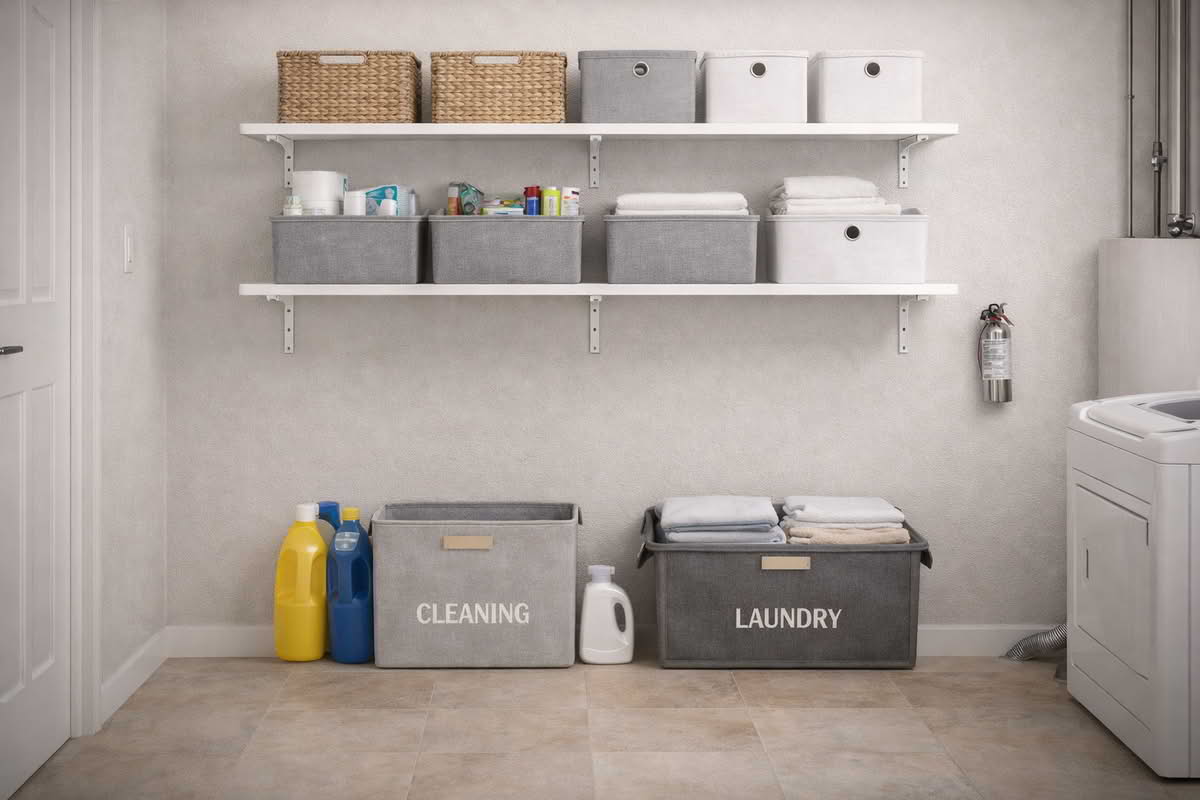
Room behavior also matters. In garages, shelves may need to leave room for tools, ladders, or work zones below. In laundry rooms, they may need to preserve space above machines or next to hampers. In small utility rooms, a shelf that seems sensible on its own may end up competing with cords, appliances, doors, or folding surfaces. Wall-mounted shelving works best when it supports what the room is already trying to do instead of overriding it.
Good wall-mounted shelving preserves floor space only when projection depth, height, and placement still allow the room to function comfortably.
Buyers also tend to overestimate how much open wall storage a room actually needs. One or two well-placed shelves can often solve a clutter problem more effectively than covering the room in storage. Extra shelves sometimes create a subtle trap: once the storage exists, it invites more categories onto the wall, which can make the room feel busier rather than calmer. The better approach is usually to add only as much shelf space as the room can absorb without losing visual and practical clarity.
Organization, Flexibility, and Long-Term Use Separate Useful Shelves From Decorative Clutter
Wall-mounted shelving can succeed in highly practical spaces, but only when the storage categories suit open access. This is an area where many buyers make a category mistake. Open shelves are strong for bins, baskets, cleaning supplies, folded goods, utility containers, and predictable categories that benefit from easy visual scanning. They are often weaker for loose small parts, dirty irregular items, and anything that tends to spread horizontally unless contained. In those cases, shelves may hold the clutter rather than solve it.
That is why container logic matters. Wall shelves are usually more successful when paired with labeled bins, baskets, or grouped categories. The shelf itself provides the platform, but the containers provide control. Without that layer, even well-installed shelves can become a row of mixed items that look visually busy and are harder to reset after use. Buyers sometimes blame the shelf for a disorder problem that is really a category and containment problem.
Flexibility also shapes long-term satisfaction. Some wall-mounted systems are intentionally fixed and simple. Others allow more customization through adjustable brackets, rails, modular shelf positions, or mix-and-match accessory layouts. Neither approach is automatically better. Fixed shelves can be cleaner and more stable when the storage category is predictable. Adjustable or modular designs make more sense when the room is still evolving or the stored items are likely to change. The right level of flexibility depends on whether you are solving a known problem or building a broader storage framework.
Use wall-mounted shelving for open-access categories that benefit from visibility and fast retrieval.
Use bins or baskets when small items, mixed categories, or visual clutter would otherwise spread across the shelf.
Use more adjustable systems when the room serves multiple functions or the storage mix is likely to change.
Another long-term issue is maintenance. Open wall shelves do not just store items. They also display them. This can be helpful in utility zones where seeing supplies at a glance improves efficiency, but it can also create a sense of visual noise if the categories are unmanaged. Buyers who want the room to feel calmer should think about how the shelf will look after six ordinary weeks of use, not just on installation day. A shelf that needs high discipline to stay attractive may be the wrong solution for a busy household.
There is also a difference between adding storage and improving storage. A wall-mounted shelf improves a room when it makes common tasks easier, keeps important items accessible, and reduces floor or counter clutter without replacing it with overhead clutter. It fails when it becomes a secondary dumping surface at eye level. The strongest shelf decisions tend to be modest and intentional. They solve defined categories cleanly and leave room for the rest of the storage plan to breathe.
Over time, the best wall-mounted shelving setups usually share the same traits: the load suits the support system, the depth suits the room, and the categories suit open storage. When those three things align, wall shelving becomes one of the most efficient ways to recover space. When they do not, the shelf may still be installed correctly but feel irritating, cramped, or visually messy in everyday use.
Final Recommendations — Choosing Wall-Mounted Shelving That Stays Useful Over Time
The right wall-mounted shelving is the kind that respects both the wall and the room. Buyers generally get better results when they think beyond the empty wall and plan for load, access, and category behavior from the start. A smaller, better-placed shelf with the right support often performs better than a larger installation that adds volume but reduces comfort or confidence.
Choose sturdier wall-mounted shelving when the stored items are dense, concentrated, or likely to get heavier over time.
Choose shallower shelves when visibility, walk-around space, and easier retrieval matter more than maximum depth.
Choose modular or adjustable systems when the room serves changing needs or mixed storage categories.
Choose shelf layouts that work with bins, baskets, and clear category zones instead of expecting the shelf alone to control clutter.
A low-regret wall-mounted shelving decision adds capacity without making the room feel more crowded or harder to manage. When support, placement, and storage behavior all line up, wall-mounted shelves stop being just a way to fill empty wall space and become a durable part of a smarter storage system.