Garage Shelving Buying Guide: How to Choose Shelves That Actually Work
Garage shelving looks simple until you start using it for real household overflow. Many buyers focus on headline weight ratings or shelf count, then end up with units that wobble on uneven concrete, waste vertical space, block door clearance, or fail to fit the bins and tools they actually own. Good garage shelving is less about buying the heaviest-looking rack and more about matching shelf depth, adjustability, material strength, and layout to the way your garage functions day after day. Whether you need to tame seasonal gear, keep bulk supplies off the floor, or create a cleaner wall of labeled storage, the right choice is the one that holds your actual load safely, fits your footprint cleanly, and stays useful as your storage needs change.
Load Capacity and Construction Matter More Than Marketing
The fastest way to regret a garage shelving purchase is to confuse a broad marketing claim with real-world strength. A shelving unit may advertise a high total weight capacity, but that number often assumes evenly distributed weight, ideal assembly, and a stable floor. In practice, garages hold awkward loads: stacked bins, paint cans, automotive fluids, power tools, cleaning supplies, and bulky seasonal items that rarely sit in perfectly balanced rows. What matters is not just the largest number on the box, but how the shelving handles uneven use over time.
Metal shelving is usually the practical default for garage use because it tolerates heavier loads, temperature swings, and rough handling better than lighter composite or thin plastic systems. That does not mean every metal unit is equally durable. The gauge of the steel, the bracing design, the connection method, and the rigidity of the shelf surface all affect whether the unit feels planted or flimsy once loaded. Shelves supported by substantial beams and solid corner posts tend to perform better than designs that rely on minimal framing and optimistic capacity claims.
Shelf surface material also changes the ownership experience. Wire shelves improve visibility and reduce dust buildup, but small items can tip or fall through, and many households end up adding liners. Particleboard or MDF shelf panels can create a more stable flat surface, but they are less forgiving around moisture, spills, or damp floor conditions. Solid steel shelves often feel more durable and easier to clean, though they can add cost and weight. The right surface depends on what you are storing and how messy the environment becomes.
For dense, heavy supplies, prioritize rigid framing and realistic per-shelf strength over large total-capacity claims.
For mixed household storage, look for shelf surfaces that support bins, loose items, and oddly shaped equipment without constant adjustment.
For garages with moisture risk, avoid shelf materials that can swell, sag, or degrade if conditions are less than ideal.
Strong garage shelving depends on more than raw capacity. Upright rigidity, shelf support, and practical spacing determine how stable the system feels once it is fully loaded.
Assembly style deserves more attention than many buyers give it. Boltless shelving can be fast to set up and easy to reconfigure, but quality varies significantly. Some systems lock together tightly and feel secure once squared and loaded. Others remain slightly loose, making the finished unit feel less confidence-inspiring. Bolted systems may take longer to build, yet they can offer a more settled, permanent feel. Neither approach is automatically better. The real question is whether you expect to move, reconfigure, or expand the system later.
Another common mistake is buying for current weight only, without considering how garage storage tends to grow. Shelving that seems generous on day one may become overloaded once extra supplies, backup materials, and long-term storage creep in. A better approach is to buy for the next stage of use, not just the immediate cleanup project. That usually means leaving margin in both capacity and configuration rather than packing every shelf to its published limit.
Size, Adjustability, and Fit Drive Everyday Usability
Even strong shelving becomes frustrating when its dimensions do not match the garage or the items being stored. Width, depth, and height all affect whether a shelving unit feels efficient or awkward. Deep shelves can seem attractive because they hold more, but excessive depth often turns the back of each shelf into a forgotten zone where duplicates, expired products, and low-priority items disappear. Shallow shelves may reduce wasted space and improve visibility, especially along high-traffic walls or near parked vehicles.
Height deserves careful thought. Tall shelving can recover valuable vertical space, but only if the upper shelves remain accessible and safe to use. In many garages, the highest shelf becomes a place for items that are either too heavy to lift comfortably or too frequently needed to store overhead. A smarter layout often pairs mid-height accessibility for everyday categories with higher placement for seasonal or rarely used items. The goal is not simply to stack higher. It is to place the right items at the right reach level.
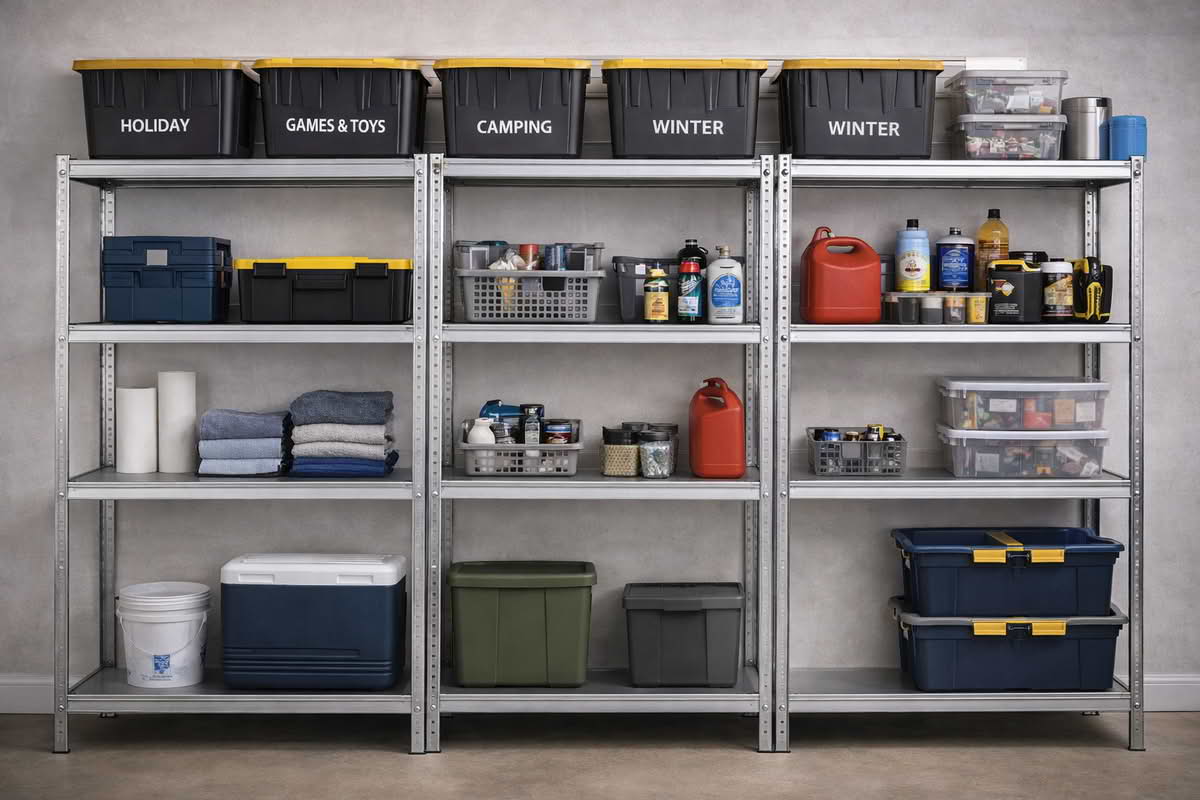
Adjustable shelf spacing is one of the most useful features in this category because it determines whether the unit adapts to real storage needs or forces everything into awkward compromises. Fixed spacing sounds manageable until you try storing tall detergent bottles, short hardware bins, a folded wagon, or a cooler on the same rack. Shelving with flexible spacing is more likely to remain useful as your storage mix changes, which matters because garage storage rarely stays static.
Match shelf depth to the items you use most often, not just the maximum amount you could theoretically fit.
Use taller units only when upper shelves will hold lighter, lower-frequency items.
Prioritize adjustability when your garage stores mixed categories instead of one predictable item type.
Fit also includes the wall and floor conditions around the shelving. Concrete garage floors are often slightly uneven, and a shelving unit that looks level in a showroom may rock or twist once placed at home. Units with better structural rigidity tolerate these imperfections more gracefully, but layout planning still matters. Leave enough setback from doors, trim, outlets, and garage door tracks. Consider whether baseboards, wall protrusions, or utility access points will affect placement. Small fit errors become ongoing annoyances when the shelving is large and heavily loaded.
Shelving works better when dimensions are chosen around actual storage containers, circulation space, and garage clearance rather than maximum theoretical capacity.
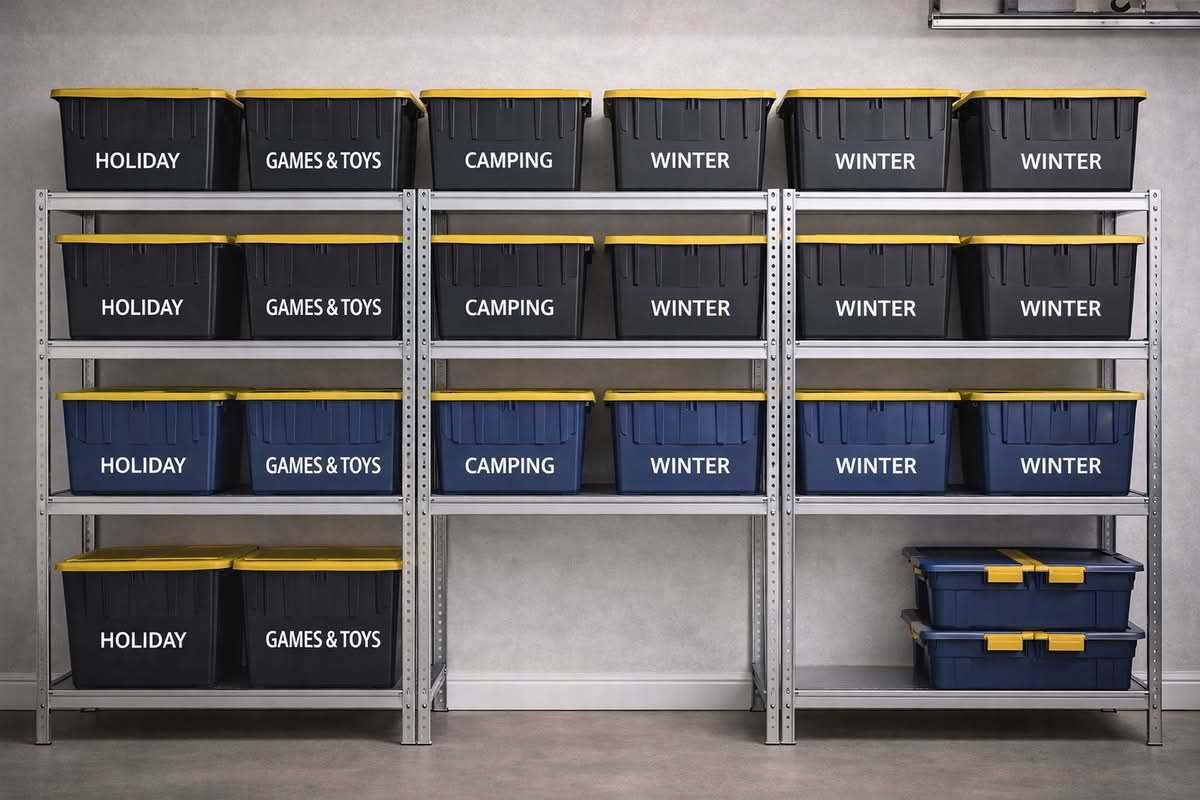
It also helps to think in container logic rather than shelf logic. Buyers often purchase shelving first and then try to find bins that fit. That backwards sequence can waste both space and money. If you already know you prefer clear totes, stackable bins, or labeled project boxes, choose shelving that fits those dimensions efficiently. Consistent bin sizing improves visibility, simplifies category planning, and makes the whole system easier to maintain. Good shelving should support organization habits, not make them harder.
Compact garages need even more discipline. In tighter spaces, a narrower shelving system that preserves parking clearance and walking access may be far more useful than a larger unit that creates daily friction. Storage that technically fits but makes the garage harder to use is not efficient. It simply moves the problem from clutter to congestion.
Layout, Access, and Long-Term Use Shape the Better Choice
Garage shelving is not an isolated purchase. It becomes part of a larger storage system that includes bins, hooks, cabinets, wall storage, work surfaces, and how people move through the space. That is why the best shelving choice often depends less on shelf specifications alone and more on how the unit fits into the broader layout. A shelving run along one side wall may be ideal for bin storage, while another household may need a shorter unit near a workbench, leaving wall space open for tools or sports equipment.
Access patterns matter more than many buyers expect. Frequently used items should not be buried behind deep shelves or stacked in front of one another. The lower shelves should not become a dumping zone for heavy objects that are awkward to lift from floor level. High shelves should not hold anything fragile or frequently needed. In other words, good shelving reduces friction. It helps the garage stay organized because the easiest place to put an item away is also the right place.
Another long-term question is whether you want open storage or more visual control. Open shelving is efficient and flexible, but it can also make a garage look busier, especially when containers are mismatched. Some households are comfortable with visible bins and labeled boxes. Others may eventually prefer a mix of shelving for utility storage and cabinets for cleaner visual containment. Buying shelving with this in mind helps avoid overcommitting to one storage mode too early.
Use open shelves for categories that benefit from fast access and easy visual inventory.
Reserve the most accessible zones for heavy-use items rather than long-term overflow.
Leave room for future complements such as wall storage, cabinets, or a workbench instead of filling every wall immediately.
Safety and maintenance are also part of the ownership picture. In households with children, pets, or frequent movement of large gear, stable shelving becomes more important than simple capacity. A unit that feels acceptable when empty can become unsettling when loaded with bins above shoulder height. Some buyers discover too late that a shelf system is more difficult to clean around, more sensitive to floor moisture, or more prone to catching dust and debris than expected. These are not dramatic failures, but they are the type of small frustrations that gradually make a system feel poorly chosen.
The strongest long-term shelving decisions usually share the same traits: enough strength margin to avoid strain, enough adjustability to accommodate changing storage categories, and a footprint that respects how the garage actually functions. That may mean resisting the urge to maximize capacity in every direction. A slightly smaller, better-placed shelving system often outperforms a larger one that dominates the room but never quite fits daily life.
Before buying, it helps to sketch a rough category plan. Decide which items belong on shelves, which should move to hooks or cabinets, and which should not live in the garage at all. That exercise often reveals that the real need is not more shelving everywhere, but more intentional shelving in specific zones. Once that becomes clear, choosing between heavy-duty units, adjustable metal racks, compact shelf systems, or bin-focused layouts becomes much easier.
Final Recommendations — Choosing Garage Shelving With the Least Long-Term Friction
The right garage shelving is the option that fits your load, your floor, and your daily access patterns without creating new problems. Buyers usually get the best outcome when they stop thinking in terms of the biggest rack available and start thinking in terms of storage behavior. The better question is not how much shelving you can fit. It is how much shelving you can use comfortably, safely, and consistently without turning the garage into a crowded staging area.
Choose heavier-duty shelving when you store dense supplies, full bins, tools, or fluids that create concentrated loads.
Choose adjustable shelving when your storage mix changes often or includes bins, equipment, and irregular household overflow.
Choose more compact shelving when maintaining vehicle clearance and walkway space matters as much as raw storage volume.
Choose dimensions around your actual containers and wall layout instead of buying a generic unit and forcing everything to fit later.
A low-regret shelving decision usually leaves some room to adapt. It supports the garage you have now while staying useful as categories shift, gear changes, and storage habits mature. When strength, fit, and layout all work together, garage shelving stops being a temporary cleanup tool and becomes part of a storage system that holds up over time.