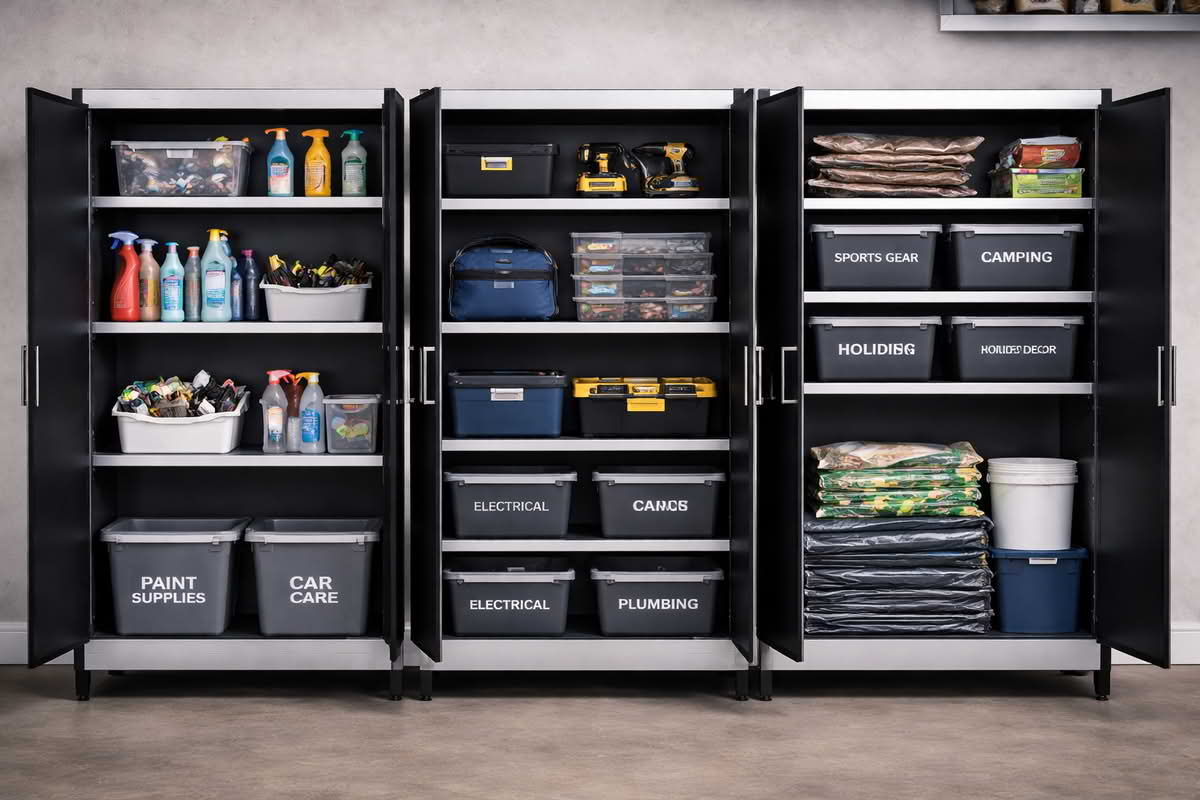
Garage Cabinet Buying Guide: How to Choose Storage That Looks Cleaner and Works Harder
Garage cabinets appeal to buyers who are tired of open shelves, visible clutter, and bins that never look fully organized. But cabinets are not automatically a better storage solution just because they hide the mess. Many people buy them expecting a cleaner garage, then discover that the cabinet depth wastes space, the shelves do not suit the items being stored, the doors are awkward in tight layouts, or the construction feels less durable than expected once real household weight moves in. A good garage cabinet system should do more than conceal supplies. It should improve how the space functions, protect the right categories of items, and fit the garage without creating access problems. The best choice is usually the one that balances enclosed storage, structural strength, and practical layout planning rather than the one that simply looks the most finished.
Construction and Storage Type Shape Cabinet Value
Garage cabinets are often treated as an upgrade category, but the real value depends on what problems they are solving. Open shelving is usually better for fast visual access and bulky bin storage. Cabinets become more useful when you want enclosed organization, cleaner visual lines, dust reduction, or a more controlled home for household supplies that do not belong on display. That distinction matters because many buyers shift to cabinets for appearance reasons without first deciding whether their storage categories actually benefit from doors, shelves, and enclosure.
Construction quality is the first major filter. In garage environments, cabinets may need to handle temperature swings, dirty tools, chemicals, cleaning products, automotive supplies, hardware, sports accessories, and miscellaneous overflow that does not stay perfectly sorted. Thin metal, weak hinges, low-rigidity panels, or shelves that flex under modest weight tend to show their limits quickly. Cabinets that look substantial in product photos can feel underbuilt once loaded with real items. This is especially true when the cabinet is tall, narrow, or expected to hold concentrated weight on only a few shelves.
Material selection changes both durability and ownership experience. Steel cabinets tend to suit garage conditions well because they resist knocks, tolerate heavier-duty use, and usually feel more secure over time. Resin or polymer options can work for lighter-duty categories and may handle moisture better, but they are not always ideal for dense loads or buyers seeking a more premium, workshop-like feel. Wood-based cabinets can look attractive in some garage designs, but they demand more caution around damp conditions, spills, and rough handling. The better material is the one that matches both the environment and the weight profile of what will live inside.
Choose more robust cabinet construction when storing tools, hardware, fluids, or heavy household supplies.
Choose lighter-duty materials only when the contents are modest and the cabinet is solving a simpler organization problem.
Choose enclosed storage deliberately for categories that benefit from dust control, visual cleanup, or better category separation.
Internal shelf design matters just as much as outer construction. Some cabinets provide adjustable shelves that make them useful across changing storage categories. Others offer limited flexibility, which can be frustrating once you try to fit taller containers, stacked bins, or mixed-size gear in the same unit. A cabinet is only as practical as the storage it supports inside. If the internal layout cannot adapt to real household items, the cabinet may look orderly from the outside while remaining inefficient within.
Freestanding versus wall-mounted cabinets also deserves real attention. Freestanding units generally offer more capacity and can handle heavier loads more comfortably, especially for floor-based storage zones. Wall-mounted cabinets recover floor space and contribute to a cleaner visual line, but they typically work better for lighter or medium-weight categories and require more careful installation planning. The right choice depends on whether your primary need is bulk enclosed storage, cleaner floor clearance, or part of a larger modular system.
Garage cabinets perform best when interior shelf spacing matches real categories such as cleaners, tools, hardware, and household overflow instead of relying on generic fixed shelf layouts.
Size, Layout, and Door Clearance Determine Daily Usability
A cabinet can be well made and still feel like the wrong purchase if it does not fit the garage properly. Buyers often focus on total storage volume, but cabinet usability is shaped by footprint, depth, height, and how the doors behave once the unit is in place. Deep cabinets may seem more capable, yet excessive depth often leads to hidden clutter at the back and awkward retrieval of smaller items. Shallow cabinets can feel more efficient for organizing supplies in layers that remain visible and reachable.
Height changes how the cabinet functions within the room. Tall cabinets can be excellent for recovering vertical storage, especially when paired with adjustable shelves. But very tall units can also become top-heavy visually and practically if the upper zones are hard to access or if the interior becomes a stack of rarely used categories. Shorter base cabinets may integrate better with work surfaces, wall systems, or future modular expansion. The better fit depends on whether you are building a contained storage wall, solving a single clutter zone, or supporting a workshop workflow.
Door clearance is one of the most overlooked factors in this category. Double doors, swing-out doors, and locking handles all seem straightforward until the cabinet is placed beside a parked car, a side door, a shelving run, or a narrow path through the garage. Some cabinets technically fit the available wall but become annoying because the doors do not open comfortably in actual use. A cabinet that forces awkward body position or partial opening every time you reach for something is not efficient storage, even if the measurements looked right on paper.
Choose cabinet depth based on visibility and retrieval, not just maximum enclosed volume.
Choose tall cabinets when vertical storage truly helps and the upper shelves can be reserved for lower-frequency items.
Choose door styles and placement with vehicle clearance, nearby walls, and everyday movement in mind.
Layout planning matters because garage cabinets rarely exist alone. They often sit beside shelves, wall storage, utility equipment, recycling areas, or a workbench. A cabinet can improve organization in one zone while reducing flexibility elsewhere if it monopolizes a valuable wall. This is especially important in garages where every foot of wall space has competing uses. A cleaner look is not always the same as a better layout. The right cabinet should serve the larger room plan, not simply occupy a large rectangle of space.
Modular cabinet systems can be attractive for buyers who want a more finished, built-in feel. They can also make sense when you already know the garage needs multiple coordinated storage functions. The tradeoff is commitment. Modular systems often cost more, ask for more planning, and work best when the long-term room layout is already reasonably clear. A simple freestanding cabinet may be the smarter choice when the garage is still evolving or when only one area needs enclosed storage.
It also helps to think in zones rather than in product count. One cabinet for household chemicals, pet supplies, and paper goods may be more effective than several smaller cabinets scattered around the room. Likewise, a tall cabinet for seasonal gear may work best when paired with open shelves for items that benefit from faster access. The strongest garage storage layouts usually mix storage types intentionally instead of expecting cabinets to solve every category equally well.
Security, Organization, and Long-Term Fit Matter More Than a Finished Look
Garage cabinets are often purchased because they make a garage look calmer. That visual benefit is real, but it should not be the only reason to buy them. The stronger case for cabinets is that they impose category boundaries. Doors and shelves encourage grouping, reduce visual distraction, and make it easier to separate household items from tools, cleaning supplies, automotive materials, or project leftovers. When used intentionally, cabinets can support a more maintainable garage because they reduce the temptation to treat every horizontal surface as open storage.
Security is another factor, though it should be viewed realistically. Lockable cabinets can help limit casual access to certain items, which is useful for households storing chemicals, sharp tools, or equipment that should not be immediately accessible. But a basic cabinet lock is usually more about deterrence and controlled access than high-level security. Buyers should not confuse “lockable” with truly secure storage. It is best understood as an organization and household-management feature rather than a substitute for specialized security solutions.
Long-term usefulness depends heavily on what kind of clutter you are trying to prevent. Cabinets work well for loose supplies, medium-size gear, household backstock, and categories that benefit from being visually hidden. They are less ideal for extremely bulky items, irregular sports equipment, oversized bins, and anything that requires fast visual scanning or frequent grab-and-go access. When cabinets are used for the wrong storage types, they can become crowded, hard to reset, and frustrating to maintain.
Use cabinets for categories that benefit from enclosed organization, visual cleanup, and cleaner separation between item types.
Use lockable options when access control matters, but treat locking as a practical feature rather than a full security solution.
Use other storage types for oversized, awkward, or high-frequency items that do not naturally belong behind doors.
Maintenance and cleaning also shape the long-term experience. Cabinets can reduce dust on stored items and make a garage feel more orderly between cleanups, but they still need enough internal discipline to stay useful. Without bins, shelf planning, or some kind of category logic, cabinets can simply hide disorder instead of solving it. Buyers sometimes discover that closed doors make clutter less visible but do not make it easier to manage. That is why cabinet selection and organization strategy should be considered together.
Another subtle issue is future flexibility. A cabinet that suits your current supplies may not fit later priorities if the garage shifts toward hobby work, tool storage, athletic gear, or more household overflow. This is where adjustable interiors, sensible sizing, and restrained buying choices tend to age better. A cabinet should leave room for category changes instead of requiring the garage to stay locked into one storage plan forever.
The best long-term garage cabinet purchases generally do three things well: they fit the room without disrupting movement, they support the categories that genuinely benefit from enclosed storage, and they provide enough structural and organizational flexibility to remain useful beyond the first cleanup project. When those conditions line up, cabinets do more than make the garage look neater. They improve the underlying storage system.
Final Recommendations — Choosing Garage Cabinets That Stay Useful After the Initial Cleanup
The right garage cabinet is not the one that looks most finished in isolation. It is the one that fits your wall space, your storage categories, and your long-term layout without turning enclosed storage into a new source of frustration. Buyers usually get better results when they treat cabinets as a targeted solution for specific types of clutter rather than a universal answer for the entire garage.
Choose freestanding cabinets when you need greater capacity, heavier-duty storage, or more flexibility in enclosed floor-based zones.
Choose wall-mounted cabinets when floor clearance matters and the contents are lighter or more household-oriented.
Choose adjustable interiors when your storage mix includes containers, supplies, and gear that vary in height and shape.
Choose cabinet layouts that preserve door clearance, walkway space, and room for other storage systems to coexist.
A low-regret cabinet purchase improves both appearance and function because it supports better storage habits over time. When cabinet strength, interior layout, and room fit all work together, enclosed storage becomes more than visual cleanup. It becomes a reliable part of a garage organization system that can adapt as household needs change.