Smart Home Hub Buying Guide for Practical Device Control and Integration
Smart home hubs sound technical, which makes many buyers assume they either need one immediately or should avoid them entirely. Both instincts can lead to poor decisions. A hub is not automatically the center of a better smart home, and it is not just a hobbyist device for complicated automations. In practical terms, a hub is valuable when the household wants more reliable device coordination, broader compatibility, cleaner automation, or a way to keep the smart home from turning into a pile of unrelated apps. The challenge is that not every home needs the same kind of hub, and not every household benefits from adding one early. A good hub should reduce fragmentation, not create a second layer of confusion. This guide focuses on those practical tradeoffs so you can choose a hub that fits your devices, your control style, and the amount of smart-home structure you actually want to maintain over time.
Start by deciding whether your home has a real hub problem to solve
The first smart home hub question is not which protocol you want. It is whether the home has reached the point where a hub solves a clear problem. Some households are still early enough in their smart-home setup that a speaker, display, and a few directly connected devices are completely adequate. Others have reached the stage where lights, plugs, sensors, locks, or routines are spread across too many apps and too many partial ecosystems. That is where a hub starts to make practical sense.
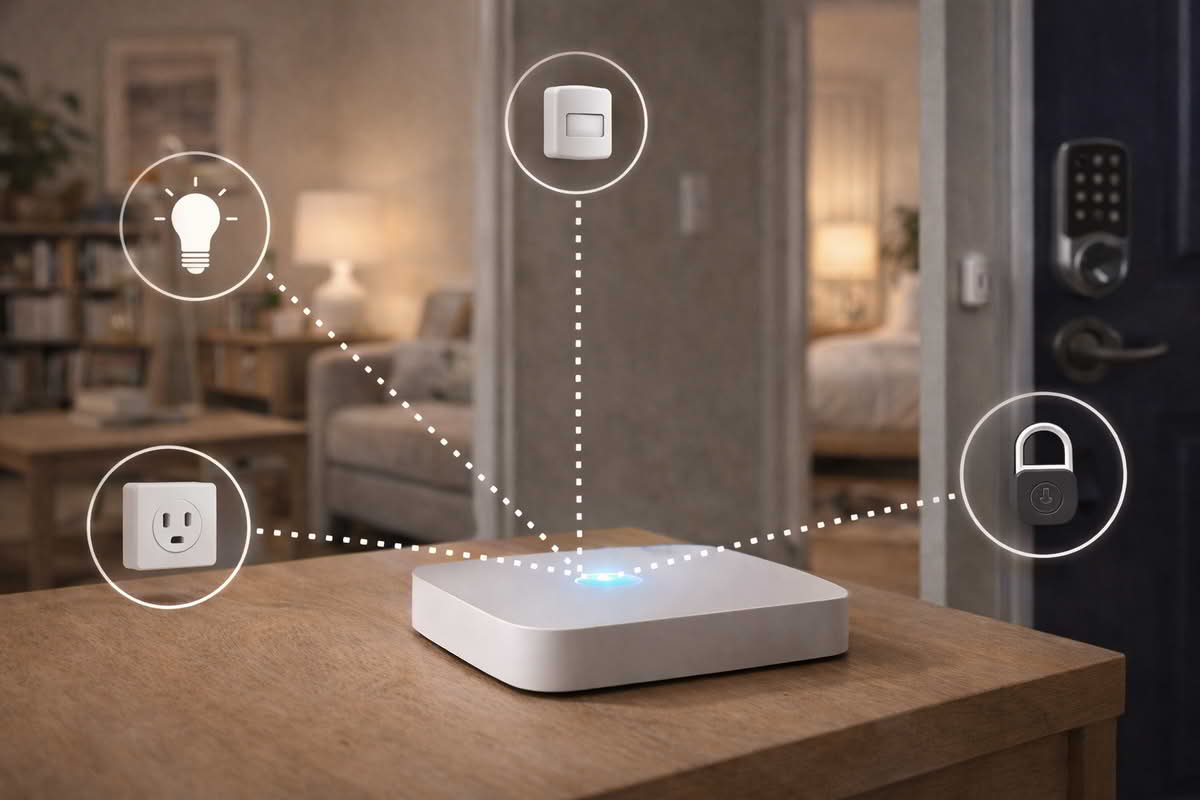
A hub is most valuable when the home needs coordination. That can mean bringing together different kinds of devices under one control logic, making automations feel more reliable, or reducing dependence on several disconnected apps for ordinary tasks. In these cases, the hub is not mainly about adding more devices. It is about giving the devices you already have a clearer shared structure. Buyers often assume hubs are mainly for expansion, but for many homes the bigger value is simplification.
This is also where some households buy too early. If the current setup is one smart speaker, two lamps, and a plug in the bedroom, adding a dedicated hub may create more management than benefit. On the other hand, if the house already has lighting in several rooms, a few sensors, door or window devices, and growing interest in automations that should work consistently, the lack of a hub may be what is making the setup feel fragmented. The right time for a hub is usually when the smart home starts feeling scattered rather than merely small.
Choose a hub when the smart home needs better coordination, not just because the category sounds more advanced.
Wait on a hub if the current setup is still small, simple, and already easy to manage.
Think of a hub as an organization tool for the home, not just another device to add.
Use the number of apps, routines, and disconnected devices as a clue that the home may be ready for more structure.
Another important distinction is whether your frustration is with compatibility or with control habits. Sometimes buyers think they need a hub because their smart home feels annoying, when the deeper issue is that the household has not decided how it wants to control devices in the first place. A speaker, display, app, or wall control strategy may still be underdeveloped. A hub will not fix that by itself. It works best when the household already knows it wants more integrated control and simply needs a better backbone to support it.
It helps to define the exact problem the hub should solve. Do you want sensors and lights to work together more cleanly? Are you trying to reduce app fragmentation? Do you want broader support for device types that your current ecosystem handles poorly? Do you want more reliable automations that do not depend so heavily on cloud logic? Those are all strong reasons to consider a hub. If the answer is vague, the best next step may be clarifying your control goals before buying another central device.
A smart home hub makes the most sense when the home already has enough connected devices that coordination and automation are starting to feel fragmented.
There is also a difference between a home that wants simple centralized control and one that wants deep automation. Some buyers just want fewer apps and more coherent device grouping. Others want sensors, schedules, presence logic, and cross-device routines that go beyond what a speaker or display handles comfortably. Both are valid goals, but they point toward different kinds of hubs. The better your sense of what “organized smart home” means to you, the easier it becomes to choose the right tool.
The safest starting mindset is to ask whether the current smart-home pain is real enough that a central platform would reduce it. If the answer is yes, a hub may be worth serious consideration. If not, adding one too soon can create complexity before the household is ready to benefit from it.
Match the hub to your devices, protocols, and long-term ecosystem direction
Once you know a hub would be useful, the next decision is compatibility. This is where buyers often get overwhelmed by protocol names and feature claims. The practical way through it is to treat compatibility as a household planning issue rather than as a technical checklist. A hub should fit the kinds of devices you already own, the kinds you are most likely to add next, and the ecosystem direction you want the home to grow toward over time.
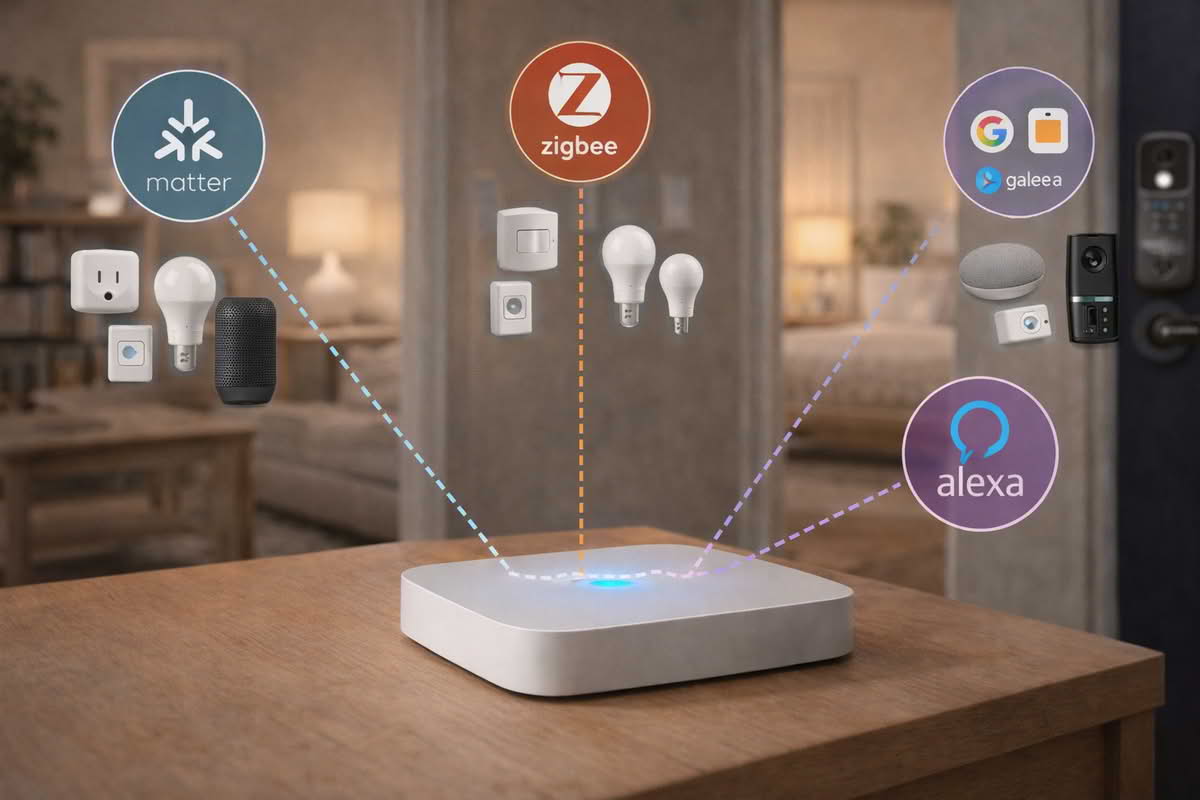
Matter-friendly hubs appeal to buyers who want a more flexible and modern path that reduces the risk of building around one narrow platform. That can be a smart long-term instinct, especially for households trying to avoid lock-in or simplify mixed-brand setups. But flexibility is only useful if the devices you care about actually fit the hub’s practical strengths. The safest choice is not always the most future-sounding one. It is the one that works well with your real near-term device mix.
Zigbee-oriented hubs make strong sense when your smart-home plan centers on sensors, lights, buttons, and other device types that often benefit from a more structured device network. These hubs can be especially useful for homes leaning into room automation, battery-powered sensors, or more coordinated whole-home routines. But again, the category should be chosen because it fits the device strategy, not because the protocol itself sounds more serious or more advanced.
Platform-specific hubs occupy another practical middle ground. They can be very effective when the household already knows which assistant, app style, and broader ecosystem it prefers. In those homes, a platform-aligned hub may reduce friction because it keeps dashboards, routines, and control logic coherent. The risk is that buyers sometimes choose these hubs too narrowly and later discover they want flexibility the platform does not support well. That does not make platform-specific hubs a mistake. It just means they work best when the household has already made a confident ecosystem decision.
Match the hub to the devices you already own and the next devices you realistically expect to add.
Choose flexible hubs when avoiding fragmentation matters more than aligning tightly with one brand.
Choose protocol-focused hubs when your home depends on device types that benefit from stronger coordination and local-style control.
Choose platform-specific hubs only when you already know the broader ecosystem fits how the household wants to operate.
This is also where buyers should think about control surfaces beyond the hub itself. A hub rarely exists alone. It usually works alongside speakers, displays, phones, dashboards, or control panels. If the household wants an all-in-one wall-friendly interface or a visible shared control point, that may influence which kind of hub makes the most sense. Likewise, if the home relies mostly on voice plus automations, the hub’s behind-the-scenes integration may matter more than the quality of its direct user-facing interface.
Device count and device variety matter too. A home with mostly simple bulbs and plugs needs different hub priorities from one using locks, sensors, thermostats, buttons, and room-based routines. The more varied the device types become, the more important it is that the hub handles them coherently. Buyers sometimes focus on whether a hub supports a long list of brands, when the more practical question is whether it supports the actual combinations of devices that make up their home’s routines.
The best hub fit comes from matching protocols and ecosystem direction to the devices and routines your home is most likely to rely on over time.
A common mistake is buying a hub mainly because it seems like the “correct” next smart-home purchase without mapping the device plan around it. That often leads to a hub that is technically capable but not especially well matched to the household’s growth path. A better approach is to think one step ahead. If the next year of smart-home additions is likely to focus on lighting, sensors, room automations, and fewer app silos, choose the hub that supports that future clearly. If the home is likely to stay simple, avoid buying more hub than you will actually use.
The better buying mindset is compatibility through real household trajectory, not just through abstract protocol language. That usually leads to a more stable system and fewer regrets when the smart home starts expanding room by room.
Choose for dependable automation and manageable ownership, not just technical ambition
Once a hub is installed, the real question becomes whether it makes the home easier to manage. This is where many purchases either prove their value or become a hobby that the rest of the household never fully uses. A good hub should make automation more dependable, device control more coherent, and everyday routines less fragile. It should not demand constant maintenance or ask one technically confident person to become the permanent translator for the rest of the house.
Reliability matters most in automations that the household depends on. If motion-based lighting, door routines, sensor-driven actions, or room scenes are important, the hub needs to support those functions in a way that feels stable. Buyers are often drawn to hubs by the promise of more powerful automation, but that power only matters when it becomes boring in daily use. The best hub is usually the one whose automations quietly work, not the one with the most elaborate rules that no one wants to maintain.
Ownership style also matters. Some households genuinely enjoy building out a more advanced smart-home system. Others mainly want the home to feel coordinated without much ongoing attention. That difference should shape the hub choice. A technically deeper platform may be a great fit for one homeowner and completely unnecessary for another who mainly wants a few lights, sensors, and scenes to behave predictably. Better fit matters more than raw capability.
App clarity and household handoff are especially important. A hub may be powerful, but if the control logic becomes too obscure, the rest of the home may never feel comfortable with it. A strong setup should still be understandable in ordinary use. Household members should know what the automations are generally doing and how to override them when needed. The more the system depends on hidden logic that only one person understands, the more fragile it becomes socially even if it is technically solid.
Prioritize automations that quietly improve the home over complex routines built mainly because they are possible.
Choose a hub that matches your tolerance for setup, maintenance, and ongoing refinement.
Value stable daily behavior more than deep technical menus you are unlikely to revisit often.
Make sure the household can still understand and live with the system without one permanent expert managing everything.
Long-term ownership also includes expansion discipline. Hubs can tempt buyers to automate too much too quickly because the control possibilities suddenly widen. That can create the same fragmentation the hub was supposed to fix, only now under one platform instead of several. The safer approach is to use the hub to improve a few repeated routines first, then expand only where the value is clear. Lighting, entry sensors, climate support, or bedtime and away-from-home scenes are often better starting points than building a huge automation web all at once.
It is also worth noting that some households need the hub mainly as hidden infrastructure rather than as a visible command center. In those homes, the best hub is not necessarily the one with the flashiest dashboard. It is the one that lets speakers, displays, apps, and routines work together more cleanly. Other homes do benefit from all-in-one control panels or visible dashboards, especially where common-space smart-home management matters. The right balance depends on whether the household wants the hub to be seen or simply felt through better device behavior.
The lowest-regret buying mindset is to choose the simplest hub that fully solves your real integration problem. For some homes, that means a flexible, compatibility-first hub that reduces fragmentation. For others, it means a platform-specific hub that aligns tightly with an ecosystem the household already trusts. Either way, the best sign of a good choice is that the smart home starts feeling calmer, more unified, and less dependent on several disconnected habits.
A hub has done its job well when the home feels easier to control and less like a collection of separate experiments. That is the real goal. Better automations, clearer device relationships, and a more manageable household system matter far more than owning the most technically ambitious hub on the market.
Final Recommendations — choosing a hub that organizes the home instead of complicating it
The right smart home hub is usually the one that solves a clear coordination problem, fits the devices you already own, and supports the kind of automation your household will actually maintain. Start by deciding whether the home really needs stronger integration yet, then choose the hub that matches your ecosystem direction and your tolerance for ongoing setup and refinement.
Choose Matter-friendly hubs when long-term flexibility and mixed-device compatibility are central to your smart-home plan.
Choose Zigbee-oriented hubs when the home relies on sensors, lighting, and broader room automation that benefit from stronger device coordination.
Choose platform-specific hubs when the household already knows which ecosystem it wants to center everything around.
Prioritize dependable automation, clear household control, and manageable ownership over buying the deepest hub simply because it seems more advanced.
In the long run, the best hub is the one that makes the smart home feel more coherent and less demanding. It should reduce app fragmentation, support routines that actually help, and give the household a stable control foundation without turning ordinary rooms into a permanent technical project.