Smart Speaker Buying Guide for Practical Voice Control at Home
Smart speakers often look like an easy first smart-home purchase, but they are easy to buy with the wrong expectations. Many people picture them as simple voice assistants that answer questions, play music, and set timers. They can do that, but the long-term value usually comes from something more ordinary: whether the speaker fits the room, hears commands reliably, sounds good enough for everyday listening, and belongs to an ecosystem you will still want to use once the novelty wears off. A small speaker that is perfect on a nightstand may feel weak in a kitchen. A speaker with strong audio may be wasted in a hallway where quick voice control matters more than music quality. This guide focuses on those practical tradeoffs so you can choose a smart speaker that works well in its actual room, supports the household’s routines, and adds useful voice control without turning basic daily tasks into a technology project.
Start with the room and decide whether the speaker is mainly for audio, voice control, or both
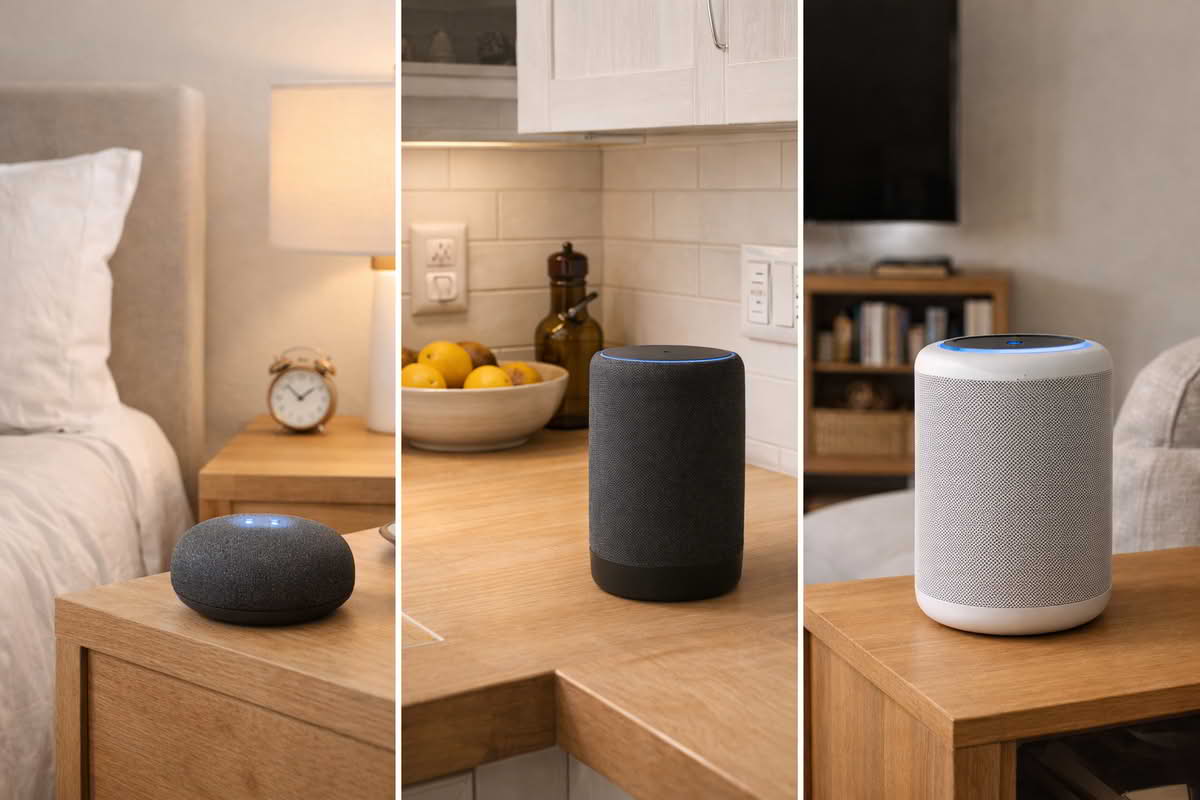
The first smart speaker decision is not which assistant name you prefer. It is what the speaker is supposed to do in the room where it will live. A compact speaker in a bedroom, a kitchen counter speaker used for timers and casual listening, and a larger living room speaker expected to fill space with music all represent different jobs. The mistake many buyers make is assuming that any smart speaker can handle all of them equally well.
Compact models make sense when the main goal is convenient voice access. They work well on nightstands, desks, entry tables, and shelves where space is limited and where the speaker mainly needs to answer questions, run routines, manage reminders, or control a few smart-home devices. In these rooms, the best speaker is often the one that stays easy to place and hears you clearly without demanding much space or visual attention.
Larger speakers shift the balance toward sound quality. They are better suited to kitchens, family rooms, and living spaces where music or spoken audio is part of everyday use. If the household wants room-filling sound and also likes voice control, the speaker has to be judged more like an actual speaker, not just as a smart assistant. Buyers often underweight this distinction and end up disappointed when a very small unit sounds thin in a larger room or when a premium speaker is underused in a low-demand space.
This is why room acoustics and room purpose matter more than many people expect. Kitchens have hard surfaces, background appliance noise, and frequent multitasking. Bedrooms are usually quieter and more forgiving. Open-concept living spaces can make a speaker feel smaller than it looked on paper. Hallways and entry points may only need quick spoken interaction. A smart speaker works best when its size and sound profile are matched to the actual room rather than chosen in the abstract.
Choose compact speakers when voice access matters more than strong music performance.
Choose larger speakers when the room genuinely needs fuller sound for regular listening.
Think about kitchen noise, open-plan layouts, and room size before assuming one speaker can do everything well.
Match the speaker to the room’s real job instead of buying only by price or brand familiarity.
It also helps to think about placement discipline. A speaker placed beside a noisy vent, too close to a wall, or tucked into a cluttered shelf may not sound or hear as well as expected. In kitchens, countertop placement may be practical, but grease, moisture, and crowding should be considered. In bedrooms, a nightstand location may be ideal for voice commands and alarms but less ideal if the speaker is too close to where one person sleeps and the other wants quiet. These are small details, but they shape daily satisfaction more than buyers often realize.
Another practical distinction is whether the speaker is for one person or for the household. A personal desk speaker can be chosen for convenience and modest footprint. A family-room speaker needs broader acceptance. That difference matters because the most useful speaker is often not the one with the most features, but the one whose sound, placement, and interface fit the room without ongoing compromise.
Smart speaker performance depends heavily on room role, placement, and whether the device is mainly expected to provide voice access, music, or both.
Buyers are sometimes surprised by how much of the decision comes down to ordinary listening behavior. Do you actually want music in this room every day? Will spoken responses be heard clearly over kitchen activity? Does the room already have another sound source that makes a smart speaker redundant? Asking these questions early makes it easier to avoid buying too much speaker for a low-demand room or too little speaker for a room where sound quality genuinely matters.
The safest starting point is to treat the product as a room-based audio-and-control tool. Once the room’s needs are clear, ecosystem choices and feature tradeoffs become much easier to judge without guesswork.
Choose the ecosystem and control style before you collect more devices
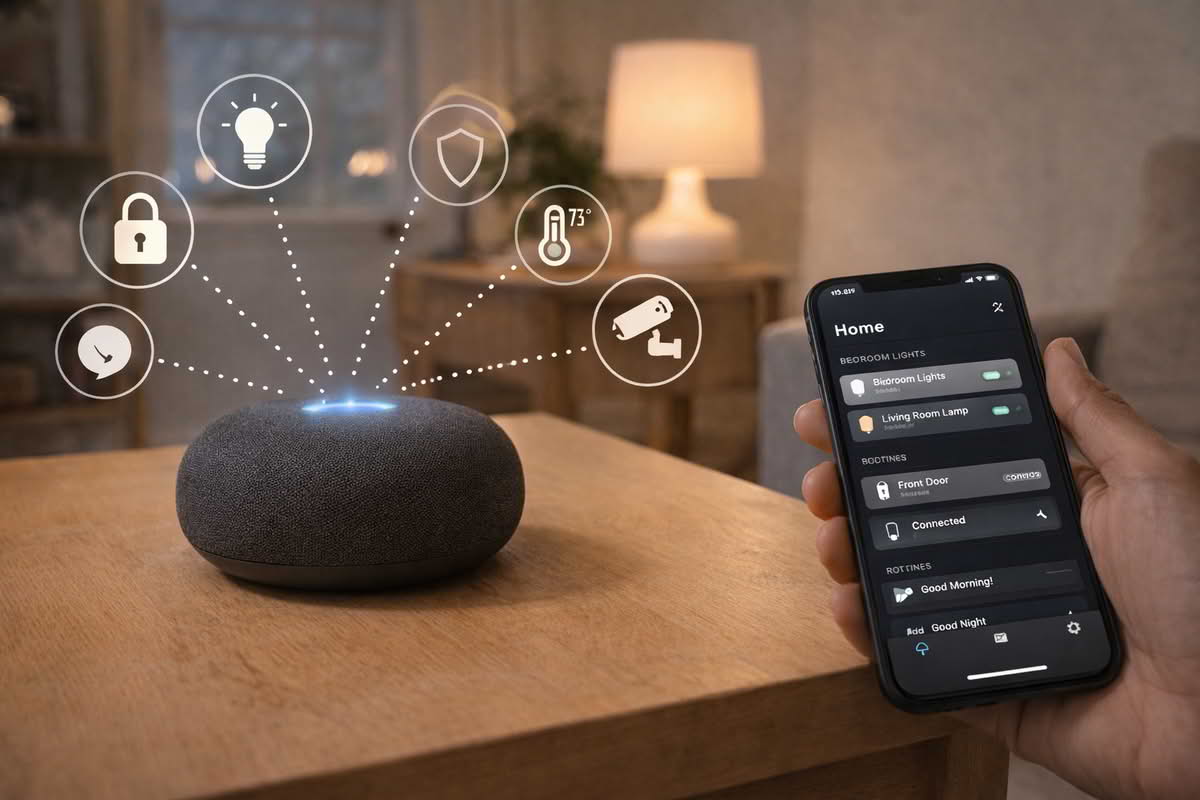
Smart speakers are often a household’s first real step into a larger smart-home ecosystem, which is why platform choice matters more than many buyers expect. A speaker is not just a music device with a microphone. It often becomes the first control surface for lights, plugs, routines, reminders, room groups, and future smart-home habits. That means the buying decision should include not just what the speaker can do now, but what kind of home-control logic it encourages later.
This is one reason entry-level smart speaker purchases sometimes age poorly. A buyer chooses a speaker for price or sound, then slowly adds smart bulbs, plugs, displays, or routines and realizes the surrounding platform feels awkward or limited for the way the household actually wants to live. The speaker was not the real decision. The ecosystem was. That does not mean beginners need to overthink every future device, but it does mean they should treat the first speaker as more than a casual impulse purchase.
Voice control style matters here too. Some households mainly want quick utility tasks: timers, weather, reminders, shopping lists, and a few simple commands for lights or plugs. Others want more active music use, multi-room playback, or deeper room-to-room smart-home routines. Some want the speaker to act mostly as a voice shortcut while they continue using apps and wall controls for most things. Others want the assistant to become a more central interface. The right platform fit depends heavily on which of these patterns feels natural in your home.
Smart-home control features are especially important if the speaker is meant to coordinate devices across rooms. A speaker that sounds good but offers weak or awkward device control may still be fine as a simple kitchen helper. But if you intend to expand into lighting, plugs, thermostats, displays, or hubs, that same speaker may become the wrong foundation. Buyers often underestimate how quickly a smart speaker shifts from being “a voice thing” to being “the way this house thinks about control.”
Choose the platform as carefully as the speaker, because the ecosystem often outlasts the first device.
Think about whether you want simple voice convenience or broader smart-home control across rooms.
Do not judge a speaker only by its sound if it may become the household’s first control hub.
Favor ecosystems that fit the household’s routines, not just the one with the lowest entry price.
Multi-room potential also deserves attention. If the first speaker works well, many households eventually want a second or third one in a bedroom, kitchen, office, or living room. At that point, grouping logic, speaker coordination, and app clarity matter much more. A platform that feels manageable with one device can feel messy with three. This is another reason the buying decision should look beyond the first room and consider whether the household might want a distributed voice layer later.
It is also helpful to be honest about whether voice is truly the preferred control method. Some buyers love spoken commands. Others find them convenient only for timers, music, and a few hands-free moments. That does not make a smart speaker a poor purchase. It just means the speaker should be chosen as a complement to normal household controls rather than as a replacement for every button, switch, and app in the home.
The most important long-term smart speaker decision is often the ecosystem behind it, especially when the speaker becomes part of a broader home-control setup.
Another subtle issue is household diversity. A speaker may make perfect sense to the person setting it up, but still feel unnatural to others in the home if the control style is too app-driven, too voice-dependent, or too inconsistent between rooms. Good platform fit means the household can use the speaker without needing one person to act as the permanent system administrator.
The better buying mindset is to choose a speaker that fits both the room and the control philosophy you are likely to expand with. That usually leads to fewer regrets than treating the first speaker as disposable and hoping the ecosystem questions sort themselves out later.
Judge smart speakers by daily usefulness, not by voice-assistant novelty alone
Smart speakers can sound more impressive during setup than they feel a few months later, which is why daily usefulness is the most important standard. Once the novelty fades, the household is left with a simple question: is this device making the room or routine easier? If the answer is yes, the speaker is probably a good fit. If not, even a capable speaker can become background clutter.
Timers, reminders, alarms, music requests, room controls, short answers, intercom-style messages, and routine triggers are often the features that survive long-term use. These are not glamorous, but they are exactly why smart speakers can become valuable household tools. A kitchen speaker that manages timers well may provide more real value than one with broader capabilities that are rarely used. A bedroom speaker that handles alarms, weather, and bedside voice commands calmly may outperform a more expensive model chosen mainly for feature depth.
Microphone performance matters here in a very practical way. The speaker has to hear commands reliably enough that using voice feels easier than walking over to a switch, opening an app, or pressing a button. In a loud kitchen or family room, weak responsiveness turns voice control into a small frustration instead of a convenience. Buyers often focus on audio quality and forget that a smart speaker that does not hear well is not really working as a smart speaker at all.
Privacy and comfort should be judged realistically too. A speaker lives in a real room, not in a product demo. Some people are perfectly comfortable with always-ready voice devices in kitchens and common areas but prefer not to place them in bedrooms or private workspaces. Others care less about placement and more about physical controls to mute microphones when desired. Long-term value depends partly on whether the household remains comfortable with the speaker’s presence after it stops feeling new.
Prioritize the tasks you expect to use repeatedly, such as timers, reminders, music, or simple smart-home commands.
Choose reliable voice pickup over extra features you may rarely touch.
Think about privacy comfort and microphone controls in the context of the actual room.
Judge the speaker by whether it reduces friction in daily life, not by how much it can theoretically do.
Sound quality should also be judged by your real listening pattern. Casual background music, spoken audio, podcasts, and kitchen listening have different standards from focused music listening in a living room. A household that mainly uses the speaker for voice requests and occasional audio should not overpay for premium sound it will barely notice. On the other hand, a room that truly depends on the speaker for everyday music should not be forced to live with a thin-sounding unit just because it was cheaper or more compact.
Multi-speaker expansion is another quiet source of long-term value or regret. If the first device works well, adding a second or third speaker should feel like a natural extension, not a fresh complication. This is where app design, grouping logic, and room naming start to matter much more. A strong ecosystem can make multiple speakers feel calm and coordinated. A weaker one can make expansion feel messy enough that the household stops after the first device.
The best smart speaker purchases usually feel slightly boring in the best sense. They fit the room, answer quickly, handle a few repeated tasks well, and continue to feel useful without asking for much attention. That calm utility is more valuable than a speaker that feels impressive in theory but awkward in the room or unreliable in ordinary use.
The lowest-regret buying mindset is to pick the simplest speaker that fully matches the room’s sound needs and the household’s likely control habits. In some rooms, that means a compact budget-friendly speaker with strong voice performance. In others, it means a larger speaker with better audio and enough smart-home control to remain relevant later. Better room fit and better daily usefulness matter more than broader ambition.
Final Recommendations — choosing a smart speaker that stays useful after the novelty fades
The right smart speaker is usually the one that matches the room’s real job and the household’s actual control habits. Start by deciding whether the device is mainly for voice convenience, music, or both, then choose the ecosystem that fits how you are most likely to expand into smart-home control over time.
Choose compact smart speakers when the goal is affordable voice access, bedside convenience, or light room-by-room control.
Choose room-filling smart speakers when the room genuinely needs stronger everyday audio in addition to voice control.
Choose budget voice assistants when the room’s role is simple and the main value comes from timers, reminders, and basic commands.
Choose speakers with stronger smart-home control features when the device is likely to become part of a broader multi-room setup.
In the long run, the best smart speaker is the one that fits naturally into the room and quietly improves the household’s routines. Good voice control should feel easy, audio should feel appropriate to the space, and the ecosystem behind the speaker should make future expansion feel more coherent rather than more fragmented.