Voice Assistant Starter Setup Buying Guide for a Practical First Smart Home
A voice assistant starter setup can be one of the easiest ways into smart-home control, but it is also one of the easiest places to make early decisions that create long-term clutter. Many beginners buy a speaker or display because it seems affordable and simple, then slowly add lights, plugs, routines, and other devices without ever deciding what kind of smart home they actually want. The result is often not a broken system, but a scattered one: several apps, devices in the wrong rooms, and voice control that feels useful in theory but inconsistent in practice. A good starter setup should do the opposite. It should give the household one clear ecosystem, one or two well-chosen devices, and a few repeated routines that actually make daily life easier. This guide focuses on those practical tradeoffs so you can choose a voice assistant setup that works well in the first room, supports normal household habits, and grows without becoming unnecessarily fragmented.
Start with the household routine and the first room you actually want to improve
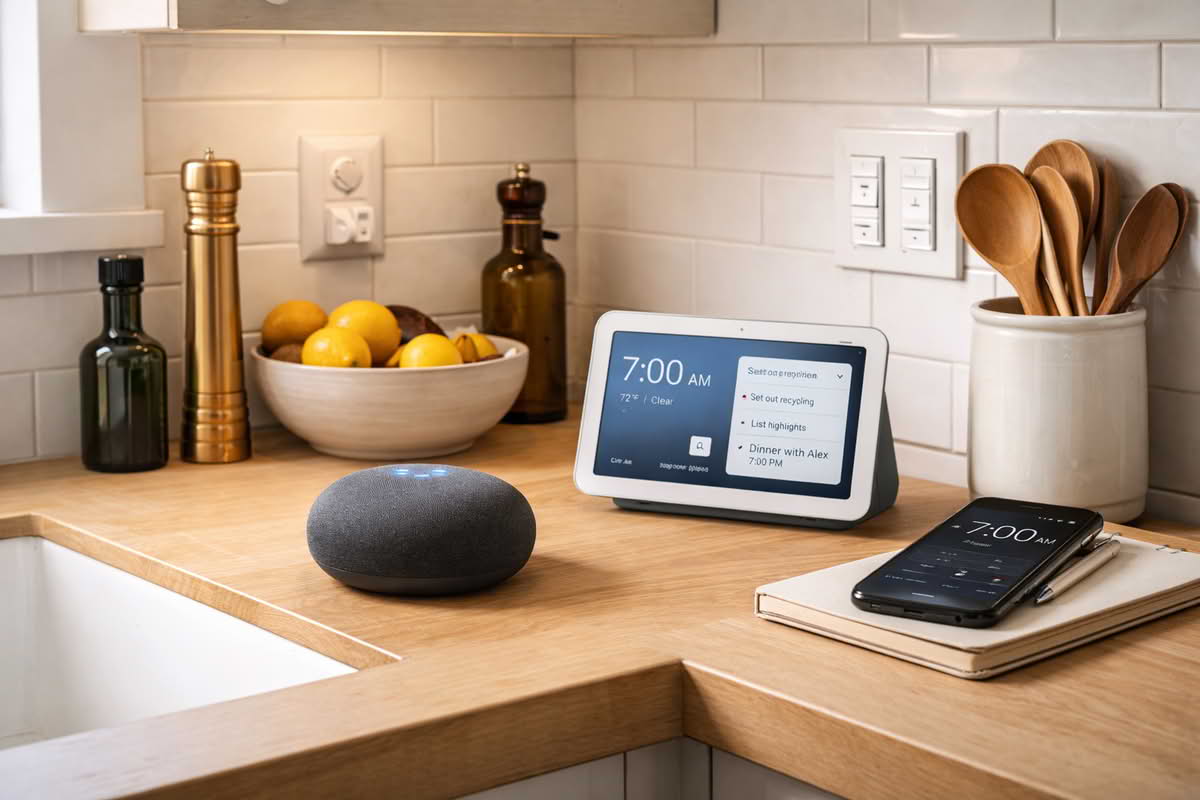
The strongest voice assistant starter setups begin with a room and a routine, not with a product bundle. This matters because voice control only feels useful when it solves a repeated household task. A kitchen that needs timers, shopping reminders, music, and a few hands-free answers creates one kind of starter setup. A bedroom that needs alarms, weather, bedtime lighting, and morning routines creates another. A living room that wants music plus a small amount of smart-home control may call for something else entirely. The better the first room is defined, the easier it becomes to choose the right mix of devices.
Many beginners make the mistake of thinking they need a whole-home strategy before buying anything. That often leads to overbuying. A more practical approach is to start with one room where voice control clearly reduces friction. Kitchens are common starting points because they reward timers, spoken questions, shopping list additions, music, and casual household coordination. Bedrooms are another strong starting point when the main goals are alarms, bedside convenience, and a simple lighting routine. Entry areas and offices can also make sense, but only when the household can clearly describe what the voice assistant will do there every day.
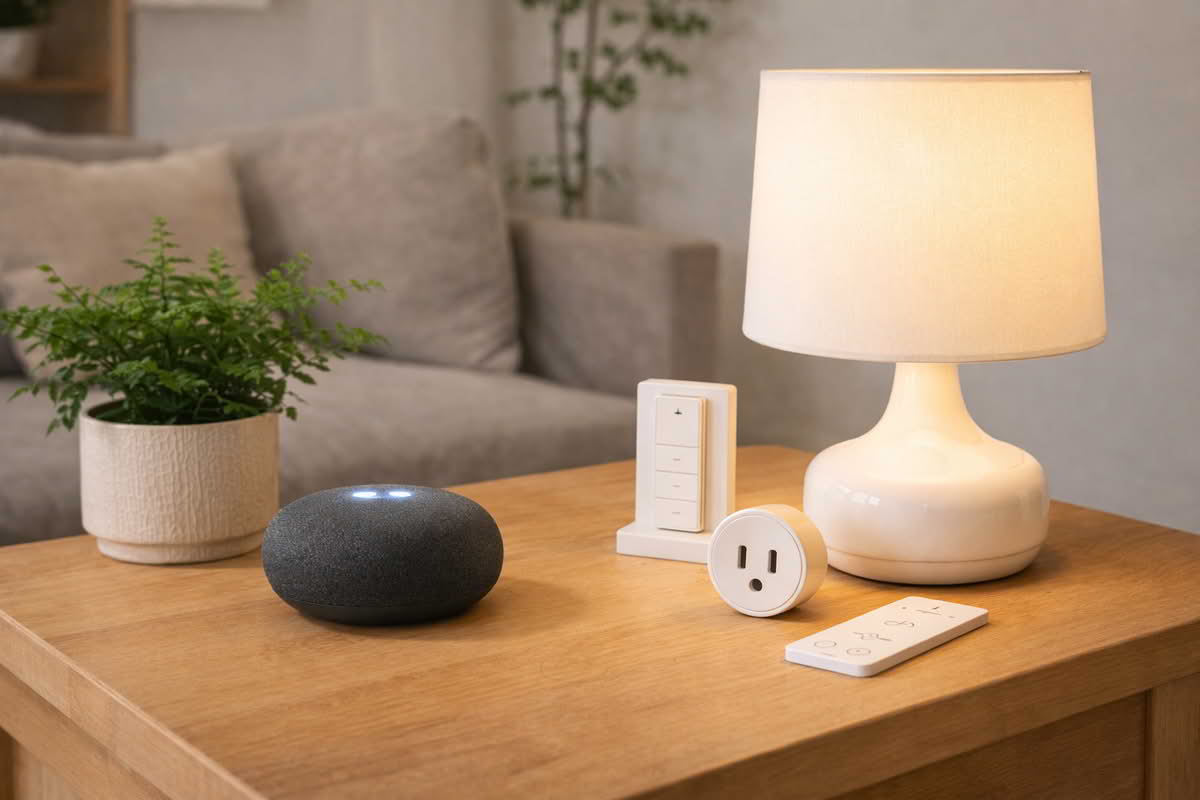
The first routine matters just as much as the first room. A setup intended mainly for music will be judged differently from one intended for smart-lighting control or calendar reminders. If you want a voice assistant mainly for hands-free convenience, a compact speaker may be all you need. If you want visual guidance for recipes, camera feeds, or dashboard-style controls, a display may make more sense. If the household mainly wants one or two lamps and a speaker to work together in the evening, a simple bundle can be better than a more ambitious starter plan.
Choose a first room where voice control solves a repeated daily task rather than just adding novelty.
Use the first setup to improve one routine clearly instead of trying to automate the whole house immediately.
Match the device type to the room’s real needs, such as timers, music, bedside routines, or quick smart-home commands.
Do not assume a starter setup has to include several rooms just to be worthwhile.
This is also where buyer psychology can create unnecessary complexity. A beginner may assume that the “right” starter setup must include a speaker, a display, several bulbs, a plug, and a hub because that looks comprehensive. In reality, the best beginner setup is often much smaller. One speaker in the correct room and one or two connected devices that support a real routine can teach the household much more about what it actually wants than a larger bundle that feels impressive at first but scattered in daily use.
Another useful question is whether the room already has a natural control point. A kitchen with busy hands and frequent multitasking benefits strongly from voice. A bedroom benefits when routines are quiet and predictable. A living room already filled with remotes, a television, and phones may need a more specific justification. Voice assistants are most valuable where spoken control genuinely removes friction, not where it simply duplicates easier existing controls.
A good starter setup usually begins in one room where voice control clearly improves a repeated routine such as timers, lighting, music, or reminders.
Starting with one room also creates a useful test. It reveals whether the household actually likes speaking to a device, whether room placement matters more than expected, and whether connected lighting or plug control feels worth expanding. That information is more valuable than trying to predict the whole smart-home future before the first real routine is in place.
The safest starting mindset is small but purposeful: choose one room, one assistant, and one or two problems to solve clearly. That usually leads to a more coherent smart-home foundation than buying a “starter bundle” first and hoping the room logic catches up later.
Choose the ecosystem and starter devices as one system, not as separate impulse buys
Once the first room and routine are clear, the next important decision is ecosystem choice. This is where many beginner setups quietly succeed or fail. A voice assistant is rarely just a speaker or display. It usually becomes the first real control layer for lights, plugs, routines, reminders, and later additions. That means the ecosystem behind the device matters as much as the device itself. Buyers sometimes choose the first speaker for price or appearance and only later realize they have also chosen the basic logic of the smart home.
That is why a starter setup should be chosen as a system. The speaker or display, the first smart bulbs or plugs, and the app experience should all make sense together. If the household wants simple bedside lighting and alarms, a compact assistant plus one or two smart bulbs may be the right first mix. If the kitchen is the target room, a display plus one plug or light routine may provide more value. If the goal is to test voice plus music in a common room, a stronger audio-focused speaker may matter more than adding multiple accessories right away.
Alexa starter setups often appeal to buyers who want broad everyday convenience and a relatively easy path into lighting, plugs, and simple room control. Google Home starter setups can appeal to households that prefer that voice style, search behavior, or display experience. Neither direction is automatically better. The more practical question is which ecosystem feels more natural for the way the household wants to ask, control, and expand. The first setup should align with that control style rather than forcing the household to adapt to a platform it never really liked.
Display-based starter setups deserve special attention because they can look more complete than speaker-only setups. Sometimes that is exactly right, especially in kitchens or visible common areas where timers, camera views, or dashboard access are central. But a display is not automatically a better starter device. In many homes, a speaker plus one or two well-chosen connected accessories is the more practical first step because it stays smaller, cheaper, and easier to place while still revealing whether voice control fits the household.
Choose the ecosystem and the first accessories together so the starter setup behaves like one coherent system.
Use compact speaker-led setups when voice convenience matters more than visual dashboards.
Use display-led setups when timers, visual answers, recipes, or camera checks are part of the room’s daily routine.
Do not confuse a bigger starter bundle with a better first smart-home experience.
Smart lights and plugs are often the best beginner accessories because they make voice control tangible quickly. Saying “turn on the lamp” or starting a simple evening routine helps the household understand the value of the assistant without requiring deeper technical planning. That said, the first accessory should match the room. A lamp in the bedroom, a kitchen plug for a light, or a living room lamp routine makes more sense than adding devices randomly just because they are easy to pair.
It is also useful to think about who will use the setup. If the household includes children, guests, or several adults with different habits, the starter devices should be easy to understand without explanation. That often favors clearer room names, fewer routines at first, and accessories that support normal household behavior instead of trying to replace it entirely. A starter setup is strongest when it feels like a small improvement to the room, not like a new system everyone must learn from scratch.
The best starter setups treat the assistant and first accessories as one small system, with the room and routine determining which devices belong together.
Another subtle mistake is starting with too many device categories at once. A speaker, bulbs, plugs, sensors, cameras, and display may all work well eventually, but beginners usually learn more from mastering one or two simple categories first. That creates cleaner naming, cleaner routines, and fewer confusing interactions across apps. Expansion then becomes deliberate instead of reactive.
The better buying mindset is to ask what one ecosystem and one starter device mix can do well in the chosen room. If that answer is clear, the first setup is likely to feel useful. If the setup depends on several categories all working together perfectly from the start, it is probably trying to do too much.
Build a setup that can grow cleanly without making the house harder to use
A voice assistant starter setup is not only about the first week of use. It is also about what the second room, second speaker, and second routine will feel like if the household decides to expand. This is where beginners often either build a clean foundation or create early fragmentation. The goal should not be “future-proofing” in an abstract sense. It should be choosing a setup that can grow without making basic household control feel more scattered.
Consistency matters first. If the first room uses clear names, simple commands, and understandable routines, expansion tends to feel natural. If the first setup already feels messy, adding more devices usually multiplies that problem. A good starter setup should teach the household how it wants rooms named, how routines should be phrased, and where voice control actually adds value. That learning is more important than squeezing every possible feature out of the first purchase.
Multi-room growth is one of the most common next steps. A kitchen speaker may lead to a bedroom speaker. A bedside routine may lead to a hallway or living-room light routine. A display used for front-door checks may lead to wanting a second visible control point elsewhere. That is normal, which is why the ecosystem should feel calm enough to support that expansion. Grouping logic, app clarity, and room naming should stay manageable as the household adds one layer at a time.
Low-friction use is the real standard. If the voice assistant only works well for one person, if routines are too complicated to remember, or if other people in the house fall back to manual control because the system feels awkward, the setup has limited long-term value. A beginner system should be easy enough that the household can use it without feeling like the home has become an experiment. That usually means simpler routines, fewer devices at first, and a strong bias toward making existing habits easier rather than replacing them.
Build the first setup with room names and routines that can still make sense when a second room is added later.
Favor simple repeated automations over a larger collection of clever but fragile commands.
Make sure the starter system works for the household, not just for the person who enjoys setting it up.
Expand only when the first setup has already proven useful in daily life.
Cost and device count should also be framed carefully. Beginner bundles can tempt buyers to think expansion is cheap and obvious. Sometimes it is. But the real cost is not only in devices. It is also in attention. Each added room brings more naming, more routines, more voice interactions, and more expectations about what should happen automatically. That is why slower, room-by-room expansion usually produces better long-term results than filling several rooms quickly without a strong reason.
Another quiet source of regret is choosing a starter setup that relies too heavily on voice alone. Voice is helpful, but most homes still depend on switches, remotes, apps, and visual controls too. A strong starter setup accepts that. It lets voice solve the tasks where speech is genuinely easier, while leaving normal household control patterns intact elsewhere. That balance keeps the house feeling usable even for people who do not want to talk to devices all day.
The best setups usually become slightly boring in the best possible way. The assistant handles timers, lamps, reminders, and a few routines well enough that no one thinks about the technology very much. That is a stronger outcome than a feature-rich setup that seems exciting but creates confusion in ordinary use. The first voice assistant system should make the house feel calmer, not more experimental.
The lowest-regret buying mindset is to start with the smallest setup that clearly improves one room, then let real daily use decide whether expansion is justified. A speaker or display, one or two connected devices, and a handful of simple routines are often enough to show whether the household wants more. If the answer is yes, growth becomes much easier because the foundation is already coherent.
Final Recommendations — choosing a starter setup that leads to a better smart home
The right voice assistant starter setup is usually the one that improves one room and one daily routine clearly while leaving room for clean growth later. Start by choosing the room where spoken control or glanceable information genuinely helps, then build a small ecosystem-consistent setup around that need rather than buying a large bundle by default.
Choose Alexa or Google Home starter setups based on which ecosystem fits the household’s preferred control style and likely expansion path.
Choose speaker-based starter setups when the first goal is voice convenience, music, reminders, and a few simple smart-home commands.
Choose display-based starter setups when the room benefits from timers, recipes, camera views, or a visible smart-home dashboard.
Prioritize clear room purpose, simple routines, and ecosystem consistency over bigger starter bundles that add devices before the household is ready to use them well.
In the long run, the best starter setup is the one that teaches the household what it actually wants from a smart home without creating clutter or confusion too early. A small, useful, well-placed system will usually provide more lasting value than a broader starter bundle that looks complete on day one but never settles into everyday life cleanly.