Smart Lighting Starter Kit Buying Guide for Building a Practical First Setup
Smart lighting starter kits are appealing because they seem to simplify a category that can otherwise feel fragmented. Instead of deciding separately between bulbs, plugs, bridges, apps, and room plans, you get a boxed starting point that promises everything will work together. Sometimes that is exactly what makes sense. Other times, it leads buyers into a bundle that solves the wrong problem, includes hardware they do not really need, or nudges them into a platform before they have thought through how the rest of the house should work. The best starter kit is not necessarily the biggest one or the one with the most dramatic lighting features. It is the one that gives you a clean first layer of control in a room where smart lighting will actually improve daily life. This guide focuses on those practical decisions so you can choose a starter kit that feels useful on day one and still makes sense as your lighting setup grows.
Start with the room and the problem you are trying to solve
The smartest way to buy a lighting starter kit is to ignore the word “starter” for a moment and focus on the room. A kit is only useful if it improves a real lighting situation in the house. That may mean making a living room feel more flexible in the evening, setting up bedside lighting that follows a schedule, automating a pair of lamps in a dark corner, or creating a cleaner first smart-lighting experience in an apartment where wiring changes are off the table. If the room problem is vague, the kit tends to be vague too, and that is where regret begins.
Many buyers are drawn to starter kits because they want a low-friction entry into smart lighting, which is a sensible goal. But low friction should not mean low planning. A kit built around several bulbs may be a great fit for a living room with matching lamps, yet a poor choice for a hallway where a switch-based solution would feel much more natural. A plug-focused starter kit might be perfect for lamps, seasonal decor, or basic automation in a rental, but not very useful if what you actually want is coordinated ceiling-light control in frequently used rooms.
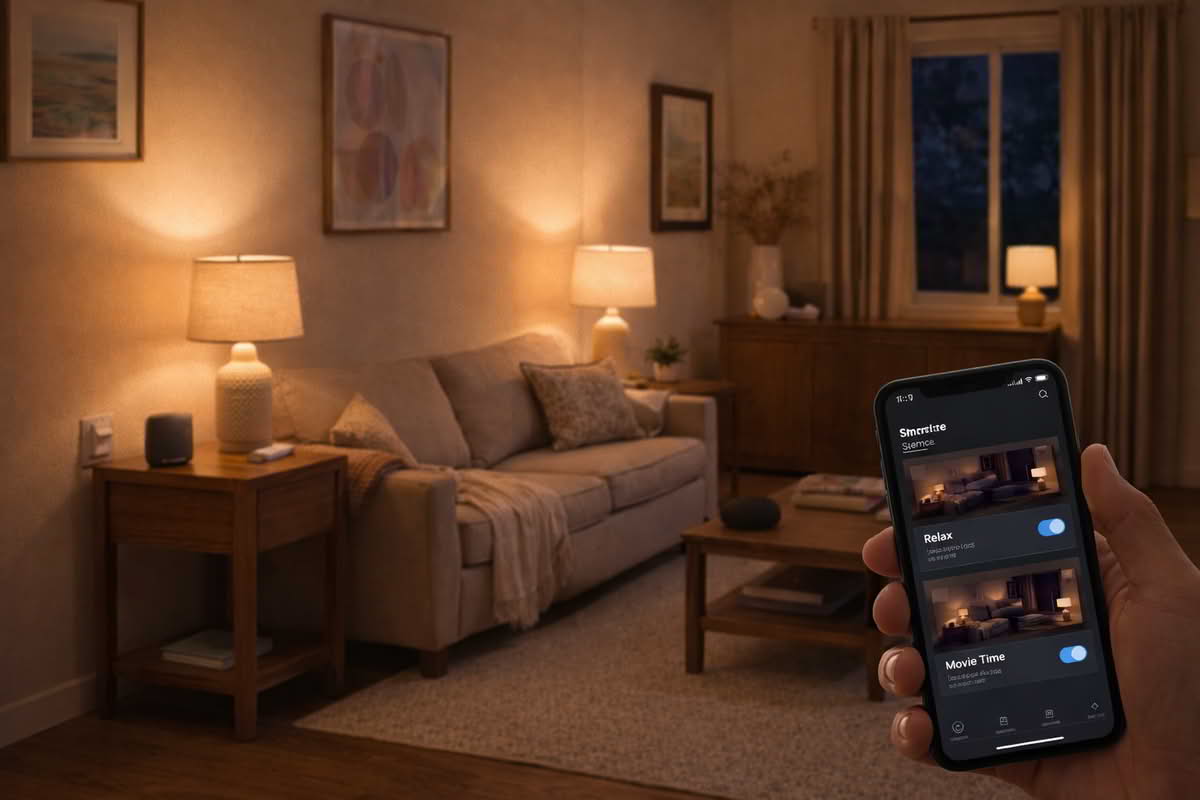
This is why room role matters more than the marketing category. Bedrooms, living rooms, and reading areas often benefit from dimming, warm light, and routines tied to time of day. Kitchens, laundry rooms, and work spaces need dependable brightness before anything else. Entry areas and hallways may benefit most from schedules or automation that removes a repeated habit. Once you know what lighting problem exists in the room, the right kind of starter kit becomes easier to identify.
Choose a starter kit only after deciding which room or zone it is meant to improve first.
Think in terms of lighting behavior, not just devices included in the box.
Use kits for rooms where several items should work together from the beginning.
Avoid buying a starter kit simply because it feels like the “official” way to begin smart lighting.
A common buyer mistake is assuming that starter kits are automatically better value than buying pieces individually. Sometimes they are. Sometimes they mainly bundle convenience and a shared setup path. That can still be useful, especially for first-time users who want fewer compatibility questions, but it should not replace basic planning. If the kit includes four bulbs and your room really needs two bulbs and a plug, the bundle may feel neat on the shelf but awkward in the house.
Another mistake is treating the first smart lighting purchase as a whole-home decision before you have any lived experience with the category. A starter kit works best when it gives you a contained test environment. One room, one routine, one manageable lighting pattern. That lets you learn whether you actually like app control, automated schedules, grouped lighting, or tunable white settings before committing to wider expansion. In that sense, the best starter kit is not the one that tries to do everything. It is the one that teaches you what kind of smart lighting you genuinely want more of.
Starter kits work best when they are planned around a specific first room where the lighting devices can operate together with a clear daily purpose.
For renters, first apartments, or households that want minimal installation complexity, starter kits can be especially appealing because they avoid electrical work while still offering a more coordinated experience than one-off device purchases. But even in those situations, the question stays the same: which room benefits first, and how should that room behave after the kit is installed? The kit should be the answer to that question, not the substitute for asking it.
Look closely at what the kit includes and what it commits you to
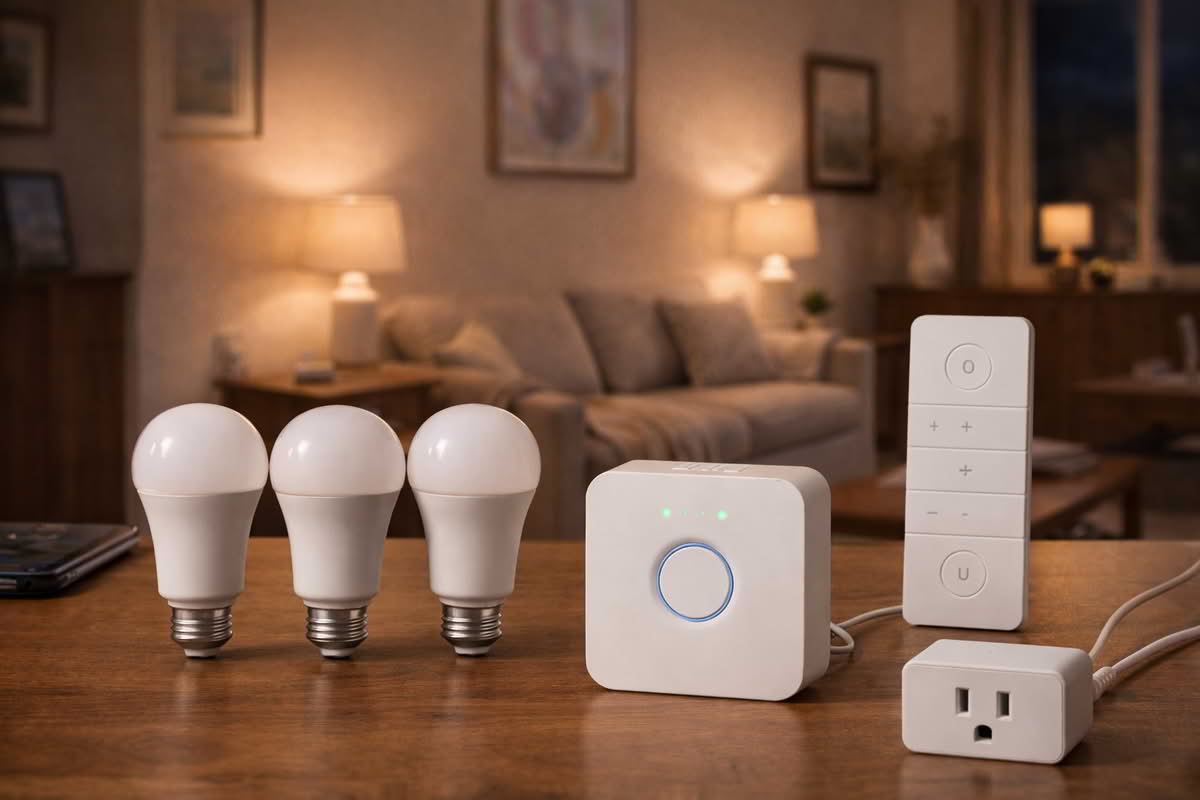
Once you know the type of room or lighting zone you want to improve, the next step is looking beyond the front of the box. Starter kits often appear straightforward, but what they include can shape your future setup more than first-time buyers realize. Some kits are essentially bulb bundles. Others add a hub or bridge, a remote, a plug, or a control accessory meant to make the first room easier to live with. Those differences are not just packaging choices. They reflect different assumptions about how your lighting should be controlled and how the system is meant to grow.
Bulb-first starter kits make the most sense when the target room already has lamps or fixtures that can stay powered consistently. They are especially useful when grouped control matters, such as matching bedside lamps or a pair of living room light sources. In those cases, buying a bundled set can reduce setup friction and make the room feel coordinated right away. But bulbs are not a universal answer. If the room depends heavily on wall-switch behavior, a bulb bundle may create the same old problem: the smart features disappear the moment someone turns the switch off.
Plug-based or mixed-device kits create a different value proposition. These can be useful when you want to automate lamps or small lighting loads without replacing every bulb individually. They also make sense for buyers who are still exploring what kind of lighting control feels natural in their home. A plug can add a smart layer to an existing lamp without forcing a full bulb ecosystem into the room. But that flexibility can also mean less visual consistency if the room eventually grows into a more coordinated lighting zone.
Hubs and bridges deserve special attention. Buyers are often tempted to avoid them because they look like added complexity. That instinct is understandable, especially for someone who wants a very simple first step. But a separate hub is not automatically a negative. In some ecosystems, it is what makes the lighting feel more stable, more coordinated, or easier to scale across multiple rooms later. The right question is not “Do I want extra hardware?” but “Does this extra hardware produce a better day-to-day system for the kind of lighting setup I may eventually want?”
Read starter kit contents as a control strategy, not just as a device count.
Bulb bundles work best where grouped lighting matters and fixtures can stay powered.
Mixed kits can offer flexibility, but may be less visually or behaviorally unified over time.
Do not dismiss hubs automatically if room-to-room consistency and future scaling matter.
Platform fit is just as important as hardware contents. A starter kit often becomes the first real commitment to a lighting ecosystem, and that means the app experience, automation style, grouping logic, and accessory support all matter. This is one of the quiet ways regret sets in. A buyer may like the initial kit but later realize the platform feels cluttered, limited, overly dependent on one control method, or awkward to expand. The starter kit then becomes not just a first purchase, but a first compromise.
That matters even more in households with multiple users. A lighting system should not only satisfy the person who set it up. It should still make sense to someone turning on bedside lamps at night, using a living room remote, or expecting the room to respond normally from a wall control. A good starter kit respects that. It creates automation and flexibility without making everyday lighting feel like a technical hobby.
Buyers should also think about whether the included control accessories are actually useful. A remote or room controller can be helpful when it bridges the gap between smart lighting and normal household habits. But if it feels redundant, confusing, or easy to lose, it may not add much real value. As with most smart-home categories, more included hardware is not automatically better. Better fit is better.
The value of a starter kit depends less on how many pieces are included and more on whether those pieces create a sensible first-room control strategy.
Judge the starter kit by how well it scales after the first setup
A starter kit should solve an immediate problem, but it also quietly sets the pattern for what comes next. That is why long-term value matters more here than in some other entry-level categories. Many people buy a kit expecting it to remain a single-room experiment, then quickly realize they want the same convenience in a bedroom, hallway, dining area, or home office. At that point, the starter kit stops being a simple bundle and starts acting like the foundation of a broader system.
This is where consistency becomes crucial. If the first kit creates lighting that feels calm, dependable, and easy to group, expanding later tends to feel logical. If the first kit feels slightly awkward, app-heavy, or overly dependent on workarounds, expansion becomes harder to justify. Buyers often think they are evaluating a boxed set, but they are also evaluating the long-term shape of their lighting habits.
Cost should be framed the same way. A starter kit may look attractively priced compared with buying each component separately, but the more important question is what the second and third room will cost if you like the first result. Some ecosystems make the first box feel affordable and the later expansion feel expensive. Others are more balanced. That does not mean you should only choose the lowest-cost path. It means you should be aware that the first kit is rarely the final cost if the lighting approach works well.
Think about the second room before buying the first kit.
Value a calm repeatable system over a flashy first-room demo.
Consider whether future expansion will require buying more of the same hardware category or shifting approaches later.
Judge the kit by how naturally it fits everyday lighting habits after the novelty fades.
Daily usability matters more than starter-kit excitement. Does the room still work normally if someone ignores the app? Are schedules helpful instead of intrusive? Do grouped lights stay consistent enough that the room feels intentional rather than patched together? Good smart lighting should become less visible over time, not more. The strongest starter kits are usually the ones that create a few dependable routines and then quietly support them.
Another common failure mode is overcommitting to features you do not actually value. Buyers sometimes choose a kit full of color-capable bulbs, extensive scenes, or accessory controls because it feels like the most complete option, then discover that what they really wanted was simple warm white lighting with reliable evening dimming. Starter kits are especially vulnerable to this kind of overbuying because they are packaged to feel exciting. A better test is to ask what the room should do on an ordinary Tuesday evening, not what it could theoretically do during a holiday or party.
Platform-specific starter kits deserve a realistic look as well. They can make excellent sense when you already know you want your lighting to live inside a particular smart-home ecosystem and you value clean integration with the voice assistant, app, or room groupings you already use. But if your household is still undecided, a highly platform-shaped kit can become limiting. The goal is not avoiding ecosystems altogether. It is choosing one because it fits your household logic, not just because the bundle looked convenient at the moment.
The most durable starter-kit purchase is usually modest, intentional, and easy to repeat. It improves one room clearly, teaches you whether the platform and control style feel right, and gives you a roadmap for expanding without having to rebuild your thinking from scratch. That is the real value of a good starter kit. It is not only a first purchase. It is a low-risk first pattern.
Final Recommendations — choosing a starter kit that leads to a better lighting system
The best smart lighting starter kit is usually the one that solves a clear first-room problem while leaving you with a system worth expanding later. Start by choosing the room, the lighting behavior you want to improve, and the control style that will still feel natural in daily life. Then choose the kit whose contents and platform logic match that plan.
Choose starter bulb kits when you want grouped lamp or fixture lighting in a room that can keep power flowing consistently.
Choose mixed or plug-oriented starter kits when flexibility matters more than tightly matched lighting hardware.
Choose platform-specific kits when you already know the broader ecosystem fits how your household wants to control lighting.
Prioritize repeatable room logic, calm app behavior, and long-term expansion value over the most feature-heavy bundle.
In the long run, the lowest-regret starter kit is the one that helps your first smart-lit room feel more natural, not more complicated. Good kits do not just get you started. They help you discover whether the lighting system behind them is actually worth living with across the rest of the home.