Smart Light Switch Buying Guide for Practical Room-by-Room Lighting Control
Smart light switches are often the better long-term lighting upgrade for people who want automation without changing how the house normally works. That is the main distinction. A smart bulb can make one lamp or fixture more flexible, but a smart switch changes the control point for the whole room. Done well, it feels natural: the wall control still works, the lights respond predictably, and schedules or voice commands become an added convenience rather than a fragile layer sitting on top of old habits. Done poorly, a switch upgrade can become confusing, incompatible with the wiring in the wall, or disappointing in rooms where dimming, multi-way control, or family use were not thought through in advance. This guide focuses on those practical decisions so you can choose smart switches that fit your wiring, your rooms, and the way people actually interact with lighting every day.
Understand when a smart switch is a better fit than smart bulbs
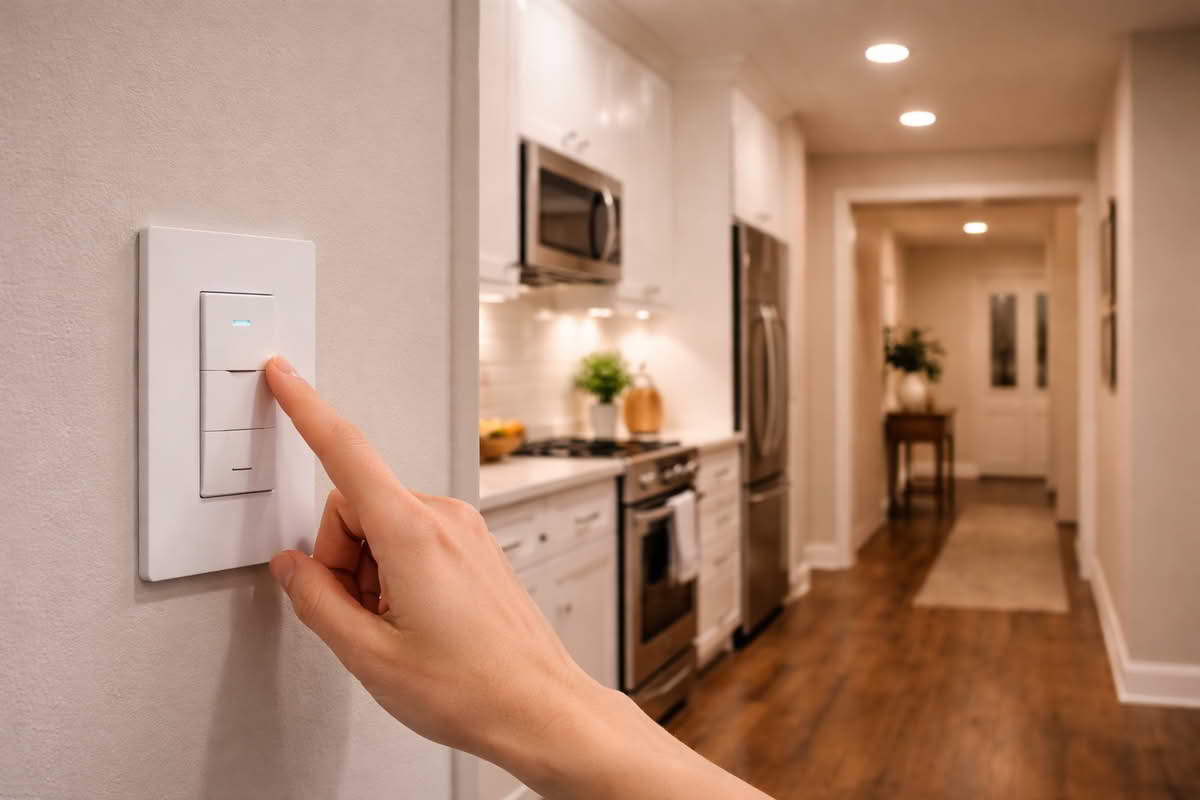
The main advantage of a smart light switch is that it upgrades the way a room behaves without requiring everyone in the house to change their instincts. People still walk in, use the wall control, and expect the lights to turn on. That matters more than it may seem at first. Many early smart-lighting frustrations come from forcing normal lighting behavior into a bulb-centered setup where the fixture must stay powered constantly. In contrast, a smart switch usually preserves the familiar control point while adding app access, schedules, voice integration, and automation in the background.
This makes smart switches especially useful in primary-use rooms. Kitchens, hallways, bathrooms, laundry rooms, living rooms, stairways, garages, and bedrooms with ceiling fixtures all benefit from lighting that behaves consistently for everyone. In those spaces, wall-switch control is not optional. It is the normal interface. If you try to make those rooms “smart” with bulbs alone, you often end up fighting the room rather than improving it. Someone turns the switch off, the bulbs go offline, and the automation logic starts to feel fragile.
That does not mean smart switches are always the better answer. Lamps plugged into outlets, decorative lighting, and isolated fixtures that do not rely on shared wall controls are often better candidates for bulbs or smart plugs. But when a whole fixture or room should behave intelligently without losing the natural experience of physical control, switches are often the cleaner solution. The benefit is not just technical. It is behavioral. A smart switch aligns better with how households already use lighting.
Another important difference is scale. A switch can control several bulbs in a room at once. That usually makes it more efficient and more coherent than replacing each bulb individually, especially in ceiling fixtures with multiple sockets or in rooms where consistency matters. Buyers sometimes start by pricing one smart bulb and assume bulbs are the cheaper path, then realize later that a six-bulb dining room fixture or a row of recessed lights becomes expensive and still may not solve the control problem as elegantly as one well-chosen switch.
Choose smart switches when normal wall control should remain the primary way a room works.
Use smart switches in busy shared rooms where automation needs to support everyday habits, not replace them.
Consider switches first when one wall control manages several lights or bulbs together.
Do not assume smart bulbs are the simpler option if the room already depends on a switch.
There is also a design advantage. Smart switches can keep the room visually quiet. Instead of introducing mismatched bulb behavior or requiring several individual smart devices to stay coordinated, the intelligence lives at the control point. For homeowners who want the house to feel upgraded but not gadget-heavy, that can be appealing. The room still looks and behaves like a room, not like an experiment in lighting automation.
The biggest buyer mistake in this category is treating the switch as if it were just another app accessory. It is not. A wall switch is part of the room’s basic infrastructure. That means the standard for success is higher. It must feel dependable to guests, family members, and anyone using the room without thinking about smart-home logic at all. If it cannot do that, the extra features matter much less.
Smart light switches usually make the most sense in rooms where the wall control is already the natural way people expect the lighting to work.
Match the switch to your wiring, dimming needs, and circuit type
More than most smart-home categories, smart light switches are shaped by the physical reality inside the wall. This is where many buying decisions go wrong. People choose a switch based on app features, style, or price, then discover that the existing wiring is not compatible or that the lighting circuit is more complicated than expected. That is why wiring should be treated as the foundation of the purchase, not as a detail to sort out later.
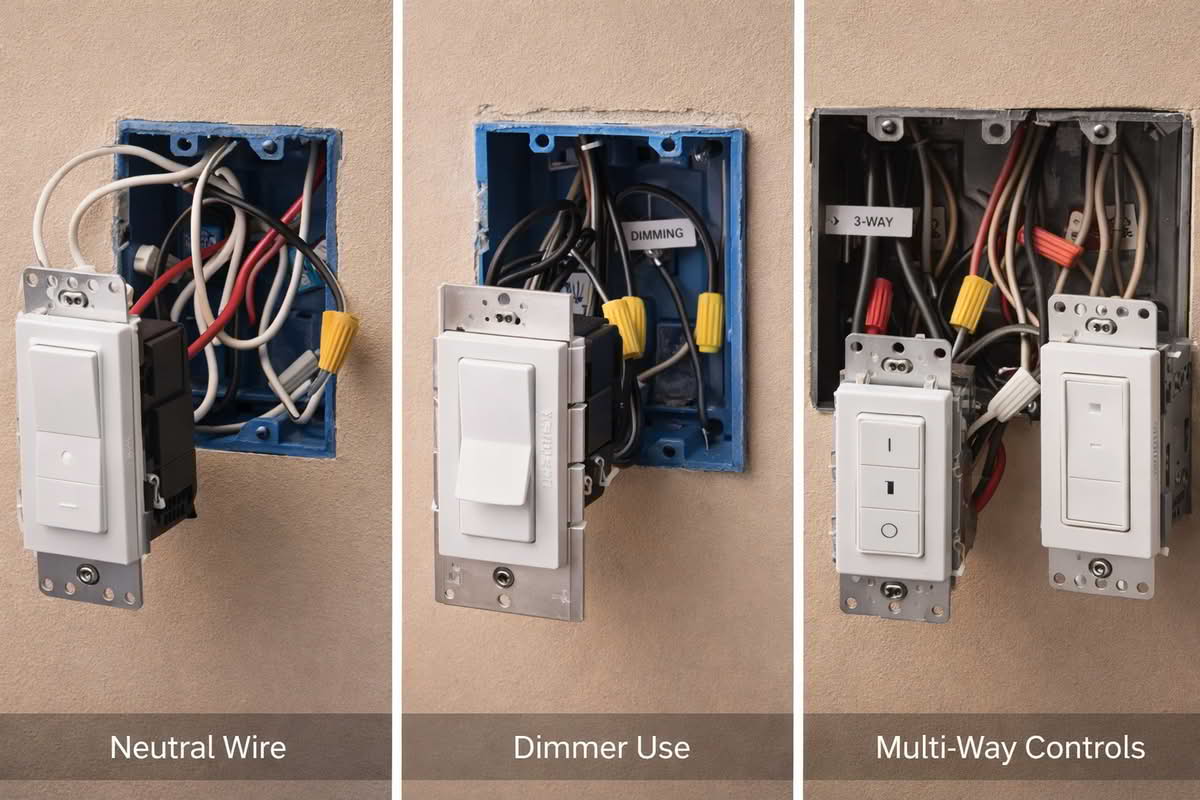
One of the first questions is whether the switch location has a neutral wire. Many smart switches rely on one, and many homes do have it available, especially in newer construction or updated wiring. But not every switch box is the same, and older homes often create more uncertainty. No-neutral smart switches exist precisely because this is such a common limitation. They can be a valuable solution, but buyers should think of them as a compatibility path, not automatically as the best general option. When a standard neutral-compatible switch is available and fits the circuit, it often provides a simpler and more predictable upgrade path.
Dimming needs are equally important. A standard smart switch and a smart dimmer are not interchangeable just because they fit in the same wall box. If the room needs adjustable light levels, choose a dimmer that matches both the fixtures and the bulbs it will control. This matters especially in living rooms, bedrooms, dining areas, and other spaces where bright task lighting and softer evening lighting both matter. A good dimmer adds real everyday value, but a mismatched one can cause flicker, limited dimming range, or inconsistent behavior that makes the room feel worse rather than better.
Multi-way circuits deserve special attention too. If a room is controlled from two locations, such as a hallway, stairwell, or large living space, a three-way smart switch setup may be required. Buyers often underestimate how much this changes the installation decision. A single-pole smart switch might look correct on a product page, yet be the wrong choice for the room. If more than one switch controls the same lighting load, you need to understand that circuit clearly before choosing hardware.
Confirm neutral-wire availability before assuming any smart switch will fit the wall box.
Choose smart dimmers only when the bulbs and fixture setup are compatible with dimming.
Identify whether the lighting circuit is single-pole or three-way before buying.
Use no-neutral or specialty switches as targeted solutions, not as default assumptions.
Bulb compatibility matters even with switches. Some buyers assume that once the intelligence moves to the wall, the bulbs no longer matter. That is only partly true. Standard non-smart bulbs often pair well with smart switches, especially in ceiling fixtures and built-in room lighting. But if dimming is involved, bulb quality and compatibility still affect the result. The switch may work perfectly while the bulbs flicker or dim unevenly. This is why a lighting upgrade should be treated as a room system, not just a one-device swap.
Load type and room role also matter. Bathroom exhaust-light combos, ceiling fans with integrated lighting, exterior floodlights, and certain specialty fixtures create more complicated control requirements than a simple overhead bedroom light. In those cases, the safest buying mindset is slower and more specific. Smart switches work best when the buyer knows exactly what the switch is controlling and whether the circuit is truly suited to the planned function.
Installation confidence is another practical consideration. Some homeowners are comfortable identifying wires, replacing wall controls, and verifying compatibility carefully. Others prefer a simpler route or professional installation. There is no penalty for that. Because a switch is part of the home’s electrical interface, it deserves more respect than a plug-in smart device. A well-installed switch that fits the circuit properly will usually provide better long-term value than a rushed upgrade pursued mainly because it seemed like the more “advanced” choice.
Wiring type, dimming needs, and multi-way circuit design often determine which smart switch category is actually appropriate for a room.
One more subtle issue is future flexibility. A homeowner might start with one hallway or kitchen switch, then later decide to standardize lighting controls across several rooms. In that situation, choosing a switch ecosystem that handles mixed room types well can matter more than squeezing the lowest price from the first install. If the platform supports normal switches, dimmers, and specialty options cleanly, expanding later becomes easier and less piecemeal.
Choose for household usability and long-term reliability, not just automation features
Once the wiring is compatible, the next question is how the switch will feel to live with. This is where many marketing claims become less important than basic daily usability. A good smart light switch should work well even for people who never open the app. The physical press should feel natural, the room should respond predictably, and manual use should remain just as dependable as it was before the switch became smart.
This is especially important in shared households. A switch upgrade that feels elegant to the person who installed it can feel confusing to everyone else if the tap behavior is odd, status lights are distracting, or the room stops working normally during app changes or internet interruptions. The best switch is usually the one that disappears into the routine of the house. Automation should add convenience quietly through schedules, scenes, and voice control, but the switch itself should still be understandable at a glance.
App quality still matters, of course, because that is where the long-term benefits live. Grouping rooms, managing schedules, linking a switch to routines, and deciding what the status indicators do all shape the ownership experience. But those features only matter if the physical switch already succeeds as a switch. Buyers sometimes overvalue remote features and undervalue the room-level question of whether the lighting still feels calm and intuitive during ordinary use.
Response reliability is another major differentiator. Lighting is one of the least forgiving smart-home categories because everyone notices delay. A speaker routine that takes a moment may be acceptable. A wall switch that feels slow, inconsistent, or occasionally disconnected can become irritating almost immediately. This is why practical responsiveness should matter more than a long list of automation possibilities. Lighting is one of the most repeated interactions in the home, so even small friction becomes noticeable quickly.
Prioritize switches that still feel natural for people who never use the app.
Choose fast reliable response over novelty features that sound impressive but add little daily value.
Use automation to support room routines, not to replace ordinary lighting behavior entirely.
Think about future room-by-room consistency if you may expand the system later.
Good automations are usually modest. A hallway light that turns on at sunset, a bathroom dimmer that uses lower brightness at night, or a kitchen switch tied into a morning routine can all add real value because they support the way the house already operates. In contrast, overly elaborate scenes or app-heavy behavior can make lighting feel overmanaged. Smart switches usually shine when they simplify the lighting experience, not when they turn every room into a control experiment.
Maintenance is generally light, but long-term ownership still matters. Firmware changes, app redesigns, and gradual system expansion can shape whether the switch ecosystem continues to feel coherent. Buyers who plan to upgrade several rooms over time should care about platform stability, available switch varieties, and how well the app handles mixed control types. A single good switch is useful. A system that stays organized across hallways, bedrooms, kitchens, and common spaces is much more valuable.
It is also worth being realistic about when a smart switch is not the best fit. Plug-in lamps, renters avoiding electrical modifications, decorative lighting experiments, and very low-stakes accent lighting often benefit more from smart plugs or bulbs. Smart switches are strongest when the lighting circuit is stable, the room’s function is clear, and physical wall control should remain central to the experience.
The lowest-regret buying mindset is simple: choose the switch type that matches the wiring, supports the room’s actual lighting behavior, and still makes sense to the least technical person using the space. That usually leads to better outcomes than chasing the most advanced-looking model or the deepest automation menu.
Final Recommendations — choosing switches that make smart lighting feel natural
The best smart light switch is usually the one that preserves normal wall control while quietly adding automation that the household will actually use. Start with wiring compatibility, dimming needs, and circuit type, then choose a switch that fits the room’s role and the habits of the people using it. That approach produces lower-regret results than starting with features alone.
Choose standard smart switches for shared rooms where simple on-off lighting control matters most.
Choose smart dimmers for bedrooms, living areas, and other spaces where adjustable light levels improve daily comfort.
Choose no-neutral or three-way models only when the wall wiring or circuit layout specifically calls for them.
Prioritize fast manual response, household usability, and room-by-room consistency over overly complex automation extras.
In the long run, the best smart switch setup is the one that makes the house feel more capable without making it feel harder to use. Good lighting control should remain familiar at the wall, dependable in daily routines, and flexible enough to grow as you upgrade more rooms over time.