Smart Light Bulb Buying Guide for Practical Everyday Home Lighting
Smart bulbs are often treated like the easiest possible smart-home upgrade, and in some ways they are. You can usually install one in minutes, control it from a phone, and start experimenting with schedules or voice commands right away. The problem is that many buyers stop there and assume all smart bulbs work about the same. In practice, the differences that matter most show up later: whether the bulb responds reliably, whether the room is bright enough, whether the app feels calm or annoying, and whether the lighting still works naturally for everyone else in the house. A smart bulb should make everyday lighting more flexible, not more fragile. This guide focuses on those practical tradeoffs so you can choose bulbs that fit your rooms, your routines, and the level of automation you actually want to live with.
Start with the room and the kind of light you actually need
The easiest way to buy smart bulbs badly is to start with app features and color effects before deciding what the room actually needs from its lighting. A bedroom lamp, kitchen ceiling fixture, reading corner, hallway sconce, and living room floor lamp may all accept a bulb with the same base type, but that does not mean they benefit from the same kind of smart bulb. The most important first step is understanding whether the goal is better everyday lighting, flexible mood control, simple automation, or just easier remote access for lamps and fixtures that are currently inconvenient to reach.
Brightness matters more than many people expect. Buyers sometimes assume that any modern smart bulb will be “plenty bright,” only to discover that a bulb that feels acceptable in a bedside lamp looks weak in a kitchen fixture or open living area. Smart bulbs are still bulbs first. If they are replacing the main light source in a room, the bulb needs to produce enough usable light for that room’s size, shade type, and general function. Decorative smart lighting is one category. Primary room lighting is another, and it demands more care.
Color temperature is equally important, especially for people who think they only want a basic white bulb. In practice, white light can range from warm and relaxed to crisp and task-oriented. A warm bulb may feel comfortable in a bedroom or den but too soft in a work area. A cooler bulb may help in kitchens, laundry areas, or home offices, yet feel sterile in a room intended for winding down. This is one reason tunable white bulbs can make more sense than buyers initially assume. They are not flashy in the way full-color bulbs are, but they often provide more useful everyday flexibility because they let the room shift with time of day and activity.
Choose brightness based on room role, not just bulb marketing language.
Decide whether the bulb is decorative accent lighting or a main light source.
Use color temperature as a practical comfort decision, not an abstract technical spec.
Think room by room rather than assuming one bulb type fits the entire house equally well.
Full-color bulbs have clear value in some homes, but they are also easy to overbuy. They make sense when you genuinely want scene-setting, entertaining flexibility, children’s room lighting variation, or a way to change the feel of a space without new fixtures. But many buyers are initially drawn to color because it feels like the complete smart lighting experience, then end up using a standard warm or neutral white setting almost all the time. That does not make color bulbs a mistake. It just means you should be honest about whether color is central to your daily use or merely appealing during setup.
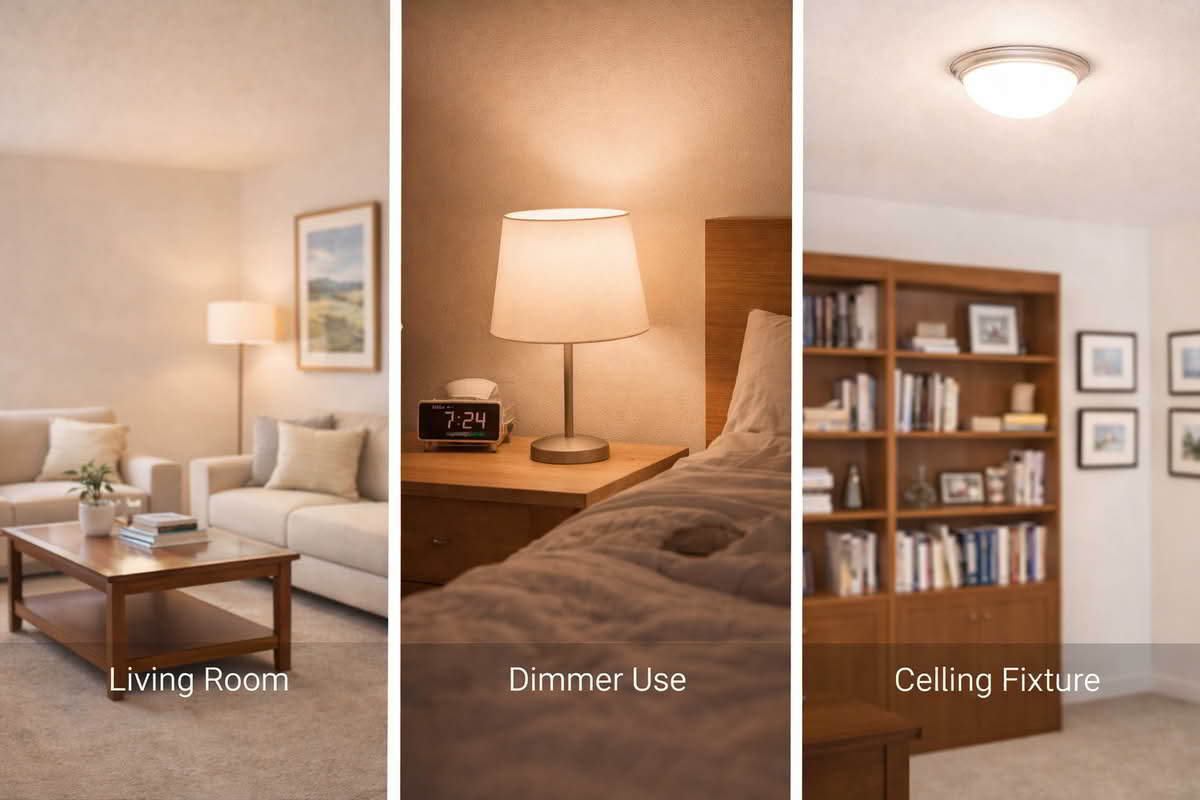
Lamp type and fixture shape matter too. A bulb inside a shaded table lamp behaves differently from one in an exposed ceiling fixture. Frosted glass, narrow shades, directional sconces, and enclosed fixtures can all change how bright a bulb feels and how evenly the light spreads through a room. Buyers sometimes blame the bulb when the real issue is that the fixture does not distribute light well for the room’s needs. If a fixture is already marginal with a standard bulb, switching to a smart bulb may not solve the underlying lighting problem.
Smart bulbs work best when brightness and light tone are matched to the room’s actual function rather than chosen only for app features or novelty.
It is also worth thinking about how many bulbs need to work together. A single smart bulb in a reading lamp is a simple purchase. Four or six bulbs in a main living area create a different kind of system. At that point, consistency matters. If the bulbs do not dim evenly, respond together, or maintain matching white tones, the room can feel less polished than expected. Multi-bulb rooms reward a more deliberate buying decision because slight inconsistencies become more visible when several light sources are used side by side.
The safest buying approach is to decide which rooms actually benefit from smart control, then narrow the bulb type based on daily use. Bedrooms and living rooms often benefit from dimming and warm-to-cool flexibility. Hallways and entry lamps may benefit more from schedules and reliable on-off control. Kitchens and work spaces need brightness and dependable task lighting before anything else. Once those goals are clear, the bulb category becomes much easier to judge realistically.
Think through control method, setup style, and everyday compatibility
Smart bulbs feel simple because the hardware is familiar, but the control logic behind them deserves more attention than many buyers give it. The key question is not just whether you can control the bulb from an app. It is how the bulb will behave in a home where people still use wall switches, expect lights to work instantly, and may not all want to manage lighting through the same system.
This is where many first smart-bulb setups begin to feel awkward. If a smart bulb is installed in a fixture controlled by a normal wall switch, the bulb loses its smart features whenever that switch is turned off. That is not a defect. It is simply how the system works. But it can frustrate buyers who expected voice control, schedules, and app access to remain consistently available. In households with multiple people, this friction shows up quickly. Someone flips the switch out of habit, and the carefully planned automation disappears until the switch is turned back on.
That does not mean smart bulbs are a poor choice. It means they work best in certain situations: lamps that stay powered, rooms where app or voice control makes genuine sense, fixtures that are inconvenient to reach, or spaces where you are willing to shape the control method around the bulb. In some rooms, that may be ideal. In others, a smart switch is the cleaner long-term choice because it preserves natural wall control while still adding automation. Buyers comparing bulbs and switches should be especially honest about how people in the home actually interact with lighting.
Setup style also matters. Some smart bulbs connect directly to the home network, while others work through a separate bridge or hub. Direct-connection setups can feel easier at first because they reduce hardware and make a single-bulb installation feel lightweight. Bridge-based systems can feel more deliberate and sometimes less convenient up front, but they may offer stronger room-to-room consistency, better device coordination, or a clearer path for expanding a larger lighting setup. The right fit depends on whether you are buying one or two bulbs for convenience or gradually building a more coordinated lighting layer across several rooms.
Smart bulbs work best when the fixture stays powered consistently.
Think about who uses the wall switch before choosing bulbs for a room.
Choose setup simplicity for small projects and system consistency for larger lighting plans.
Do not assume app control automatically improves a room if the control method feels unnatural.
Voice assistants, scenes, and automation rules can be helpful, but they should support normal living rather than replace it. A good lighting setup should still make sense when someone walks into a room half awake, when a guest uses the house, or when a family member does not care about smart-home routines at all. If controlling the light requires too much explanation, the convenience argument starts to weaken. Smart bulbs succeed when the automation feels optional but valuable, not when it becomes the only practical way to use the room.
Compatibility with dimmers and enclosed fixtures deserves caution as well. Not every existing dimmer plays well with smart bulbs, and combining the wrong type of wall dimming hardware with smart control can produce flicker, instability, or confusing behavior. Similarly, some enclosed or heat-trapping fixtures are less friendly to certain bulb designs over the long term. Smart bulbs are often marketed as universal upgrades, but the reality is more conditional. A few minutes spent thinking about fixture type and existing controls can prevent a lot of avoidable frustration later.
It is also wise to consider what happens during internet interruptions, router changes, or power outages. Some smart bulbs recover gracefully and return to expected behavior. Others may require a little more cleanup, re-pairing, or setting review than a buyer anticipated. These are not daily events, but they do shape trust. A smart bulb should still feel like a light first. If small network disruptions make the room feel unreliable, the convenience benefit starts to erode.
Judge smart bulbs by long-term usability, not by feature lists alone
The most important question with smart bulbs is not what they can do on day one. It is whether they continue to feel worthwhile after the novelty fades. This is where practical ownership matters more than marketing. A bulb can advertise scenes, schedules, millions of colors, remote access, and platform integrations, but the daily value often comes down to a smaller set of qualities: reliable response, predictable dimming, stable grouping, useful automation, and lighting that still feels good when used manually.
Cost should be framed in system terms rather than per bulb alone. One smart bulb in a lamp is an easy experiment. Replacing six bulbs in an open-plan living space, or outfitting several bedrooms and hallways, becomes a broader budget decision. At that point, the real question is whether the room-by-room gains justify the total cost and the complexity you are introducing. Buyers often underestimate how quickly a “simple” smart bulb project becomes a small ecosystem. The best approach is usually incremental: start where smart control solves a clear problem, then expand only if the value holds up in everyday use.
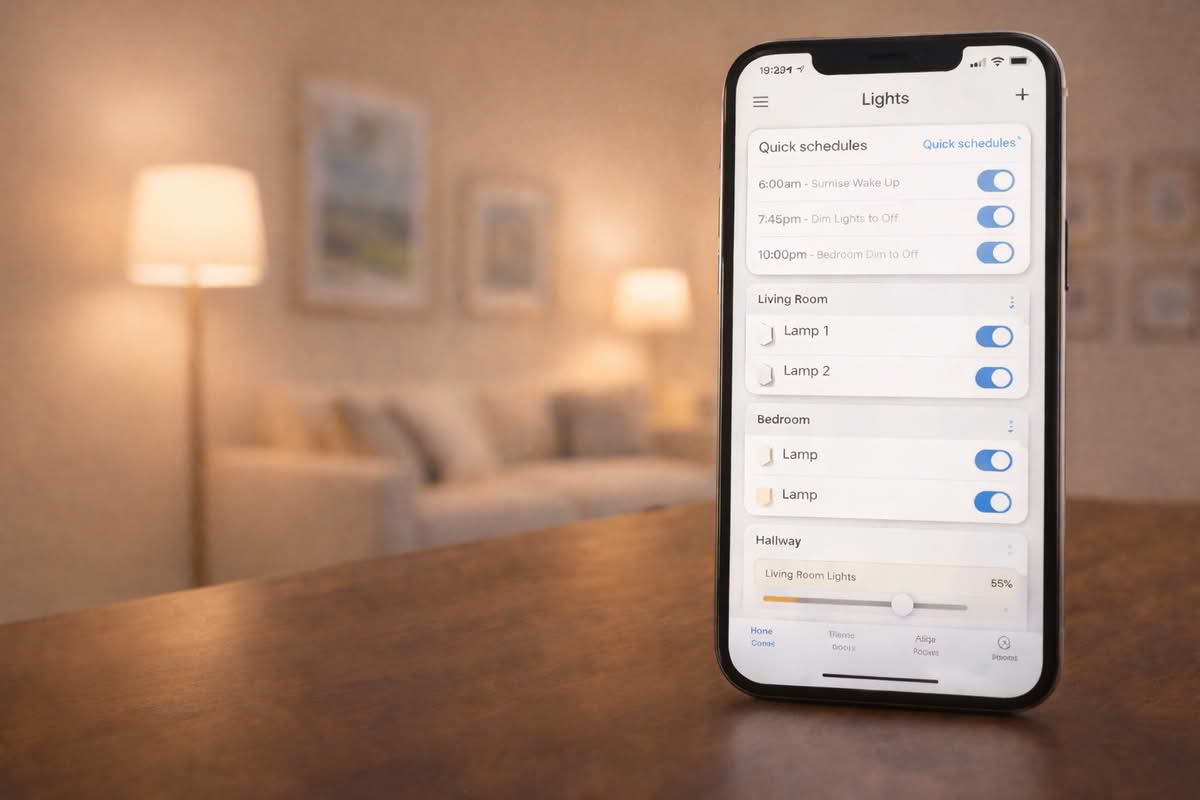
Schedules and routines are often where smart bulbs prove themselves. A bedside lamp that shifts warmer in the evening, a hallway light that turns on at sunset, or living room lamps that come on before you arrive home can all feel genuinely useful. These are modest improvements, but that is exactly why they matter. Smart lighting tends to provide the most value when it quietly removes friction rather than when it tries to impress. The more a setup depends on constant tinkering, scene management, or novelty color changes, the less likely it is to remain central to daily life.
Evaluate smart bulbs as part of a room or household system, not just as one-off gadgets.
Start with problems that smart control clearly solves, such as timing, dimming, or hard-to-reach lamps.
Expect the most lasting value from routines and consistency rather than dramatic effects.
Expand gradually so you can see which rooms actually benefit before committing widely.
Multi-room ownership adds another layer. Once bulbs are grouped across several rooms, the quality of the app and the stability of the platform matter more. A good system should make it easy to understand which lights belong together, whether automations are active, and how manual control interacts with those automations. A poor app can make even good bulbs feel messy. The room lights may technically work, but if everyday adjustments are confusing, the whole system feels less trustworthy.
There is also a psychological side to smart bulb buying. People often imagine that more control automatically means a better lighting experience. But too many options can make lighting feel oddly overmanaged, especially in spaces where the right answer is usually simple. Most rooms benefit from a few dependable states, not endless customization. If a bulb can provide warm evening light, a brighter daytime setting, and a couple of useful schedules, that may deliver more real value than a much more elaborate setup that no one consistently uses.
Long-term value from smart bulbs usually comes from stable routines, room grouping, and reliable everyday response rather than from novelty features alone.
Maintenance is usually light with smart bulbs, but not nonexistent. Firmware updates, occasional app changes, household Wi-Fi adjustments, and replacement planning for multi-bulb rooms all influence the ownership experience. None of these tasks are dramatic, yet they explain why some smart lighting setups age gracefully and others become neglected. A system with calm software, dependable bulb behavior, and clear room logic is easier to keep using over time.
In the end, the strongest buying mindset is to treat smart bulbs as lighting tools first and smart-home devices second. When the light quality is good, the control method makes sense, and the automation solves real daily problems, smart bulbs can be an elegant upgrade. When the purchase is driven mostly by feature abundance, the result is often a more complicated version of lighting that was already working well enough.
Final Recommendations — choosing smart bulbs that improve daily lighting without adding friction
The right smart light bulb is usually the one that fits the room’s actual lighting needs and the household’s normal habits, not the one with the longest feature list. Start with brightness, light tone, and fixture role, then choose a control method that still feels natural when other people use the room. This leads to better long-term results than starting with color effects or app features.
Choose white or tunable white smart bulbs when everyday comfort, dimming, and schedules matter more than decorative effects.
Choose color smart bulbs when scene changes and visual flexibility are genuinely part of how you use the room.
Use smart bulbs where fixtures can remain powered consistently and where app or voice control adds real convenience.
Expand gradually, especially in multi-bulb rooms, so you can confirm that the system feels reliable before scaling up.
In the long run, the lowest-regret smart bulb setup is the one that makes lighting feel calmer and more responsive without making the house harder to use. Good smart lighting should fade into the background of everyday life while quietly giving you better control over how your rooms actually feel.