How to Choose a Dish Rack or Sink Organizer for Everyday Kitchen Use
Dish racks and sink organizers look like simple kitchen accessories until they start affecting the counter every single day. A bad one creates puddles, traps grime, blocks usable workspace, and somehow still fails to hold the dishes or tools you actually wash most often. Many buyers choose based on appearance alone or assume that any rack will be fine as long as it roughly fits the sink area. In practice, the daily experience depends on drainage direction, footprint, dish spacing, utensil storage, cleaning access, and how well the rack matches your real hand-washing habits. Some kitchens only need a compact drying zone for a few daily items. Others rely on a rack as an essential part of cleanup because cookware, baby bottles, knives, or fragile items are washed by hand constantly. The better decision usually comes from treating the rack or organizer as a wet-work system, not just a countertop accessory. Size, flow, and maintenance matter more over time than a tidy-looking frame.
Start with how your kitchen actually handles dishes
The most useful place to begin is not the rack design. It is the role hand washing plays in your kitchen. Some households run most items through a dishwasher and only hand wash knives, cutting boards, pans, and a few delicate pieces. Others hand wash almost everything because of apartment living, cookware preferences, or limited dishwasher use. Those kitchens have very different needs. A minimal rack can be perfect in one home and completely inadequate in another.
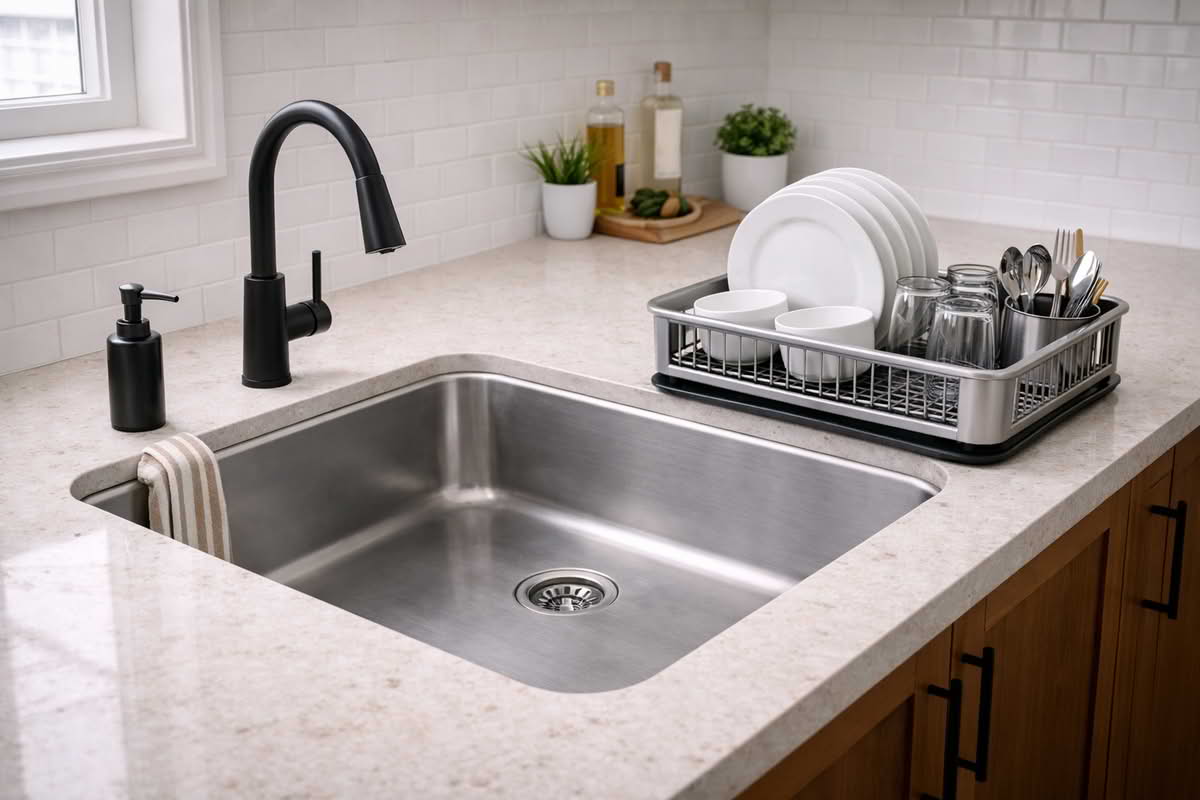
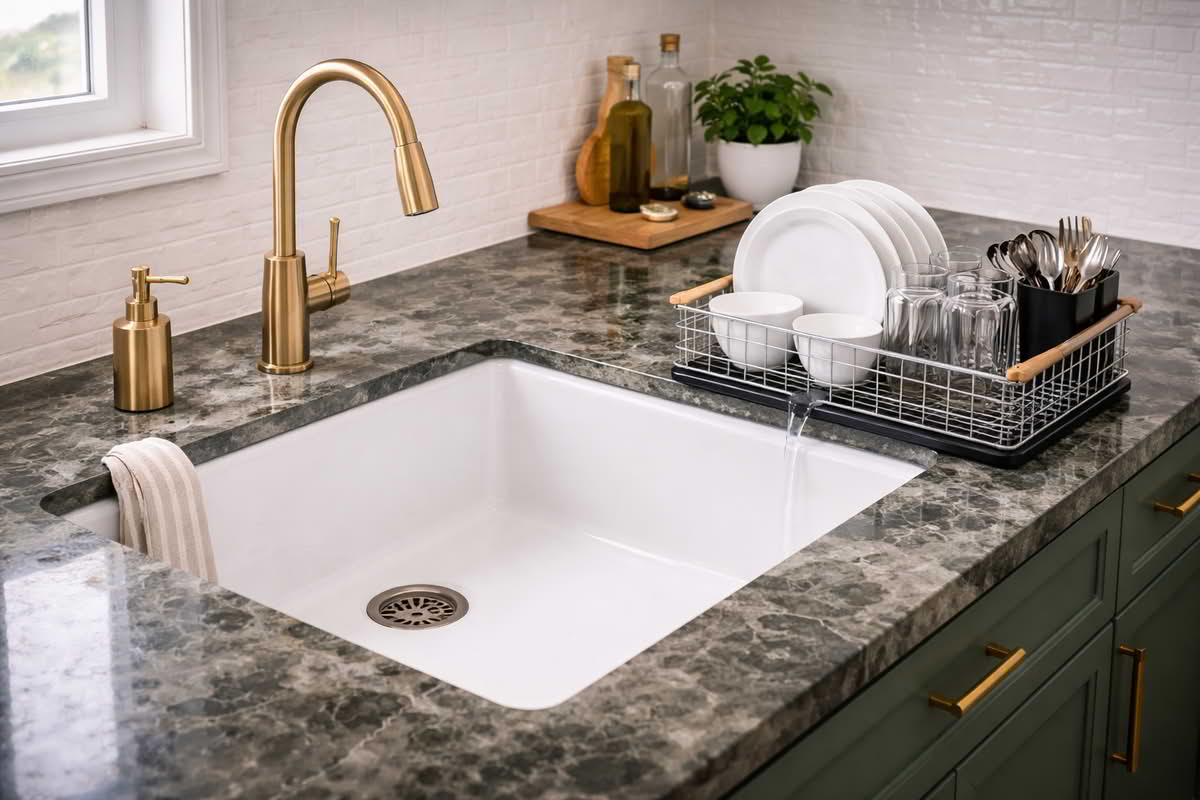
A dish rack works best when it matches the real volume and types of items a kitchen washes by hand every day.
This is where many buying mistakes begin. Buyers often choose the smallest rack that seems like it will fit because they want to protect counter space. That instinct makes sense, but it can backfire quickly if the kitchen regularly dries plates, bowls, glasses, and cookware all at once. The reverse problem happens too. A large multi-tier rack may look like the safer choice because it promises capacity, but if the household only dries a few daily items, the result can be a bulky structure that dominates the counter and stays half empty most of the time.
It also helps to separate dish racks from sink organizers in your own planning. A drying rack solves a volume and drainage problem. A sink organizer solves an access and clutter problem for brushes, sponges, soap, and sometimes cloths or scrubbers. Some kitchens need both in one integrated system. Others work better with separate pieces because the sink area is narrow, the faucet layout is awkward, or the counter space is limited. Buyers sometimes assume one product should solve every sink-side problem at once, but that often leads to oversized or poorly fitting setups.
Another useful question is what kinds of items you wash most often. Flat plates, deep bowls, wine glasses, insulated cups, cutting boards, sheet pans, and baby bottles all behave differently in a drying system. A rack that looks spacious can still be frustrating if the plate slots are too narrow, the cup area is unstable, or tall items drip onto everything else. The best rack is rarely the one that claims the highest general capacity. It is the one that matches the shapes your kitchen repeats most.
Choose the setup around actual hand-washing volume, not around a generic idea of what a kitchen rack should hold.
Think about whether you need a true dish-drying system, a sink-side organizer, or both.
Match the rack to the dishes and cookware you wash most often, not just to standard dinnerware.
Do not assume a larger rack is automatically better if it creates daily counter crowding.
Frequency matters a great deal in this category because sink-side products are exposed to daily wear, moisture, soap, and clutter. A rack used once in a while for a few special items has different priorities from a rack used after every meal. If the system is part of everyday cleanup, then drainage, wipe-down ease, and how quickly the area starts looking messy become much more important than buyers often expect. Small design flaws repeat fast in wet zones.
Shared kitchens also need simpler logic than people sometimes realize. A drying system that only works when dishes are arranged carefully or when one person constantly resets the sponge holder is not really a strong system. The best sink-area products usually make ordinary cleanup easier for everyone, even when people do not load them perfectly. That usually means clear zones, forgiving spacing, and a design that still drains well under everyday mess.
A good purchase in this category usually comes from realism. The right rack or organizer should support the scale of cleanup your kitchen actually produces and fit the sink zone without turning every post-meal reset into a small negotiation with water, clutter, and counter space.
Rack style, drainage, and sink-area layout
Once the washing pattern is clear, the next decision is what kind of physical layout makes sense. Compact countertop racks, larger two-level systems, over-sink designs, roll-up options, sink caddies, and tray-based organizers all solve different problems. The better choice depends less on which looks most capable and more on how water needs to move through your specific sink area.
Countertop dish racks usually make the most sense when the kitchen has a defined area beside the sink and the goal is stable, predictable drying without much setup. Their strength is that they are easy to understand and usually easier to load quickly than more specialized designs. Their weakness is that they consume fixed counter space and can create a constantly damp visual zone if drainage is poor or if the tray design traps water rather than channeling it well.
Over-sink racks and bridge-style systems appeal because they promise to reclaim counter space. In the right kitchen, that can be a major advantage. If the sink is wide enough, the faucet placement works, and the household genuinely needs more drying capacity without sacrificing prep room, these designs can be highly practical. But they are also easy to misjudge. Over-sink systems can feel visually heavy, awkward around faucet movement, or inconvenient if they block access while washing. They only work well when the sink geometry clearly supports them.
Compact drainers and minimal racks make sense in smaller kitchens or lower-volume dish routines. They are often best when the dishwasher handles most cleanup and the drying area only needs to support a few knives, pans, water bottles, or hand-washed glasses. Their weakness is not quality so much as range. Once the hand-washing load increases, these systems can overflow quickly and create a constant cycle of partial drying, towel use, and items stacked in unstable ways.
Drainage deserves far more attention than it usually gets because it is the core functional question in this category. A rack can hold dishes attractively and still fail if water pools under it, drains in the wrong direction, or leaves the counter wet every day. Buyers often focus on capacity and underweight the simple question of where the water is going. Good drainage usually feels invisible. Bad drainage turns the rack into a constant source of wiping, odor, residue, and annoyance.
Drainage matters as much as capacity because a dish rack should move water back toward the sink instead of leaving the counter wet and messy.
Choose countertop racks when you have a true drying zone beside the sink and want straightforward loading.
Choose over-sink designs only when the sink width, faucet layout, and workflow genuinely support them.
Choose compact drainers when the kitchen needs only a light-duty drying area rather than a full dish system.
Prioritize drainage direction and water control as heavily as capacity, because wet counters destroy long-term satisfaction fast.
Sink organizers for brushes, sponges, and soap should be judged through the same lens. Some solve clutter well by grouping essentials into one small zone. Others create a damp collection point that holds debris and stays in the way. The better option depends on whether the real problem is loose tools scattered around the sink or simply the lack of a small, washable home for a few items. As with spice storage and pantry bins, the right organizer is usually the one solving a very specific friction point rather than trying to become a universal sink station.
Utensil holders and cup zones can also change the ownership experience more than expected. A rack may technically fit dishes, but if small items fall through, long utensils tip over, or cups drip in inefficient ways, the daily use can feel clumsy. A strong design usually separates different drying behaviors clearly enough that loading feels fast and obvious. This matters because a dish rack is often used at the end of a meal when people want the cleanup to be simple, not strategic.
The best purchases in this category usually come from treating the sink area like a water-management and access problem rather than a styling problem. Once buyers focus on how dishes enter, drip, dry, and leave the rack, the more useful designs tend to stand out very clearly.
Cleaning, counter space, and long-term value
Dish racks and sink organizers succeed long term only when they stay manageable in a wet, messy environment. This is one of the easiest categories to underestimate because the products look simple. But they live in one of the harshest zones of the kitchen. Water, soap residue, food particles, hard-water marks, and daily handling all test the design quickly. A rack that looks well made can still become unpleasant if it is hard to clean or if it traps grime in corners and joints.
Cleaning should be treated as part of core performance. A rack that is easy to wipe, rinse, or lift for a quick counter clean usually stays in better long-term use than one with multiple hard-to-reach compartments and stagnant moisture points. This matters especially for sink caddies and sponge holders, where small amounts of trapped water can turn into odor and visible grime surprisingly fast. Buyers often assume these products will stay relatively clean because they are used around soap and water, but the opposite is often true. They need designs that make buildup easier to remove.
Counter footprint also needs to be judged honestly. A rack does not just occupy the base dimensions listed in the product description. It also creates a working wet zone around itself. Dishes extend beyond the frame, utensils lean outward, and access to the faucet or nearby prep space may shrink. This is especially important in small kitchens where the sink area is already doing several jobs at once. A rack that is only slightly too large can make the whole counter feel more cramped than expected.
This is why "space-saving" claims should be interpreted carefully. Some products save space by building upward, bridging the sink, or integrating several functions. Sometimes that works beautifully. Sometimes it simply relocates the bulk and makes the sink area feel busier. The better question is not whether a product saves space in theory. It is whether it saves usable space in your actual kitchen while keeping cleanup easy.
Cost should be judged by daily exposure and repetition. A budget rack can be a sensible choice if the dish load is light and the kitchen only needs a basic drying surface. Mid-range products often make the most sense for many households because they improve drainage logic, spacing, and cleanability without becoming oversized or overcomplicated. Higher-priced racks and organizers only make sense when the kitchen truly benefits from better capacity, more efficient layout, or a design that solves a recurring sink-area problem more cleanly than simpler options.
Judge wipe-down ease and grime resistance as part of the product's real quality, not as secondary maintenance details.
Think about the full wet zone the rack creates, not just the stated base footprint.
Be cautious of space-saving designs that save square inches but reduce sink access or make the area busier.
Spend more only when the improved drainage, capacity, or layout clearly matters in your everyday cleanup routine.
Another common regret pattern is buying for visual neatness instead of sink-side function. A slim rack may look refined and modern, but if it forces cookware to balance awkwardly or leaves glasses dripping across the counter, it is not truly helping. The reverse also happens. Buyers choose a very large or complex rack because it seems practical, then discover that it is hard to clean and more cumbersome than the actual dish load requires. Both problems come from ignoring proportion.
The best dish rack or sink organizer is usually the one that feels like the right amount of system. It handles the daily hand-washing load, contains water well enough to keep the counter manageable, and stays easy enough to rinse or wipe that it does not become a permanent dirty corner of the kitchen. That kind of quiet fit creates more value over time than a rack that merely looks more serious.
In practical terms, the right product should make the sink area calmer after cleanup, not create a second cleanup task around itself. When that balance is right, the rack becomes part of the kitchen flow instead of one more object competing with it.
Final Recommendations — choosing the drying and sink setup that fits your dishes, your sink, and your counter
A good dish rack or sink organizer should be chosen by hand-washing volume, sink layout, and long-term maintenance realism rather than by appearance alone. Buyers who mainly need a light-duty drying area usually do best with a compact system that emphasizes good drainage and easy wipe-down. Kitchens that rely heavily on hand washing may benefit more from broader drying layouts or over-sink designs, but only when the sink and counter can support them without creating new clutter or access problems. In both cases, the goal is the same: make cleanup easier without turning the sink area into a permanent wet-storage problem.
Match the product to the actual dishes and cookware your kitchen washes most often.
Choose the rack style based on real sink geometry and drainage logic, not just on capacity claims.
Prioritize water control, cleanability, and counter fit alongside storage features.
Spend for better long-term fit, not just for a larger or more polished-looking rack.
The lowest-regret purchase is usually the one that feels proportionate. It is big enough to handle the real dish load, simple enough to keep clean, and well designed enough that the counter stays more usable, not less. When that balance is right, the drying area becomes less like a necessary mess and more like a kitchen zone that quietly does its job well.