How to Choose a Bakeware Set for Everyday Baking and Roasting
Bakeware sets look straightforward until you try to live with one in a real kitchen. A box may promise the essentials, but everyday usefulness depends on whether the pans are the right sizes, whether they heat evenly enough for reliable results, and whether the finish can handle repeated baking, roasting, washing, and stacking without becoming frustrating. Many buyers either choose the cheapest set and end up fighting warped pans, sticking surfaces, and uneven browning, or buy a large set filled with pieces they rarely use. The better approach is to think about bakeware as a small working system. It should match the kinds of food you actually make, fit the oven and storage space you have, and hold up under regular handling. A good set makes routine baking and roasting simpler. A poor one creates small problems every time the oven turns on.
What a bakeware set should actually include
The most useful starting point is not color, finish, or piece count. It is deciding what jobs the set needs to cover. Some households mainly need a dependable sheet pan, a muffin pan, a loaf pan, and one or two cake or casserole formats. Others bake occasionally but roast vegetables, reheat food, and make one-pan dinners several times a week. Those kitchens still need bakeware, but not necessarily in the same mix. The value of a set depends on how well its included pieces match real oven use rather than how comprehensive the packaging sounds.
A bakeware set is most useful when its core pan types match the baking, roasting, and oven meals a kitchen actually repeats.
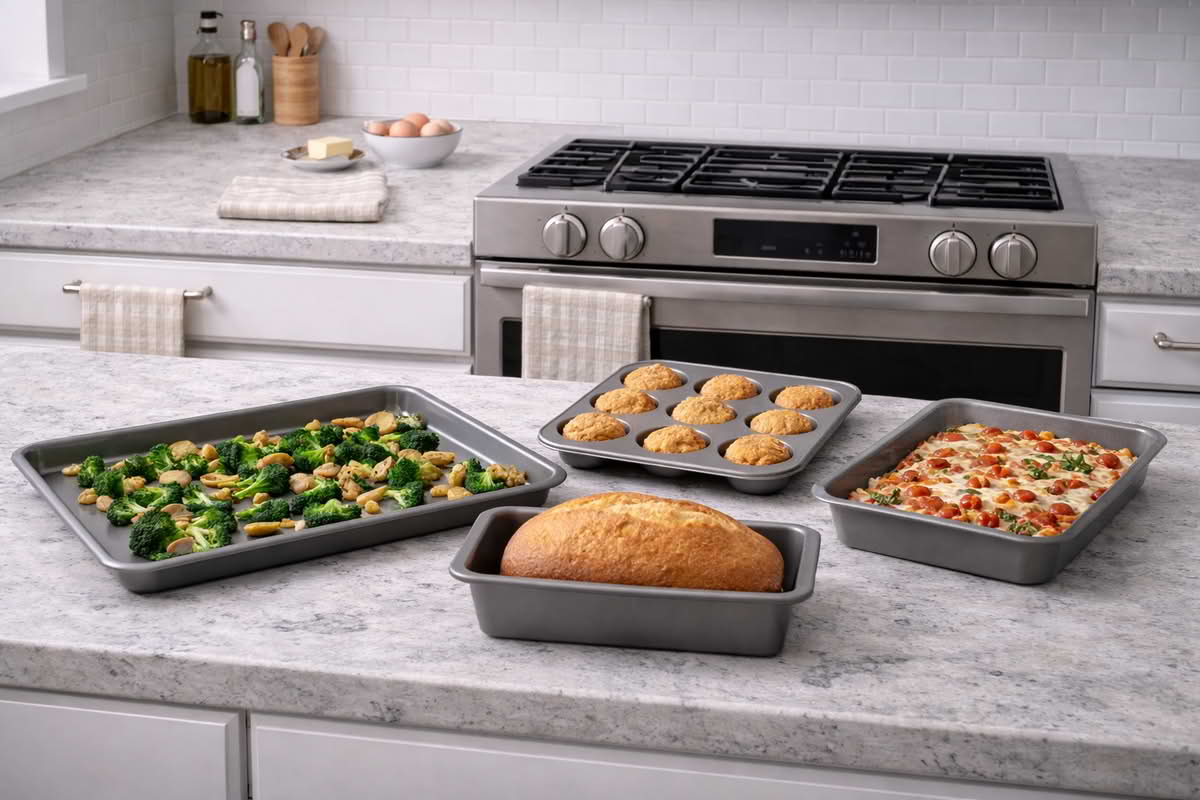
This is where buyer regret often begins. Sets can inflate perceived value by adding small novelty pans, duplicate sizes, or specialty pieces that look helpful but do not actually solve common kitchen tasks. In practice, a well-chosen bakeware set usually revolves around a few dependable formats. A sheet pan or roasting pan handles vegetables, proteins, cookies, and general oven work. A rectangular baking dish or pan covers casseroles, bars, and baked pasta. A loaf pan supports breads and quick bakes. A muffin or cupcake pan is genuinely useful in many kitchens, but only if it fits the household's cooking patterns. Beyond that, every extra piece should earn its space.
Many buyers make the mistake of treating bakeware as occasional-use equipment, which leads them to underestimate how much frustration comes from poorly chosen pans. Unlike decorative or seasonal items, bakeware tends to repeat the same problems over and over. A pan that browns too aggressively on the edges or flexes when moved out of the oven is not a one-time annoyance. It is a recurring limitation that shows up with cookies, roasted vegetables, and weeknight sheet-pan meals. Since many households use bakeware for both sweet and savory cooking, the best set is rarely the most dessert-focused or the most specialized. It is the set that covers routine oven cooking without awkward gaps.
Another practical issue is pan depth and actual usable capacity. A shallow roasting pan may work for cookies but feel limiting for vegetables or anything that releases liquid. A cake pan may technically fit a recipe but produce crowded batter and inconsistent results if its dimensions are slightly off from common expectations. This matters more than buyers sometimes realize, because oven cooking depends heavily on surface area, airflow, and food spacing. The wrong pan size can change cooking time, browning, and texture even before material quality enters the picture.
Prioritize a small group of versatile pan types over the highest piece count.
Check whether the set includes at least one genuinely useful sheet or roasting format.
Avoid paying for novelty pieces unless they clearly match your regular baking habits.
Think about the recipes and oven tasks you repeat most, not the ones you might try once.
A first-home buyer may benefit from a balanced starter set because it reduces decision fatigue and creates a coherent base for future additions. Someone replacing worn bakeware in an otherwise functional kitchen may be better served by a smaller set or even a selective upgrade, especially if only the most-used pieces have failed. These are different buying situations, and they should not be judged the same way. Starter value is about broad coverage. Replacement value is usually about improving reliability in the pieces that matter most.
It also helps to think about how the set will be used across seasons. Bakeware often does more than baking. It may handle roasted vegetables in colder months, batch meal prep, reheating leftovers, or simple tray-based dinners all year. That broader role makes durability, ease of cleanup, and handling comfort more important than many marketing pages suggest. A set that only excels under careful, occasional baking may feel much less impressive once it enters regular weeknight rotation.
How materials, coatings, and construction affect results
Bakeware material influences more than just durability. It affects browning, release, oven response, cleanup, and how forgiving the pan is under repeated use. This is one of the reasons buyers often feel disappointed even when they chose a popular product. They assumed all bakeware works roughly the same, when in reality different materials and finishes create noticeably different cooking behavior.
Metal bakeware is common because it is practical and versatile. In many kitchens it provides the most reliable balance of speed, weight, and everyday usefulness. But even within metal bakeware, thickness matters. Thin pans often heat quickly, but they can also brown unevenly, warp more easily, and feel less stable when loaded with food. Heavier-gauge pans tend to resist warping better and often produce more predictable results over time. That does not make heavier automatically better for every buyer, but it usually improves long-term confidence in the set.
Nonstick-coated bakeware appeals for obvious reasons. Food release is easier, cleanup tends to be faster, and the set may feel more approachable for casual bakers. Those are real advantages, especially in kitchens where convenience matters more than maximum longevity. The tradeoff is lifecycle wear. Coatings can scratch, discolor, or lose performance over time, particularly when stacked carelessly, cleaned aggressively, or exposed to repeated high-heat roasting. That does not mean coated pans should be avoided. It means the buyer should see them as convenience-oriented tools that benefit from gentler handling.
Uncoated metal can be a stronger fit for buyers who care more about durability and are comfortable with a little more technique or cleanup. These pans may not offer the same easy release on their own, but they often tolerate repeat use, temperature swings, and general handling better. For households that roast frequently, line pans with parchment, or already have a consistent cleanup routine, uncoated bakeware can be the more durable long-horizon choice.
Ceramic or glass baking pieces sometimes appear in broader bakeware sets or related collections, and they serve certain purposes well. They can be useful for casseroles, baked pasta, and presentation-friendly oven-to-table use. But they behave differently from metal, often heating and retaining heat in ways that change browning and timing. That makes them useful complements, not always ideal substitutes for core sheet- and pan-based bakeware. Buyers can run into trouble when they assume attractive presentation materials will cover all of the practical work a basic metal set normally handles.
Heavier-gauge metal usually improves stability and reduces the chance of warping under routine use.
Coated pans favor easier release and cleanup, but they usually ask for gentler long-term handling.
Uncoated bakeware often makes more sense when durability matters more than convenience.
Glass or ceramic pieces can be useful additions, but they do not replace every core bakeware job equally well.
Surface color and finish also influence performance more than some buyers expect. Darker finishes can encourage stronger browning, which may be helpful in some recipes and too aggressive in others. That is not a flaw by itself, but it is part of how the set behaves in real cooking. If a household frequently bakes items where even color matters, small differences in finish and heat absorption can become noticeable. A set that seems universally capable in product photos may need small adjustments in timing and temperature once it is in use.
Rim construction, edge reinforcement, and how the pan feels in the hand matter too. A pan that flexes noticeably when lifted can feel inexpensive even before it warps. Rolled or reinforced edges often improve handling confidence and long-term shape retention. These details are easy to miss during shopping because they are less glamorous than coating claims, yet they often determine whether a pan still feels dependable after years of oven use and dish rack rotation.
The largest mistake in this category is treating bakeware as passive equipment. It is not passive. It actively shapes results. Uneven browning, sticking, overflow, corner overcooking, and difficult release are often traced back to pan design and construction rather than recipe failure. A better set will not magically make every bake perfect, but it can make the kitchen more predictable, and predictability is a major part of low-stress cooking.
Size, storage, and long-term ownership
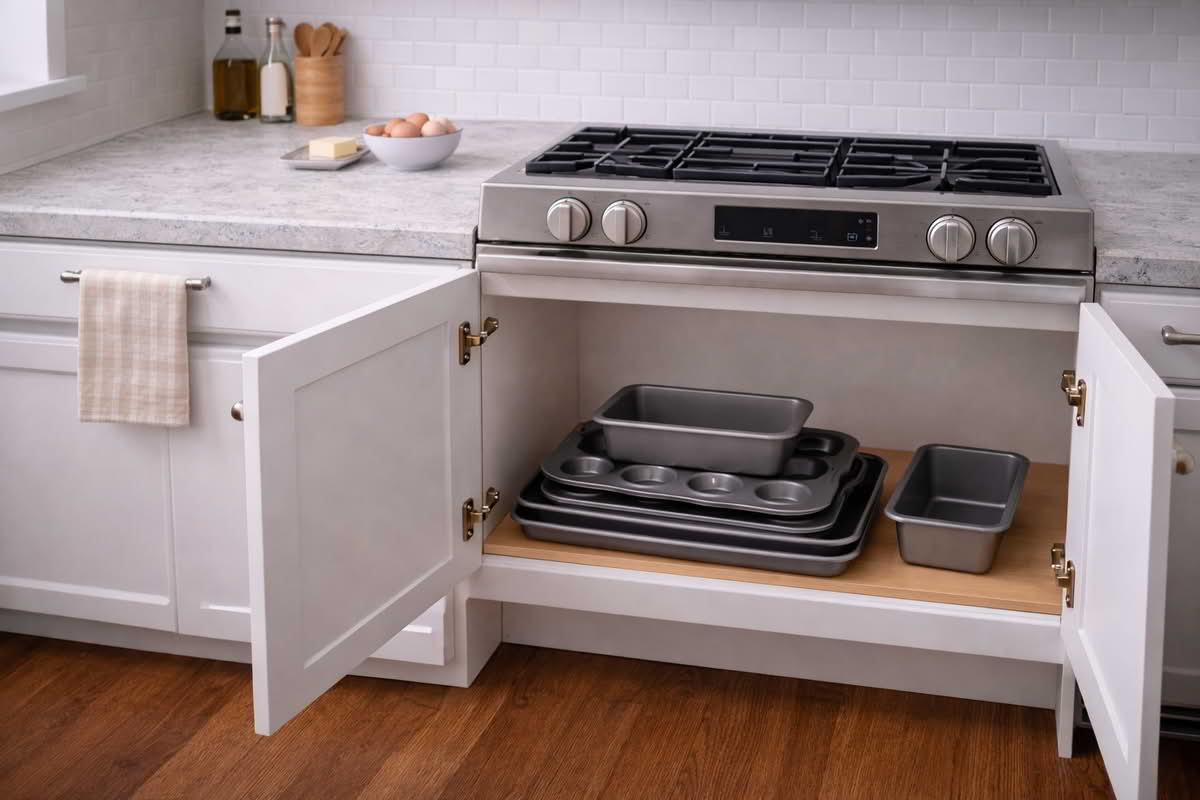
The best bakeware set is not just the one that performs well in the oven. It is the one that remains easy to own. Storage is a major part of that equation, especially in kitchens with limited cabinets, shallow drawers, or crowded appliance shelves. Large bakeware pieces can become inconvenient quickly if they stack poorly, scrape against each other, or force constant cabinet rearranging. A set that looks complete on paper can become irritating if it takes too much effort to store safely.
Long-term bakeware value depends not just on oven performance, but on whether the pans fit the kitchen's storage space and stay easy to stack, reach, and use regularly.
Size should also be matched to oven reality. Not every kitchen has the same rack configuration or usable interior space. Extra-large sheet pans, deep roasting pieces, or wide-handled pans may technically fit some ovens and feel awkward in others. Buyers sometimes assume standard dimensions are universally practical, only to discover that loading and unloading becomes cramped once oven racks, sidewalls, and nearby cookware are involved. This is especially relevant for smaller homes, apartment kitchens, and compact ranges.
Nesting design matters if the set will be stacked. Tight stacking can save space, but it can also increase surface wear, especially on coated bakeware. Buyers who want compact storage should think about whether they are willing to use liners, separators, or gentler stacking habits. A set that requires protection to preserve the finish may still be a good fit, but only if that ownership style matches the household. Otherwise, the convenience of a slick coating may be offset by faster cosmetic and functional wear.
Long-term ownership also depends on what failure looks like. Some bakeware degrades gradually through staining and cosmetic wear while remaining fully useful. Other pans start to feel compromised when they warp, release unevenly, or become frustrating to clean. Knowing which type of aging you can tolerate matters. Buyers often get distracted by a showroom-clean appearance and forget that real bakeware will darken, collect marks, and show use. Cosmetic change is not the same as structural failure. The key question is whether the set keeps performing reliably after repeated heating and cooling cycles.
Cost should be framed around frequency of use, not just purchase price. A budget set may be entirely reasonable for a first apartment, a temporary rental, or a household that bakes occasionally. A mid-range set often makes the most sense for everyday kitchens because it can improve construction, reduce frustration, and still remain financially practical. Higher-priced bakeware is only worth it when its durability, design, or performance differences align with how often the oven is actually used. Premium positioning alone does not create value.
Choose a set that fits your cabinets and oven as comfortably as it fits your budget.
Think about stacking wear if the pans will live in a tight kitchen storage system.
Expect some cosmetic aging, but be more concerned about warping and unreliable cooking performance.
Spend more only when better construction meaningfully improves a task you do often.
Another useful strategy is to leave room for later additions. A strong starter set does not need to contain every future pan format. It only needs to cover the tasks that repeat now. As baking habits become more specific, it is easier to add an individual pan with a clear purpose than to buy an oversized starter set and live with pieces that never quite fit. This approach also respects how many kitchens evolve. Most households do not need a perfectly complete bakeware collection on day one. They need a dependable foundation.
Low-regret ownership comes from proportion. The right set should be substantial enough to feel reliable, simple enough to store, and flexible enough to support both baking and general oven cooking. When those elements line up, the bakeware becomes invisible in the best way. It supports the food instead of becoming part of the problem.
Final Recommendations — building a bakeware system that stays useful over time
A good bakeware set should solve everyday oven tasks first and specialty ambitions second. Buyers who want a practical kitchen foundation usually do best with a set built around a few versatile pan types, dependable construction, and realistic storage needs. Households that bake or roast frequently should put more weight on thickness, shape stability, and long-term surface behavior than on inflated piece counts or decorative finishes.
Choose for recurring oven tasks, not just occasional baking projects.
Prioritize reliable pan types and stable construction over extra pieces that rarely get used.
Match coatings and materials to your tolerance for cleanup, wear, and careful handling.
Leave room to add specialized bakeware later instead of expecting one set to do everything well.
The best long-term bakeware purchase usually feels practical rather than exciting. It fits the kitchen, works predictably, and keeps doing ordinary jobs well without demanding constant workarounds. That is what turns a bakeware set from a starter purchase into a dependable part of the kitchen.