How to Choose a Dutch Oven or Stock Pot for Home Cooking
Dutch ovens and stock pots often get treated as interchangeable large pots, but they solve different kitchen problems and create different kinds of long-term satisfaction. Buyers frequently choose based on appearance, brand reputation, or vague ideas about versatility without thinking through weight, heat behavior, storage space, and the actual meals they cook most often. That is where regret usually starts. A heavy vessel that performs beautifully in theory can become annoying if it is difficult to lift, clean, or store. A lighter pot may feel practical at first but disappoint when it struggles with long simmering, braising, or even heat retention. The better choice usually comes from understanding the role this pot will play in the kitchen: everyday boiling, batch soups, pasta nights, bread baking, slow braises, or large family cooking. A well-matched pot becomes one of the most reliable tools in the kitchen. A poorly matched one becomes a bulky compromise.
Dutch oven vs. stock pot: start with the job
The most important decision is not brand or finish. It is whether you need the pot to prioritize heat retention and stovetop-to-oven versatility, or whether you mainly need capacity, lower weight, and easier handling for high-volume cooking. That distinction usually points clearly toward either a Dutch oven or a stock pot, even though both live in the same part of the kitchen.
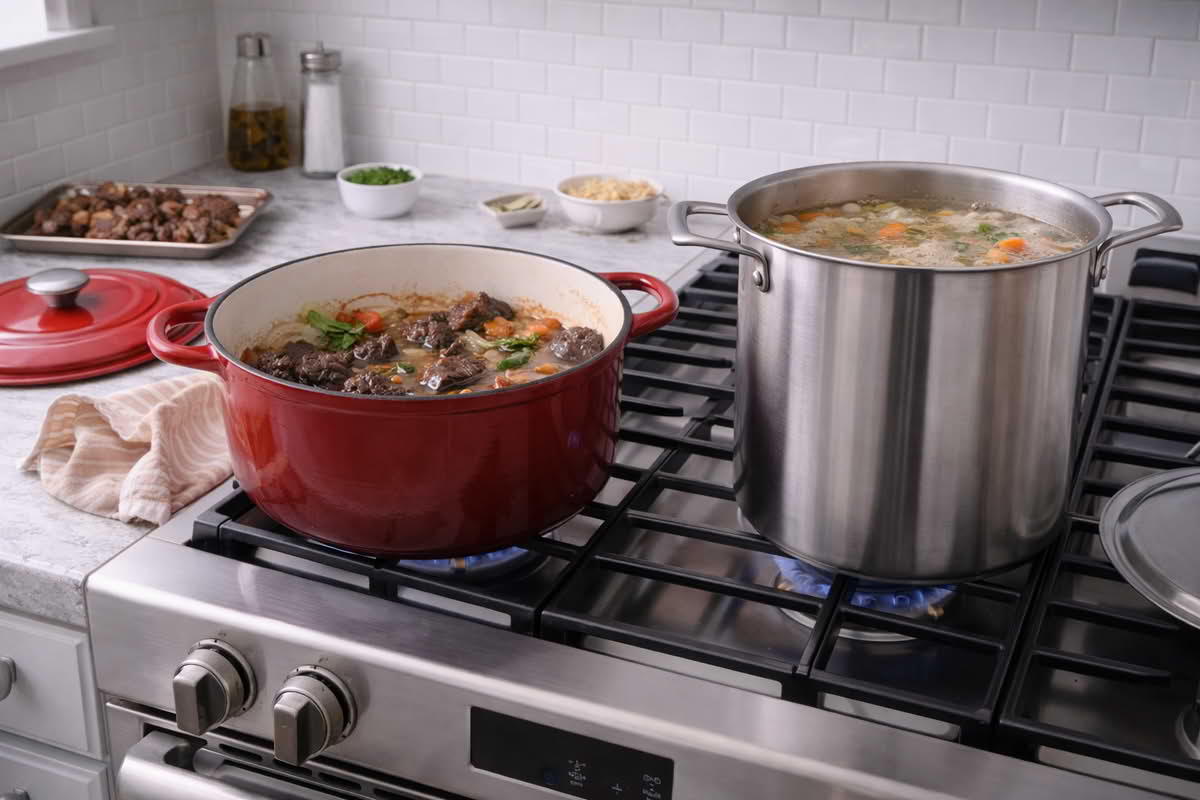
Dutch ovens and stock pots are most useful when chosen for different kitchen roles rather than treated as interchangeable large pots.
A Dutch oven is usually chosen for slower, heavier cooking tasks. Braises, stews, chili, no-knead bread, bean dishes, and one-pot meals all benefit from a vessel that holds heat steadily and can move from burner to oven without much fuss. The pot's heavier construction is part of its value. It promotes even cooking, helps maintain stable temperatures, and makes the vessel feel substantial when cooking needs to be controlled rather than rushed. That same strength becomes a weakness when the pot is filled with liquid and has to be moved, washed, or lifted into a high cabinet.
A stock pot is often the more practical tool when the main tasks are boiling pasta, making broth, cooking corn, blanching vegetables, or preparing soups in larger quantities without the need for intense heat retention. In those situations, sheer capacity and easier handling matter more than heavy thermal mass. A good stock pot can feel far more usable for routine large-batch cooking because it does not ask the cook to manage the same weight penalty.
Many buyers get stuck because they want one pot to do everything. That is understandable, but it often leads to choosing the most broadly praised option rather than the best fit. A Dutch oven is more versatile in some cooking styles, yet that does not automatically make it the better household tool. A stock pot may be less glamorous, but it can be the more logical everyday choice for kitchens that cook pasta often, make soup in larger volumes, or simply do not want a very heavy vessel dominating the cabinet.
This is where buyer psychology creates avoidable mistakes. People often imagine the version of themselves who will braise frequently, bake rustic bread every weekend, and serve dramatic one-pot meals. In practice, many kitchens spend more time boiling, simmering, and reheating than staging idealized slow-cooking sessions. That does not diminish the value of a Dutch oven. It just means the correct purchase depends on repeated use patterns, not aspirational identity.
Choose a Dutch oven when slow cooking, braising, oven finishing, and heat retention matter most.
Choose a stock pot when capacity, lighter handling, and routine boiling or batch soup cooking matter more.
Do not assume the more versatile-sounding pot is automatically the more practical one.
Think about what the pot will do on ordinary weeknights, not just special projects.
Kitchen size also matters. In a smaller kitchen, every large vessel has to justify both its storage footprint and its physical inconvenience. A Dutch oven that is rarely used can feel especially wasteful because it is bulky, heavy, and often kept in a prime cabinet area. A stock pot that is too large for the household may create a similar problem. The right choice is often the one that earns its space through repetition.
It is also worth separating gift appeal from ownership logic. Dutch ovens are often marketed and discussed as high-value kitchen centerpieces, which makes them attractive as gifts and upgrades. But real value is determined by use. A beautiful heavy pot that comes out four times a year is less useful than a simpler stock pot that handles weekly cooking efficiently. A thoughtful purchase in this category usually comes from realism rather than prestige.
How material, weight, and heat behavior change the experience
Once the job is clear, material becomes easier to evaluate. Different constructions create very different ownership experiences, especially in larger vessels where weight and heat behavior are magnified. The wrong material choice in a pan can be annoying. In a full-size Dutch oven or stock pot, it can become physically unpleasant or functionally limiting.
Enameled cast iron Dutch ovens are popular for good reason. They hold heat well, support slow and steady cooking, and move comfortably between stovetop and oven for a wide range of meals. The enamel surface also reduces some of the maintenance concerns associated with bare cast iron, which makes the pot more approachable for many households. But the tradeoff is unavoidable weight. Even empty, these pots are substantial. Full of stew, stock, or braising liquid, they can become difficult to maneuver for anyone who prefers lighter cookware or deals with limited wrist strength, smaller sinks, or awkward storage.
Stainless steel stock pots usually prioritize practicality. They tend to be lighter for their capacity, easier to lift when draining pasta or pouring broth, and better suited to routine high-volume boiling. Their weakness is that they do not provide the same kind of deep heat retention as heavier Dutch ovens. For some dishes that matters very little. For others, especially long simmering or oven-centered cooking, it becomes more noticeable.
Construction still matters within each material family. A thin, lightly built stock pot may be affordable and adequate for occasional pasta water, but it can feel unstable or less even when cooking soups or broth for longer stretches. A sturdier base improves confidence and helps reduce scorching risk, especially when cooking dense liquids or foods that simmer for a while. Likewise, not every Dutch oven performs the same simply because it is heavy. Lid fit, interior finish, handle size, and general balance all affect the cooking and ownership experience.
Heat retention is one of the most misunderstood features in this category because it sounds universally good. In reality, strong heat retention is useful when you want stable, gradual cooking and fewer temperature swings. It is less useful when the main job is boiling water quickly, draining, and moving on. A pot that excels at one kind of cooking can feel unnecessarily cumbersome for another. That is why material should always be evaluated in relation to task, not in isolation.
Heavier vessels usually improve heat stability, but they also increase lifting, washing, and storage difficulty.
Stainless stock pots usually make more sense for frequent boiling and large-batch liquid cooking.
Enameled cast iron Dutch ovens usually make more sense for braises, stews, and oven-centered cooking.
Base construction, lid fit, and handle comfort matter almost as much as the headline material.
Handle design deserves special attention because this category magnifies bad ergonomics. Large loop handles on a Dutch oven may look simple, but their usable size matters when the pot is hot and heavy. Stock pot side handles need to feel secure when the pot is full, not just when lifted empty in a showroom-style comparison. A pot that becomes awkward when full can turn routine tasks into risky ones. That includes draining pasta, moving soup to the sink, or lifting a braise out of the oven.
Lid construction also influences how the pot behaves. Heavier lids that fit well can support better moisture retention, which matters for braises and long simmering. Lighter lids may be easier to handle for day-to-day boiling and stirring. Some buyers focus almost entirely on pot body material while overlooking the lid, even though the lid strongly affects evaporation, convenience, and how controlled the cooking process feels.
Maintenance expectations should be honest as well. Some buyers are happy to own a heavy, substantial piece because it feels durable and rewarding to use. Others realize after a month that they are choosing lighter pans instead because the large pot feels physically inconvenient. Neither reaction is wrong. The mistake is pretending weight will not matter when it obviously will. In this category, physical realism is part of good buying judgment.
Capacity, lid design, and long-term kitchen fit
Capacity is where many buyers overshoot. Large pots create a sense of preparedness, and that can be psychologically appealing. But a vessel that is too large for the household often becomes harder to store, slower to clean, and more awkward to use than necessary. Unless you regularly cook for a crowd, batch aggressively, or make high-volume soups and stocks, the biggest option is rarely the most efficient one.
A pot should be sized around both meal scale and cooking style. Smaller households often benefit from moderate capacities that feel usable for soup, pasta, stew, and occasional batch cooking without becoming unwieldy. Larger families or people who cook ahead may genuinely need more volume. The mistake is not buying large when you need it. The mistake is buying large because it feels like the safer choice, then discovering the pot is too heavy to fill comfortably or too big for normal portions.
Pot shape also matters. Taller, narrower stock pots make efficient use of burner space and can work well for boiling and simmering larger liquid volumes. Wider Dutch ovens provide more surface area for browning and better evaporation control for braises, stews, and reduction-focused cooking. Even when overall capacity numbers seem similar, the cooking behavior can be very different. That is why choosing by volume alone is incomplete.
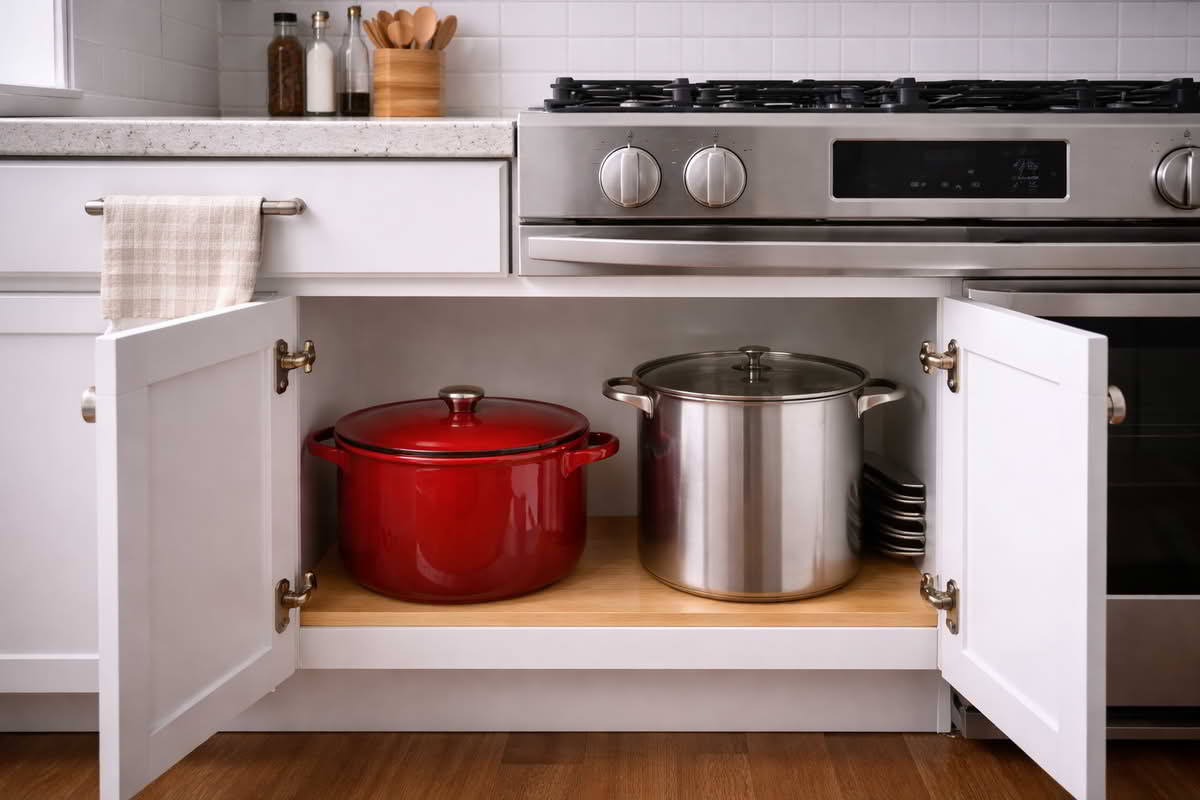
Storage fit is part of long-term value. A heavy Dutch oven stored high up is often an invitation to use it less. A giant stock pot that only fits in an inconvenient lower cabinet may create the same problem. Buyers tend to think of large cookware as static objects, but ownership involves regular movement, cabinet negotiation, and sink cleanup. A pot that lives awkwardly in the kitchen may be technically excellent and still feel like a poor purchase over time.
Large cookware creates better long-term value when its capacity and weight fit the kitchen well enough that the pot stays easy to reach and worth using regularly.
Oven compatibility and stovetop flexibility also deserve real scrutiny. A Dutch oven is often purchased specifically for its ability to move from stovetop to oven, but that only matters if the weight and lid design make that movement reasonable. A stock pot may be less oven-oriented, yet it still benefits from broad stovetop compatibility, especially if the kitchen may change in the future. Buyers replacing a major kitchen workhorse should think beyond the current stove and ask whether the pot will remain useful through future moves or appliance changes.
Buy capacity for repeated real meals, not rare maximum-demand scenarios.
Wider pots support browning and braising better, while taller pots often suit boiling and high-volume liquids.
Storage location can influence how often a large pot actually gets used.
Long-term value depends on kitchen fit just as much as cooking performance.
Cost should be interpreted through usage frequency and ownership horizon. A higher-priced Dutch oven can make sense if it will be used regularly for the kinds of cooking it does best. A simpler stock pot may deliver better value if it serves weekly pasta, soup, and broth needs without adding unnecessary weight or expense. The most common regret patterns are paying premium money for a pot that is admired more than used, or buying the cheapest large pot available and then fighting poor balance, thin construction, or disappointing longevity.
Replacement strategy matters here too. Some kitchens do well with one substantial Dutch oven plus lighter everyday boiling vessels. Others are better served by a dependable stock pot and a separate smaller braising piece later. There is no universal sequence. What matters is avoiding the assumption that one purchase must solve every future cooking need immediately. A kitchen often works better when large cookware is chosen intentionally rather than symbolically.
The best decision in this category usually feels proportionate. The pot is big enough, not enormous. Heavy enough for its job, not punishing. Flexible enough to support your cooking style, not celebrated for features you will rarely use. That balance is what turns a large vessel from an occasional project piece into a reliable part of the kitchen.
Final Recommendations — choosing the pot that fits your cooking habits instead of your aspirations
A Dutch oven or stock pot should be chosen by role, not reputation. If your kitchen revolves around braises, stews, oven finishing, and slow, controlled cooking, a Dutch oven usually makes more sense despite its weight. If your routine centers on pasta, soup, broth, boiling, and larger liquid-heavy tasks, a stock pot is often the more practical and lower-friction tool. In both cases, the right purchase is the one that fits your hands, your stove, your storage space, and the meals you actually repeat.
Choose function first: heat retention and versatility for Dutch ovens, capacity and easier handling for stock pots.
Be realistic about weight, especially when the pot will be full and hot.
Match capacity to normal household cooking rather than occasional oversized scenarios.
Favor a pot that will stay in rotation over one that mainly feels impressive in theory.
The best long-term cookware decisions usually look sensible rather than dramatic. A large pot earns its place by being easy enough to use, good enough at its main job, and durable enough to stay useful for years. When those pieces align, the pot stops feeling like a major purchase and starts feeling like part of the kitchen's normal rhythm.