Buying a cookware set looks simple until the details start stacking up. A box may promise everything needed for a kitchen, but real daily use depends on how the pans heat, how much weight you want to manage, whether the pieces fit your stove, and whether the set includes useful workhorses instead of filler. Many buyers either overspend on large sets full of rarely used pieces or go too cheap and replace key pans within a year. The better approach is to treat a cookware set as a long-term kitchen system. Material, construction, lid design, oven tolerance, and maintenance all affect whether the set feels helpful or frustrating after the first few weeks. A good purchase is usually the one that matches how you actually cook, clean, store, and upgrade over time.
What a cookware set should actually cover
The first question is not which finish or brand looks nicest. It is whether the set covers the jobs your kitchen handles most often. Many cookware sets are sold by piece count, which encourages shoppers to compare numbers before usefulness. A larger number sounds like better value, but piece count can be inflated by including multiple lids, undersized saucepans, or specialty pieces that spend most of their time in a cabinet. In practice, a strong cookware set usually covers a small range of repetitive tasks well: boiling, simmering, sauteing, frying, steaming, reheating, and occasionally moving from stovetop to oven.
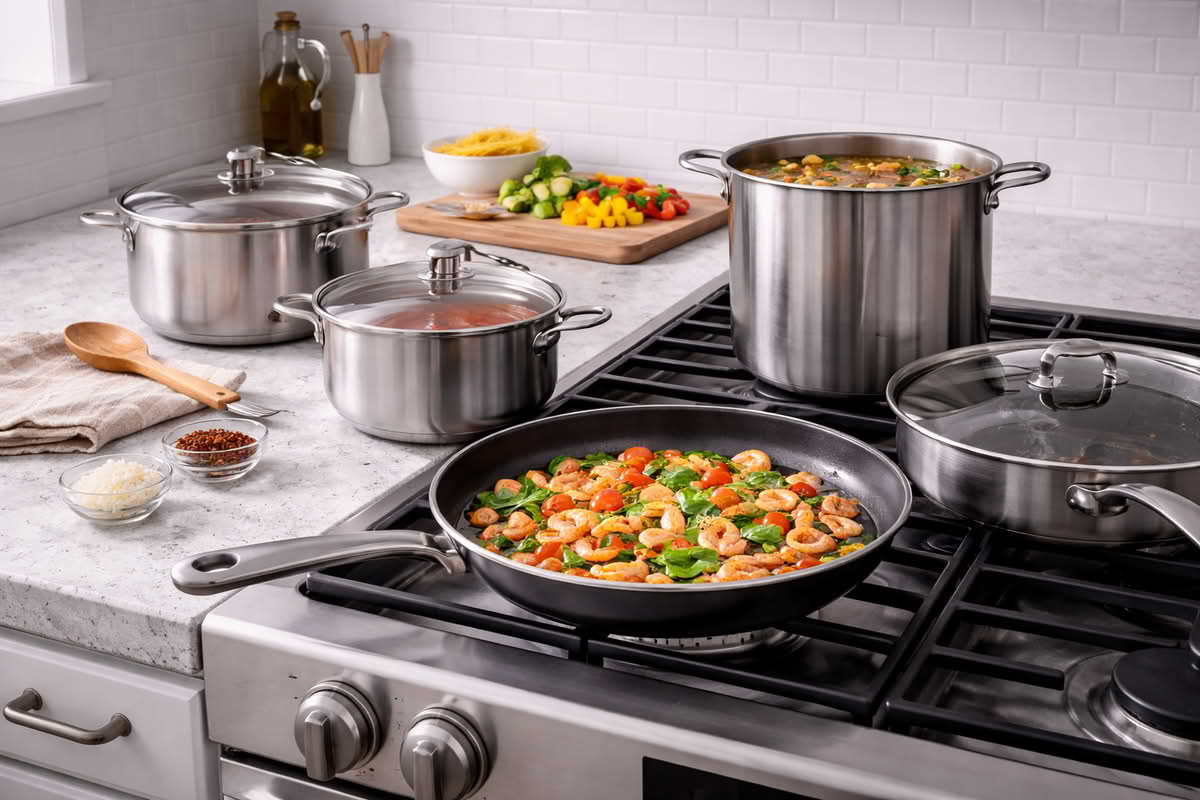
A cookware set is most useful when its core pieces support the everyday boiling, frying, simmering, and sauteing tasks a kitchen repeats most often.
For most households, the most important pieces are predictable. A medium saucepan handles grains, sauces, and reheating leftovers. A larger saucepan or small stock pot covers soups, pasta, and batch cooking. A skillet or saute pan handles eggs, vegetables, and weeknight proteins. A larger covered vessel manages one-pot meals, braises, and high-volume cooking. When those core roles are missing or undersized, even an attractive set becomes inconvenient. Buyers often discover this only after using the cookware for a month, when the same pan is constantly overloaded while two other pieces stay untouched.
Piece size matters as much as piece type. A pan that looks substantial in photos can feel cramped once it holds food for more than one person. Small sets often work well for apartments, couples, and kitchens with limited storage, but they become frustrating when pan diameters are too narrow for browning, or pot walls are too shallow for real soup or pasta use. On the other end, oversized sets can waste space and create extra cleanup without delivering much benefit if the household mostly cooks simple meals in small batches.
Look for a set built around frequently used pan sizes rather than the highest piece count.
Check whether lids and handles support oven use, draining, and controlled pouring.
Be cautious of specialty pieces that sound versatile but duplicate jobs your existing kitchen tools already handle.
Think about how many burners you typically use at once, because large sets do not help if the pieces are too similar in size.
A cookware set also needs to match the stage of kitchen life you are actually in. A first-home or first-apartment buyer often benefits from a cohesive starter system because it reduces decision fatigue and creates a consistent cooking feel across pieces. Someone replacing worn cookware in an already functional kitchen may not need a full set at all. In that case, buying a large bundle can lock money into redundant pans instead of upgrading the few pieces that matter most. Gift buyers run into the same problem. A cookware set can seem like a universally useful choice, but usefulness depends heavily on the recipient's stove type, storage limits, and tolerance for maintenance.
Another common mistake is assuming every set should support every cooking style. That sounds sensible, but it usually leads to overbuying. A kitchen that rarely sears meat does not need to prioritize the same construction as one that relies on high-heat stovetop cooking. A household that values easy cleanup after quick dinners may be happier with a different balance than a household focused on browning, deglazing, and oven-finishing. A cookware set does not need to be universal. It needs to be coherent.
Lid design, handle shape, and rim construction are small details that affect daily satisfaction more than many buyers expect. Lids that rattle, handles that get awkwardly hot, or rims that drip during pouring can turn routine cooking into a minor annoyance every day. These features rarely dominate marketing, yet they are exactly the kind of details that distinguish cookware that ages gracefully from cookware that feels compromised. A buying decision based only on headline features misses a large share of what makes a set pleasant to live with.
How material and construction change daily use
Material is where most cookware decisions become confusing, because every option involves tradeoffs. There is no single material that is easiest to clean, highly responsive, naturally slick, durable under rough treatment, lightweight, affordable, and compatible with every stove. The right choice depends on which compromises matter least in your kitchen. Understanding those tradeoffs is more useful than memorizing broad claims about performance.
Nonstick cookware sets appeal to many buyers for obvious reasons. They simplify delicate cooking, need less oil, and make cleanup quicker. That can be genuinely useful in busy kitchens where convenience matters more than maximum searing performance. The downside is lifecycle durability. Nonstick surfaces are typically the first part of a cookware collection to wear out, especially if the pans are overheated, stacked carelessly, or used with harsh cleaning habits. That does not make nonstick a bad choice. It means buyers should view it as a convenience-oriented system with a more limited service life, not as a permanent kitchen investment.
Stainless steel sets sit at the other end of the spectrum. They usually appeal to buyers who want longer-term durability, oven flexibility, and fewer worries about surface wear. Stainless is useful for browning, building fond, and handling a wider range of temperatures. Its weakness is that it asks more from the cook. Heat control matters more, sticking is more common with poor technique, and cleanup can take more effort. For some kitchens that is a fair trade for longevity. For others it turns everyday cooking into unnecessary friction.
The phrase "stainless steel" by itself is not enough. Construction matters just as much as outer material. A pan with better heat distribution tends to cook more evenly and respond more predictably across the bottom and sidewalls. Thin cookware often creates hot spots, which can lead to scorched sauces, uneven browning, and a frustrating gap between what the burner is doing and what the food is doing. Heavier construction can improve performance, but it also increases weight. That matters more than marketing suggests, especially for large pots full of liquid or wide skillets that need to be lifted, tilted, and washed frequently.
Hard-anodized aluminum often occupies a practical middle ground. It can offer lighter handling than some heavier clad alternatives while still providing more stability than bargain-level thin pans. In many kitchens, this category works because it feels manageable, heats efficiently, and keeps total set weight reasonable. The tradeoff is that performance varies widely depending on coating quality, thickness, and handle design. A hard-anodized label alone does not guarantee a well-balanced set.
Choose nonstick when easy release and faster cleanup are more important than maximum lifespan.
Choose stainless when you want broader temperature tolerance, stronger browning, and longer-term durability.
Choose heavier construction only if the added weight still feels realistic for daily washing, lifting, and storage.
Pay attention to oven safety, because some lids, handles, or coatings reduce how flexible the set really is.
Another overlooked issue is how material affects cooking confidence. Buyers sometimes choose the most technically capable cookware, then end up using it less because it feels unforgiving. A pan that performs beautifully in theory does not help much if the learning curve leads to frequent sticking or discouraging cleanup. The reverse also happens. A convenience-focused nonstick set can feel perfect at first, but disappoint later if the household begins cooking more often and wants better browning or oven versatility. That is why it helps to think about where your cooking habits are likely to go, not just where they are now.
Handle design is tightly connected to material choice. Heavier pans need handles that feel secure and balanced, not just visually sturdy. Awkward balance can make an otherwise good pan tiring to maneuver, especially when draining pasta water, transferring a sauce, or lifting a full stock pot. Wider helper handles on larger vessels can make a significant difference in real kitchens, particularly for buyers who do not want cookware that feels physically demanding.
Glass lids versus metal lids are another tradeoff that seems minor until the cookware is in use. Glass lids let you check progress without releasing heat, which is convenient for newer cooks and routine simmering. Metal lids are often lighter, more durable, and less visually fussy over time. Neither is universally better, but the right choice depends on whether visibility or durability matters more in your daily routine.
Induction compatibility is now important enough that it should never be treated as a side detail. If a set does not work on the stove you own, nothing else matters. Even buyers with gas or standard electric ranges should think ahead if they may move or remodel. Replacing an entire cookware system because of a future appliance change is expensive and avoidable. A set that already supports multiple cooktop types can preserve flexibility, especially for households that expect a kitchen upgrade later.
Size, compatibility, and long-term value
Long-term value in cookware is rarely about getting the lowest price per piece. It comes from buying a set that still makes sense after habits change, storage gets tighter, or one or two pieces wear differently than the rest. The strongest cookware purchases usually avoid two extremes: cheap sets that feel disposable and oversized premium sets that solve theoretical problems more than real ones.
Start by matching set size to household scale and cooking frequency. A small household that cooks simple meals a few nights a week may not benefit from a large assortment of vessels. Too many pieces create clutter, stack wear, and cabinet crowding. A household that batch cooks, entertains, or regularly makes soups, pasta, or one-pot meals may quickly outgrow a compact starter set. The question is not how many pieces sound impressive. It is how many pieces reduce friction without creating new storage problems.
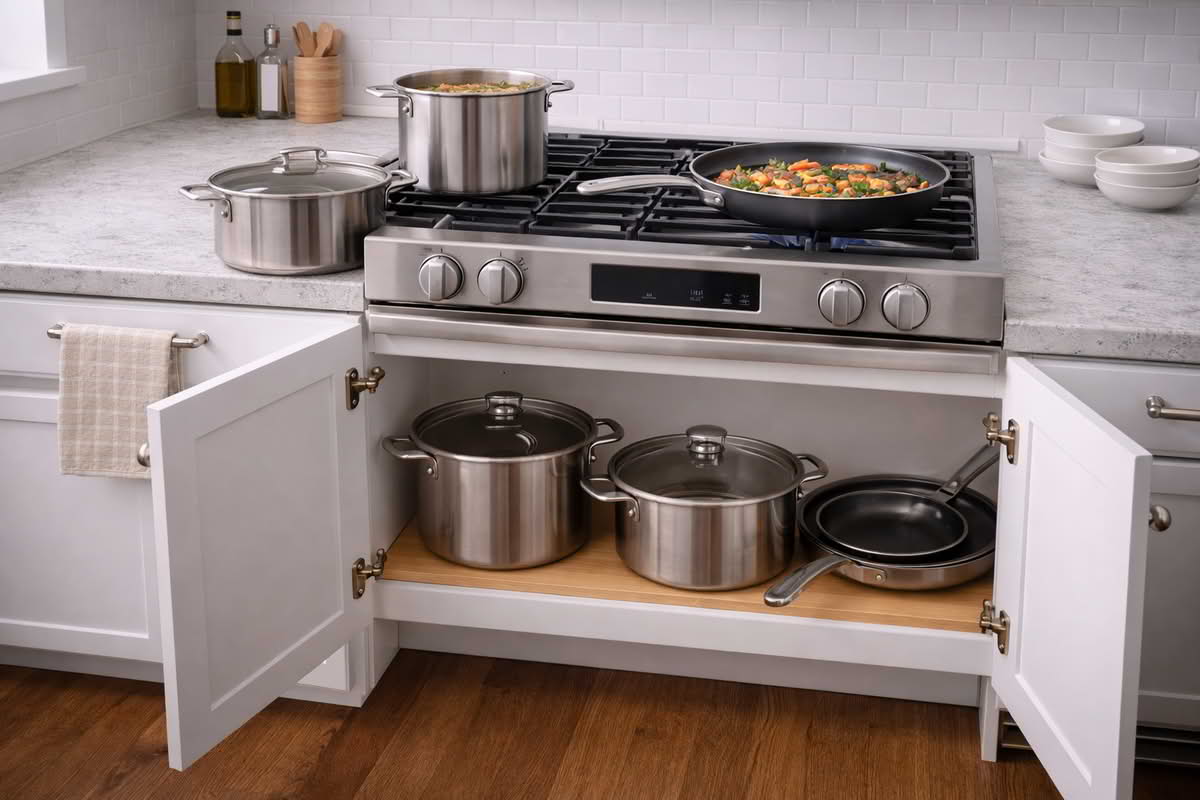
Storage deserves more attention than it usually gets. Lids take space. Long handles affect drawer and cabinet layout. Tall pots compete with mixing bowls, appliances, and food storage containers. In smaller kitchens, even good cookware can become annoying if it is hard to put away. This is one reason some buyers prefer modest sets combined with one or two separately chosen specialty pieces later. It keeps the starting system lean while leaving room to upgrade intentionally.
Stove compatibility is equally practical. Flat-bottomed pans tend to matter more on glass and induction surfaces, where contact quality affects performance. Weight can also become more noticeable on certain ranges, particularly if the cookware must be moved often between burners or between stove and sink. Buyers sometimes focus heavily on cooking performance and underweight the simple question of whether the pans feel easy to manage in the actual kitchen space available.
Dishwasher-safe claims should also be interpreted carefully. A piece can technically survive dishwasher use while still looking worse, losing polish, or aging faster than it would under gentler care. If low-maintenance ownership matters, it is worth considering not just whether the cookware can be cleaned a certain way, but whether that care routine is realistic week after week. Some sets are easy to own because they forgive neglect. Others are only easy to own if the household is willing to be careful.
Smaller kitchens usually benefit from tighter sets with fewer duplicate pan sizes.
Households that batch cook should prioritize pot volume and a genuinely useful larger pan.
Future stove changes are worth considering now, especially when replacing an entire cookware system.
Long-term value improves when replacement needs are predictable rather than surprising.
Cost modeling helps here. Budget sets can be sensible if expectations are realistic and the buyer mainly needs a functional starting point. Mid-range sets often deliver the strongest balance for everyday households because they improve construction, compatibility, and finishing details without forcing buyers into a premium price bracket. Higher-priced sets can make sense when the household cooks often, values durability, and is intentionally buying for a long service life. But a premium set is only worth it if its strengths actually show up in the way the kitchen operates.
One of the most common forms of buyer regret is paying for performance that never gets used. Another is saving money upfront only to replace the most-used pieces quickly. Both outcomes come from choosing without a realistic view of use patterns. A cookware set should be judged less like a luxury object and more like a household tool system. The right system feels proportionate. It fits the stove, the sink, the cabinets, the cleaning habits, and the meals you actually repeat.
Replacement strategy matters too. Some buyers want a set whose core pieces can anchor the kitchen for a long time, even if a dedicated nonstick skillet or specialty pot is added later. Others want an inexpensive reset that gets them through a transitional period, such as a first apartment, a temporary rental, or a move. Both are valid. Problems arise when shoppers confuse one goal for the other. Transitional cookware should not be judged by the same standard as a long-horizon kitchen upgrade, and vice versa.
The best low-regret mindset is to treat cookware as part of kitchen workflow rather than kitchen identity. It does not need to impress anyone. It needs to support repeatable cooking with manageable cleanup and durable enough performance for the stage of life you are in. When viewed that way, the decision becomes clearer. You are not buying a box of pieces. You are choosing a system that either reduces friction every week or slowly creates it.
Long-term cookware value depends not just on the pans themselves, but on whether the set fits the stove, storage space, and everyday workflow of the kitchen.
Final Recommendations — matching the set to how your kitchen actually works
The right cookware set depends less on headline prestige and more on how honestly it matches your cooking patterns. Buyers who want the lowest-friction experience usually do best with a set that emphasizes easy cleanup, manageable weight, and sensible everyday sizes. Buyers who cook often, use a wider range of techniques, and care about longer-term durability should usually lean toward stronger construction and broader temperature flexibility. In both cases, the goal is not maximum piece count. It is a system that covers daily cooking without filling cabinets with compromises.
Choose by core tasks first, and treat piece count as secondary.
Match material to your tolerance for maintenance, sticking, and long-term wear.
Prioritize stove compatibility, storage fit, and pan weight before chasing premium positioning.
Leave room for later additions instead of expecting one box to solve every future cooking need.
A low-regret cookware purchase usually feels quietly useful rather than dramatic. It fits the kitchen, supports the meals you actually make, and remains practical as routines evolve. That kind of fit matters more over time than marketing language, bundle size, or trend-driven finishes.