Soil Testing and Amendment: Understanding and Improving Garden Soil
Many garden problems—slow plant growth, poor yields, or persistent nutrient deficiencies—begin with soil conditions that gardeners cannot easily see. Because soil health involves chemistry, biology, and structure working together, problems are often misdiagnosed or treated with unnecessary fertilizers. Soil testing provides a clear way to understand what plants actually need and which amendments will improve long-term soil performance. This guide explains how soil tests work, what the results mean, and how to apply amendments thoughtfully. Instead of guessing at soil problems, gardeners can use testing and targeted improvements to build productive, resilient soil over time.
Why Soil Testing Matters for Garden Success
Soil may appear uniform from the surface, but its chemistry and structure vary widely between locations. Two gardens in the same neighborhood can have completely different nutrient balances, drainage characteristics, and pH levels. Without testing, gardeners often attempt to correct problems by adding fertilizers or amendments based on guesswork rather than actual soil conditions.
Soil testing removes much of this uncertainty by identifying measurable factors that affect plant growth. Instead of assuming that plants need more fertilizer, a soil test reveals whether the issue is nutrient imbalance, improper pH, or poor organic matter levels.
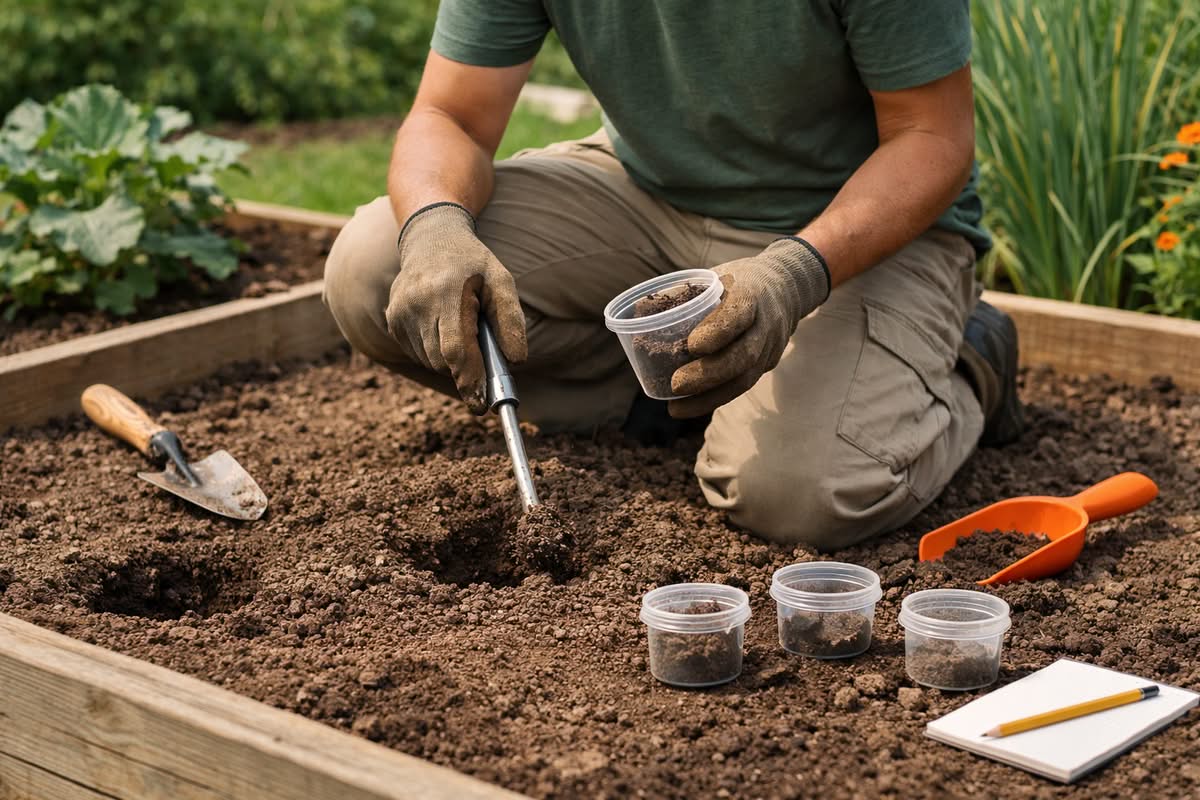
Soil testing typically involves collecting samples from multiple locations in a garden to create a representative soil profile.
Understanding soil conditions helps gardeners make better long-term decisions such as:
Whether soil pH needs adjustment
Which nutrients are deficient or excessive
How much organic matter is present
Whether soil structure may limit root growth
Over time, testing also helps track soil improvement. Repeating a soil test every few years allows gardeners to see whether amendments and organic practices are actually improving soil health.
How Soil Testing Works and What It Measures
Soil testing typically begins with collecting small soil samples from several areas of a garden. These samples are mixed together and analyzed either with home test kits or through laboratory testing services. Laboratory tests tend to provide the most detailed results and recommendations.
Most soil tests measure several key properties that influence plant growth.
Soil pH: indicates how acidic or alkaline the soil is
Nitrogen (N): supports leafy plant growth
Phosphorus (P): supports root development and flowering
Potassium (K): improves plant strength and resilience
Organic matter: reflects soil fertility and biological activity
Some laboratory tests also analyze additional nutrients such as calcium, magnesium, sulfur, and trace minerals. These elements may become important when diagnosing long-term soil imbalances or growing specialized crops.
The key advantage of laboratory testing is precision. Instead of broadly recommending fertilizer, soil reports identify specific nutrients that are lacking or excessive, allowing amendments to be applied more strategically.
Interpreting Soil Test Results
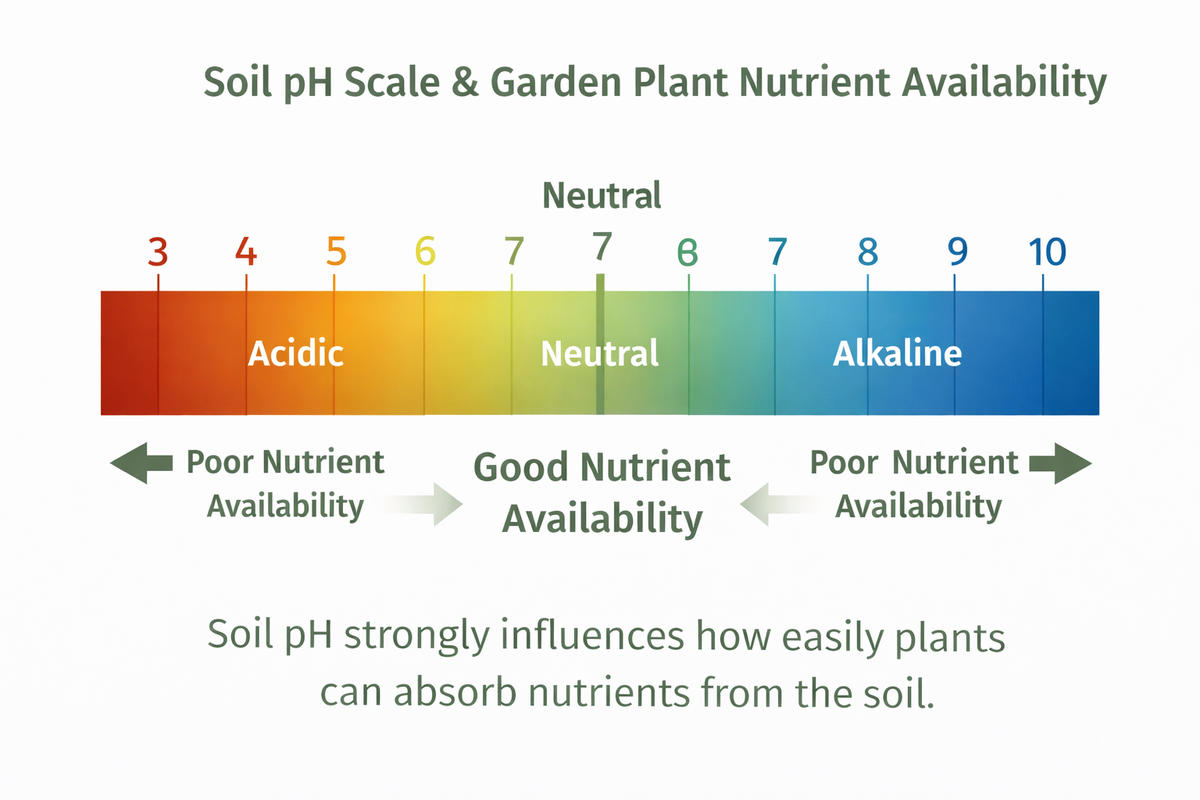
Soil test reports can initially appear technical because they include numeric values, nutrient ranges, and recommended amendment levels. However, the most important factor most gardeners need to understand is soil pH, which strongly influences nutrient availability.
Most vegetables and garden plants grow best in slightly acidic to neutral soil conditions. When soil pH falls outside this range, plants may struggle to absorb nutrients even if those nutrients are present in the soil.
Soil pH strongly influences how easily plants can absorb nutrients from the soil.
Soil test reports often classify nutrient levels into categories such as:
Low (deficient)
Optimal or sufficient
High (potential excess)
An important misconception is that higher nutrient levels are always better. In reality, excess nutrients can sometimes interfere with plant growth or disrupt soil biology. Balanced soil conditions generally support healthier plant development than heavily fertilized soil.
Common Soil Amendments and What They Do
Once soil test results identify specific issues, amendments can be used to improve soil chemistry or structure. Amendments differ from fertilizers in that many of them focus on improving soil health rather than supplying quick plant nutrients.
Some of the most common garden soil amendments include:
Compost: improves soil structure, microbial activity, and long-term fertility.
Lime: raises soil pH in acidic soils.
Sulfur: lowers soil pH in alkaline conditions.
Gypsum: may improve soil structure in some clay soils.
Organic fertilizers: provide nutrients slowly as they decompose.
The effectiveness of amendments depends heavily on applying the right material for the specific soil issue. For example, adding fertilizer to soil that already has sufficient nutrients may not improve plant growth and could even lead to nutrient runoff or imbalances.
Soil amendments also work on different timescales. Some changes, such as pH adjustments, may take months to fully influence soil chemistry, while organic matter additions may gradually improve soil over several growing seasons.
Building Long-Term Soil Health
While soil testing identifies specific chemical conditions, long-term soil health depends on biological activity and organic matter as well. Healthy soil supports complex communities of microbes, fungi, and soil organisms that help cycle nutrients and maintain stable structure.
Gardeners often improve soil health through practices that gradually increase organic matter and minimize soil disturbance.
Adding compost regularly
Using mulch to protect soil surfaces
Growing cover crops during off-seasons
Avoiding excessive tilling that disrupts soil structure
Soil rich in organic matter supports microbial life, stable structure, and long-term fertility.
These practices work together with soil testing. While tests identify current soil chemistry, long-term management practices improve the underlying soil ecosystem that supports healthy plant growth year after year.
Final Recommendation: Choosing the Right Soil Improvement Strategy
The most effective approach to soil improvement begins with understanding the soil you already have. Rather than adding fertilizers or amendments based on assumptions, soil testing provides a clear picture of nutrient levels, pH balance, and organic matter conditions.
Different garden situations call for slightly different soil improvement strategies:
New gardens with unknown soil history: Begin with a soil test to establish baseline conditions before adding fertilizers or amendments.
Gardens with poor plant performance: Testing helps identify whether the problem involves nutrient deficiency, pH imbalance, or structural soil issues.
Established gardens focused on long-term productivity: Periodic testing combined with compost additions helps maintain stable fertility.
Raised bed gardens: Testing helps monitor nutrient balance as organic materials gradually decompose over time.
In most home gardens, the most reliable strategy is combining occasional soil testing with consistent soil-building practices such as composting, mulching, and organic matter management. This balanced approach improves soil gradually while preventing the guesswork that often leads to unnecessary amendments or inconsistent plant growth.
Over time, gardeners who understand their soil and manage it carefully tend to see the most stable plant health, better yields, and fewer recurring nutrient problems.