Raised Bed Gardening: Designing Productive Garden Beds at Home
Raised bed gardening has become one of the most popular ways for homeowners to grow vegetables, herbs, and flowers—but many people start building beds without fully understanding how design choices affect long-term results. Bed depth, soil composition, layout, and materials all influence plant health, water management, and maintenance requirements. A poorly designed raised bed can dry out too quickly, compact over time, or become difficult to maintain. This guide explains how raised beds work, when they make sense, and how to design a system that stays productive for years rather than becoming a short-lived garden experiment.
Why Raised Beds Work for Home Gardens
Raised beds improve growing conditions by creating a controlled soil environment that drains well, warms faster in spring, and avoids the compaction problems common in ground-level gardens. Because the soil inside a raised bed is intentionally prepared, gardeners can avoid many of the limitations of native soil such as heavy clay, poor fertility, or inconsistent drainage.
The structural boundary of a raised bed also changes how gardeners interact with their garden space. Beds encourage organized planting patterns, easier weeding, and predictable soil conditions. This often leads to better plant performance and more consistent yields, particularly in small backyard gardens where space is limited.
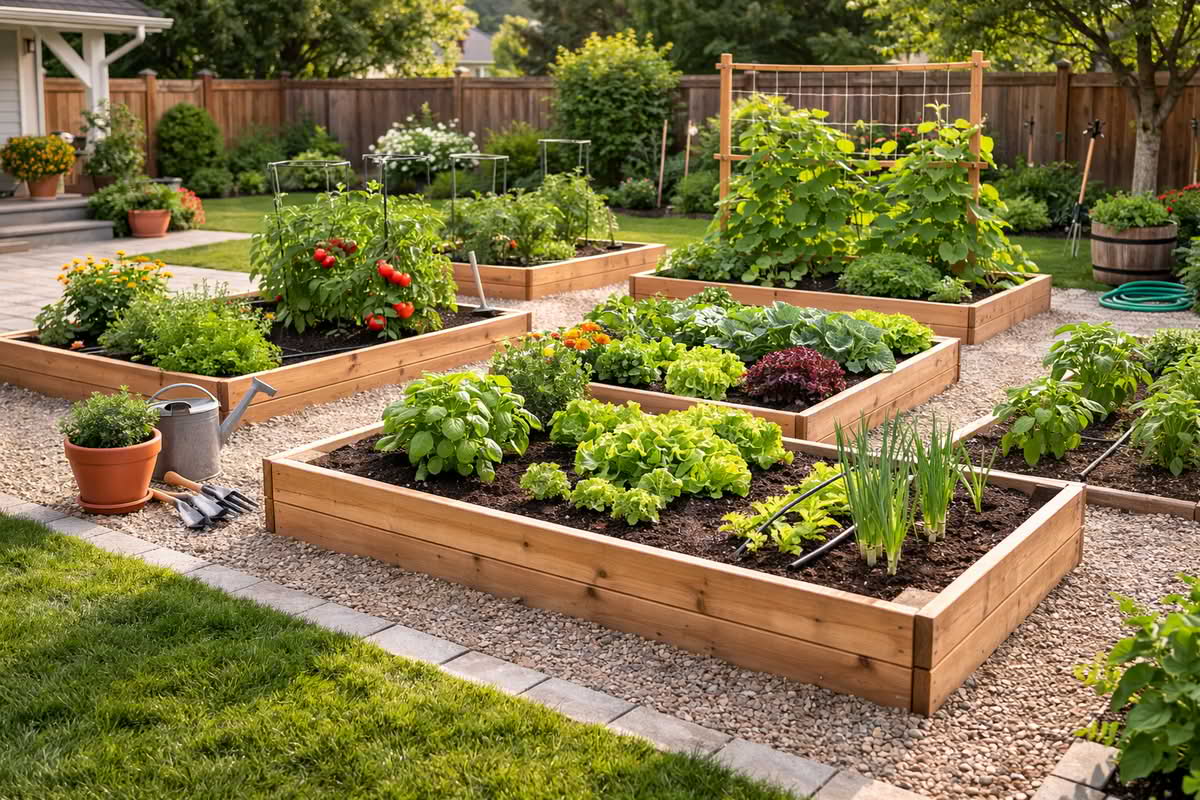
Raised beds create defined planting areas and walkways, making gardens easier to manage and maintain over time.
Some of the most important advantages include:
Improved soil drainage and reduced waterlogging
Less soil compaction because beds are never stepped on
Earlier soil warming in spring climates
Better weed management due to defined growing areas
More efficient use of small garden spaces
However, raised beds also require thoughtful design. Because the soil sits above ground level, it can dry out faster than in-ground gardens and may require more consistent irrigation and seasonal soil replenishment.
Raised Bed Design Basics: Size, Depth, and Layout
One of the most common mistakes new gardeners make is building raised beds that are too wide, too shallow, or poorly arranged within the garden space. Good bed design focuses on accessibility, soil volume, and efficient movement around the garden.
Raised beds are typically designed so gardeners can reach the center from either side without stepping into the soil. This preserves soil structure and prevents compaction.
Typical width: 3–4 feet for comfortable reach
Typical length: 6–12 feet depending on space
Pathways: 18–24 inches between beds
Orientation: Often north–south for even sunlight exposure
Depth is another important factor. While shallow beds may appear easier to build, deeper beds support better root development and soil stability.
8–10 inches: minimum depth for herbs and shallow-rooted crops
12 inches: good general-purpose garden depth
18–24 inches: ideal for deep-rooted vegetables and long-term soil health
Deeper beds also provide a larger soil buffer against temperature changes and moisture loss. Although they require more soil initially, they tend to perform better over multiple growing seasons.
Choosing Materials for Raised Bed Construction
Raised beds can be constructed from a wide range of materials, but the choice affects durability, cost, and long-term maintenance. The best material often depends on climate, budget, and the expected lifespan of the garden.
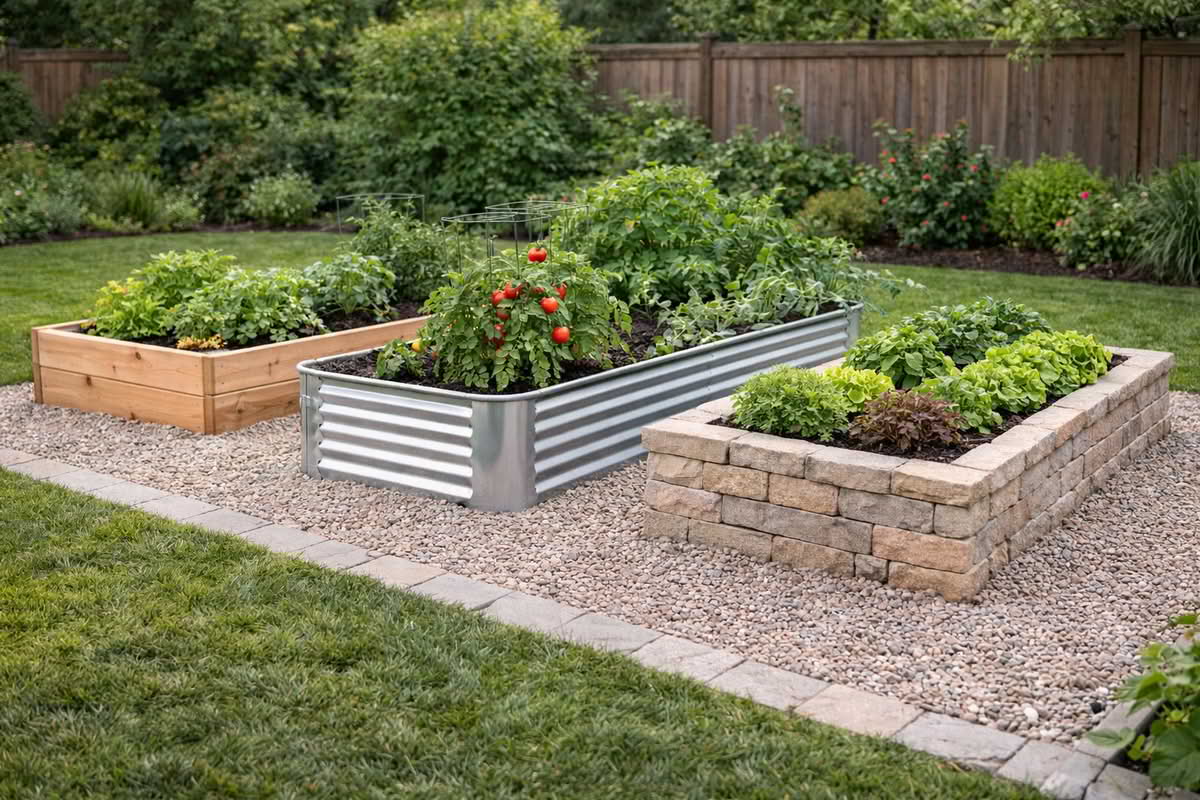
Raised beds can be built from wood, metal, masonry, or composite materials depending on durability and aesthetic preferences.
Common raised bed materials include:
Untreated wood: popular for affordability and natural appearance, but typically lasts 5–10 years depending on climate.
Cedar or redwood: naturally rot-resistant woods that last longer but cost more upfront.
Metal beds: durable and long-lasting, often with modern aesthetics.
Concrete blocks or stone: extremely durable but more labor-intensive to build.
Many gardeners prioritize untreated or naturally rot-resistant materials to avoid introducing chemical preservatives into the soil. However, durability tradeoffs should also be considered when designing a permanent garden space.
Soil Strategy for Long-Term Raised Bed Success
Soil quality is the single most important factor determining the success of a raised bed garden. Because raised beds are filled intentionally, gardeners have the opportunity to build a fertile soil system from the start rather than trying to repair poor native soil.
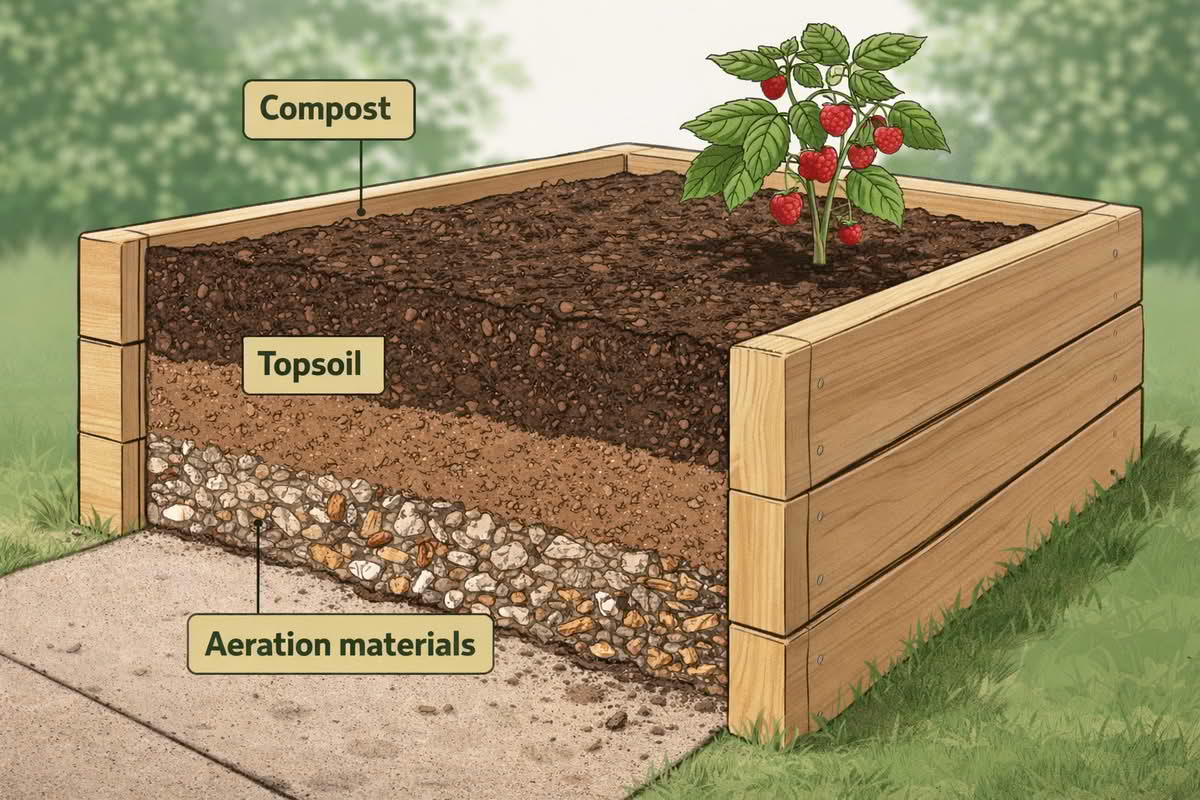
A balanced raised bed soil blend typically includes three main components that support structure, drainage, and long-term fertility.
Topsoil or mineral soil: provides structure and nutrient-holding capacity
Compost: supplies organic matter and microbial activity
Aeration material: such as coarse sand or aged bark to improve drainage
Over time, organic matter decomposes and soil levels may slowly settle. Many gardeners add compost each season to replenish nutrients and maintain soil volume.
Healthy raised bed soil typically combines mineral soil, compost, and aeration materials to create a balanced growing medium.
Avoid filling beds with pure compost or bagged potting soil alone. These materials can break down rapidly or become unstable over time, leading to poor root support and inconsistent moisture retention.
Planting Density and Seasonal Management
Raised beds often allow for more efficient planting patterns than traditional row gardening. Because gardeners can access the bed from all sides, plants can be spaced more densely without sacrificing accessibility.
This style of planting is sometimes referred to as “intensive gardening,” where crops are spaced based on mature plant size rather than wide row spacing designed for large farm equipment.
Leafy greens can be planted in dense blocks rather than rows
Root vegetables can be staggered to maximize space
Vertical crops like tomatoes and cucumbers benefit from trellises
Companion planting can improve space efficiency
Raised beds also benefit from seasonal soil care practices such as adding compost, rotating crops, and planting cover crops during off-seasons. These strategies help maintain soil structure and nutrient balance over time.
Irrigation planning is another important factor. Because raised beds drain well and warm quickly, they may require more frequent watering during hot summer conditions compared with in-ground gardens.
Final Recommendation: Choosing the Right Raised Bed Approach
Raised bed gardening works best when the design reflects the gardener’s available space, soil conditions, and long-term maintenance expectations. While raised beds can dramatically improve growing conditions, the benefits depend on thoughtful planning rather than simply building a box and filling it with soil.
Several common scenarios illustrate how raised beds are typically used most effectively:
Gardens with poor native soil: Raised beds provide a controlled soil environment that avoids clay compaction, drainage problems, or nutrient deficiencies.
Small backyard gardens: Defined beds help organize planting areas and maximize productivity within limited space.
Accessible gardening layouts: Taller raised beds can reduce bending and make gardening easier for many homeowners.
Highly productive vegetable gardens: Structured beds support intensive planting methods and seasonal soil management.
For most homeowners, the most successful approach is building moderately deep beds (12–18 inches), filling them with a balanced soil mix rich in compost, and arranging them with comfortable walkways that make maintenance easy throughout the growing season.
When designed with long-term soil health and accessibility in mind, raised beds become a durable garden framework that can remain productive for many years while simplifying many of the challenges that traditional in-ground gardens often face.