Composting for Home Gardeners: Turning Kitchen and Yard Waste Into Healthy Soil
Many gardeners understand that compost improves soil, but fewer understand how to produce it consistently at home. Composting is often portrayed as either extremely simple or unnecessarily complicated, which leaves many people unsure where to start. In reality, successful composting depends on understanding a few basic biological principles: balancing materials, maintaining airflow, and managing moisture. When these elements work together, organic waste becomes a steady source of nutrient-rich soil amendment rather than landfill trash. This guide explains how composting works, what materials to use, and how to choose a composting method that fits your garden space, time, and long-term soil goals.
What Composting Actually Does for Garden Soil
Composting is essentially the controlled decomposition of organic matter. Microorganisms such as bacteria and fungi break down plant scraps, yard debris, and other biodegradable materials into a dark, crumbly substance that improves soil structure and fertility. For home gardeners, compost acts as a slow-release nutrient source and a structural improvement for many soil types.
One of the most important benefits of compost is its ability to improve soil structure. Sandy soils that drain too quickly can hold water more effectively when compost is added, while heavy clay soils become looser and easier for plant roots to penetrate. In both cases, compost helps soil maintain a healthier balance of air, water, and nutrients.
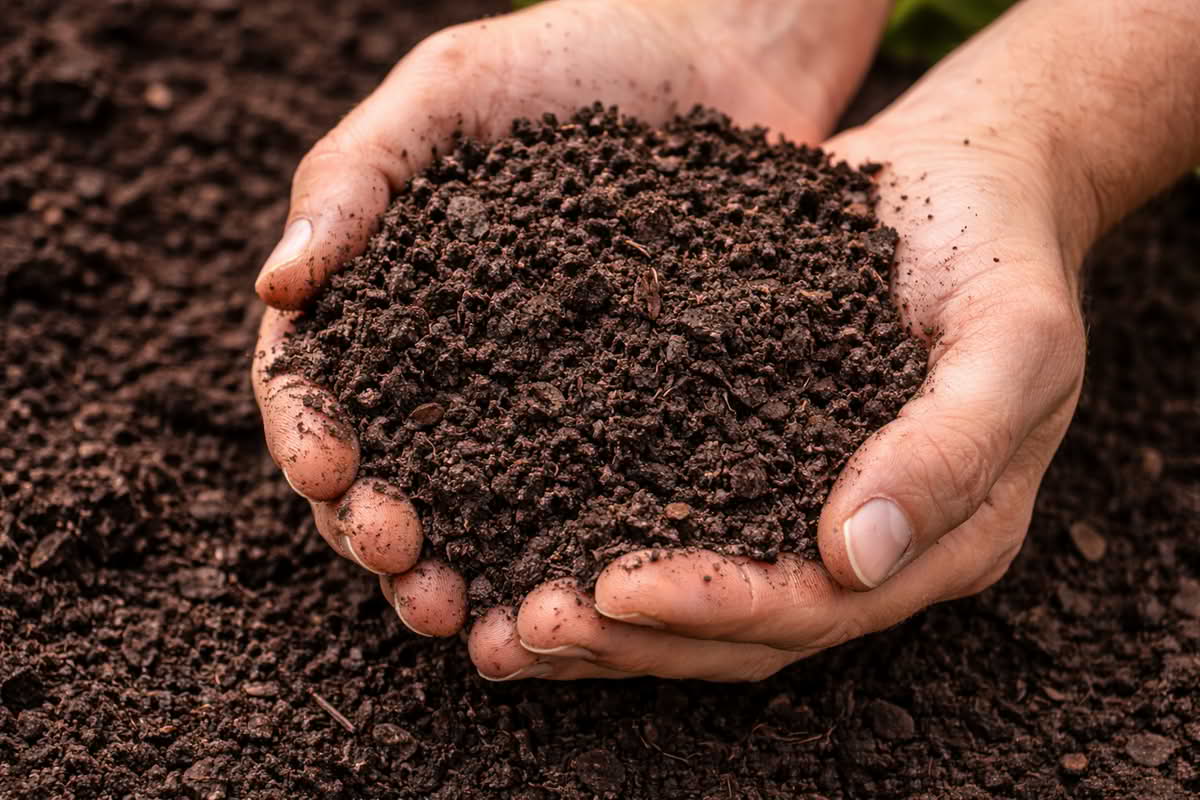
Finished compost has a dark, crumbly texture and earthy smell, indicating that organic material has fully decomposed.
Improves soil structure and drainage
Adds organic matter that feeds soil microbes
Helps soil retain moisture during dry periods
Gradually releases nutrients for plant growth
Compost also reduces waste. Food scraps, grass clippings, leaves, and small plant debris that would normally go to the landfill can instead be returned to the soil as a resource. For many homeowners, composting becomes both a gardening practice and a small-scale environmental improvement.
Understanding Compost Ingredients and Balance
Successful composting depends largely on balancing two categories of organic material commonly described as “greens” and “browns.” Greens provide nitrogen, which fuels microbial activity, while browns provide carbon, which supplies energy and structure during decomposition.
A pile dominated by green materials can become wet, compacted, and unpleasantly smelly. A pile that contains only brown materials may decompose extremely slowly. Most home compost systems work best when both types of material are mixed together in balanced proportions.
Brown materials: dry leaves, shredded cardboard, straw, small twigs
Moisture: compost should feel similar to a wrung-out sponge
Air: oxygen is necessary for beneficial decomposition
Another common misconception is that compost requires precise measurement. In reality, most backyard systems work well with approximate ratios. A helpful guideline is roughly two to three parts brown material for every one part green material, layered or mixed together as the pile grows.
Avoid adding materials that may introduce pests or disease problems. Meat, dairy products, oily foods, and pet waste typically do not belong in standard home compost systems because they attract animals and may not break down safely in backyard conditions.
Choosing a Composting Method for Your Space
There are several ways to compost at home, and the best choice depends on available space, the amount of organic waste produced, and how quickly compost is needed. Some gardeners prefer simple compost piles, while others choose enclosed bins or rotating tumblers to keep materials contained.
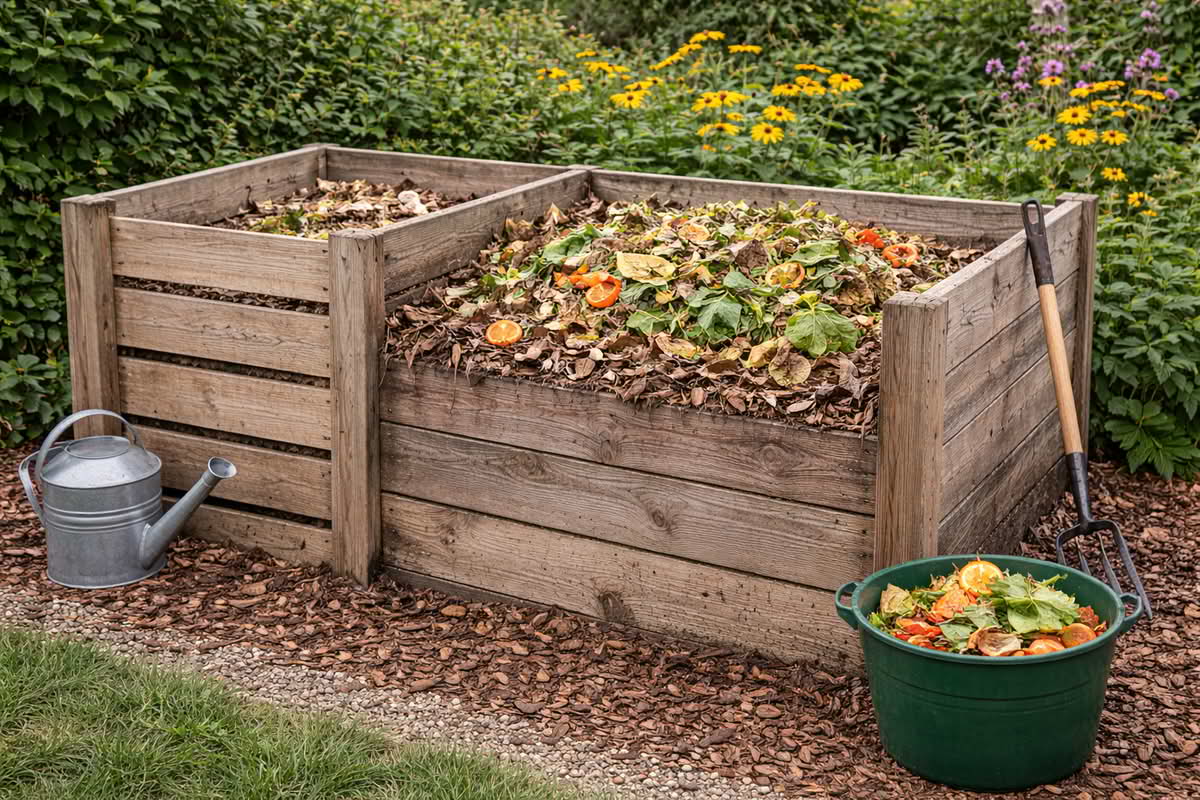
Enclosed compost bins help organize materials and maintain airflow while keeping garden waste contained.
Open compost piles are the simplest approach. Yard debris and food scraps are stacked in a dedicated area and turned occasionally to encourage decomposition. This method works well for gardeners with larger yards and steady supplies of leaves or grass clippings.
Open piles: simple and inexpensive but less contained
Compost bins: structured containers that keep piles organized
Tumbling composters: rotating containers that speed mixing and aeration
Worm composting: small indoor or outdoor systems using worms to process scraps
Each method involves tradeoffs. Open piles offer maximum capacity but may look untidy in smaller yards. Tumblers are compact and faster but limit how much material can be processed at once. Choosing the right system often depends more on lifestyle and available space than on strict performance differences.
Managing the Composting Process
Once materials are added to a compost system, microorganisms begin breaking them down. Temperature, airflow, and moisture determine how quickly decomposition occurs. Active compost piles can become surprisingly warm as microbes generate heat while digesting organic matter.
Turning the pile occasionally introduces oxygen, which supports aerobic microbes and prevents foul odors. While frequent turning speeds up the process, it is not strictly required. Many home compost piles decompose gradually with only occasional mixing.
Turn the pile every few weeks to improve airflow
Add dry leaves or cardboard if the pile becomes too wet
Moisten dry materials so microbes can function properly
Chop or shred large materials to speed decomposition
One of the most common beginner mistakes is assuming compost must be constantly managed. In reality, composting works best when gardeners maintain general balance rather than micromanaging the pile. As long as organic materials are reasonably mixed and moisture remains moderate, decomposition will occur naturally over time.
How to Use Finished Compost in the Garden
Finished compost typically appears dark brown or black and has a loose, crumbly texture. The original ingredients should no longer be recognizable. At this stage, compost becomes a versatile soil amendment that can be used throughout the garden.
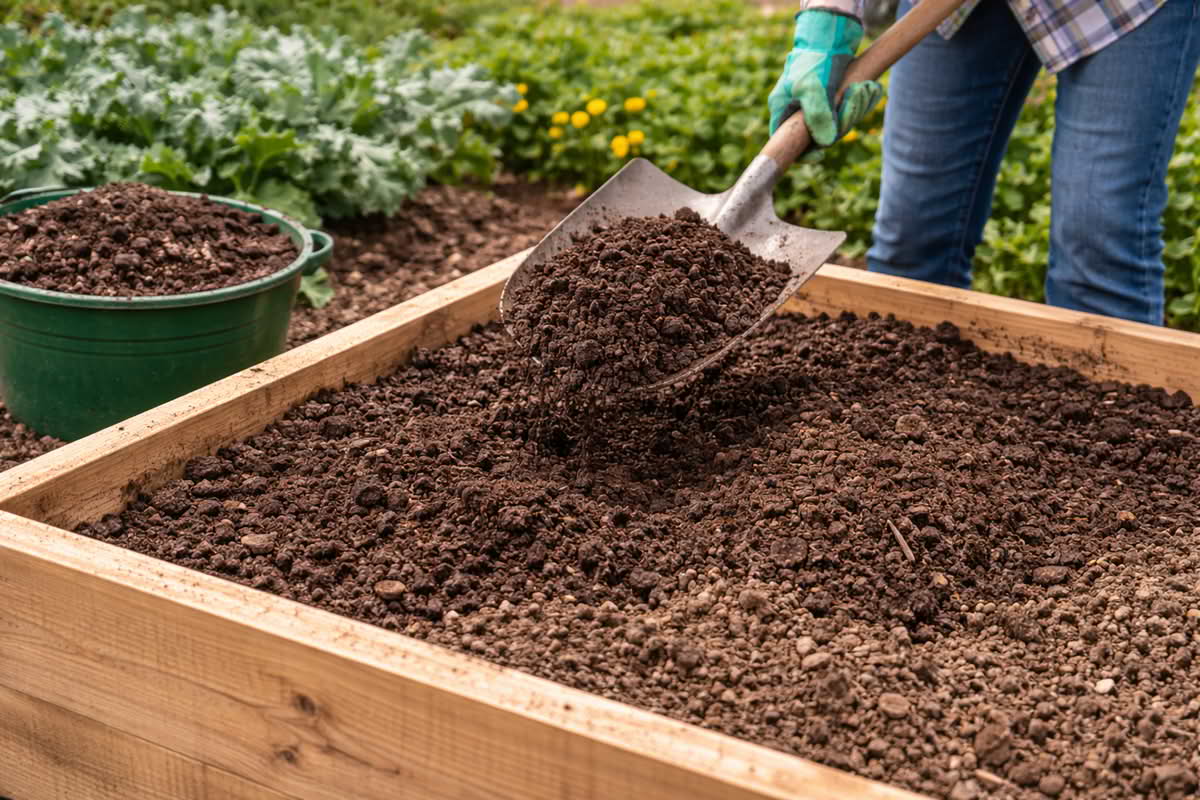
Compost can be mixed into garden beds to improve soil structure and provide slow-release nutrients.
Many gardeners incorporate compost directly into planting beds before each growing season. Mixing several inches of compost into the top layer of soil helps replenish organic matter and improves root growth for vegetables, flowers, and shrubs.
Mix compost into vegetable beds before planting
Use as a top dressing around established plants
Blend with potting soil for container gardening
Add to lawn areas to improve soil health
Compost can also function as part of a long-term soil improvement strategy. By applying small amounts regularly, gardeners gradually build richer soil that requires fewer external fertilizers and supports healthier plant growth year after year.
Final Recommendation: Choosing the Right Composting Approach
Composting works best when it fits naturally into a gardener’s routine. Rather than searching for the most advanced system, most homeowners benefit from choosing a simple approach they can maintain consistently. The goal is not perfect compost chemistry but steady recycling of organic materials into soil-building resources.
For gardeners with large yards and abundant leaves or grass clippings, an open compost pile or multi-bin system offers the greatest flexibility and capacity. These setups allow large volumes of organic matter to break down gradually with minimal equipment.
In smaller yards or urban environments, enclosed compost bins or tumbling composters provide a more compact solution. These systems keep materials contained and make turning easier, though they limit how much compost can be produced at once.
Gardeners who generate mostly kitchen scraps may prefer worm composting systems. Vermicomposting converts food waste into highly concentrated compost in relatively small spaces, making it practical for patios, garages, or even indoor setups.
Over time, composting becomes less about managing a pile and more about building a sustainable gardening cycle. Organic waste from the kitchen and yard returns to the soil, plants grow in healthier conditions, and each growing season gradually improves the garden’s long-term fertility.