Mulch Types and Application: How to Protect Soil and Improve Plant Growth
Mulch is one of the simplest tools gardeners can use to improve soil health and plant performance, yet it’s often misunderstood or applied incorrectly. Some gardeners treat mulch as purely decorative, while others use it inconsistently without understanding how different materials affect moisture, temperature, and soil biology. In reality, mulch plays a critical role in protecting soil from erosion, conserving water, and supporting beneficial organisms that plants rely on for long-term health. Choosing the right mulch type—and applying it correctly—can dramatically improve garden resilience. This guide explains how mulch works, the strengths and tradeoffs of common mulch materials, and how to use mulch effectively in home gardens.
Why Mulch Matters for Soil Health
In natural ecosystems, soil is rarely exposed. Fallen leaves, plant debris, and organic material form a protective layer that shields the ground from sun, wind, and heavy rain. Mulch replicates this natural protection in garden environments, helping soil maintain stable conditions that plants depend on.
One of the most immediate benefits of mulch is moisture retention. Bare soil loses water quickly through evaporation, particularly during warm or windy weather. A layer of mulch slows that evaporation dramatically, allowing soil to remain evenly moist for longer periods between watering.
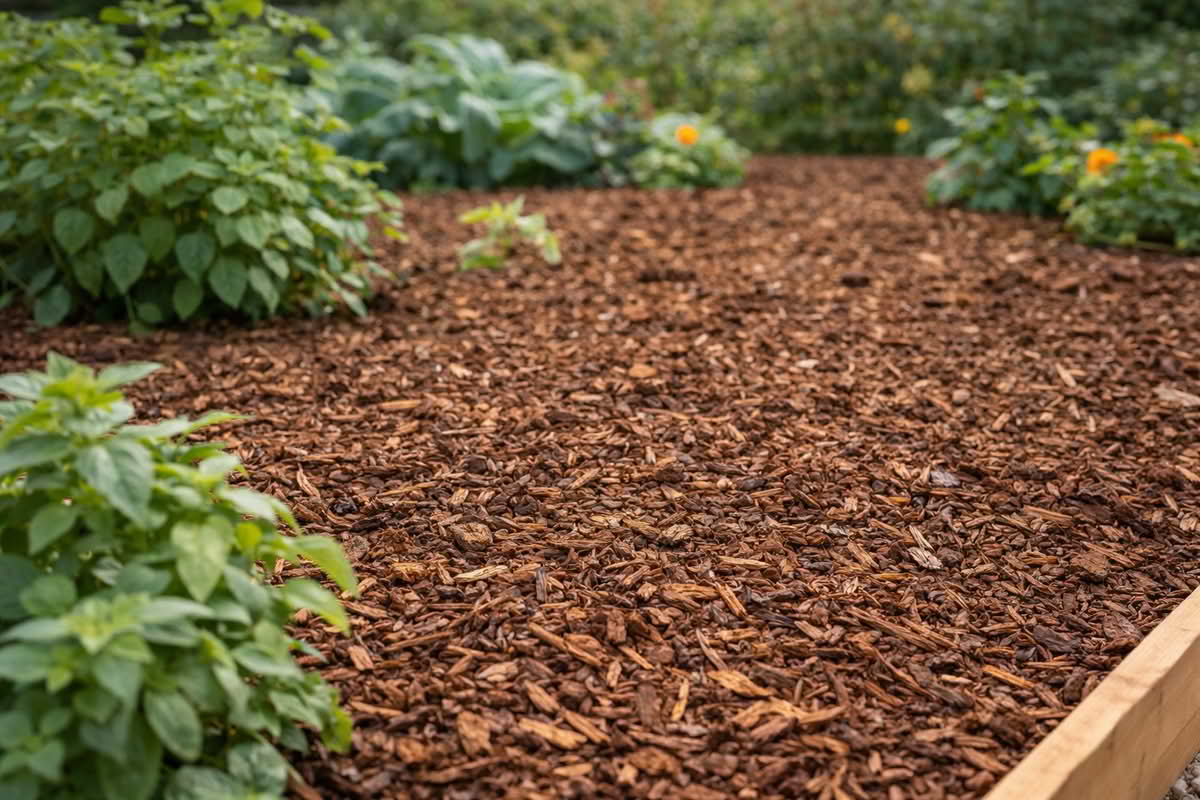
A protective mulch layer helps regulate soil moisture, temperature, and weed growth.
Reduces soil moisture loss through evaporation
Suppresses weed growth by blocking sunlight
Moderates soil temperature fluctuations
Protects soil structure from erosion and heavy rain
Over time, certain mulches also contribute organic matter as they decompose. This process feeds soil microbes and improves long-term soil fertility. For gardeners trying to build healthier soil, mulch is often one of the most effective and low-effort practices available.
Organic vs. Inorganic Mulch Materials
Mulch materials fall into two broad categories: organic and inorganic. Organic mulches come from plant-based materials that gradually decompose, while inorganic mulches consist of materials that remain relatively stable over time.
Organic mulches are generally favored in vegetable gardens and planting beds because they enrich the soil as they break down. However, they require periodic replacement as decomposition reduces their thickness.
Inorganic mulches: gravel, rubber mulch, landscape fabric, stone
Organic mulches improve soil structure over time
Inorganic mulches last longer but do not feed soil biology
The tradeoff between these materials often comes down to maintenance versus soil improvement. Organic mulches must be replenished periodically, but they actively support soil health. Inorganic mulches last longer but primarily serve structural or aesthetic roles.
For most home gardens, organic mulches provide the greatest long-term benefits because they contribute directly to the living ecosystem beneath the soil surface.
Common Mulch Types and Their Tradeoffs
Within the organic mulch category, several materials are commonly used in residential gardens. Each option behaves slightly differently in terms of longevity, appearance, and suitability for specific plant types.
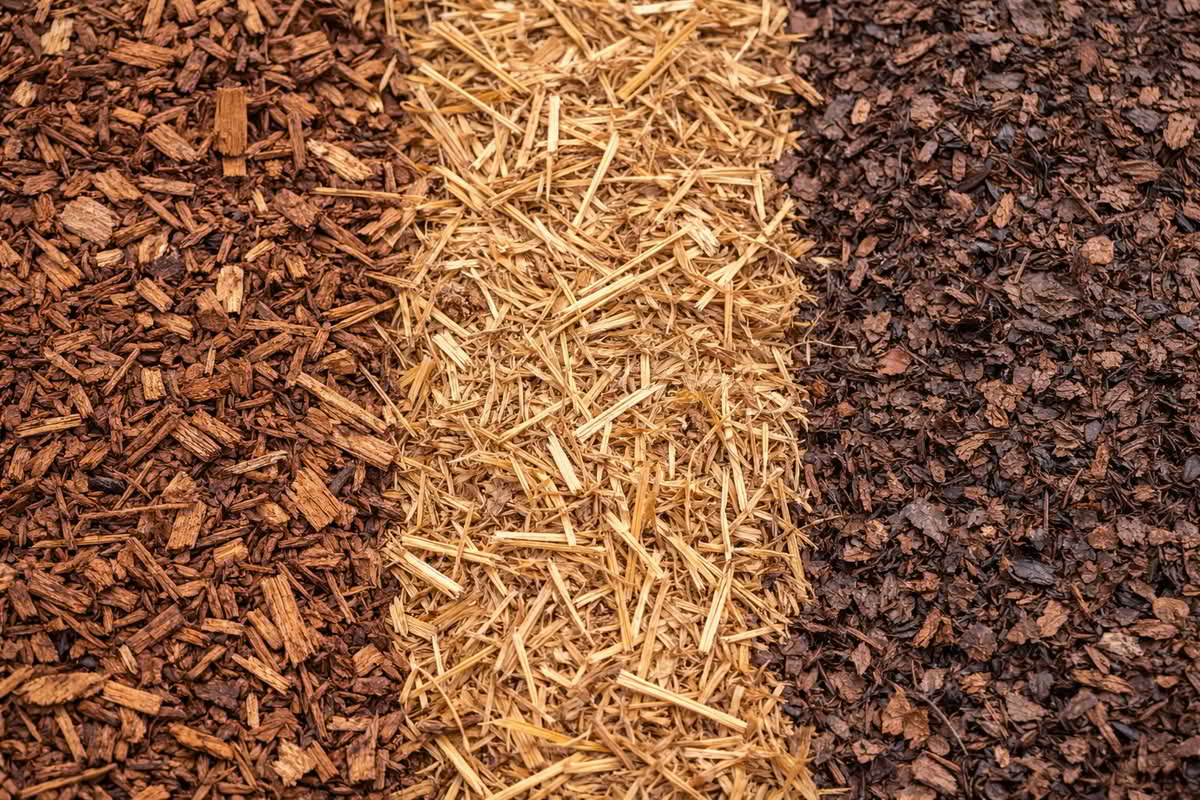
Different mulch materials vary in appearance, decomposition rate, and suitability for different garden areas.
Wood chips and bark mulches are among the most widely used options for landscape beds and around trees or shrubs. They break down slowly and provide a clean, natural appearance.
Wood chips: durable mulch ideal for trees and shrubs
Shredded leaves: excellent soil builder but may compact
Straw: lightweight mulch commonly used in vegetable gardens
Compost: nutrient-rich mulch that doubles as soil amendment
Each material has tradeoffs. Straw decomposes quickly but may need seasonal replacement. Wood chips last longer but contribute nutrients more slowly. Shredded leaves are readily available in many areas but can mat together if applied too thickly.
Choosing the right mulch type often depends on the purpose of the garden area and how much maintenance the gardener is willing to perform.
How to Apply Mulch Correctly
Even high-quality mulch can cause problems if applied incorrectly. One of the most common mistakes gardeners make is applying mulch too thickly or piling it directly against plant stems and tree trunks.
Mulch should function as a protective blanket for the soil, not a mound that traps moisture against plant tissues. Excessive mulch depth can reduce airflow and create conditions that encourage rot or pest problems.
Apply mulch in a layer roughly 2–3 inches deep
Keep mulch a few inches away from plant stems
Water soil before applying mulch to trap moisture
Spread mulch evenly across the planting area
Another frequent issue is “mulch volcanoes” around trees—large piles of mulch stacked against the trunk. While common in landscaped areas, this practice can damage tree bark and encourage root problems. Mulch should always remain flat and evenly distributed around the root zone.
Mulching Strategies for Different Garden Areas
Different parts of the garden benefit from slightly different mulching strategies. Vegetable beds, perennial plantings, and landscape areas all have unique soil management goals that influence which mulch materials work best.
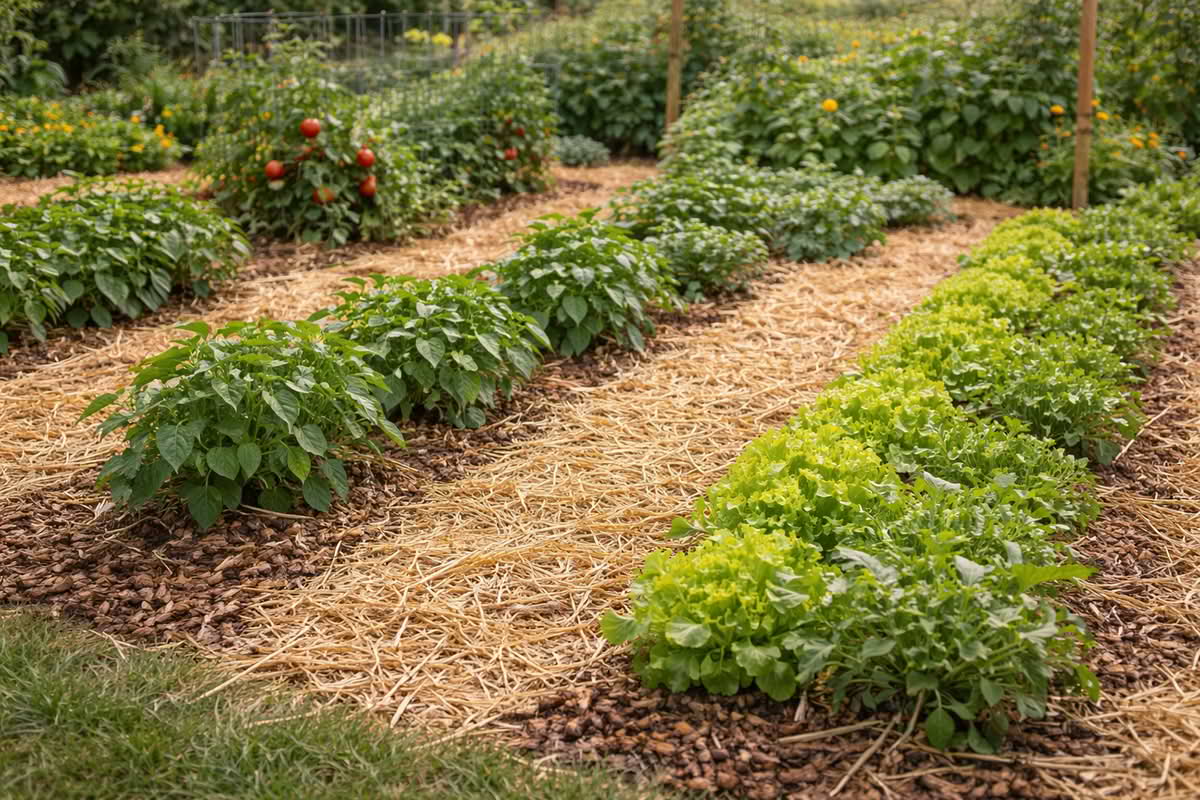
Straw mulch works well in vegetable gardens because it suppresses weeds while allowing easy planting and harvesting.
Vegetable gardens often benefit from lighter mulches such as straw or shredded leaves. These materials suppress weeds while allowing easy planting and soil preparation between growing seasons.
Vegetable beds: straw, compost, or shredded leaves
Perennial beds: bark or wood chip mulch
Tree bases: wide mulch rings with coarse organic material
Garden paths: wood chips or gravel for durability
Matching mulch material to garden function helps balance soil health, maintenance needs, and visual appearance. Over time, thoughtful mulching strategies reduce watering requirements and make garden maintenance significantly easier.
Final Recommendation: Choosing the Right Mulch Strategy
The most effective mulch strategy is one that balances soil improvement, maintenance effort, and the specific needs of different garden areas. Rather than choosing a single mulch type for the entire landscape, many gardeners benefit from using different materials where they perform best.
For gardeners focused on improving soil health and vegetable production, organic mulches such as straw, shredded leaves, or compost provide the greatest long-term benefit. These materials gradually break down, feeding soil microbes and improving soil structure over time.
For perennial planting beds and shrubs, wood chips or bark mulches often provide the best balance of durability and soil protection. They decompose slowly and maintain a neat appearance while still contributing organic matter to the soil.
In decorative landscape areas where longevity and low maintenance are priorities, inorganic mulches such as gravel may provide a more stable solution. While they do not improve soil fertility, they can reduce weed growth and require less frequent replacement.
Ultimately, mulch works best when it becomes a routine part of garden care rather than an occasional addition. Maintaining a consistent protective layer helps regulate soil conditions, reduce maintenance demands, and support healthier plant growth throughout the growing season.