Patio and Deck Cleaning: Protecting Outdoor Surfaces While Removing Dirt and Stains
Patios and decks collect dirt, algae, pollen, and stains throughout the year, yet cleaning these surfaces is often more complicated than homeowners expect. Many people either underestimate how much buildup accumulates outdoors or attempt aggressive cleaning methods that damage wood, stone, or composite materials. Pressure that’s too strong, harsh chemicals, or improper tools can leave permanent marks or strip protective finishes. This guide explains how patio and deck surfaces accumulate grime, how different materials respond to cleaning, and how to select appropriate tools and techniques so outdoor spaces can be restored safely without shortening the life of the materials underneath.
Why Patios and Decks Accumulate Dirt and Stains
Outdoor living areas are constantly exposed to environmental debris. Wind carries dust and soil particles, plants release pollen, and rainwater spreads organic material across surfaces. Over time these materials combine with moisture and sunlight to create stains, discoloration, and sometimes slippery algae growth.
Unlike indoor flooring, outdoor surfaces also experience seasonal cycles that accelerate buildup. During spring and summer, plant debris and pollen accumulate quickly. In autumn, leaves and organic matter break down and leave dark stains. Winter moisture can encourage mold or algae growth in shaded areas.
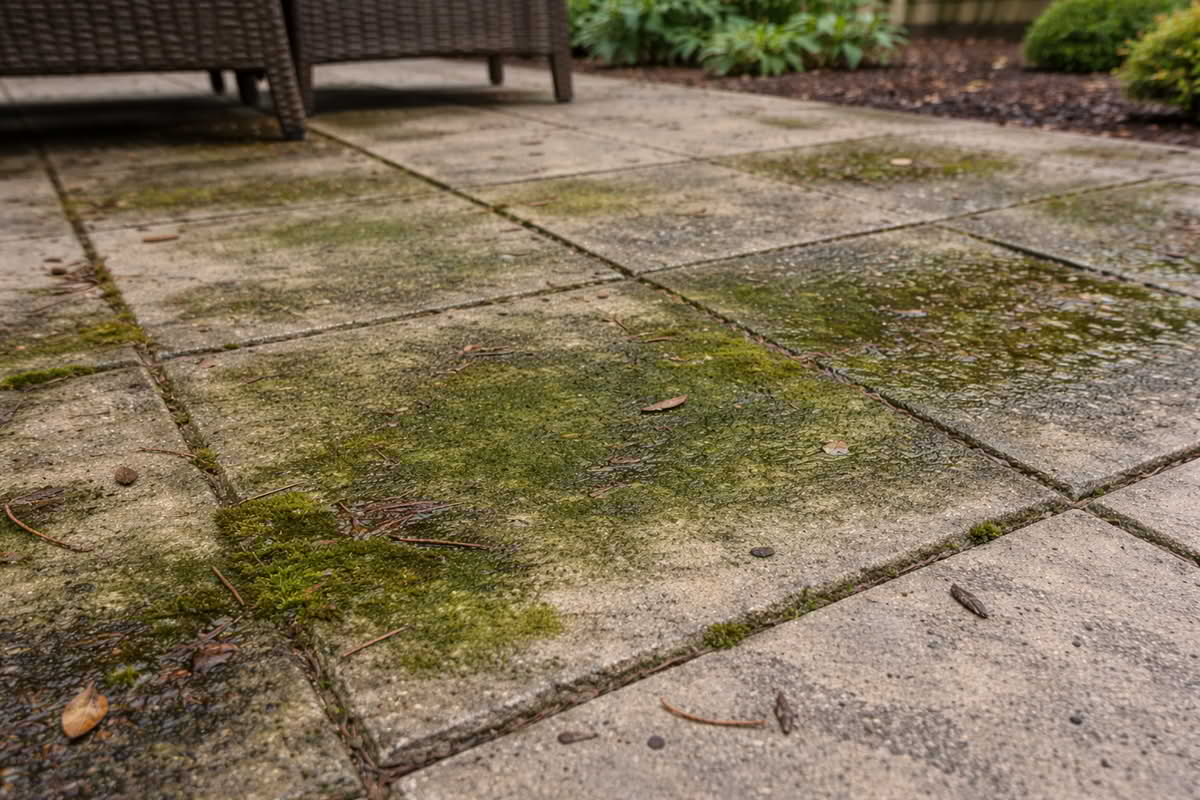
Outdoor surfaces accumulate organic debris, moisture, and algae over time, creating stains and slippery areas if not cleaned periodically.
Several environmental factors influence how quickly patios and decks become dirty:
Shade encourages algae and mold growth.
Nearby trees drop sap, pollen, and leaf debris.
Foot traffic grinds soil and dust into surface textures.
Moist climates accelerate biological growth.
Because these factors vary widely between homes, cleaning frequency and techniques should be adapted to local conditions rather than following a rigid schedule.
Understanding Different Patio and Deck Materials
One of the most important factors in outdoor cleaning is the material being cleaned. Patios and decks can be built from wood, composite boards, stone pavers, concrete, or tile, and each material responds differently to water pressure, scrubbing, and cleaning agents.
Wood decks are particularly sensitive to aggressive cleaning. High-pressure water streams can erode the softer grain in the wood, leaving uneven surfaces or splintering fibers. Even moderate pressure must be used carefully to avoid long-term damage.
Composite decking materials are generally more durable but can still develop surface streaking if cleaned with narrow pressure washer nozzles. Stone patios and concrete slabs are much more resistant to pressure but may absorb stains from organic material or rust.
Wood decks: sensitive to pressure and aggressive scrubbing.
Composite decking: durable but may show streaking.
Concrete patios: strong but prone to deep stains.
Stone pavers: porous surfaces that trap dirt and algae.
Recognizing these differences helps prevent the most common mistake in outdoor cleaning: applying the same technique to every surface regardless of its durability.
Cleaning Tools and Equipment for Outdoor Surfaces
Cleaning patios and decks effectively requires tools that balance power with control. While pressure washers often receive the most attention, they are only one part of the cleaning process. In many situations, simpler tools can produce better results with less risk to the surface.
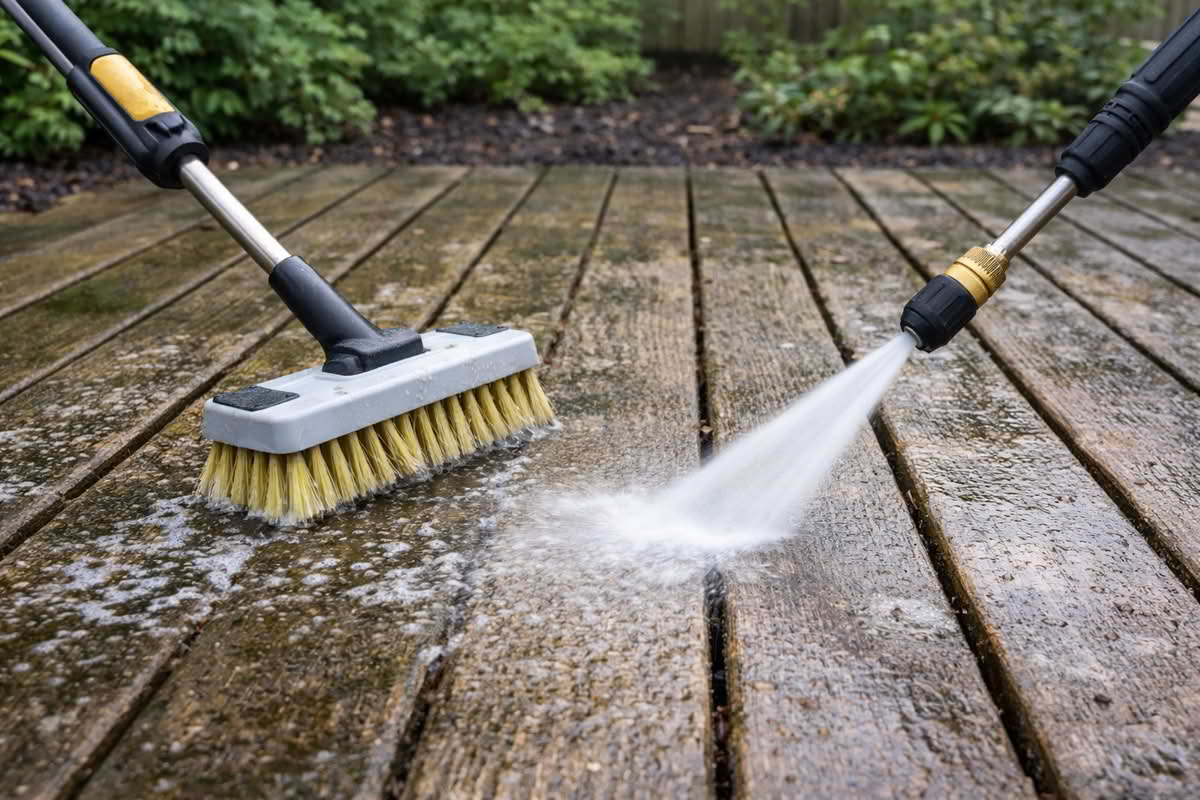
Stiff-bristle brushes are often the first line of defense against dirt and algae. These brushes allow targeted scrubbing in problem areas without applying excessive pressure across the entire surface. Long-handled deck brushes are particularly useful for covering large areas comfortably.
Many outdoor cleaning projects combine manual scrubbing with controlled pressure washing to remove stubborn dirt safely.
Pressure washers can be very effective when used correctly, particularly for concrete or stone surfaces. However, wide spray angles and moderate pressure settings are usually safer for deck materials.
Deck brushes for controlled scrubbing.
Garden hoses for light rinsing and maintenance cleaning.
Pressure washers for tougher grime and large areas.
Surface cleaner attachments for flat concrete patios.
Choosing the right tool combination often reduces cleaning time while preventing unnecessary wear on outdoor materials.
Effective Cleaning Techniques for Different Surfaces
Effective patio and deck cleaning usually follows a sequence rather than relying on a single step. Starting with dry debris removal helps prevent dirt from spreading when water is introduced. Sweeping away leaves, soil, and loose debris prepares the surface for deeper cleaning.
Once loose debris is removed, pre-wetting the surface helps loosen embedded dirt and reduces the likelihood of streaking. For areas with algae or mildew, mild cleaning solutions can break down biological growth before scrubbing begins.
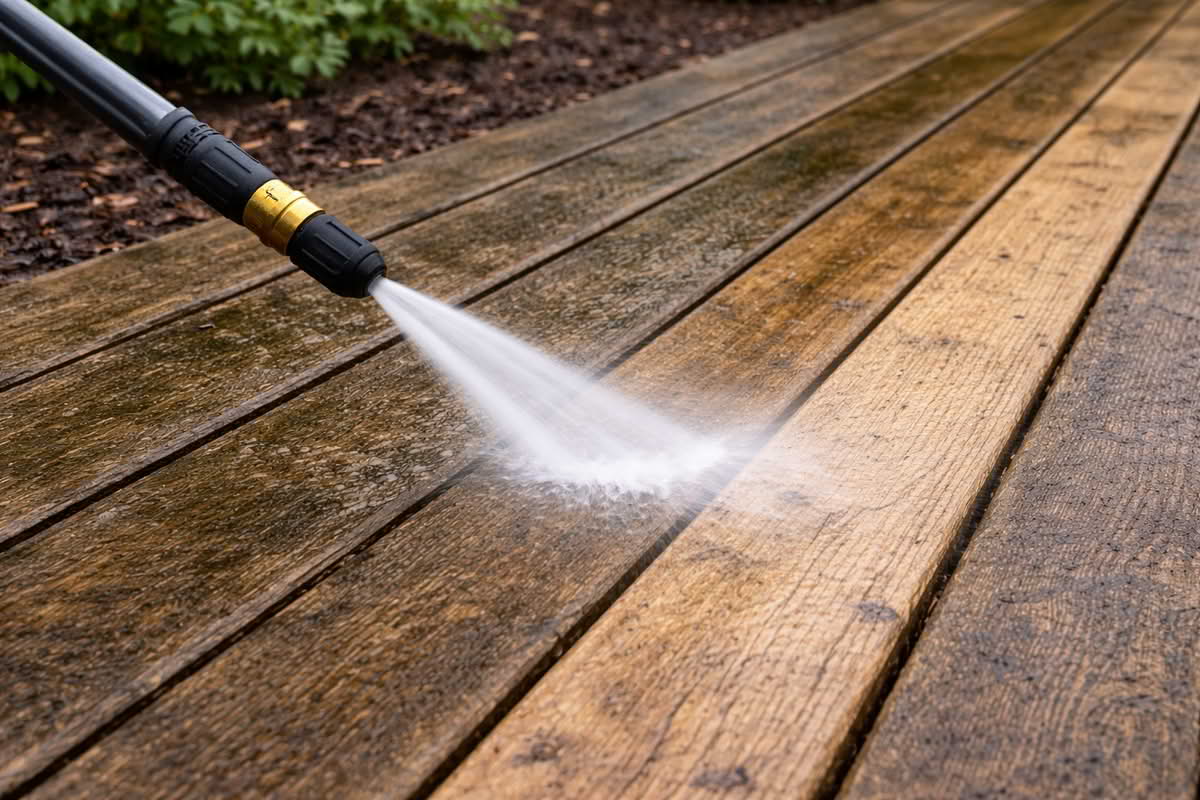
Controlled spray angles and consistent motion help prevent streaking and surface damage when cleaning wooden decks.
When using a pressure washer on deck boards, maintaining a consistent distance and moving in smooth, even passes prevents visible striping patterns. Working along the grain of the wood rather than across it also reduces surface damage.
Start by sweeping away loose debris.
Pre-rinse surfaces to soften accumulated dirt.
Scrub problem areas before pressure washing.
Rinse thoroughly to remove residue.
Following a systematic cleaning sequence usually produces better results than relying solely on high-pressure water.
Preventing Future Dirt and Algae Buildup
Preventive maintenance can significantly reduce how often patios and decks require intensive cleaning. Simple habits like seasonal sweeping and occasional rinsing prevent dirt from becoming embedded in surface textures.
Moisture control also plays an important role in preventing algae growth. Areas that remain shaded and damp for long periods are particularly prone to slippery buildup. Improving drainage or trimming nearby plants can help reduce these conditions.
Regular sweeping prevents debris accumulation.
Occasional rinsing removes pollen and dust.
Trim nearby vegetation to improve airflow.
Ensure water drains away from the patio or deck.
In many cases, these preventive steps significantly extend the time between deep cleaning sessions while helping preserve the appearance of outdoor surfaces.
Final Recommendation: Choosing the Right Approach
Cleaning patios and decks effectively requires balancing cleaning power with material protection. Outdoor surfaces may appear durable, but aggressive cleaning methods can shorten their lifespan or create cosmetic damage that is difficult to repair.
For wood decks and composite boards, gentle cleaning methods combined with periodic scrubbing are usually the safest approach. Moderate water pressure and wide spray patterns provide sufficient cleaning power while protecting the surface texture of the material.
Concrete patios and stone surfaces generally tolerate stronger cleaning tools, including pressure washers and specialized surface cleaners. These materials often benefit from deeper cleaning because their porous structure can trap dirt and organic stains.
Homeowners with shaded yards or nearby trees may need more frequent cleaning due to algae growth and organic debris. In these environments, routine sweeping and seasonal washing can prevent buildup from becoming difficult to remove.
Ultimately, the most effective strategy is consistent maintenance rather than occasional aggressive cleaning. By matching cleaning methods to the specific surface material and environmental conditions, patios and decks can remain attractive and functional outdoor spaces for many years.