Driveway and Concrete Cleaning: Practical Methods for Restoring Outdoor Surfaces
Driveways, walkways, and concrete patios gradually collect stains that ordinary rinsing cannot remove. Oil drips, tire marks, algae, moss, and embedded dirt slowly darken the surface, making even well-maintained homes look neglected. Many homeowners assume these stains are permanent or attempt aggressive cleaning methods that can damage concrete. In reality, most driveway discoloration results from predictable environmental buildup that can be cleaned effectively with the right approach. This guide explains how concrete surfaces accumulate stains, which cleaning methods work best for different situations, and how to restore outdoor surfaces while avoiding common mistakes that lead to long-term damage.
Why Concrete and Driveways Become Stained
Concrete may appear solid and durable, but it is actually a porous material. Tiny microscopic openings in the surface allow water, oils, and organic matter to penetrate slightly below the surface. Over time, these substances accumulate and create visible discoloration.
Driveways experience particularly heavy exposure because they combine environmental debris with vehicle-related contaminants. Rainwater carries dust and soil across the surface, while vehicles leave behind rubber residue, motor oil, and road grime.
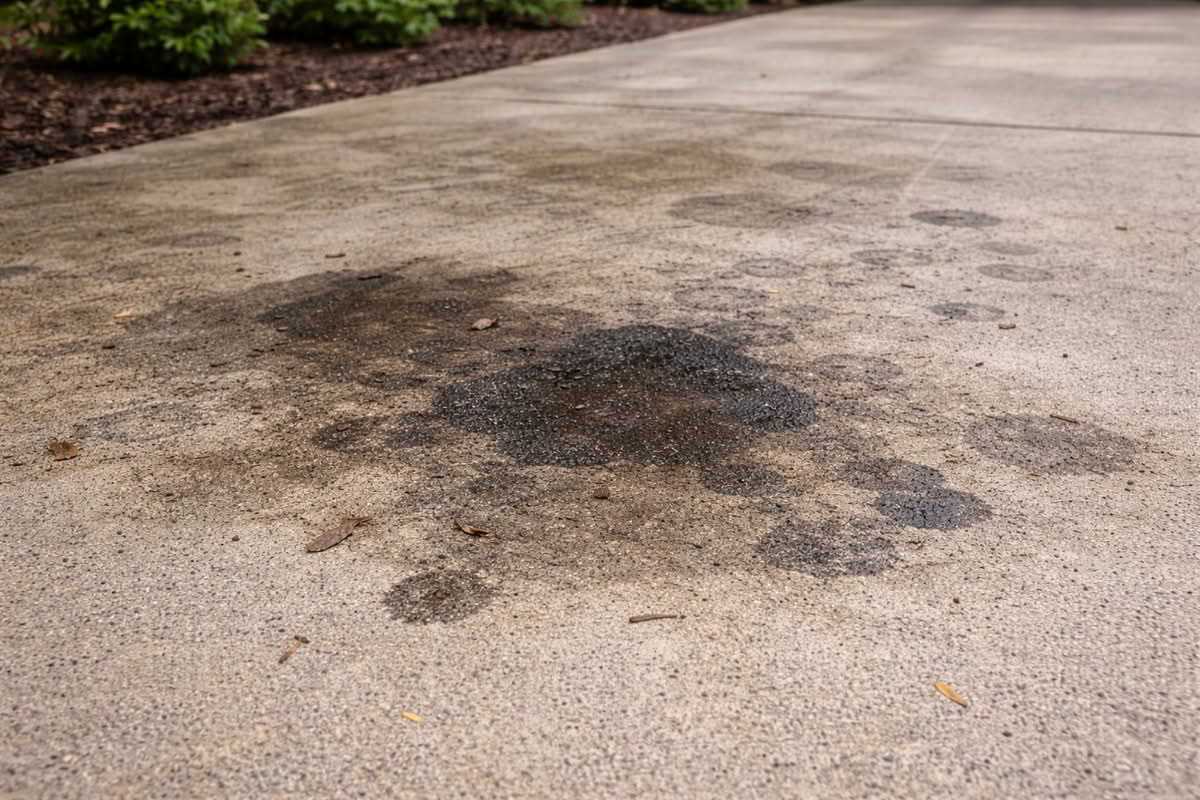
Oil, dirt, and organic debris gradually penetrate porous concrete surfaces, leading to visible staining.
Organic growth also contributes to discoloration. Algae, moss, and mildew thrive in damp environments and often appear as dark or green patches on shaded sections of driveways and walkways.
Motor oil and automotive fluids.
Rubber residue from tires.
Algae and moss growth in shaded areas.
Embedded soil and dust carried by rainwater.
Understanding the source of staining is important because different contaminants respond best to different cleaning techniques. Treating all stains the same way often leads to inconsistent results.
Evaluating the Condition of the Concrete Surface
Before beginning any cleaning process, it is helpful to evaluate the condition of the concrete itself. Not all discoloration comes from surface debris. In some cases, aging concrete may have uneven coloration caused by weathering or previous repairs.
A quick inspection can reveal whether the surface mainly requires light cleaning or more aggressive restoration methods.
Look for signs such as:
Surface dirt that lifts easily when wet.
Dark patches indicating oil absorption.
Green or black areas caused by organic growth.
Cracks or surface scaling that require gentle cleaning.
Heavily weathered concrete should be cleaned carefully. Extremely high pressure can erode the surface layer and expose the rough aggregate underneath. Once this damage occurs, the texture cannot easily be restored.
Older driveways may also contain sealed sections that respond differently to cleaning than untreated areas. Identifying these differences helps prevent uneven results after cleaning.
Effective Cleaning Methods for Concrete Surfaces
Several cleaning approaches can restore driveway and concrete surfaces depending on the severity of staining. The most effective methods combine mechanical cleaning with targeted cleaning solutions.
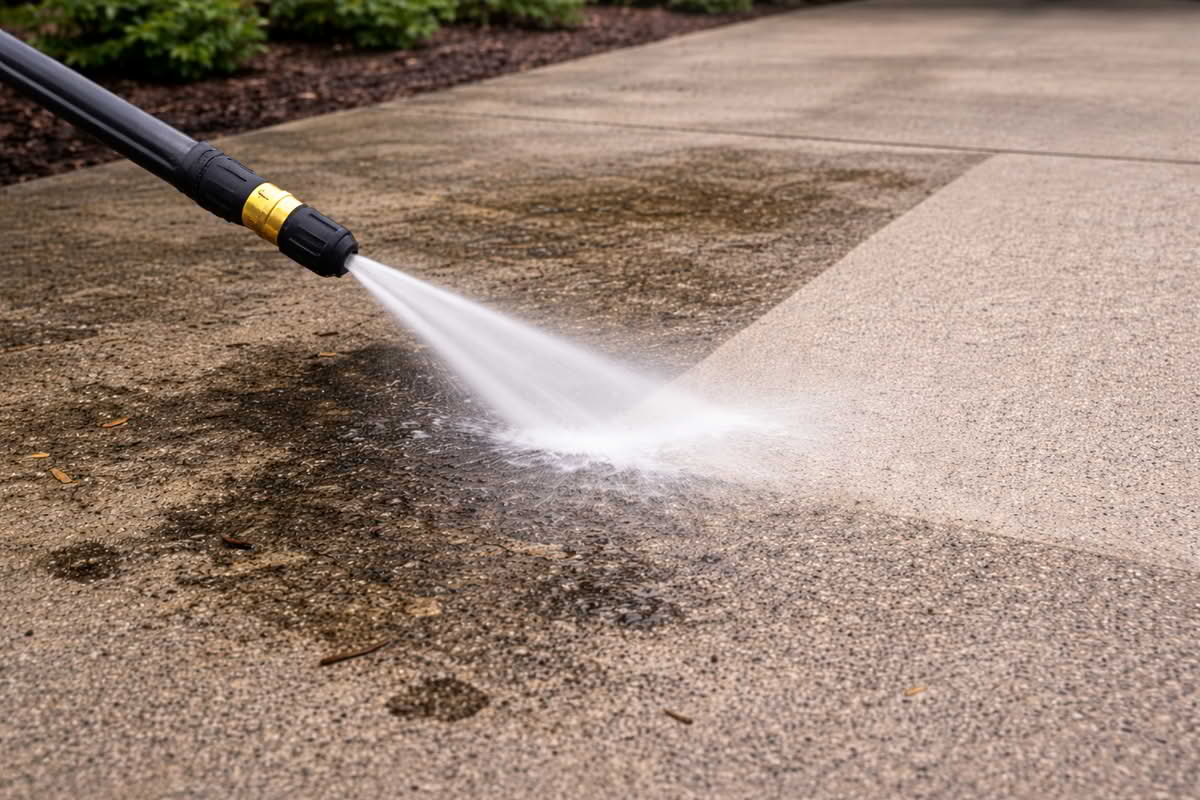
Pressure washing removes accumulated dirt and organic buildup from concrete surfaces.
For light surface dirt, a stiff brush and household detergent may be sufficient. Scrubbing helps lift loose debris from the concrete pores, especially after the surface has been soaked with water.
Larger areas typically benefit from pressure washing. Pressurized water can dislodge dirt embedded in the surface without requiring extensive manual labor.
Effective cleaning methods include:
Manual scrubbing with degreasing cleaners.
Pressure washing with wide spray nozzles.
Rotating surface cleaner attachments for large driveways.
Specialized cleaners designed for oil and grease stains.
The key is balancing cleaning power with surface protection. Excessively narrow pressure nozzles can leave visible lines or etch the concrete, especially when used too close to the surface.
Treating Common Driveway and Concrete Stains
Different stains respond best to specific cleaning techniques. Identifying the cause of discoloration helps determine which approach will produce the best results.
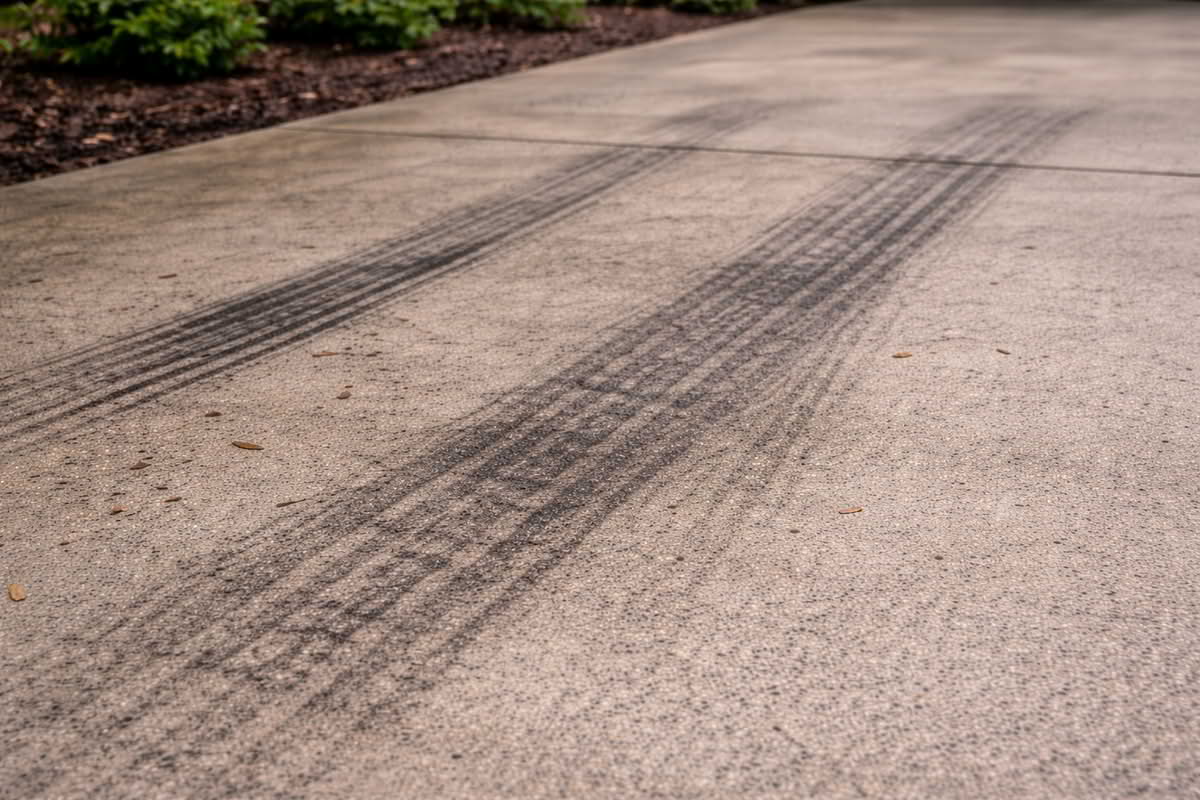
Tire marks and rubber residue can leave dark streaks on concrete surfaces.
Oil stains are among the most common driveway problems. Fresh oil stains often remain on the surface, while older stains penetrate deeper into the concrete. Absorbent powders or degreasing solutions can help draw oil back out of the surface.
Tire marks are another frequent issue. The friction between tires and the driveway can leave rubber residue that appears as dark streaks. These stains typically respond well to pressure washing combined with mild cleaning agents.
Oil and grease stains from vehicles.
Rubber residue from turning tires.
Rust stains from metal tools or irrigation equipment.
Organic stains caused by leaves and plant debris.
Organic stains from leaves, mulch, or nearby plants may require oxygen-based cleaners designed to break down plant pigments and mildew growth.
Preventing Future Stains and Surface Damage
After cleaning a driveway or concrete patio, preventative maintenance helps preserve the restored appearance for much longer. Concrete surfaces that are cleaned regularly tend to resist deep staining because contaminants do not have time to penetrate the pores.
Simple preventative strategies can significantly extend the time between deep cleaning sessions.
Rinse driveways periodically to remove loose dirt.
Clean oil spills as soon as they appear.
Trim nearby plants that drop leaves or organic debris.
Consider applying a concrete sealer to reduce absorption.
Sealing concrete can provide an additional layer of protection by limiting how easily liquids soak into the surface. While sealers do not prevent all staining, they make routine cleaning much easier.
Final Recommendation: Choosing the Right Cleaning Approach
Restoring a driveway or concrete patio rarely requires a single universal method. The most effective approach depends on the age of the concrete, the types of stains present, and the size of the area being cleaned.
For lightly stained driveways, routine pressure washing combined with occasional scrubbing is usually enough to maintain a clean surface. These situations typically involve dirt accumulation rather than deep oil penetration.
Surfaces with heavier contamination often require a two-step process: applying a cleaning solution to break down stains followed by pressure washing to rinse away debris. This method works particularly well for oil spots and areas affected by algae growth.
Older driveways with years of buildup may benefit from more thorough cleaning using specialized concrete cleaners and slower, methodical pressure washing. Taking the time to clean the surface evenly helps prevent streaking or patchy results.
In the long term, regular maintenance is the most reliable strategy. Cleaning small stains early prevents them from becoming permanent marks and reduces the need for aggressive cleaning later. With the right combination of techniques and periodic upkeep, most concrete surfaces can maintain a clean, durable appearance for many years.