Gutter Cleaning Tools: Choosing the Right Equipment for Safe and Effective Maintenance
Gutters quietly protect a home from water damage, yet cleaning them is one of the most commonly postponed maintenance tasks. Many homeowners underestimate how quickly leaves, dirt, and roof debris can block drainage, while others avoid the task because climbing ladders or reaching roof edges feels risky. As a result, gutters often go years without proper cleaning. This guide explains how gutter blockages form, the different categories of tools designed to remove debris, and how to select equipment that matches your home’s layout and your comfort level with ladder work. Understanding these options makes gutter maintenance safer, easier, and far more predictable.
Why Gutters Become Clogged Over Time
Gutters are designed to collect rainwater flowing from a roof and direct it safely away from a home’s foundation. However, because they run directly beneath roof edges and near surrounding trees, they also collect a surprising amount of debris throughout the year.
Leaves are the most obvious source of gutter clogs, but they are rarely the only one. Roof shingles shed granules over time, wind carries dust and soil into gutters, and small twigs or seed pods can accumulate in downspouts. When rainwater mixes with this material, it forms a dense layer of organic sludge that slows water flow.
Gutters often fill with a mixture of leaves, roof granules, and organic debris that eventually blocks proper drainage.
Over time, clogged gutters can create several problems:
Water overflowing and damaging siding or trim.
Pooling water near the home’s foundation.
Ice dams forming during colder seasons.
Pests nesting in damp debris.
Because these issues develop gradually, many homeowners only notice them after visible damage appears. Regular cleaning prevents these problems long before they become costly repairs.
Categories of Gutter Cleaning Tools
Gutter cleaning tools fall into two primary categories: tools used while standing on a ladder and tools designed to clean gutters from the ground. Each approach has advantages depending on the height of the house, the type of debris present, and the user’s comfort with climbing ladders.
Ladder-based tools provide the most direct access to debris inside the gutter. They allow the user to physically remove leaves, packed dirt, and blockages from downspouts. This method is often the most thorough but also requires careful attention to ladder safety.
Ground-based tools, by contrast, extend the user’s reach using long poles or specialized attachments. These tools reduce the need for climbing but can be less precise when dealing with compacted debris.
Ladder-access tools for direct debris removal.
Extension pole tools for ground-based cleaning.
Water-based attachments for rinsing gutters.
Vacuum systems designed for dry debris removal.
Many homeowners eventually use a combination of these tools depending on seasonal conditions and the level of debris buildup.
Ladder-Based Gutter Cleaning Tools
Traditional gutter cleaning typically involves climbing a ladder and manually removing debris. While this approach requires more physical effort, it provides the highest level of control when clearing heavily clogged gutters.
The most common ladder-based tool is the gutter scoop. These curved plastic tools are designed to fit inside standard gutter channels, making it easy to lift out wet leaves and compacted dirt. Their shape allows debris to be removed efficiently without damaging the gutter itself.
Gutter scoops allow direct removal of wet leaves and compacted debris when cleaning gutters from a ladder.
Some ladder-based tools include flexible brushes that loosen stubborn buildup along the bottom of the gutter. These brushes can be especially helpful for removing dirt that has hardened after repeated exposure to moisture.
Gutter scoops for lifting out heavy debris.
Hand brushes for scrubbing sediment buildup.
Short hose attachments for rinsing downspouts.
Although ladder cleaning is physically demanding, it remains one of the most reliable ways to fully clear clogged gutters and ensure water flows freely.
Ground-Based Gutter Cleaning Tools
Ground-based gutter cleaning tools are designed to minimize the need for climbing ladders. These tools use extension poles or angled attachments to reach gutters from below, making them appealing for homeowners who prefer to keep their feet on the ground.
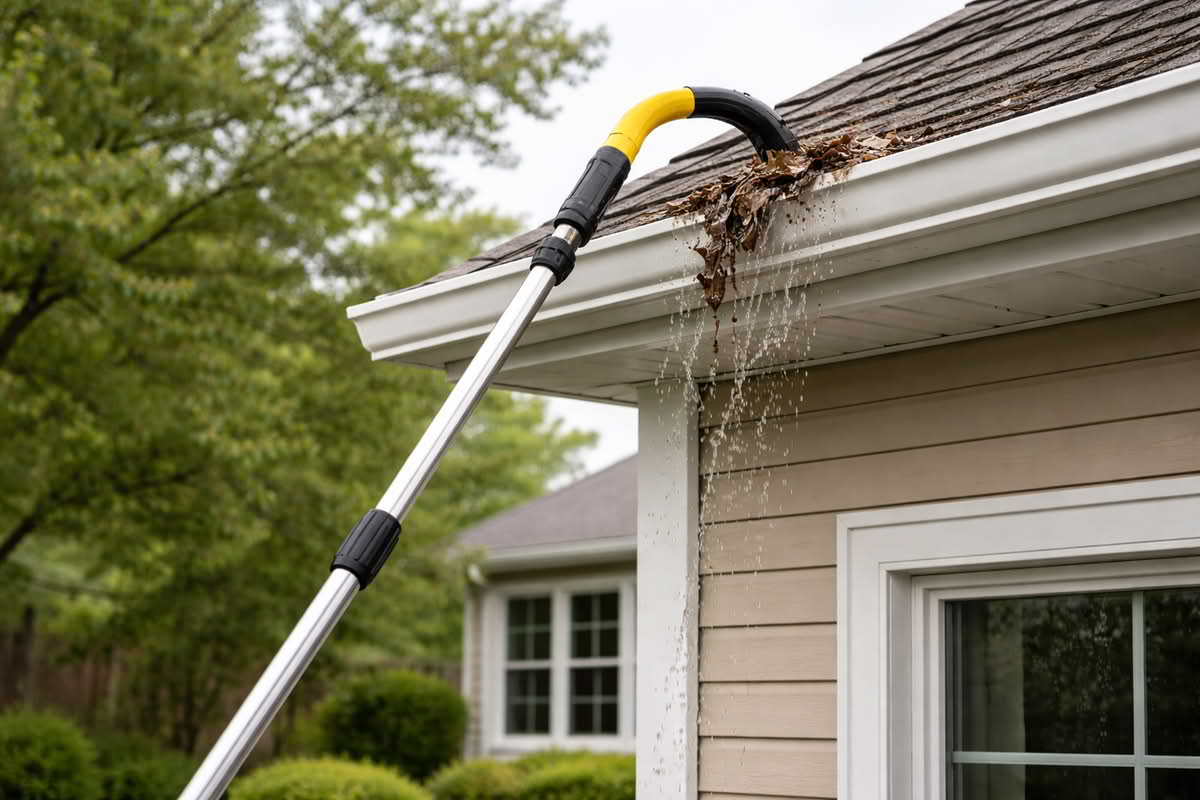
One of the most common options is a telescoping pole fitted with a curved cleaning head. This design allows the user to reach above the gutter edge and pull debris toward the ground. While this approach works well for loose leaves, it may struggle with dense or wet buildup.
Telescoping gutter tools allow debris removal from the ground, reducing the need for ladder climbing.
Some systems use water pressure to flush debris out of gutters. Curved spray attachments connect to a garden hose or pressure washer and direct water into the gutter channel. These tools are particularly useful for clearing lighter debris after manual cleaning has removed larger blockages.
Telescoping poles for reaching high gutters.
Curved hose attachments for rinsing debris.
Vacuum systems designed for dry leaf removal.
Ground-based tools can dramatically reduce the time spent climbing ladders, though they typically work best as maintenance tools rather than solutions for severely clogged gutters.
Safety Considerations When Cleaning Gutters
Safety is one of the most important considerations when selecting gutter cleaning tools. Working at roof height introduces risks that many homeowners underestimate, particularly when ladders are placed on uneven ground or when users lean too far to reach debris.
Proper ladder placement significantly reduces these risks. Ladders should always be positioned on stable ground and angled correctly so they remain balanced during use. Moving the ladder frequently instead of stretching to reach distant areas can prevent dangerous shifts in balance.
Use a sturdy ladder designed for outdoor work.
Avoid leaning sideways to reach distant gutter sections.
Wear gloves to protect hands from sharp debris.
Work with a partner when possible for added stability.
Homeowners with multi-story homes or steep rooflines may find that professional cleaning services are the safest option, particularly when gutters are difficult to access.
Final Recommendation: Choosing the Right Approach
The best gutter cleaning tools depend largely on a home’s height, surrounding vegetation, and the homeowner’s comfort level with ladder work. No single tool is ideal for every situation, which is why many maintenance routines combine multiple approaches.
For homes surrounded by trees that drop heavy seasonal debris, ladder-based cleaning tools such as gutter scoops provide the most reliable method for removing dense blockages. These tools allow direct access to wet leaves and sediment that may be difficult to remove with extension tools.
Ground-based tools are often a good solution for routine maintenance. Telescoping poles and hose attachments can quickly clear loose debris without requiring ladder setup, making them useful for seasonal touch-ups throughout the year.
For homeowners who prioritize safety or have multi-story homes, investing in tools that minimize ladder use can make gutter maintenance far more manageable. In these cases, a combination of ground-based tools and occasional professional cleaning may provide the best balance of convenience and thoroughness.
Ultimately, effective gutter maintenance depends less on a single tool and more on consistent attention throughout the year. By selecting tools that match both the home’s layout and the user’s comfort level, homeowners can keep gutters functioning properly while reducing the risk and effort involved in regular cleaning.