String Trimmer Buying Guide: Choosing the Right Tool for Clean Lawn Edges
Many homeowners assume a string trimmer is a simple tool: press the trigger and trim grass along edges. In reality, choosing the right trimmer involves several decisions that affect comfort, efficiency, and long-term maintenance. Differences in power systems, cutting width, line types, and weight distribution can make a noticeable difference depending on the size and layout of your yard. A trimmer that works well for a small suburban lawn may feel underpowered or inconvenient on larger properties. This guide explains the practical factors that matter most when choosing a string trimmer so you can match the tool to your lawn, your workload, and your maintenance expectations.
Understanding String Trimmer Power Sources
One of the first decisions when choosing a string trimmer is the power source. Electric corded, battery-powered, and gas-powered trimmers each serve different types of lawns and maintenance routines. The right choice often depends less on raw power and more on how the tool fits into your yard maintenance workflow.
Corded electric trimmers are the simplest option for small lawns. They are lightweight, quiet, and require almost no maintenance beyond replacing trimming line. However, the extension cord limits mobility and can become frustrating in yards with many obstacles or large distances between outlets.
Battery-powered trimmers are increasingly popular because they balance convenience and power. Modern lithium-ion systems can handle most residential trimming tasks while eliminating the cord. The main limitation is runtime, which depends on battery size and cutting conditions.
Small lawns often work well with corded electric trimmers.
Medium yards benefit from battery-powered models for mobility.
Larger or overgrown areas may require the power of gas engines.
Battery systems may integrate with other yard tools.
Gas trimmers provide the highest cutting power but also introduce more maintenance. Fuel mixing, engine upkeep, and higher noise levels make them better suited to demanding or frequent trimming tasks rather than occasional residential use.
Cutting Width and Line Types
Cutting width determines how much grass the trimmer can clear with each pass. Wider cutting swaths can reduce trimming time on large properties, but they also require more power to maintain cutting speed. Narrower cutting widths are often easier to control in tight areas such as garden beds or fence lines.
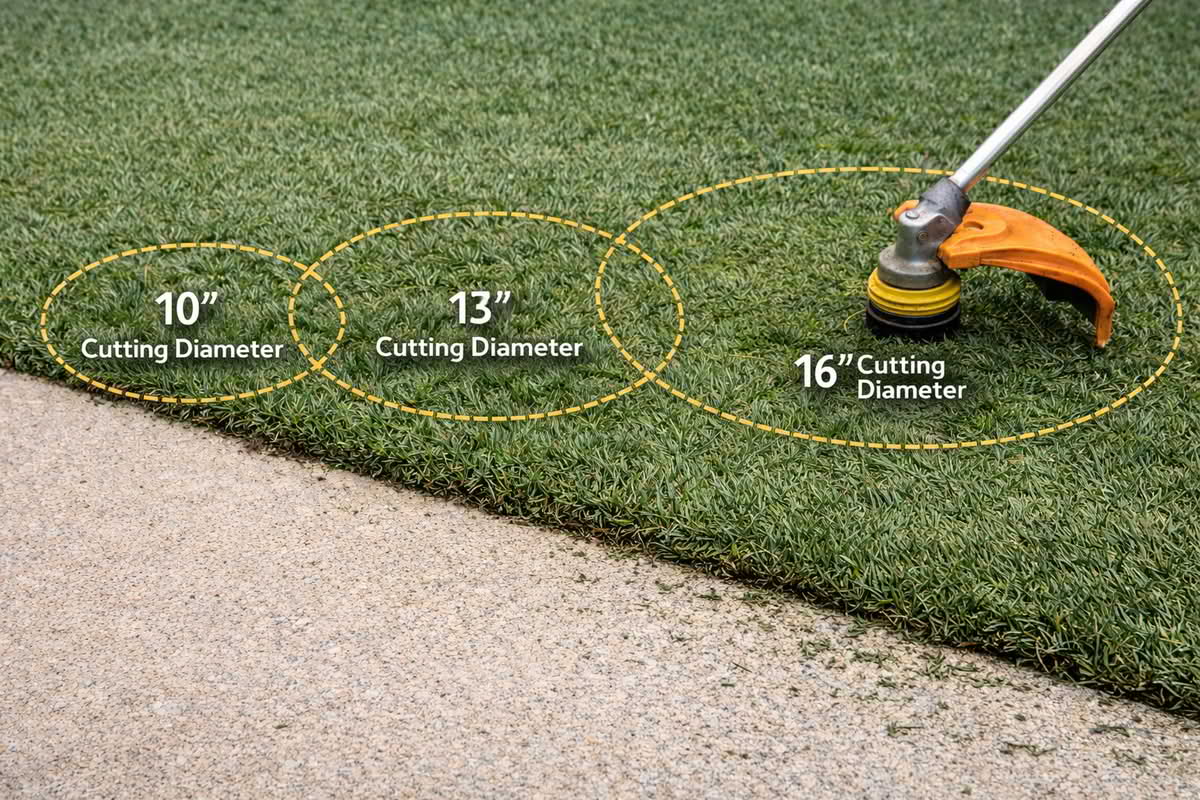
Most residential trimmers range between 10 and 16 inches in cutting diameter. A wider head may seem appealing for efficiency, but the added size can make the tool harder to maneuver around delicate landscaping features.
Cutting width affects how quickly a string trimmer can clear edges and borders during lawn maintenance.
Line thickness also plays an important role in performance. Thicker line handles tougher vegetation, while thinner line works best for lighter trimming tasks.
Thin line (.065–.080 inch) works well for light grass trimming.
Medium line (.080–.095 inch) handles thicker grass and weeds.
Heavy-duty line (.095 inch or larger) targets dense growth.
Choosing a line type that matches your trimming conditions helps maintain consistent cutting performance and prevents frequent line breakage.
Weight, Balance, and Comfort
Because string trimmers are handheld tools, ergonomics matter more than many buyers expect. Even small differences in weight distribution can influence fatigue during longer trimming sessions.
Lighter trimmers are easier to handle but may sacrifice power or durability. Heavier models often deliver stronger cutting performance but can become tiring when used for extended periods.
Well-balanced tools reduce strain on the arms and shoulders.
Adjustable handles improve control for different user heights.
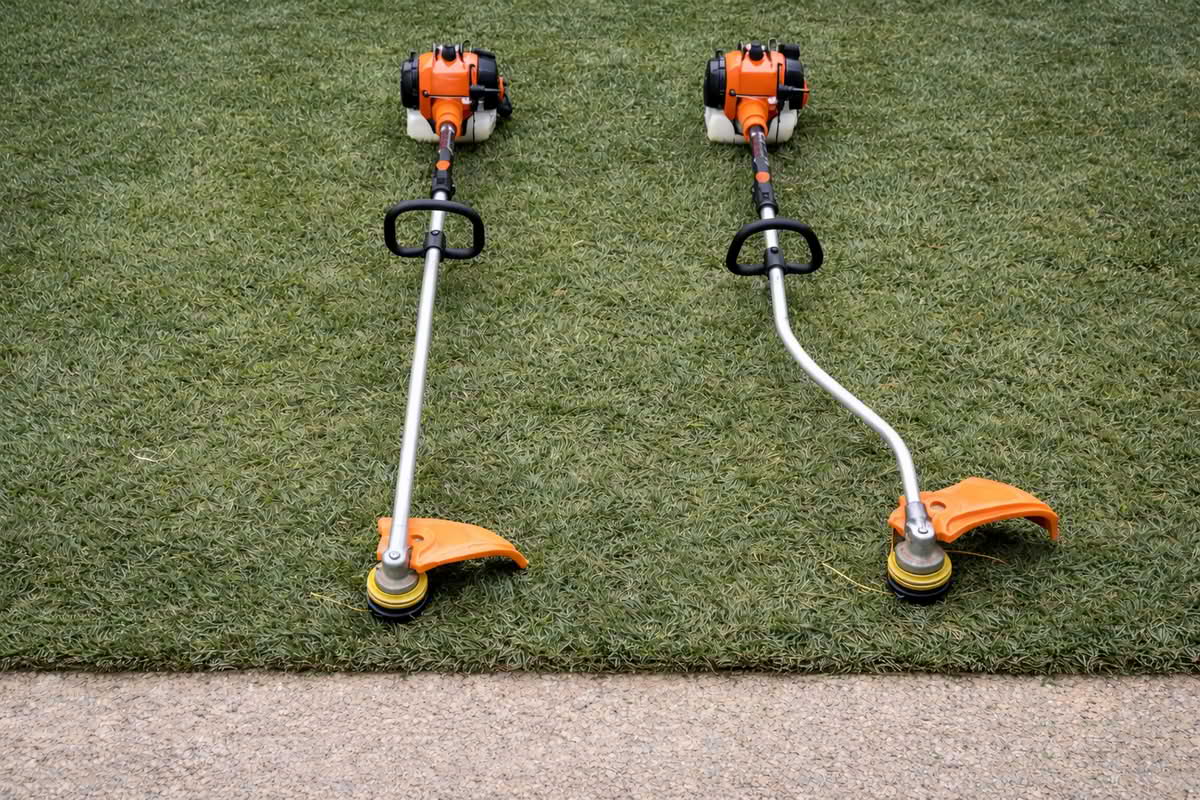
Straight shafts often extend reach under shrubs or fences.
Curved shafts may feel more comfortable for casual trimming.
Comfort features may seem secondary at first, but they significantly affect how enjoyable routine yard maintenance becomes over time.
Straight and curved shaft designs affect reach, comfort, and trimming control.
Matching a Trimmer to Your Yard Size
The size and layout of your yard should guide many of the decisions in this guide. A trimmer that performs well on a small urban property may struggle with larger lawns that include extensive borders, fences, or landscaping features.
Small yards usually require only occasional trimming around sidewalks and garden beds. In these environments, a lightweight electric or battery model is typically sufficient.
Medium-sized suburban properties often require more frequent edging along fences, patios, and landscape borders. Battery-powered trimmers are popular in this range because they offer mobility without the complexity of gas engines.
Compact lawns prioritize maneuverability.
Medium properties benefit from balanced power and runtime.
Considering the layout of your yard helps ensure the tool you choose will remain practical over time rather than becoming frustrating during regular maintenance.
Maintenance and Long-Term Durability
String trimmers experience repeated stress during normal operation. Spinning line impacts grass, soil, fences, and other obstacles, which gradually wears down internal components and trimming heads.
Simpler designs often require less maintenance but may sacrifice long-term durability. More advanced models sometimes include stronger components, replaceable heads, or protective guards that extend the lifespan of the tool.
Line replacement should be simple and quick.
Trimmer heads should resist jamming.
Protective guards help prevent debris damage.
Battery systems should remain compatible with future tools.
Long-term durability often depends on build quality rather than raw power. A well-built trimmer that matches your workload typically performs better over time than an oversized tool used infrequently.
Final Recommendation: Choosing the Right Approach
The right string trimmer ultimately depends on how often you trim and the complexity of your lawn layout. Rather than focusing only on power ratings or cutting width, it is more useful to match the tool to your specific maintenance routine.
Homeowners with small lawns typically benefit from lightweight electric or battery trimmers that prioritize convenience. These tools are easy to store, require minimal maintenance, and provide more than enough power for occasional edging and light trimming tasks.
For medium suburban yards, battery-powered trimmers often provide the best balance of mobility and performance. They allow you to move freely around fences, trees, and garden beds without dealing with extension cords.
Small lawns: lightweight electric trimmers prioritize convenience.
Suburban yards: battery-powered models balance mobility and power.
Large or heavily landscaped properties: higher-powered trimmers improve efficiency.
Frequent trimming routines benefit from durable designs.
Taking the time to match the tool to your yard conditions and maintenance habits helps ensure your string trimmer remains useful and comfortable to operate for many seasons of routine lawn care.