Lawn Mower Buying Guide: Choosing the Right Mower for Your Yard
Buying a lawn mower sounds simple until you realize how many options exist. Walk-behind mowers, self-propelled models, riding mowers, battery systems, and gas engines all promise to make lawn care easier, yet the wrong choice can quickly become frustrating or expensive. Many homeowners buy a mower based on power or price alone, only to discover later that their yard layout, terrain, or mowing habits make the tool inefficient. This guide explains how different mower types actually perform in real residential yards, helping you match mower design, power system, and cutting style to the practical realities of maintaining a healthy lawn.
Understanding the Main Types of Lawn Mowers
Lawn mowers fall into several major categories, each designed for different lawn sizes and maintenance styles. Understanding these categories first helps narrow the decision process significantly. Many homeowners assume they need the most powerful machine available, but mower design often matters more than raw power.
The most common residential mower is the walk-behind rotary mower. These machines use a spinning blade under a protective deck and are suitable for most suburban lawns. Within this category, however, there are still important distinctions that affect usability and effort.
Push mowers – basic walk-behind machines powered only by the blade motor; the user pushes the mower forward.
Self-propelled mowers – wheels are driven by a transmission, reducing the effort required to mow.
Riding mowers – larger machines intended for properties with significant lawn area.
Reel mowers – manual or powered mowers that cut grass with a scissor-like action.
Push mowers are lightweight and simple but can become tiring on larger lawns. Self-propelled mowers solve this problem by transferring engine power to the wheels, allowing the machine to pull itself forward.
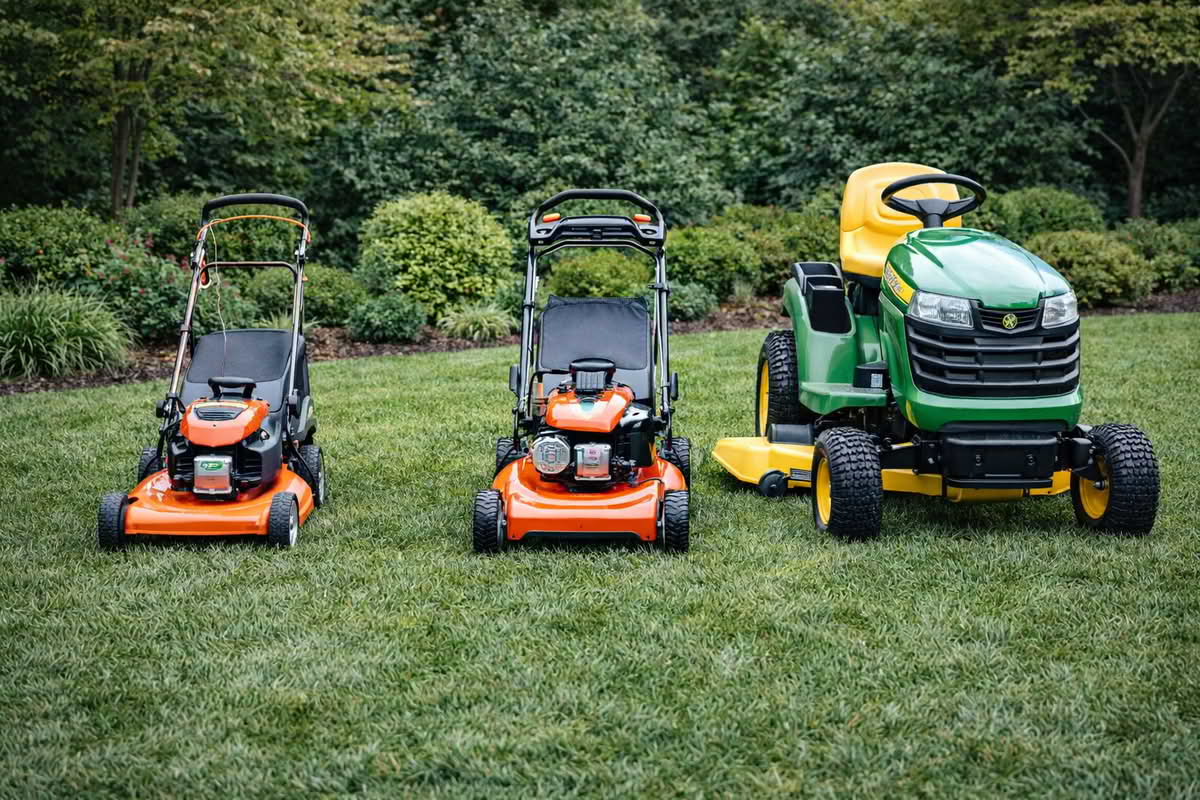
Residential lawn mowers vary widely in size and capability. Walk-behind models suit most suburban lawns, while riding mowers are designed for much larger properties.
Riding mowers become practical when mowing time exceeds roughly an hour with a walk-behind mower. They dramatically reduce effort but introduce higher purchase costs, storage needs, and maintenance complexity. For most typical residential yards under half an acre, walk-behind mowers remain the most practical option.
Gas vs Battery vs Electric: Power System Tradeoffs
One of the most significant changes in lawn equipment over the past decade is the rise of battery-powered mowers. Historically, gas engines dominated the market because they provided reliable power and long run times. Today, however, battery technology has become competitive for many residential scenarios.
Choosing the right power system depends on yard size, maintenance preferences, and noise considerations. Each system has distinct strengths and weaknesses.
Gas mowers – high power and unlimited run time with refueling, but require maintenance and produce noise and emissions.
Battery mowers – quieter and easier to start, but run time depends on battery capacity.
Corded electric mowers – lightweight and inexpensive but limited by extension cords.
Gas engines excel when cutting thick grass or large lawns. Their primary drawback is maintenance: oil changes, fuel storage, spark plugs, and seasonal preparation. For homeowners who mow frequently but prefer minimal upkeep, battery systems can dramatically simplify lawn care.
Battery mowers eliminate fuel management and typically start instantly with a push button. However, they require thoughtful planning for battery charging and capacity. A large yard may require multiple batteries or mid-session charging.
Corded electric mowers still exist but have become less common because extension cords limit mobility. They are best suited for very small lawns where power outlets are easily accessible.
Cutting Systems, Deck Size, and Lawn Health
Beyond power systems, the mower’s cutting system plays a major role in lawn appearance and health. Most residential mowers use a rotating blade, but the way the deck is designed determines how effectively the mower lifts, cuts, and distributes grass clippings.
Deck width—often called cutting width—affects mowing efficiency. Wider decks reduce the number of passes required to mow a lawn, but they also increase machine weight and reduce maneuverability.
18–20 inches – common for compact push mowers and small lawns
21–22 inches – the most common residential deck size
30+ inches – typically found on large walk-behind or riding mowers
Cutting systems also vary in how they manage grass clippings. Modern mowers usually offer multiple modes, allowing homeowners to adapt to seasonal lawn conditions.
Mulching – finely chops grass and returns nutrients to the soil.
Side discharge – ejects clippings out of the deck.
Bagging – collects clippings for disposal.
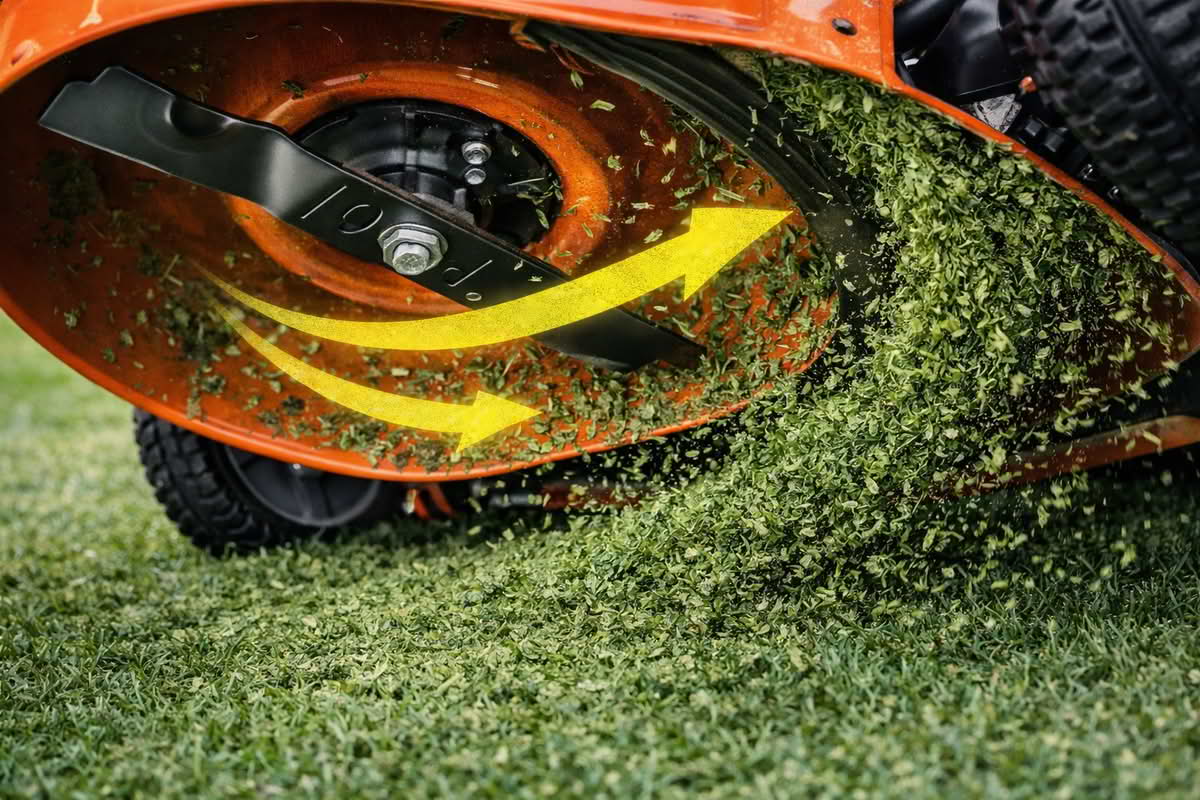
Mulching systems recirculate grass clippings inside the mower deck so they are cut into smaller pieces that decompose quickly in the lawn.
Mulching is often preferred because it returns nitrogen and organic matter to the soil. However, in wet or overgrown conditions, bagging or side discharge may prevent clumping and uneven cutting.
Matching a Mower to Yard Size and Terrain
The physical layout of your yard influences mower choice more than many buyers expect. Two lawns of identical square footage may require very different mowing strategies depending on terrain and obstacles.
Slopes, narrow spaces, landscaping beds, and trees can all affect maneuverability. A mower that works perfectly on a flat, open lawn may feel cumbersome in a yard with tight turns or uneven terrain.
Small lawns (under 5,000 sq ft) – compact push or battery mowers are usually sufficient.
Medium lawns (5,000–15,000 sq ft) – self-propelled mowers improve efficiency and reduce fatigue.
Large lawns (15,000+ sq ft) – riding mowers or wide-deck walk-behind models reduce mowing time.
Hills introduce additional complexity. On slopes, lighter mowers with good traction are easier to control. Heavy riding mowers may struggle on steep terrain, while self-propelled walk-behind models often perform better.
Another overlooked factor is obstacle density. Yards with numerous garden beds, trees, and pathways require frequent turning, making smaller, more maneuverable mowers preferable.
Maintenance, Storage, and Long-Term Ownership
Lawn mower ownership involves more than just cutting grass. Maintenance requirements, seasonal storage, and long-term durability all affect the overall ownership experience.
Gas mowers generally require the most upkeep. Regular oil changes, air filter cleaning, blade sharpening, and winter fuel management are necessary to maintain reliable performance.
Annual blade sharpening improves cutting quality.
Air filters and spark plugs require periodic replacement on gas engines.
Fuel left in the tank during winter can cause starting problems.
Battery mowers reduce many of these maintenance tasks. They eliminate fuel systems and oil changes, but batteries must be stored properly and eventually replaced after several years of use.
Storage space is another practical consideration. Folding handles and vertical storage designs can make it easier to fit a mower into a crowded garage or shed.
Over the long term, the most satisfying mower purchases tend to be those that balance performance with convenience. A slightly less powerful machine that is easy to start and maintain often sees more consistent use than a larger, more complex one.
Final Recommendation: Choosing the Right Approach
The best lawn mower depends less on brand or engine power and more on how well the machine matches the conditions of your yard. Most homeowners benefit from evaluating their lawn size, terrain, and maintenance preferences before choosing a mower type.
Several common scenarios illustrate how these factors influence the decision.
Small suburban lawns – lightweight battery or push mowers offer quiet operation and minimal maintenance.
Medium-sized yards – self-propelled walk-behind mowers balance efficiency and maneuverability.
Large open properties – riding mowers dramatically reduce mowing time.
Yards with slopes or obstacles – smaller self-propelled mowers provide better control.
In the long run, the most practical mower is the one that makes routine mowing easy enough to maintain a consistent schedule. Regular mowing encourages healthier turf, reduces weed pressure, and improves overall lawn appearance.
By choosing a mower that fits both your yard and your maintenance habits, you can turn lawn care from a demanding chore into a manageable part of regular home upkeep.