Leaf Blower Buying Guide: Choosing the Right Tool for Efficient Yard Cleanup
Leaf blowers are often marketed as simple yard tools, but the differences between models can significantly affect how useful they are in real-world conditions. Factors such as air speed, air volume, power source, and noise levels all influence how effectively a blower can move leaves, grass clippings, and debris. A tool that works well for clearing a small patio may struggle with larger lawns or wet autumn leaves. This guide explains the key design and performance considerations behind leaf blowers so homeowners can choose a model that fits their property size, cleanup habits, and tolerance for noise, weight, and maintenance.
Understanding Leaf Blower Power Sources
The first major decision when selecting a leaf blower is choosing the power system. Corded electric, battery-powered, and gas-powered blowers each serve different types of properties and cleanup routines. Understanding how these systems affect mobility, power, and maintenance helps narrow down the most practical option.
Corded electric blowers are the simplest and lightest tools available. They are typically quiet, require very little maintenance, and provide consistent airflow for light yard cleanup tasks. However, the extension cord limits range and makes them less practical for large yards or properties with many obstacles.
Battery-powered blowers remove the cord limitation while still maintaining relatively quiet operation. Advances in lithium-ion batteries have improved airflow performance, making many cordless models suitable for typical residential properties. The tradeoff is limited runtime, which depends on battery size and debris conditions.
Corded blowers prioritize simplicity and affordability.
Battery models provide mobility with moderate power.
Gas engines deliver the strongest airflow.
Gas tools require fuel storage and more maintenance.
Gas blowers remain the most powerful option for heavy leaf accumulation or large properties. However, the additional weight, noise, and maintenance requirements make them less appealing for occasional residential use.
Air Speed vs Air Volume: What Actually Moves Leaves
Two measurements are commonly used to describe leaf blower performance: air speed and air volume. Understanding the difference between these numbers can prevent confusion when comparing tools.
Air speed is usually measured in miles per hour (MPH). This indicates how fast the air exits the nozzle. Higher air speed can help dislodge stuck leaves or move debris out of tight spaces such as between pavers or along fence lines.
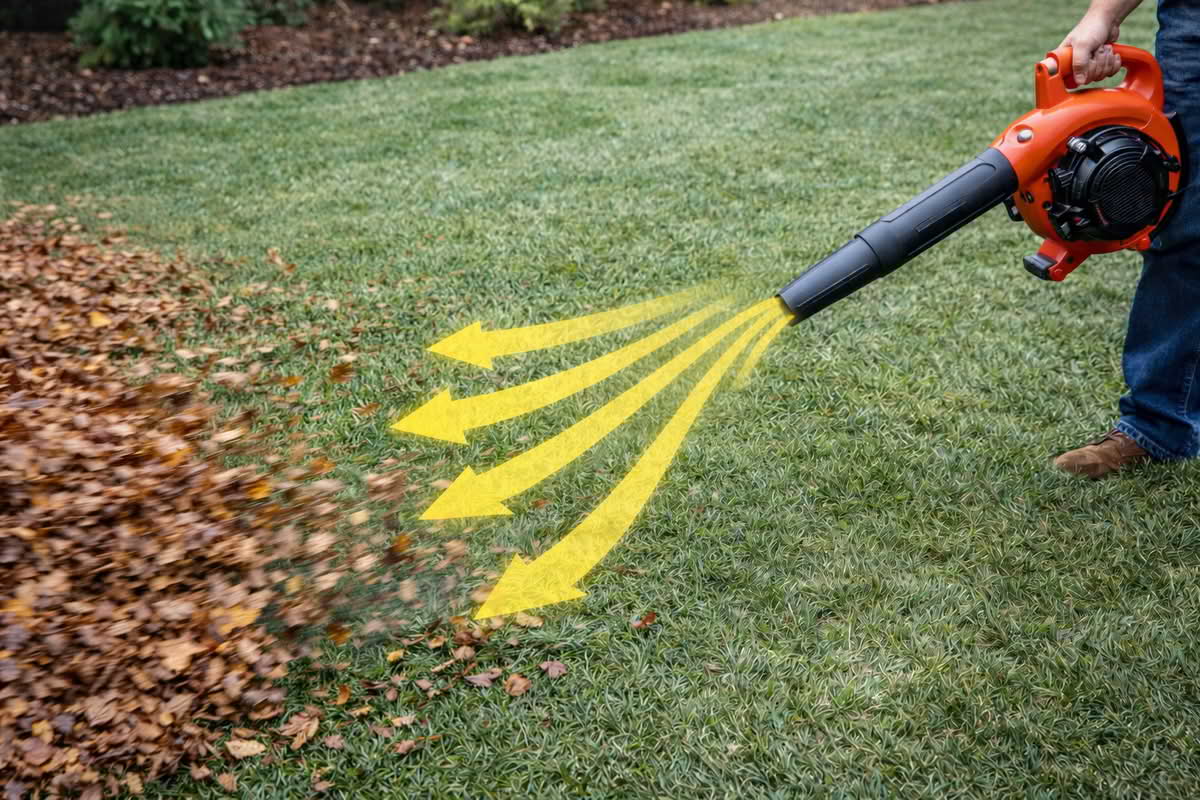
Air volume is measured in cubic feet per minute (CFM). This represents how much air the blower moves overall. Larger volumes of air are typically more effective for pushing piles of leaves across open areas of the lawn.
Air volume determines how effectively a blower can push large piles of leaves across open areas.
High air speed helps dislodge stubborn debris.
High air volume moves large amounts of leaves efficiently.
Both measurements together determine practical clearing power.
For many residential properties, a balanced combination of airflow speed and volume matters more than maximizing either number individually.
Handheld vs Backpack Blowers
Leaf blowers are typically available in handheld or backpack configurations. Each design changes how the tool feels during longer cleanup sessions and how much airflow the machine can realistically produce.
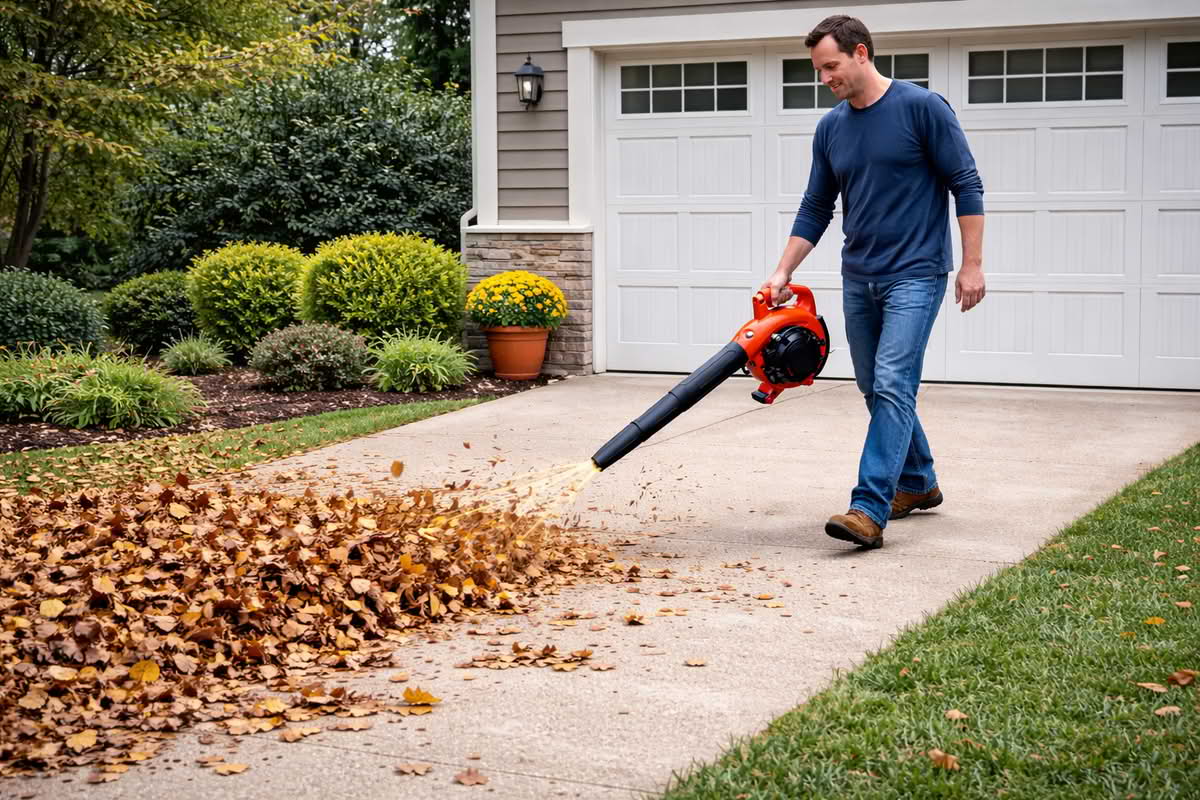
Handheld blowers are the most common option for homeowners. They are compact, easy to store, and simple to operate for short cleanup tasks such as clearing driveways or patios.
Backpack blowers place the engine and fan assembly on the user’s back, which distributes weight across the shoulders and hips. This configuration allows for larger engines and stronger airflow while reducing arm fatigue.
Handheld blowers work well for short cleanup sessions.
Backpack blowers support longer work periods.
Backpack models typically generate stronger airflow.
Handheld units are easier to store and transport.
For many residential properties, handheld blowers provide enough airflow for seasonal leaf cleanup without the complexity of larger equipment.
Noise, Weight, and Comfort Considerations
Comfort factors often influence long-term satisfaction with yard tools more than raw power ratings. Because leaf blowers operate at high speeds, they can generate substantial noise and vibration during use.
Electric and battery-powered blowers generally produce less noise than gas engines. This can make them more suitable for neighborhoods with nearby homes or local noise restrictions.
Lighter tools reduce arm fatigue during longer sessions.
Variable speed triggers allow more control over airflow.
Ergonomic handles improve maneuverability.
Ergonomics and weight distribution affect comfort during longer yard cleanup sessions.
Even small improvements in weight distribution or vibration reduction can make seasonal yard cleanup noticeably easier.
Matching a Blower to Your Yard Size
The size of your yard and the amount of debris you typically manage should guide most buying decisions. A tool that is oversized for your property may feel unnecessarily heavy, while an undersized blower may struggle during peak leaf fall.
Small properties with limited tree coverage typically only require light debris cleanup. In these cases, compact electric or battery-powered blowers are usually sufficient for patios, sidewalks, and small lawn areas.
Medium suburban yards often benefit from cordless blowers with stronger airflow. These tools provide mobility while still offering enough power to clear seasonal leaf buildup.
Small yards prioritize portability and simplicity.
Medium properties benefit from balanced airflow performance.
Larger yards require higher airflow capacity.
Heavy tree coverage increases cleanup workload.
Thinking about how debris accumulates on your property helps determine whether airflow strength or mobility should be the higher priority.
Final Recommendation: Choosing the Right Approach
The best leaf blower is the one that matches the size of your property and the type of yard cleanup you perform throughout the year. Instead of focusing only on peak power numbers, it is more useful to consider how the tool will be used during routine maintenance.
For small yards or light cleanup tasks, corded electric blowers provide a simple and low-maintenance solution. They are lightweight, affordable, and powerful enough for patios, sidewalks, and light leaf coverage.
Battery-powered blowers are often the most practical option for typical suburban homes. They offer mobility without the noise and maintenance of gas engines, while still delivering enough airflow for seasonal leaf accumulation.
Small yards: lightweight electric blowers are usually sufficient.
Suburban properties: cordless blowers balance mobility and airflow.
Large yards with heavy tree coverage: stronger blowers improve efficiency.
Frequent seasonal cleanup benefits from ergonomic and durable designs.
By focusing on airflow characteristics, comfort, and property size, homeowners can choose a blower that simplifies routine yard cleanup without introducing unnecessary complexity or maintenance.