Weed Control and Prevention: How to Keep Your Lawn Healthy Without Constant Battles
Weeds are one of the most common frustrations homeowners face when maintaining a lawn. They appear quickly, spread aggressively, and often seem to return no matter how many times they are removed. Much of the confusion comes from treating weeds as isolated problems instead of symptoms of deeper lawn conditions. Soil health, mowing habits, watering patterns, and seasonal timing all influence whether weeds gain a foothold. This guide explains how weeds develop, why some control methods work better than others, and how to build a lawn environment where weeds struggle to compete in the first place.
Why Weeds Take Over Lawns
Weeds rarely invade a lawn randomly. In most cases, they take advantage of gaps in the turf where grass is weak, thin, or stressed. These gaps can develop for several reasons, including poor soil conditions, inconsistent watering, low mowing height, or compacted soil. When grass cannot grow densely enough to shade the soil surface, weed seeds have an opportunity to germinate and spread.
Many weeds are opportunistic plants designed to grow quickly in disturbed environments. Lawns, especially those under heavy use or inconsistent care, provide exactly the type of conditions these plants prefer. The result is a cycle where weakened grass invites weeds, and weeds further compete with grass for water, nutrients, and sunlight.
Thin or patchy turf exposes soil for weed seeds to germinate.
Overwatering or poor drainage encourages certain weed species.
Compacted soil limits grass root growth while weeds adapt more easily.
Short mowing heights weaken grass and allow weeds to receive more sunlight.
Because weeds exploit weaknesses in lawn systems, long-term control usually requires improving the underlying health of the turf rather than relying only on removal methods.
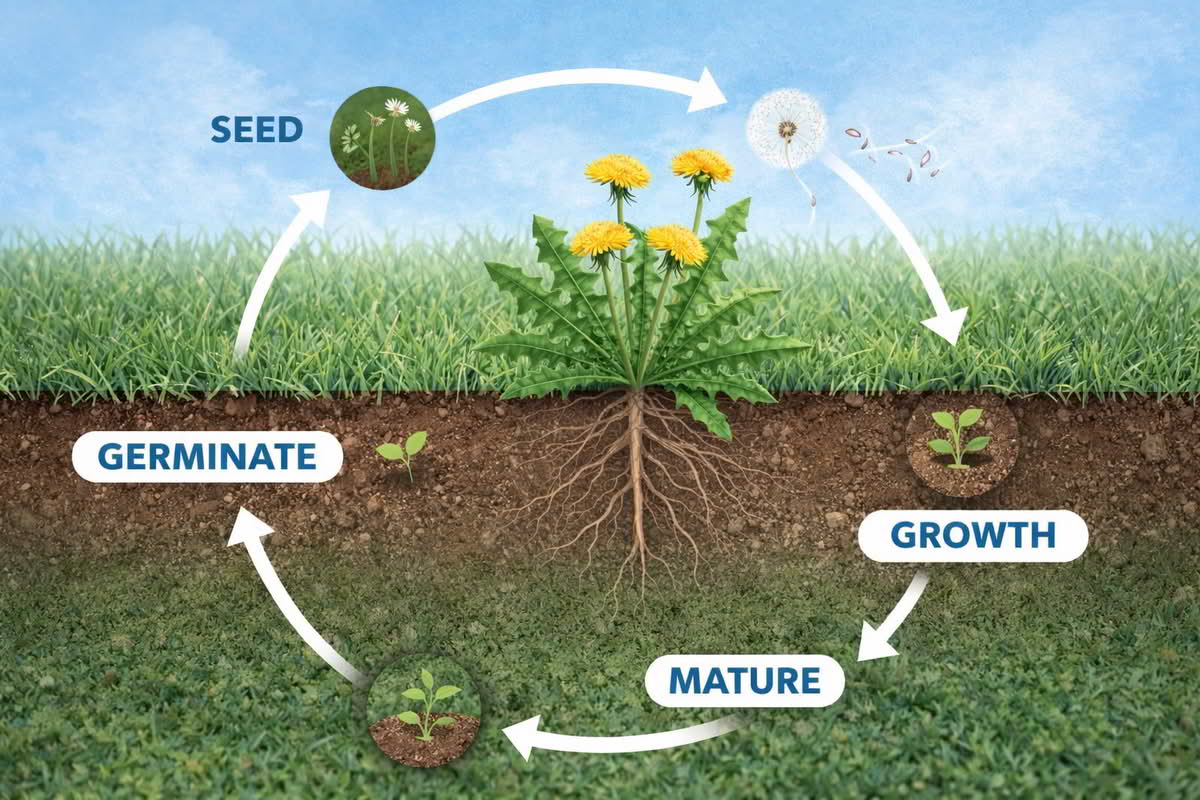
Many weeds follow predictable growth cycles tied to soil temperature and seasonal conditions, which is why timing often determines the success of control methods.
Common Types of Lawn Weeds
Not all weeds behave the same way, and understanding the type of weed present in a lawn can influence how it should be controlled. Broadly speaking, lawn weeds fall into three major categories: broadleaf weeds, grassy weeds, and sedges. Each group grows differently and responds to different control approaches.
Broadleaf weeds are often the most recognizable because they contrast visually with grass. Plants such as dandelions or clover produce wide leaves that grow above the turf canopy, allowing them to capture sunlight even in dense lawns.
Broadleaf weeds – Plants with wide leaves such as dandelion, clover, and plantain.
Grassy weeds – Species that resemble turfgrass but grow more aggressively, such as crabgrass.
Sedges – Fast-growing plants that thrive in wet or compacted soil.
Identifying which category dominates your lawn helps determine whether prevention, mechanical removal, or targeted treatments will be the most effective strategy.
Core Weed Control Methods
Most lawn weed management strategies fall into three categories: manual removal, cultural control, and chemical control. Each method has advantages and limitations depending on the severity of the weed problem and the size of the lawn.
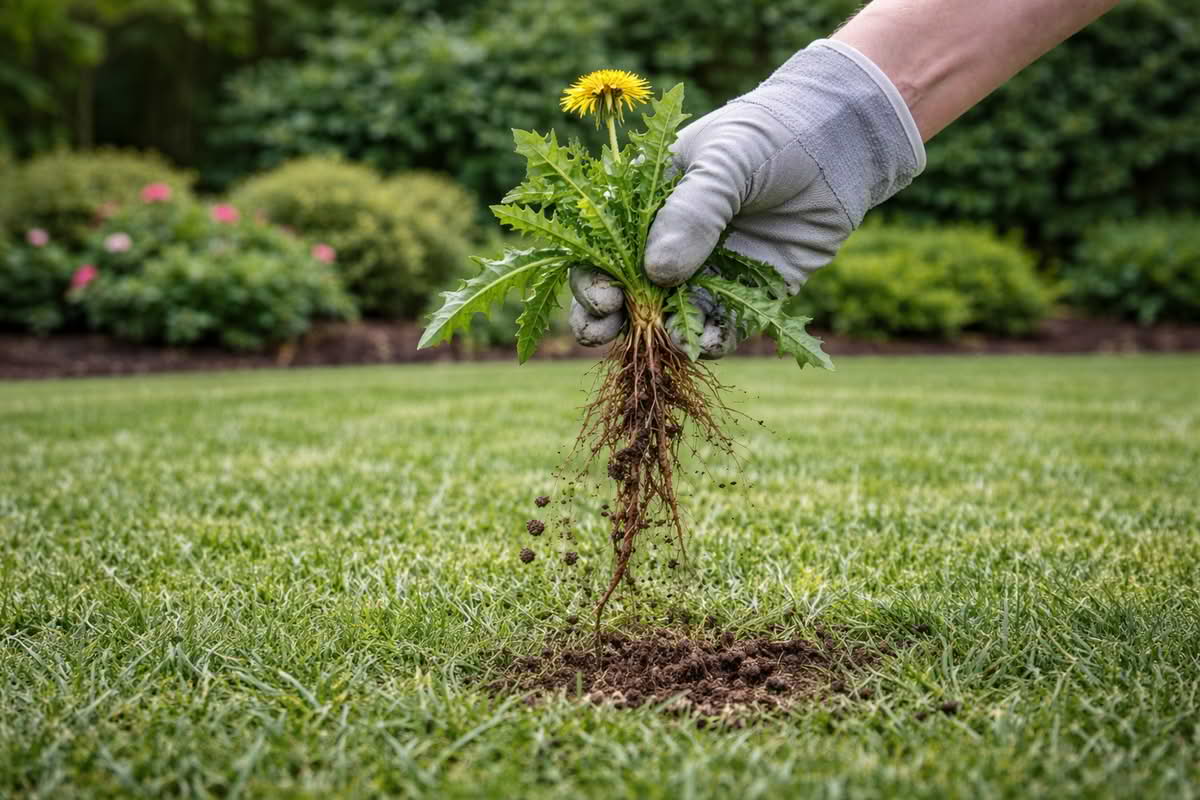
Manual removal works best when weed populations are small and the lawn is otherwise healthy. Pulling weeds by hand or using specialized weeding tools can remove the entire root system and prevent regrowth, especially for deep-rooted plants like dandelions.
Hand-pulling weeds after rain or irrigation when soil is softer.
Using weeding tools to remove deep taproots.
Spot treatments for concentrated patches.
Maintaining dense turf to crowd out new weeds.
Chemical methods can provide faster results for larger infestations, but they require careful timing and application. In many cases, selective treatments are used to target specific weeds without damaging surrounding grass.
The key decision is balancing short-term removal with long-term prevention. Removing visible weeds may improve appearance immediately, but preventing new weeds from germinating often delivers more lasting results.
Removing weeds with their full root system prevents many species from regrowing and spreading through the lawn.
Preventing Weeds Through Lawn Health
One of the most effective ways to control weeds is to create conditions where grass grows so densely that weeds cannot compete. Healthy turf naturally shades the soil surface, reducing the number of weed seeds that can germinate.
Several lawn care practices contribute to this type of weed-resistant environment. While none of these methods eliminate weeds completely, they significantly reduce the likelihood of large infestations.
Maintain proper mowing height to encourage deeper grass roots.
Water deeply but less frequently to strengthen turf resilience.
Improve soil structure to support healthy root growth.
Repair thin patches quickly through overseeding.
These practices shift the lawn ecosystem in favor of grass rather than weeds. Over time, a thick and vigorous lawn becomes the most reliable defense against invasive plants.
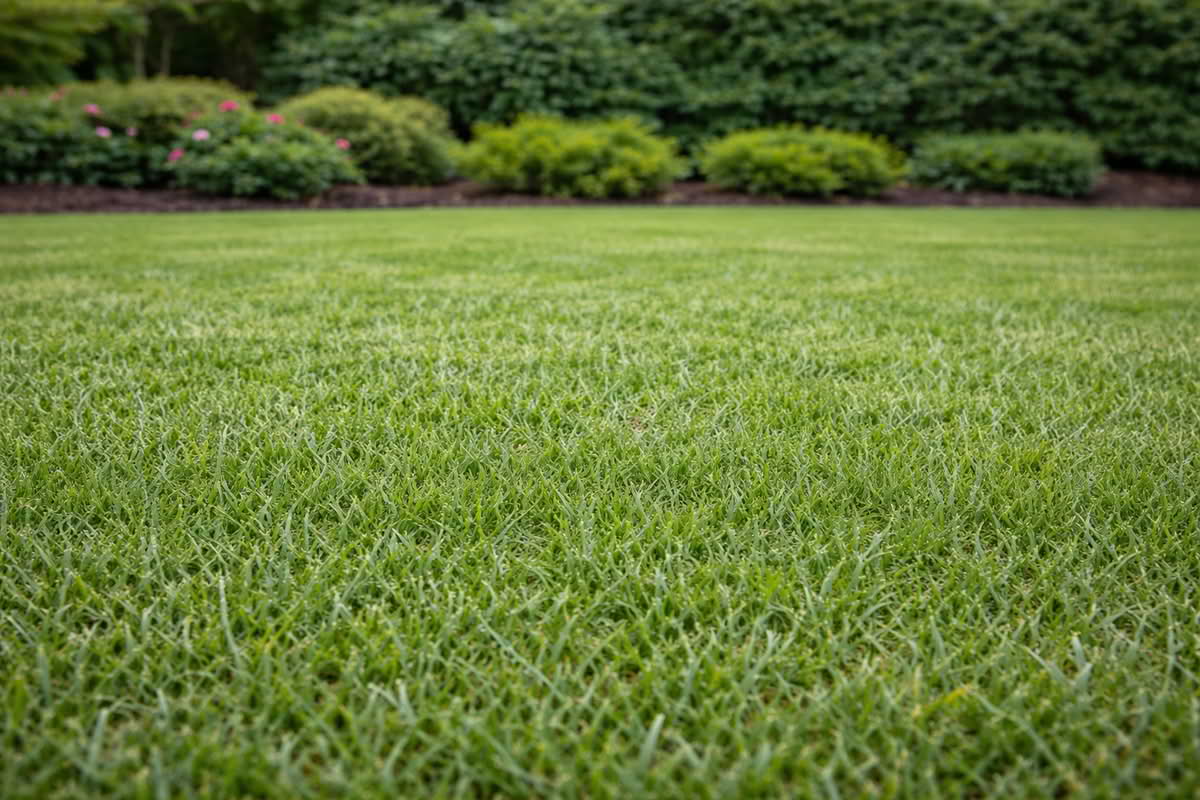
Dense turfgrass crowds out weed seedlings by blocking sunlight and occupying available soil space.
Seasonal Weed Management Strategy
Weed control is most effective when aligned with seasonal lawn growth patterns. Different weeds emerge at different times of the year, and applying the same strategy year-round often leads to inconsistent results.
Spring is typically the most important period for preventing new weed growth. Soil temperatures begin rising, and many annual weeds start germinating during this window. Addressing lawn conditions early in the season helps grass establish itself before weeds become dominant.
Early spring: Focus on soil health and preventing early germination.
Late spring and summer: Monitor for new weed growth and address isolated patches.
Fall: Repair damaged areas and strengthen turf density.
Seasonal planning reduces the need for reactive measures later in the year. Instead of repeatedly removing weeds, homeowners can focus on strengthening the lawn so fewer weeds appear in the first place.
Final Recommendation: Choosing the Right Approach
Effective weed control depends on understanding the condition of your lawn and choosing strategies that match the scale of the problem. Treating weeds as isolated nuisances often leads to repeated cycles of removal without addressing the root cause.
In smaller lawns with occasional weeds, manual removal combined with proper mowing and watering habits may be enough to maintain a healthy appearance. These lawns typically recover quickly when grass growth remains strong and consistent.
Lawns with moderate weed populations often benefit from a combined approach. Removing established weeds while improving soil health, watering practices, and turf density gradually shifts the balance toward grass over time.
In heavily infested lawns, restoration may require a more systematic approach. Addressing soil conditions, repairing damaged areas, and maintaining consistent seasonal care can gradually rebuild a dense turf canopy that suppresses new weeds.
The long-term perspective is simple: a healthy lawn is the most effective weed control system available. When grass grows vigorously and covers the soil surface, weeds struggle to compete, reducing the need for constant intervention year after year.