Lawn Seeding and Overseeding: How to Build a Thicker, Healthier Lawn
Many lawn problems trace back to one underlying issue: thin or aging turf. When grass becomes sparse, the lawn struggles to resist weeds, tolerate drought, or recover from foot traffic. Seeding and overseeding are two of the most effective ways to rebuild turf density, but they are often misunderstood or poorly timed. Some homeowners reseed too aggressively, while others wait too long and allow lawns to deteriorate further. This guide explains how lawn seeding and overseeding work, when each approach makes sense, and how to restore healthy turf density without starting over unnecessarily.
Understanding Seeding vs Overseeding
Lawn seeding and overseeding both involve spreading grass seed across soil, but they serve different purposes. Seeding usually refers to establishing an entirely new lawn or repairing large areas where grass has disappeared. Overseeding, by contrast, adds new grass seed into an existing lawn to increase density and rejuvenate aging turf.
Many lawns benefit from overseeding every few years. Grass plants naturally thin over time due to environmental stress, disease pressure, or gradual soil compaction. Introducing new seed helps maintain a balanced mix of healthy plants and prevents bare patches from developing.
Full seeding: Used when establishing a lawn from bare soil.
Overseeding: Used to thicken an existing lawn without removing the turf.
Patch seeding: Targeted repair of localized bare areas.
Understanding which situation applies helps determine how much preparation the lawn needs and how aggressively seed should be applied.
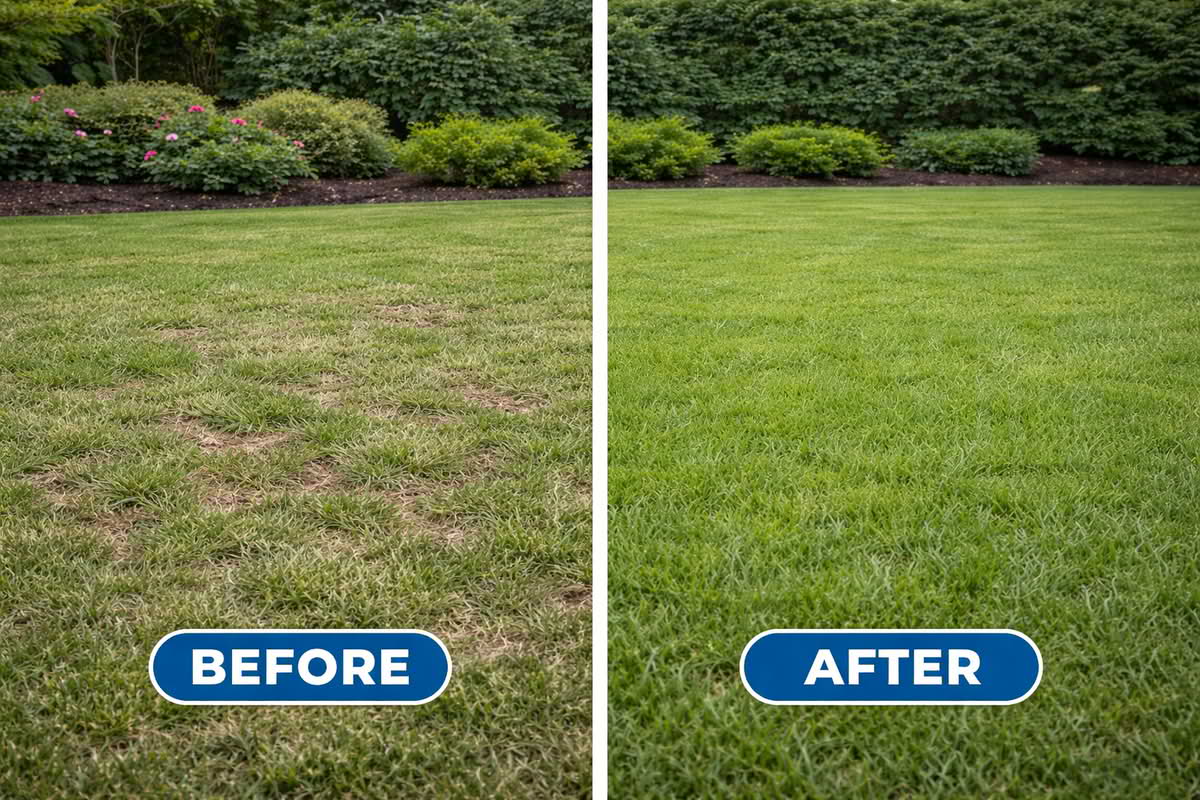
Overseeding gradually increases turf density by introducing new grass plants between existing ones.
When a Lawn Needs Overseeding
Determining whether overseeding is necessary often depends on the condition of the existing turf. Lawns rarely thin overnight. Instead, density declines slowly over several seasons, making it easy to overlook the problem until weeds begin appearing or soil becomes visible between grass blades.
A simple visual test can help identify thinning turf: if you can easily see soil through the grass canopy while standing upright, the lawn likely needs overseeding. Dense turf should largely conceal the soil surface.
Visible soil between grass blades.
Slow recovery after mowing or foot traffic.
Increasing weed presence.
Patchy growth caused by drought or seasonal stress.
Overseeding early often prevents larger restoration projects later. Waiting until large areas become bare may require full reseeding instead.
Preparing the Lawn for Seed
Successful seeding depends heavily on preparation. Grass seed must contact the soil surface in order to germinate. If seed falls only on top of thick grass or lawn debris, germination rates can decline dramatically.
The goal of preparation is to create small openings in the turf canopy where seeds can settle into the soil. This does not require removing the lawn entirely, but it does involve improving surface access for new seedlings.
Mow the lawn slightly shorter than usual before seeding.
Remove excess lawn clippings or debris.
Loosen compacted soil where necessary.
Address drainage or soil issues that may have weakened the lawn.
Preparation also helps ensure that new grass seedlings are not immediately shaded out by older plants competing for sunlight and nutrients.
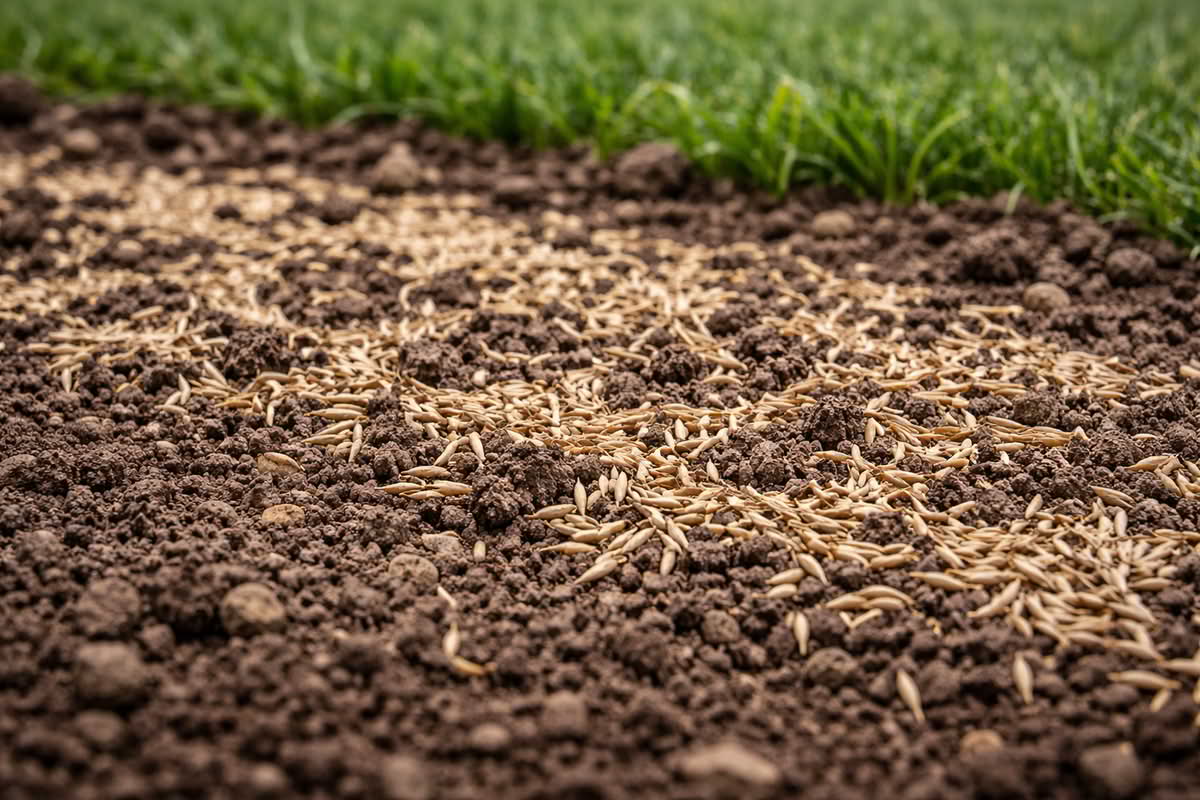
Grass seed germinates most reliably when it makes direct contact with soil rather than sitting on top of existing turf.
How to Distribute Seed Evenly
Even seed distribution plays a major role in how uniform the lawn appears once new grass begins growing. Clumping seed in certain areas can lead to uneven growth patterns, while sparse coverage may fail to improve density.
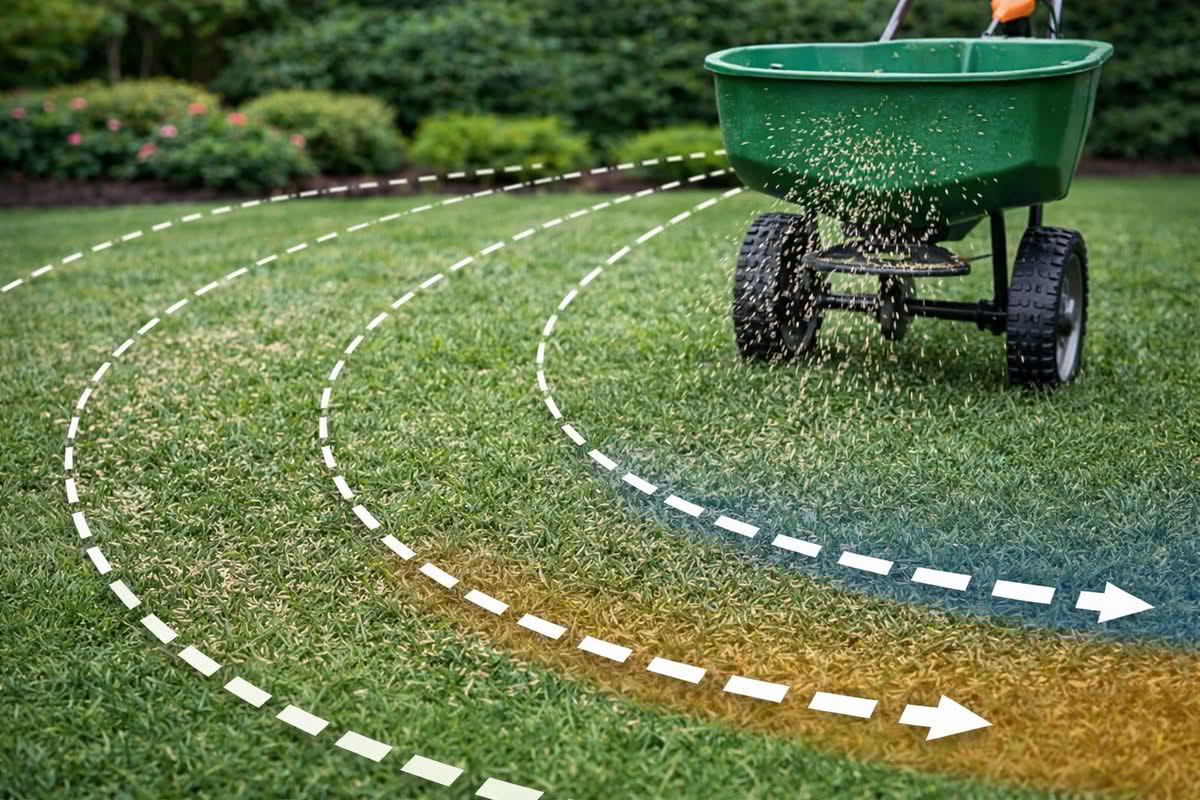
Many homeowners find it helpful to divide the total amount of seed into two passes across the lawn. The first pass distributes seed in one direction, while the second pass spreads seed perpendicular to the first. This cross-pattern technique helps minimize missed areas.
Spread seed in two directions for more uniform coverage.
Avoid concentrating seed in shaded or low spots.
Lightly water after spreading to help settle seed into the soil.
Maintain consistent coverage across the entire lawn.
Uniform seeding allows the lawn to develop an even canopy as new grass matures. This helps the turf look consistent and reduces the chance of new gaps forming between plants.
Overlapping spreader passes help ensure grass seed is distributed evenly across the lawn surface.
Helping New Grass Establish Successfully
Germination is only the first step in establishing new grass. The early growth phase is when seedlings are most vulnerable to stress. Proper watering and mowing practices help protect new plants until they develop stronger root systems.
Newly seeded lawns typically require lighter but more frequent watering during the first few weeks. The goal is to keep the top layer of soil consistently moist without saturating the lawn or washing seeds away.
Water lightly but consistently during the germination period.
Avoid mowing until seedlings reach a stable height.
Limit heavy foot traffic on newly seeded areas.
Gradually transition to deeper watering once roots establish.
Patience is essential during this stage. While germination may occur within a few weeks, full turf density often develops gradually over an entire growing season.
Final Recommendation: Choosing the Right Approach
Lawn seeding and overseeding both help restore turf density, but the right approach depends on the condition of the lawn and the scale of the problem. Recognizing early signs of thinning turf allows homeowners to strengthen their lawn before large areas deteriorate.
For lawns that are mostly healthy but slightly thin, overseeding every few years is usually sufficient to maintain density and resilience. This approach introduces new plants while preserving the existing turf structure.
Lawns with moderate thinning or patchy growth may require more focused overseeding combined with soil improvements. Addressing compaction, watering patterns, or nutrient imbalances can help new grass establish more successfully.
In situations where large sections of turf have disappeared, full seeding may be necessary to rebuild the lawn from the soil surface upward. While this approach requires more preparation, it can reset the lawn's structure and improve long-term durability.
Over time, consistent overseeding and proper lawn care create a dense turf canopy that naturally resists weeds, tolerates environmental stress, and recovers quickly from seasonal wear. Maintaining this density is one of the most effective long-term strategies for keeping a lawn healthy and visually consistent.