Lawn Aeration Guide: How to Improve Soil Health and Turf Performance
Compacted soil and poor drainage are often hidden causes of weak, thin, or patchy lawns. Many homeowners notice slow growth, water pooling, or shallow roots without realizing that underlying soil structure is limiting turf health. Lawn aeration is a technique designed to alleviate compaction, improve nutrient uptake, and strengthen root systems. Despite its benefits, aeration is often misunderstood, with some homeowners skipping it entirely or performing it incorrectly. This guide explains why aeration matters, how to assess your lawn’s needs, and the most effective methods to restore soil and grass vitality over the long term.
Why Aeration Is Important
Soil compaction occurs when foot traffic, mowing, or environmental conditions compress the soil, limiting air, water, and nutrient movement to grass roots. Compacted soil creates shallow root systems, slow growth, and increased vulnerability to stress and disease.
Aeration involves creating small openings in the soil to relieve compaction. This process improves water infiltration, encourages deeper root growth, and allows fertilizer and nutrients to reach the roots more effectively.
Reduces soil density and enhances root expansion.
Improves water and nutrient penetration.
Helps prevent puddling and drainage problems.
Strengthens turf resilience against environmental stress.
Long-term lawn health depends on addressing compaction before it severely limits grass growth. Aeration creates the foundation for vigorous turf capable of resisting drought, disease, and wear.
Identifying Compacted Areas
Not all lawns need uniform aeration. Targeting problem areas ensures the process is efficient and effective. Compacted zones are often revealed by slow water absorption, pooling, or patchy grass growth.
High-traffic zones, such as pathways or play areas.
Lawns with clay-heavy soil that drains poorly.
Areas showing signs of shallow root systems or thin grass.
Spots where fertilizer or water runoff occurs quickly.
Simple tests, such as using a screwdriver or soil probe, can confirm compaction. Resistance to penetration indicates dense soil that would benefit from aeration.
Core Aeration Methods
There are two main approaches to lawn aeration: spike aeration and core (plug) aeration. Spike aerators create holes by pushing into the soil, while core aerators remove small plugs, leaving gaps that allow air, water, and nutrients to penetrate.
Spike Aeration: Easier to perform, suitable for minor compaction, but may compact soil around the holes.
Core Aeration: More effective for serious compaction, removes plugs to improve root growth and water infiltration.
The choice of method depends on lawn condition, soil type, and the severity of compaction. Core aeration is generally recommended for established lawns with dense soil, while spike aeration can be used as a maintenance technique in lighter soils.
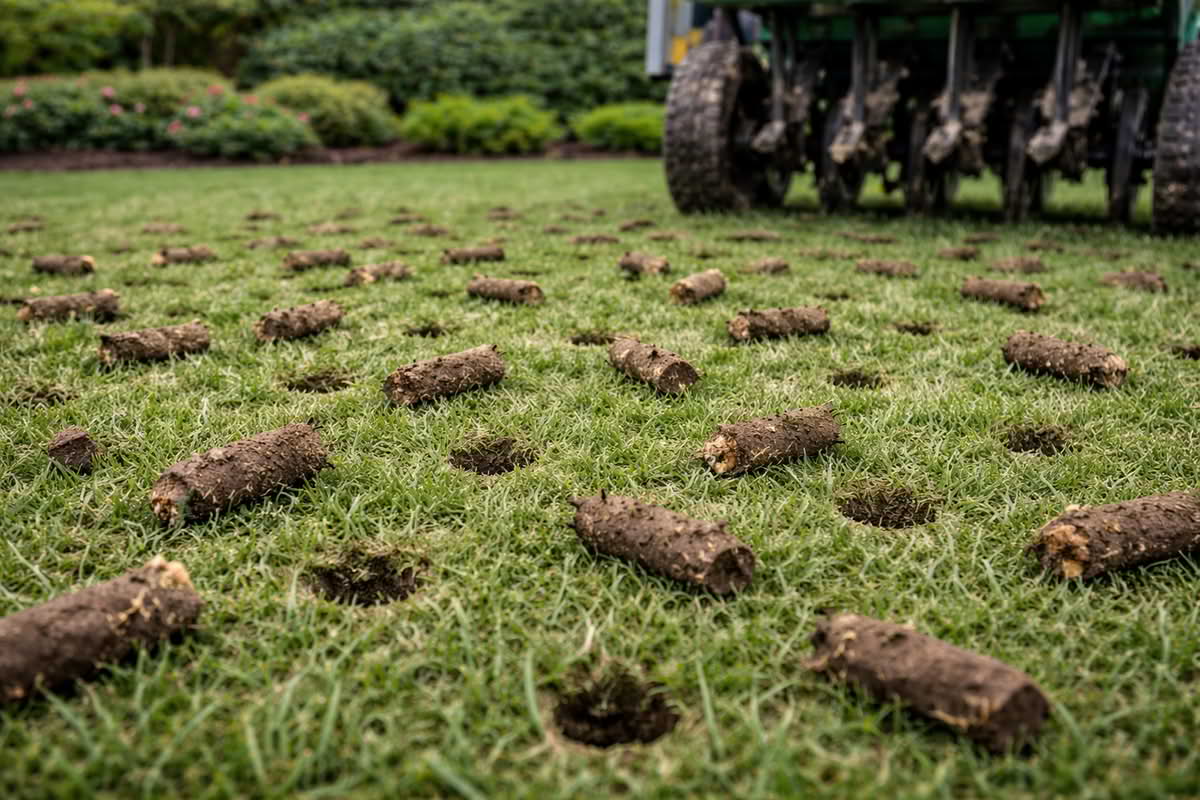
Core aeration removes plugs of soil to reduce compaction and allow better root growth and nutrient penetration.
Timing and Seasonal Considerations
Aeration is most effective when grass is actively growing. This ensures that grass can recover quickly and fill in the holes created during the process. Cool-season grasses respond best to early fall or spring aeration, while warm-season grasses benefit most in late spring or early summer.
Plan aeration when soil is moist but not saturated.
Avoid aerating during drought or extreme heat.
Coordinate aeration with overseeding for optimal results.
Use seasonal knowledge to maximize recovery and turf density.
Timing strategically ensures that aeration benefits are maximized without stressing the lawn unnecessarily.
Post-Aeration Care Tips
After aerating, lawns require attentive care to take full advantage of improved soil conditions. Proper watering, fertilization, and overseeding can accelerate recovery and boost turf density.
Water lightly immediately after aeration to settle the soil.
Apply fertilizer to take advantage of open soil and improved root access.
Overseed if additional turf density is desired.
Leave soil plugs on the surface; they break down naturally and enrich the soil.
Resume normal mowing only after grass has recovered and plugs have decomposed.
Integrating these post-aeration practices strengthens the turf and ensures the investment in aeration yields lasting benefits.
Final Recommendation: Choosing the Right Approach
Lawn aeration is a powerful tool for improving soil health and promoting dense, resilient turf. Homeowners with compacted or heavily trafficked lawns should prioritize core aeration, while lighter soils and maintenance aeration can be performed with spike tools.
Timing is critical: align aeration with active growth periods for your grass type to ensure rapid recovery. Combining aeration with overseeding and proper fertilization accelerates improvements and maximizes turf density.
For small areas of compaction or early signs of soil stress, light spike aeration or focused core aeration may be sufficient. For older lawns with widespread compaction, a full core aeration followed by overseeding and targeted fertilization provides the best long-term results.
Over time, regular aeration combined with consistent lawn care practices strengthens the root system, improves water and nutrient uptake, reduces weeds, and contributes to a vibrant, sustainable lawn that thrives season after season.