Greenhouse Buying Guide: Choosing the Right Structure for Your Garden
A greenhouse can dramatically extend the growing season and protect plants from unpredictable weather, but choosing the right one is often more complicated than it first appears. Many gardeners focus only on size or price, overlooking factors like ventilation, structural durability, and climate suitability. The result is a greenhouse that overheats in summer, struggles through winter storms, or simply doesn’t support the way the garden is actually used. This guide breaks down the key design choices that determine how well a greenhouse performs, helping you evaluate structures, materials, and layouts so the greenhouse becomes a reliable long-term growing environment rather than a frustrating garden experiment.
Why Gardeners Use Greenhouses
At its core, a greenhouse is designed to create a controlled growing environment. By capturing solar heat and protecting plants from wind and frost, the structure allows gardeners to grow plants earlier in the season and continue later into the year. For many home gardeners, this means starting seedlings earlier in spring or protecting delicate plants during colder months.
However, the benefits of a greenhouse go beyond simply keeping plants warm. A well-designed greenhouse also creates stable humidity levels, reduces exposure to pests, and allows gardeners to experiment with plants that might not otherwise survive in their climate.
Extend the growing season by several weeks or months.
Protect young plants from frost, wind, and heavy rain.
Provide a stable environment for seed starting.
Allow cultivation of plants that require warmer conditions.
One common misconception is that any enclosed structure with clear panels functions well as a greenhouse. In reality, successful greenhouses balance sunlight, airflow, and temperature management. Without ventilation or shading, a greenhouse can easily overheat on a sunny day, even during cooler seasons.
Greenhouse Types and Structural Designs
Greenhouses come in a variety of structural forms, each suited to different garden layouts and budgets. Some structures are compact and simple, while others are designed to function as permanent garden buildings.
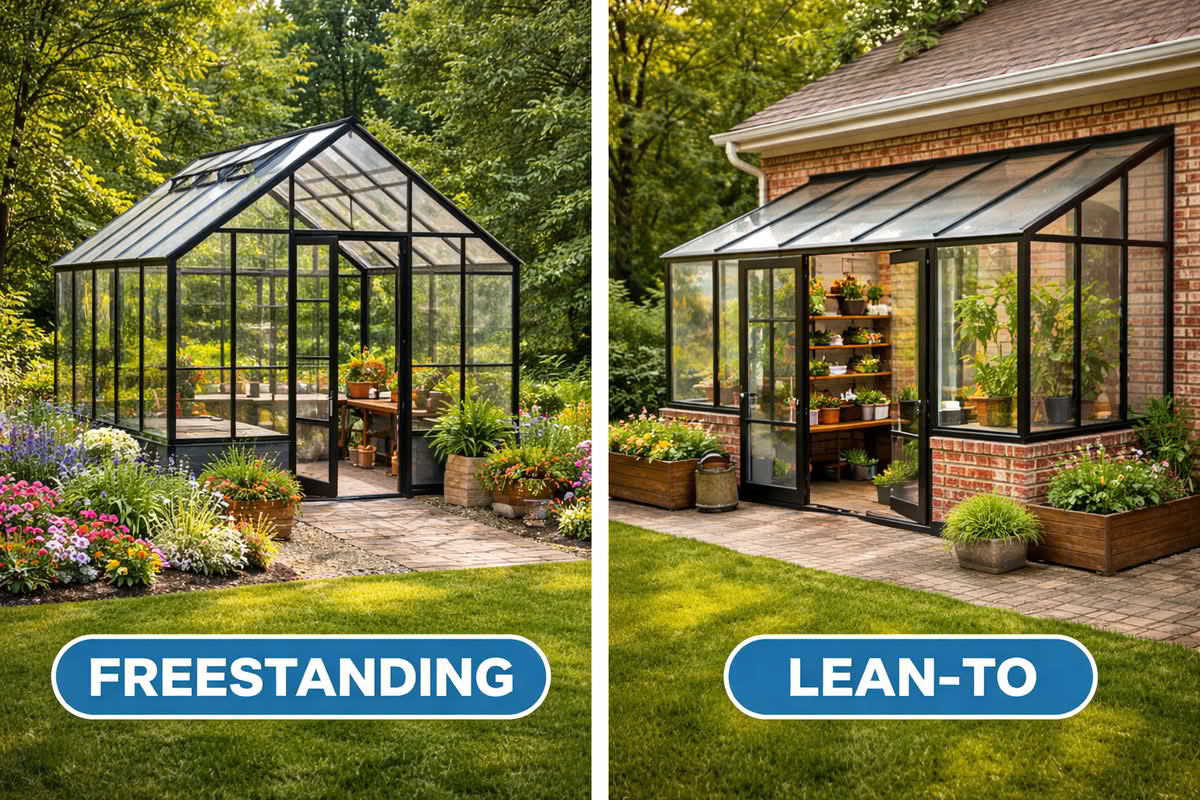
Lean-to greenhouses: Attach to an existing wall, saving space and using the building for additional warmth.
Freestanding greenhouses: Independent structures that allow sunlight from all sides.
Mini or cold frame greenhouses: Small enclosures used for seed starting or plant protection.
Walk-in greenhouses: Larger structures designed for regular use and movement inside.
The right design depends heavily on how you plan to use the structure. Gardeners who want to grow a wide range of plants often benefit from walk-in greenhouses, while those focused on seed starting may find compact structures perfectly sufficient.
Freestanding greenhouses allow light from all sides, while lean-to structures save space and benefit from the warmth of adjacent buildings.
Structural durability is another factor that is often underestimated. In windy or snowy climates, stronger frames and reinforced panels are essential to prevent damage during extreme weather conditions.
Glazing Materials and Light Transmission
The transparent panels of a greenhouse, often referred to as glazing, determine how much light enters the structure and how well heat is retained. The choice of material significantly affects performance and longevity.
Glass panels: Provide excellent light transmission but are heavier and more fragile.
Polycarbonate panels: Lightweight and durable, often with insulation layers.
Plastic film coverings: Common in temporary or budget-friendly greenhouses.
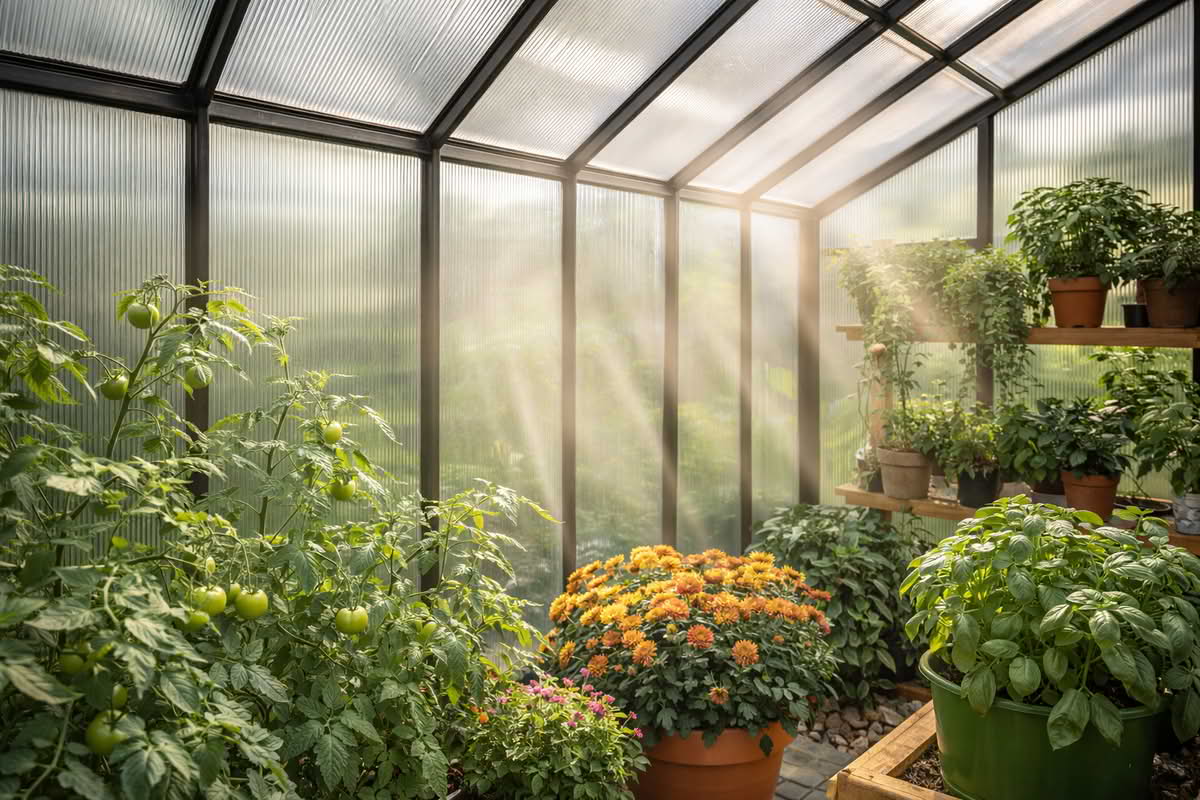
Light diffusion is an important consideration. Some materials scatter sunlight evenly throughout the greenhouse, reducing harsh shadows and helping plants receive more balanced light exposure.
Multiwall polycarbonate panels diffuse sunlight, helping distribute light more evenly across plants inside the greenhouse.
A common mistake is assuming that maximum sunlight is always beneficial. In many regions, strong direct sunlight can raise greenhouse temperatures quickly. Materials that diffuse light can reduce plant stress and create more balanced growing conditions.
Ventilation, Heating, and Climate Control
A greenhouse that traps heat without releasing it can become unusable during warm days. Proper ventilation is essential to regulate temperature and maintain healthy airflow around plants.
Effective greenhouse designs typically include roof vents, side vents, or automated vent openers that respond to temperature changes. These features allow hot air to escape and prevent overheating.
Roof vents allow hot air to rise and escape naturally.
Side vents increase airflow across the structure.
Shade cloth can reduce excessive sunlight during summer.
Supplemental heaters may be used in cold climates.
Gardeners often discover that ventilation matters more than insulation during the warmer months. Even small greenhouses can experience rapid temperature spikes if airflow is insufficient.
Size, Placement, and Site Planning
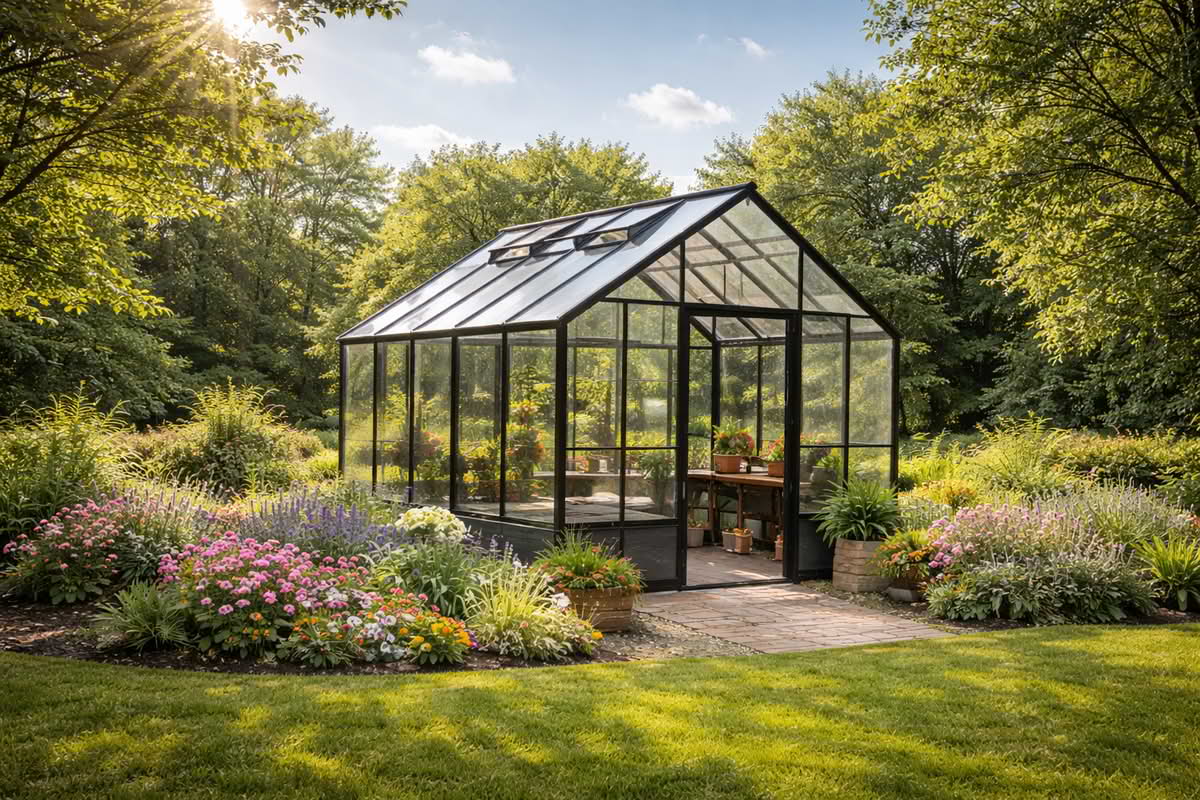
The placement of a greenhouse strongly influences how well it performs. Ideally, the structure should receive ample sunlight throughout the day while remaining protected from strong winds.
South-facing exposure is generally considered ideal in many climates because it maximizes sunlight during winter months when daylight hours are shorter.
Choose a location with consistent sunlight exposure.
Avoid areas shaded by buildings or tall trees.
Ensure adequate drainage to prevent standing water.
Allow room around the structure for maintenance access.
Proper greenhouse placement ensures consistent sunlight while avoiding shade from nearby trees or buildings.
When planning size, it is usually wise to choose slightly larger than the current need. Gardeners often expand their growing projects once a greenhouse becomes part of the gardening routine.
Final Recommendation: Choosing the Right Approach
Selecting a greenhouse involves balancing structural durability, climate suitability, and how the structure will actually be used throughout the year. While many gardeners focus primarily on price or appearance, the most successful greenhouse setups are those that match the growing goals and environmental conditions of the garden.
For small gardens or beginners: Compact walk-in or mini greenhouses offer a simple way to start seedlings and protect plants.
For dedicated gardening spaces: Freestanding greenhouses provide flexibility and greater growing capacity.
For limited yard space: Lean-to greenhouses can use existing walls while maximizing sunlight exposure.
For challenging climates: Strong frames and insulated panels improve durability and temperature stability.
Ultimately, the most effective greenhouse is one that maintains a stable growing environment without constant adjustment. By choosing a structure that balances sunlight, airflow, and durability, gardeners can create a dependable space that supports healthy plants and extends the possibilities of the garden for many seasons to come.