Fencing and Garden Borders: Defining, Protecting, and Structuring Your Garden
Fences and garden borders do far more than mark property lines—they shape how a garden functions, how it feels, and how well it protects plants and outdoor spaces. Yet many homeowners treat fencing as a purely decorative choice or a simple barrier, overlooking how height, material, layout, and placement influence usability and long-term maintenance. A poorly planned fence can block sunlight, disrupt garden flow, or fail to protect plants from animals. This guide explains the practical considerations behind garden fencing and borders, helping you evaluate materials, layout strategies, and common design approaches so your garden structure supports both protection and visual harmony.
Why Fencing and Borders Matter in Garden Design
Fencing and borders help define the physical structure of a garden. They guide movement through the space, protect plants from animals, and visually organize planting areas. Even simple borders can make a garden feel more intentional by separating planting beds from pathways, lawns, or patios.
The role of fencing varies depending on the garden's purpose. Some gardens require strong protective barriers against animals or pets, while others benefit from low decorative borders that simply frame planting areas.
Fencing can protect plants from animals and foot traffic.
Borders visually separate planting areas from lawns or walkways.
Defined garden edges improve maintenance and organization.
Structural elements help create a sense of intentional design.
One common mistake is installing fencing purely for appearance without considering how it affects sunlight, airflow, or maintenance access. Garden structures should support plant health and usability rather than creating obstacles.
Common Types of Garden Fencing
Garden fencing comes in many forms, each designed to address different needs. Some structures are primarily protective, while others are intended to enhance the visual layout of a landscape.
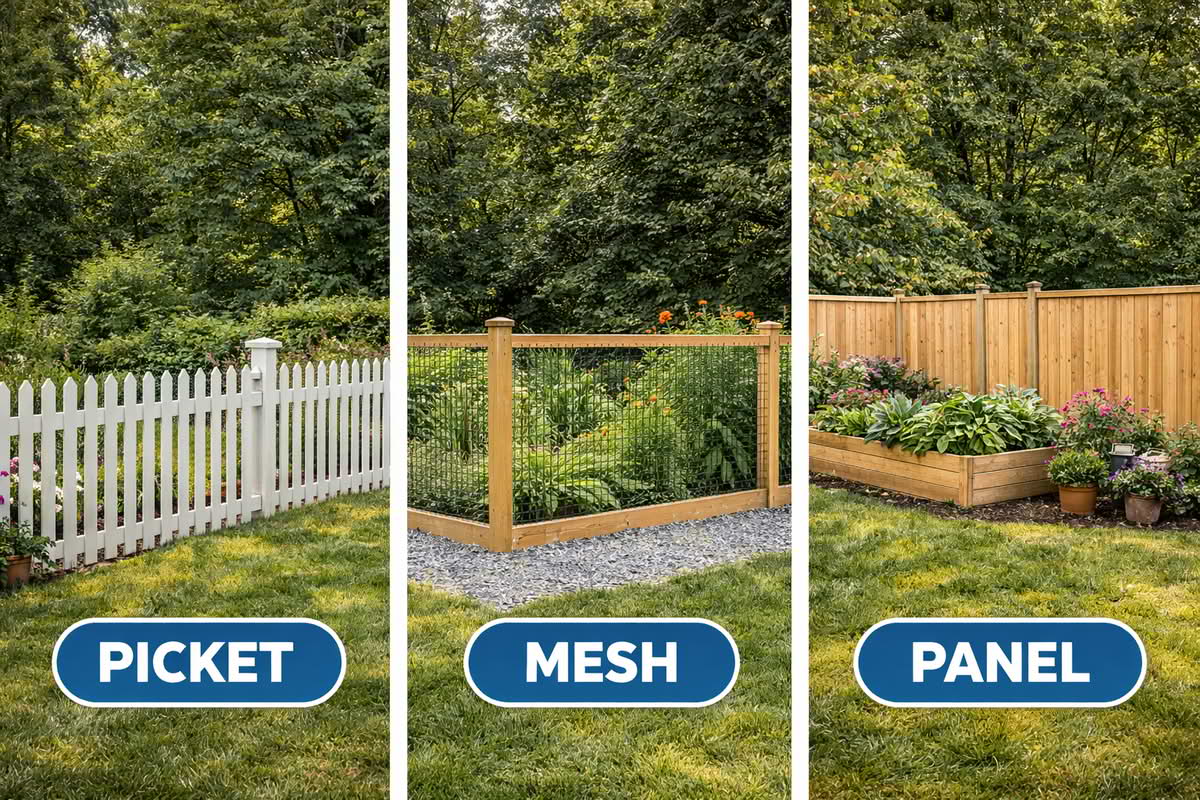
Picket fencing: traditional decorative fencing that frames gardens without fully blocking views.
Wire or mesh fencing: practical barriers used to protect plants from animals.
Panel fencing: solid sections that provide privacy and wind protection.
Split rail fencing: open structures commonly used for larger garden areas or property boundaries.
The right fencing type depends on the garden's function. For example, vegetable gardens often require protective fencing to prevent animals from reaching crops, while ornamental gardens may rely on lighter structures that emphasize visual appeal.
Garden fencing ranges from decorative picket designs to practical mesh barriers used to protect plants.
Visibility is another factor worth considering. Some homeowners prefer open fencing that allows views into the garden, while others want structures that provide privacy or block wind.
Garden Border Materials and Layout Strategies
Borders serve a slightly different purpose from fences. Instead of enclosing the entire garden, they define the edges of planting beds, pathways, and landscaping features. Borders help keep soil and mulch contained while preventing grass from spreading into planting areas.
A variety of materials can be used to create borders, each offering different aesthetic and functional advantages.
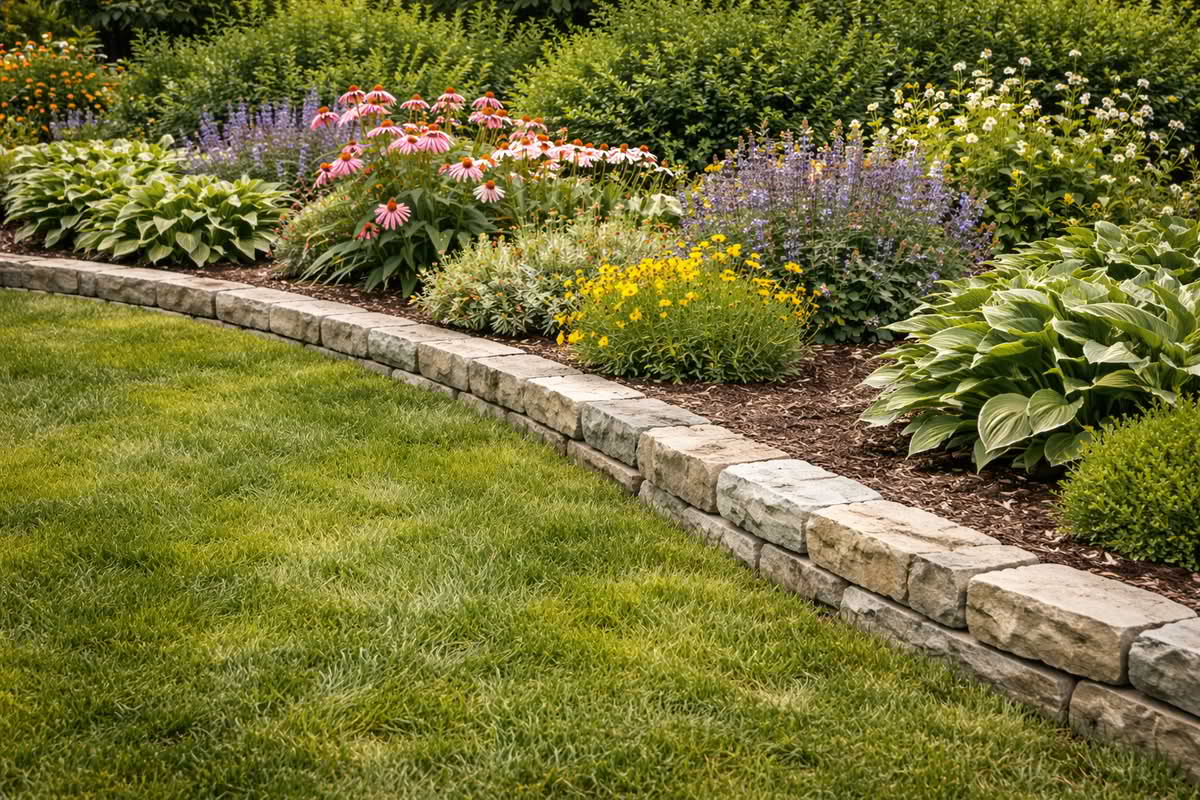
Stone borders provide a natural and durable edge.
Metal edging creates clean lines and modern garden layouts.
Wood borders blend easily with rustic or natural landscapes.
Brick or concrete edging provides strong structural separation.
Stone borders create a durable visual edge that separates planting beds from surrounding lawn areas.
Layout planning is important when installing borders. Gentle curves can soften the look of a garden, while straight edges create a more formal appearance. The choice often depends on the overall landscape style of the property.
Height, Visibility, and Plant Protection
Fence height significantly influences how effective the structure will be. Low decorative fencing may provide visual definition, but it will not necessarily prevent animals or pets from entering the garden.
Taller fencing provides stronger protection but may also affect the appearance of the garden and the surrounding landscape. Striking a balance between visibility and protection is often the goal.
Low borders work well for decorative or organizational purposes.
Medium-height fences help deter pets and small animals.
Taller fencing may be required to prevent larger animals from entering.
Open designs maintain airflow and visibility within the garden.
Another factor to consider is sunlight exposure. Solid fencing can cast shadows over garden beds, which may affect plant growth depending on orientation and time of day.
Installation Planning and Long-Term Maintenance
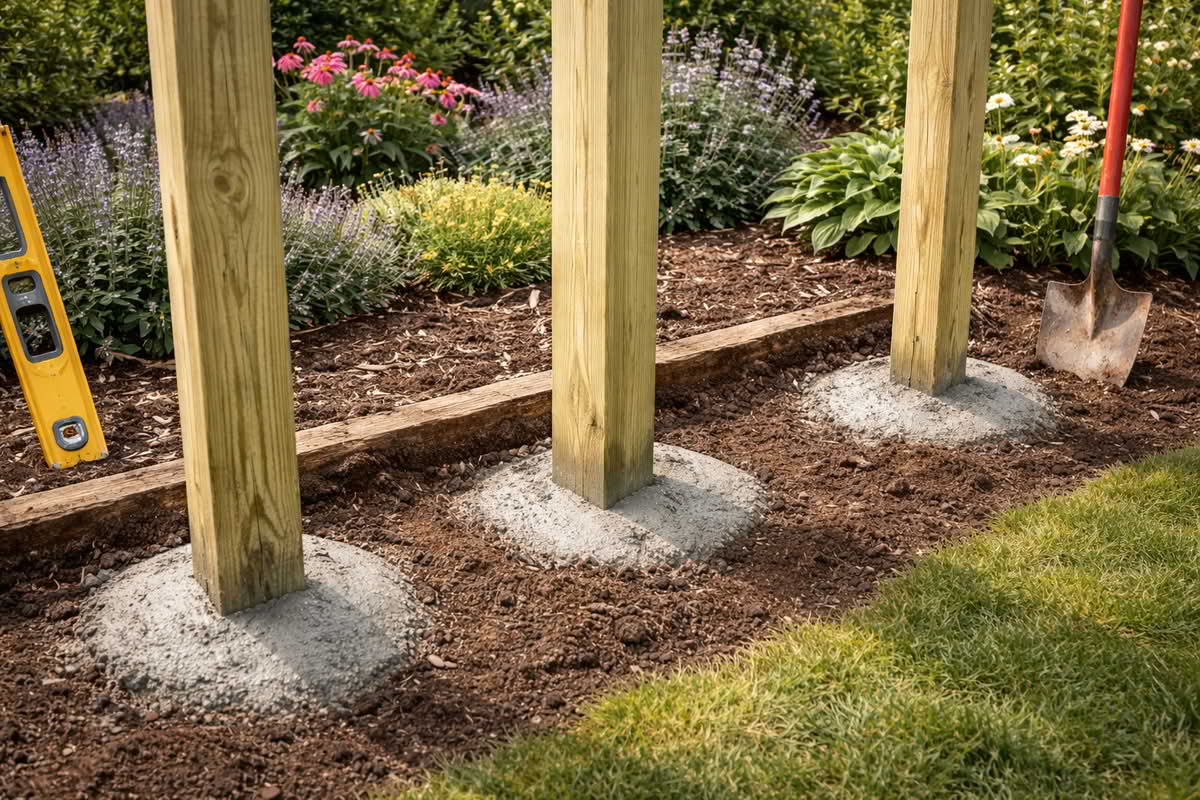
Installing fencing or borders requires careful planning to ensure stability and durability. Posts must be anchored securely, especially in areas with strong winds or soft soil conditions.
Ground preparation is often overlooked but plays an important role in long-term performance. Uneven ground can lead to shifting structures or gaps where animals may enter.
Secure fence posts below the frost line where applicable.
Ensure the ground is level before installing borders.
Use durable fasteners and weather-resistant materials.
Inspect structures periodically for wear or damage.
Properly installed fence posts provide the structural stability needed for long-term garden fencing.
Maintenance needs vary depending on the material. Wood fencing may require staining or sealing, while metal or vinyl fencing often requires only occasional cleaning and inspection.
Final Recommendation: Choosing the Right Approach
Choosing the right fencing or border solution depends on how the garden will be used and what challenges the space presents. A decorative garden border may be sufficient for purely ornamental areas, while productive gardens often require stronger protection.
For decorative landscaping: low borders or picket-style fencing provide structure without dominating the space.
For vegetable gardens: mesh or wire fencing helps protect plants from animals.
For defined garden layouts: stone, brick, or metal borders create clear planting boundaries.
For larger properties: open rail or panel fencing can define the space while maintaining visibility.
Ultimately, the most successful garden structures balance protection, accessibility, and visual harmony. By choosing fencing and borders that match both the functional needs and design style of the garden, homeowners can create outdoor spaces that remain organized, attractive, and easy to maintain over time.