Plumbing Tape and Sealant Buying Guide for Home Maintenance
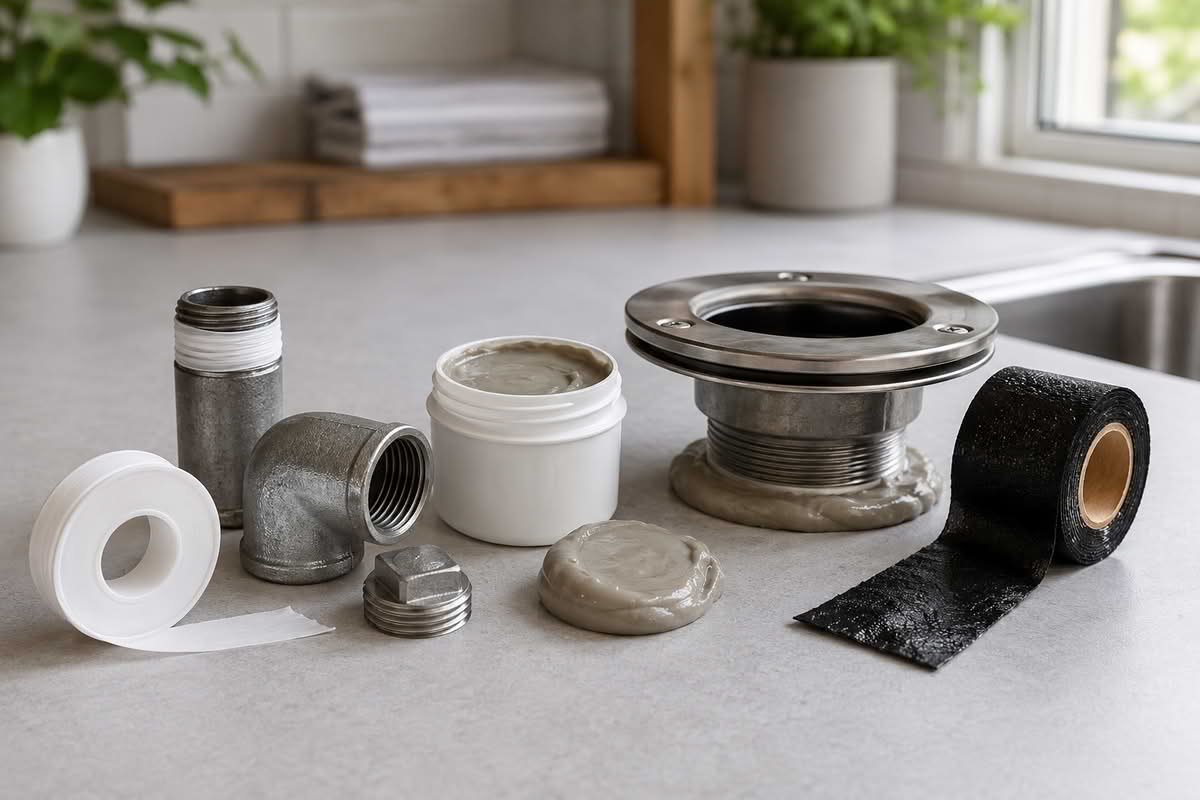
Plumbing tape and sealants can look interchangeable on a shelf, but they solve different problems. Thread tape helps seal threaded pipe connections. Pipe thread compound fills and lubricates certain threaded joints. Plumbers putty is commonly used around drain flanges and non-pressurized sealing points. Silicone repair tape may help with temporary containment in limited situations, but it should not be treated as a universal fix for damaged pipe. This guide focuses on choosing by connection type, material compatibility, pressure exposure, cleanup, storage, and the limits of each product so small maintenance tasks do not turn into messy or misleading repairs.
Choose by Sealing Job
The first step in choosing plumbing tape or sealant is identifying what kind of joint or surface needs to be sealed. Threaded connections, sink drain flanges, slip-joint drain parts, temporary leak containment, and general moisture gaps do not call for the same product. A roll of thread tape is not a substitute for putty around a drain flange. Plumbers putty is not meant for every threaded fitting. Silicone repair tape may wrap around a surface, but it does not replace a properly repaired damaged pipe or fitting. The job type should decide the product before price, brand, or package size does.
Thread tape is usually associated with threaded pipe connections where the tape wraps around male threads before assembly. Its job is to help fill thread gaps and support a cleaner seal as the fitting tightens. It is thin, compact, easy to store, and useful to keep in a basic home toolkit. The tradeoff is that application technique matters. Too little tape may not seal well. Too much tape can interfere with proper assembly. Wrapping in the wrong direction can cause the tape to bunch or unwind as the fitting is tightened.
Pipe thread sealant, often called pipe dope, serves a similar general purpose but applies as a compound rather than a tape. It can be useful where a paste-style product is preferred, where thread lubrication helps assembly, or where the connection and material call for a compound. The tradeoff is mess and storage. Compounds can dry out, separate, or spread onto surrounding surfaces if used carelessly. They also require more attention to compatibility and cleanup than a simple roll of tape.
Plumbers putty belongs in a different mental category. It is commonly used around certain sink drains, strainers, and similar non-pressurized sealing points. It is valued because it can be shaped, compressed, and cleaned up after the part is seated. But it is not the right product for every surface or every fixture. Some materials and installations call for silicone or a gasket instead. Treating putty as a universal sealant is one of the easiest ways to create cleanup problems or a poor long-term seal.
Use thread tape for compatible threaded connections where tape is appropriate for the fitting.
Use pipe thread compound when a paste-style thread sealant better suits the material or assembly.
Use plumbers putty around suitable non-pressurized drain flanges and similar fixture points.
Use silicone repair tape only as a situational temporary aid, not as a substitute for proper repair.
Plumbing sealing products should be chosen by connection type because threaded fittings, drain flanges, and temporary wraps have different requirements.
Understand Material and Pressure Limits
Plumbing sealants are easy to overtrust because their packaging often emphasizes stopping leaks or sealing connections. In practice, the connection material, water exposure, pressure, temperature, and fixture design all matter. A product that works well on one threaded fitting may not be suitable for another. A putty that works around a metal drain flange may not be appropriate for every stone, plastic, or specialty surface. A temporary tape wrap may help contain moisture briefly but should not be treated as evidence that the underlying problem is solved.
Threaded plumbing connections rely on mechanical fit as well as sealing material. Tape or compound helps fill small gaps in the thread path, but it cannot correct severely damaged threads, wrong-size fittings, poor alignment, or parts that should not be joined. If the fitting is cross-threaded or cracked, adding more sealant can hide the issue for a short time while making the eventual fix messier. Buyers should think of thread sealants as support for a sound connection, not a way to force an unsound connection to behave.
Plumbers putty has its own limits. It is often used where a drain flange or fixture part compresses the putty into place, but it is generally not a high-pressure sealing material. It can also be affected by surface compatibility. Some fixture manufacturers specify different sealing methods, and some materials may stain or react poorly with oil-based putty. This is why the product label and fixture instructions matter. A putty that is convenient for one sink installation can be the wrong choice for another.
Silicone repair tapes and self-fusing tapes are especially important to frame carefully. They can be useful for temporary containment, gripping, bundling, or emergency moisture control in limited situations. But the word “repair” can be misleading if it encourages a homeowner to ignore a damaged pipe, failing joint, or active pressurized leak. A temporary wrap may buy time, but it should not replace diagnosing the actual failure point and using a proper fitting, replacement part, or professional repair when needed.
Check whether the product is intended for the material being sealed.
Do not rely on sealant to compensate for cracked parts, wrong fittings, or damaged threads.
Distinguish non-pressurized drain sealing from pressurized supply-line sealing.
Treat temporary tapes as short-term aids when the underlying problem still needs attention.
The safest buying logic is conservative: choose the product that matches the joint design, use it within its stated limits, and avoid products that make broad promises without clear application boundaries. This does not mean every small plumbing task is complicated. It means the product has to match the connection. A careful match reduces rework, cleanup, and the false confidence that comes from using a sealant where the real issue is mechanical fit.
Avoid Common Application Mistakes
Many plumbing tape and sealant problems come from application rather than product choice alone. Thread tape can fail if it is wrapped too loosely, wrapped backward, applied over dirty threads, or layered so heavily that the fitting no longer tightens properly. Pipe compound can create mess or uneven coverage when too much is applied. Putty can squeeze out unevenly or fail to seat if the surface is dirty, wet, or not assembled with steady pressure. Temporary tapes can disappoint when applied to wet, dirty, irregular, or actively leaking surfaces without enough stretch or overlap.
Preparation is usually more important than speed. Threads should be clean enough for the sealant to seat. Drain flanges should be free of old putty or debris before new material is applied. Surfaces that receive tape should be wiped and assessed before wrapping. The product should be applied only where it belongs, not spread across surrounding areas in the hope that more material will create a better seal. In plumbing work, excess sealant often creates cleanup and assembly problems rather than extra protection.
Quantity control is another practical issue. With thread tape, a few neat wraps are usually more useful than a bulky mass of tape. With pipe compound, even coverage matters more than thick coverage. With putty, the goal is a consistent bead that compresses as the fixture is tightened. With temporary repair tape, the wrap typically depends on stretch, overlap, and contact with itself. Each product has a different way of working, so the buying decision should include whether the user is comfortable applying it correctly.
Clean old sealant, debris, and residue before applying new material.
Use controlled amounts instead of assuming more sealant creates a better result.
Follow the product’s direction for wrap direction, cure time, surface condition, or compression.
Stop and reassess if parts do not align or tighten normally after sealant is applied.
Storage also matters because many of these products are kept for occasional use. Thread tape is easy to store and remains useful in a small toolkit. Putty should be kept sealed so it does not dry out or become contaminated. Compounds need lids closed properly and should be checked before reuse. Tape rolls can collect dust or lose usefulness if tossed loosely into a dirty toolbox. A product that is stored cleanly is more likely to perform predictably when the next maintenance task comes up.
Final Recommendations — Choosing Sealants by Connection Type
A practical plumbing tape and sealant setup should cover common home maintenance without encouraging shortcuts. The best starting point is to separate threaded connections, non-pressurized drain sealing, and temporary containment into different decisions. Each product should have a clear purpose, and none should be treated as a universal fix for damaged plumbing.
Choose plumbing thread tape for compatible threaded fittings where a clean, compact sealant is appropriate.
Choose pipe thread sealant when a compound better matches the material, assembly, or working preference.
Choose plumbers putty for suitable drain flanges and non-pressurized fixture points.
Choose silicone repair tape only when temporary containment or wrapping fits the situation.
The lowest-regret approach is to buy sealing products for specific connection types, apply them carefully, and stay realistic about their limits. Good sealant use supports a sound installation; it does not turn the wrong fitting, damaged part, or serious leak into a permanent solution. For long-term home maintenance, clear product boundaries are more valuable than a crowded drawer full of overlapping sealants.