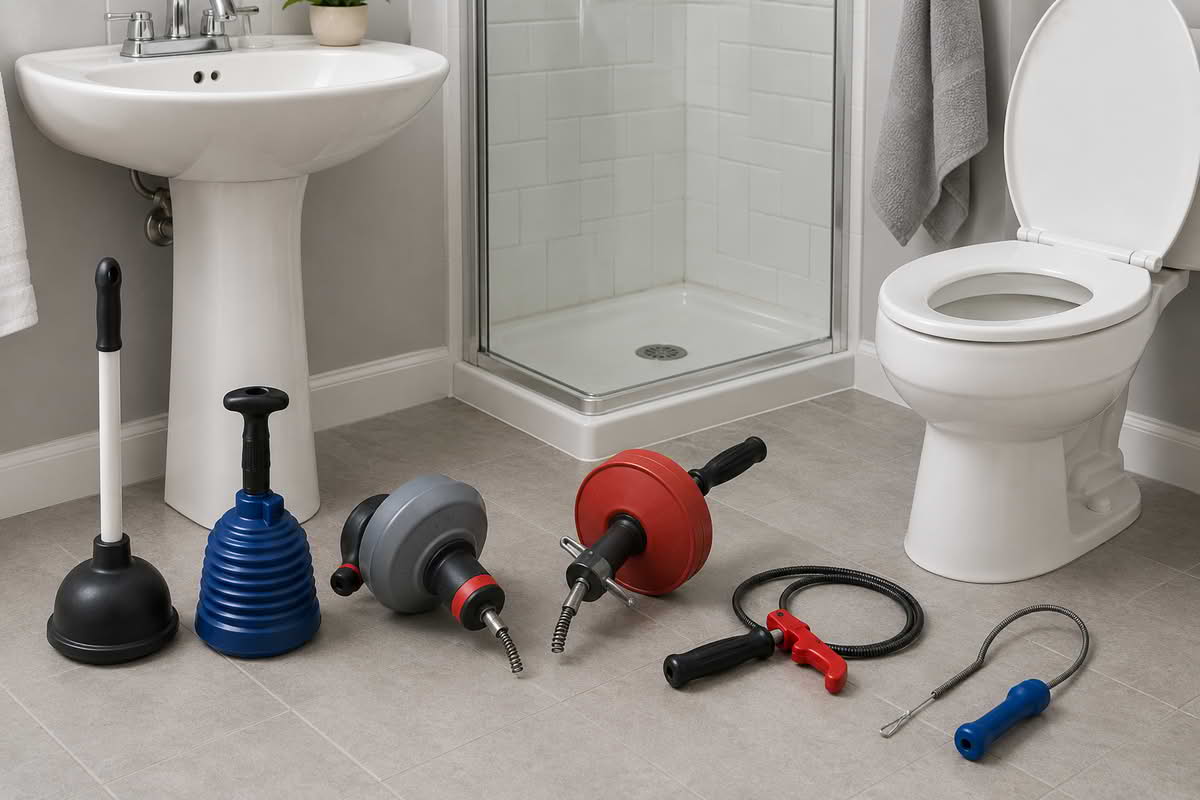
Drain clearing tools are easy to underestimate until a sink backs up, a shower drains slowly, or a toilet clog resists a quick plunge. The wrong tool can make the job messier, damage a fixture, or simply fail because it was designed for a different kind of blockage. A good choice starts with the fixture, the likely clog location, and how much force or reach the task actually requires. This guide focuses on practical home-use tools such as toilet plungers, sink plungers, drain snakes, and toilet augers, with attention to seal quality, cable behavior, storage, cleanup, and the difference between light maintenance and more stubborn clogs.
Match the Tool to the Fixture
The most common drain-clearing mistake is treating every clog as the same problem. Toilets, bathroom sinks, kitchen sinks, showers, tubs, and utility drains may all back up, but the tools that work well on one fixture can be awkward or risky on another. A toilet plunger, for example, is usually shaped to form a seal inside a toilet bowl opening. A flat cup plunger is better suited to flat surfaces such as sinks and tubs. A small hair-removal tool may help with a shallow shower clog but will not reach a deeper blockage. A toilet auger is designed to travel through a toilet trap while helping reduce the chance of scratching visible porcelain when used correctly.
A practical drain-clearing setup should not be built around one all-purpose tool. It should be built around a few predictable fixture categories. Toilets need tools that create a strong seal and direct pressure through the trapway. Sinks and tubs need tools that sit flat over the drain opening or reach shallow clogs near the stopper. Longer snakes and hand augers are better for clogs that sit beyond the immediate drain opening, but they require more control and more careful handling.
For toilets, prioritize flange plungers and toilet augers rather than flat sink plungers.
For bathroom sinks and tubs, a cup plunger or short drain snake is often more appropriate.
For shower hair clogs, a simple retrieval tool may be more useful than a heavy auger.
For kitchen sinks, consider whether the clog may be affected by grease, disposer use, or trap configuration.
The goal is not to own the most aggressive tool first. The better goal is to own the least risky tool that can reasonably handle the fixtures in the home. A compact apartment with one bathroom may need a different setup than a house with multiple bathrooms, a laundry sink, and a kitchen disposer. Choosing by fixture type keeps the decision grounded in actual use rather than tool size alone.
Drain clearing tools should be matched to the fixture first, because seal shape, cable reach, and safe handling vary by drain type.
Understand Reach, Force, and Control
Drain-clearing tools differ mainly in how they apply force. A plunger uses water pressure and seal quality. A short plastic or barbed tool retrieves material near the surface. A drain snake uses cable reach and rotation. A toilet auger combines a guided cable with a shape meant for toilet traps. These differences matter because more force is not always better. A tool that reaches farther can also get stuck, kink, scratch a surface, or push material deeper if it is used without patience.
For plungers, seal quality is more important than handle length or dramatic marketing claims. A plunger that cannot seal against the fixture wastes effort and splashes water without moving the clog. Toilet plungers usually need a flange or extended shape that helps seat into the bowl opening. Sink plungers need a flat cup that can seal against a relatively flat basin surface. Some collapsible designs save storage space but may feel less stable under repeated pressure. Rigid designs can feel more controlled, but they take up more room and may require a dedicated storage spot.
For snakes and augers, the key variables are cable length, cable stiffness, handle control, and the type of end used to break up or retrieve material. A very flexible cable may bend around tight curves but feel harder to steer. A stiffer cable may transmit force better but can be less forgiving in delicate fixture paths. Longer tools are useful only when the clog is actually deeper in the line. If the blockage is near a stopper, strainer, or trap, a short tool can be easier to clean and less likely to create a bigger mess.
Short reach works well for visible hair and shallow buildup near strainers or stoppers.
Medium reach is useful for many sink, tub, and shower clogs beyond the immediate opening.
Toilet augers are more specialized and should not be treated as general sink snakes.
High-force tools require more restraint, especially around older fixtures or unknown pipe conditions.
The better buying question is not “Which tool is strongest?” but “How much reach and force can I control safely?” A homeowner who only needs to clear occasional bathroom sink hair may be better served by a simple retrieval tool and a small sink plunger. A household with recurring toilet clogs may benefit from a quality flange plunger and a toilet auger. A home with older plumbing should be especially careful about aggressive tools, because the cost of damaging a fixture or pipe can outweigh the convenience of clearing a clog quickly.
Storage, Cleanup, and Misuse Risks
Drain-clearing tools are not just used; they also have to be stored and cleaned. This is where many purchases become frustrating. A toilet plunger without a caddy may work well but create an unpleasant storage problem. A snake with an exposed cable may be effective but messy to coil and wipe down. A compact tool may be easier to store but less comfortable during repeated use. These ownership details matter because drain-clearing tools often sit unused for long periods, then need to work quickly during an inconvenient moment.
For bathrooms, storage is part of the decision. A plunger-and-caddy setup can make sense when the tool will stay near the toilet, especially in a guest bathroom or shared bathroom where appearance and containment matter. The tradeoff is that some caddy sets prioritize neat storage over plunging performance. If the plunger head is too small, too stiff, or poorly shaped for the bowl, the caddy will not make the tool more effective. For utility storage, performance may matter more than appearance, and a larger or less decorative tool may be acceptable.
Cleanup also affects which tools are realistic for a household. A simple cup plunger can be rinsed and stored with minimal fuss. A toilet auger may need more careful cleaning after use. Drain snakes can hold debris along the cable and may require gloves, towels, and a place to coil the tool without contaminating nearby surfaces. This does not make them bad choices, but it does mean they should be bought with the full task in mind, not just the moment of clearing the drain.
Choose caddy storage when the tool will live in a visible or shared bathroom.
Choose simpler tools when cleanup convenience matters more than deep reach.
Use toilet-specific tools for toilets rather than forcing sink tools into the wrong fixture.
Keep gloves and cleanup supplies near more aggressive drain-clearing tools.
Misuse is another practical concern. A plunger used after harsh chemicals can splash unsafe liquid. A snake forced through the wrong fixture can scratch surfaces or become difficult to retrieve. A tool pushed too aggressively may move a clog farther down the line instead of removing it. The right purchase should make proper use easier, not just promise stronger results. Clear tool boundaries help prevent a small clog from becoming a larger plumbing problem.
Final Recommendations — Choosing a Practical Drain Clearing Setup
A sensible drain-clearing setup starts with the fixtures in the home and the type of clog most likely to occur. Most households do not need every tool at once. They need a small, logical set that covers common toilet, sink, tub, and shower problems without encouraging risky overuse. For many homes, that means separating toilet tools from sink and shower tools, then adding more reach only when the use case justifies it.
Choose a flange-style toilet plunger for toilet clogs instead of relying on a flat sink plunger.
Choose a cup plunger or shallow retrieval tool for sinks, tubs, and shower drains.
Choose a drain snake when the clog is likely beyond the visible drain opening.
Choose a toilet auger only when toilet clogs require more reach than plunging can provide.
The lowest-regret choice is usually not the most aggressive tool. It is the tool that fits the fixture, gives enough reach without sacrificing control, and can be cleaned and stored in a way the household will actually tolerate. Drain clearing is a practical maintenance task, so the buying decision should favor safe fit, repeatable handling, and clear use boundaries over broad claims or one-tool-for-everything thinking.