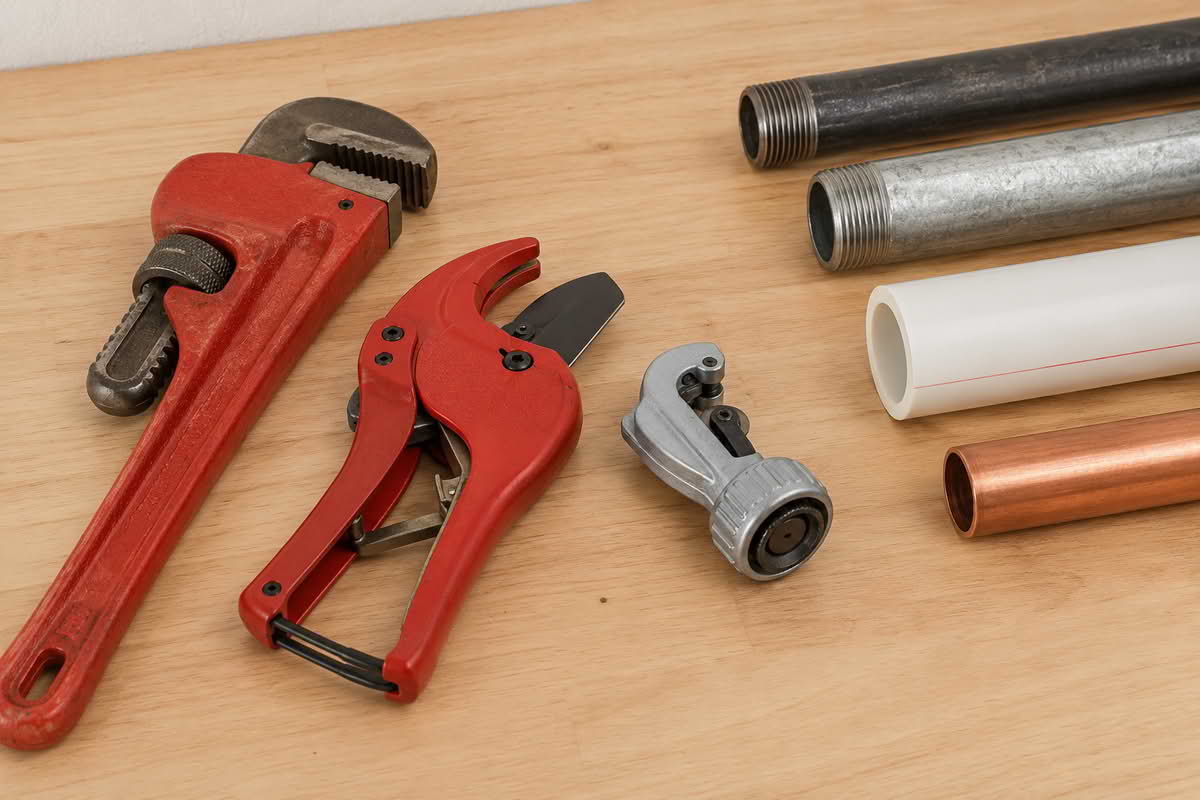
Pipe Cutting and Gripping Tool Buying Guide for DIY Plumbing
Pipe cutting and gripping tools are easy to group together as basic plumbing tools, but they solve very different problems. A pipe wrench is meant to hold or turn round material with force. A tubing cutter is meant to create a clean, controlled cut. A PVC cutter is meant to slice plastic pipe quickly without leaving a ragged edge. Choosing poorly can lead to crushed pipe, uneven cuts, damaged fittings, or a tool that technically works but is awkward in the space where the job actually happens. This guide focuses on pipe material, working clearance, leverage, cut quality, jaw behavior, and the difference between occasional home use and repeated plumbing projects.
Separate Cutting From Gripping
A useful pipe-tool setup begins by separating two jobs that often get mixed together: cutting pipe and gripping pipe. Cutting tools are judged by cut quality, material compatibility, blade or wheel control, and how much finishing work they leave behind. Gripping tools are judged by jaw strength, bite, adjustment range, leverage, and whether they can hold round material without slipping. A tool that grips aggressively is not a cutting tool, and a cutter that makes a clean edge is not meant to break loose stubborn threaded fittings.
This distinction matters because plumbing mistakes often happen when one tool is forced into the wrong role. A pipe wrench can bite into metal pipe, but it can also mar finished surfaces and crush softer material if used carelessly. Adjustable pliers can grip some fittings, but they may slip or round edges when the jaw fit is poor. A hacksaw can cut many materials, but it may leave a rougher edge than a dedicated tubing cutter or PVC cutter. The correct tool reduces the amount of force and cleanup required after the cut or adjustment.
Pipe wrenches are strongest when the job involves gripping round metal pipe or turning fittings where surface marking is acceptable. They are not delicate finish tools. Compact pipe wrenches are useful where space is limited, while larger models provide more leverage for stubborn connections. For many homeowners, one moderate-size pipe wrench and one compact gripping tool may be more practical than a full range of heavy wrenches that rarely leave the toolbox.
Use cutting tools when the task requires a clean pipe end for joining, fitting, or replacement.
Use gripping tools when the task requires holding, turning, or counterholding round pipe or fittings.
Avoid using aggressive pipe jaws on finished fixtures or soft materials unless surface damage is acceptable.
Plan for deburring, cleanup, or edge preparation after many pipe cuts.
The best tool choice depends less on the name of the plumbing task and more on the physical action required. Replacing a short section of PVC drain pipe may require cutting, measuring, and dry fitting. Loosening an old threaded metal connection may require counterholding and torque. Trimming copper tubing under a sink may require a small cutter that can rotate in tight clearance. Treating these as separate actions leads to better purchases and fewer improvised workarounds.
Pipe tools should be chosen by the action required: gripping and turning, clean cutting, or working in limited clearance around specific pipe materials.
Match the Tool to Pipe Material
Pipe material changes the buying decision. Plastic drain pipe, PVC supply-related components, copper tubing, steel pipe, and flexible connectors respond differently to force. A tool that works well on one material may damage another. PVC cutters are useful because they can make quick, square cuts in plastic pipe when sized correctly, but they are not meant for metal. Tubing cutters are often chosen for copper or similar tubing because they score and cut with controlled rotation. Pipe wrenches are commonly associated with metal pipe because their teeth are designed to bite into round surfaces.
For plastic pipe, cut quality and blade behavior matter. A ratcheting PVC cutter can be fast and convenient, but it needs enough jaw capacity for the pipe size and enough blade sharpness to avoid crushing the pipe. Cheaper cutters may be acceptable for occasional small cuts, but they can flex, leave angled cuts, or require more hand force. A cleaner cut makes fitting and sealing easier, especially when pipe ends need to seat fully inside couplings or adapters.
For copper tubing, a tubing cutter is usually more controlled than a general saw because it can rotate around the tube and gradually tighten the cutting wheel. The tradeoff is clearance. A standard-size tubing cutter may not rotate around a pipe that sits close to a wall, cabinet, or framing member. A compact tubing cutter can solve tight-space problems but may be slower or limited to certain diameters. The decision should account for where the cut will happen, not just what material is being cut.
For metal pipe and threaded fittings, gripping strength becomes more important. Pipe wrenches use angled jaws and leverage to bite under load. This can be useful on stubborn threaded connections, but it can also leave marks and may be inappropriate for decorative or finished parts. Two-wrench technique may be needed in some situations: one tool turns the fitting while another counterholds the pipe or adjoining fitting to reduce stress on the rest of the assembly.
Choose PVC cutters for plastic pipe when quick, square cuts are more important than broad material versatility.
Choose tubing cutters for copper or similar tubing when a clean, controlled cut is needed.
Choose compact cutters when there is not enough room for a full-size tool to rotate.
Choose pipe wrenches for round metal pipe where jaw marks are acceptable and torque is needed.
Material mismatch is one of the easiest ways to create extra work. A rough cut can require additional cleanup before assembly. A crushed plastic pipe may need to be recut. A marked fitting may look careless in a visible area. A slipped wrench can damage surrounding parts or injure hands in a cramped space. Matching the tool to the material is not a formality; it directly affects whether the repair or installation feels controlled.
Think About Clearance, Leverage, and Control
Plumbing work often happens in places where tools do not have ideal room to move. Under sinks, inside vanities, near walls, around water heaters, and behind appliances, clearance can be more important than tool size. A longer handle gives more leverage, but it also needs room to swing. A larger cutter may feel stronger but may not rotate around pipe in a tight corner. A compact tool may fit into the space but require more patience or hand strength.
Leverage is helpful only when it remains controlled. A large pipe wrench can apply significant force, which is useful for stubborn metal connections but risky when the pipe is old, poorly supported, or connected to fragile surrounding components. Smaller wrenches reduce leverage but may give better feel. Adjustable pliers and compact wrenches can be useful for general support tasks, but they should not be treated as substitutes for every pipe-gripping job. The tool should allow the user to apply force gradually and keep the jaw seated.
Cutters also require control. A tubing cutter needs to stay square to the pipe while the wheel advances gradually. Tightening too quickly can deform tubing or create a rougher cut. A PVC cutter needs the pipe seated properly in the jaws so the blade does not walk or angle. A saw requires a steady line and usually more cleanup. Buyers often focus on whether a tool can cut the material, but a cleaner question is whether it can cut the material in the space where the pipe is installed.
Check handle swing before choosing a long wrench for under-sink or near-wall work.
Choose compact cutters when pipe is close to walls, framing, cabinets, or other obstructions.
Use larger pipe wrenches only when the pipe and connection can handle the leverage.
Consider whether the tool helps keep the cut square and the grip stable under pressure.
Storage and future use also belong in the decision. A homeowner who occasionally cuts plastic drain pipe may value a simple PVC cutter that stores easily. Someone who expects repeated work with copper tubing may prefer a more precise tubing cutter and a compact backup for tight spaces. A household that only needs emergency grip on stubborn plumbing parts may not need a full wrench set. The right tool group should be useful enough to keep, but not so specialized that it becomes clutter after one project.
Final Recommendations — Choosing Pipe Tools by Material and Access
A practical pipe cutting and gripping setup should be built around the materials in the home and the spaces where the work will happen. For many DIY users, the highest-value choices are not the largest tools, but the tools that make common cuts and grips predictable. Clean cutting, stable jaw engagement, and controlled leverage matter more than owning every size or style.
Choose PVC cutters for clean plastic pipe cuts when the pipe size is within the tool’s capacity.
Choose tubing cutters for copper or similar tubing when cut quality and control matter.
Choose compact pipe wrenches when access is limited and moderate gripping force is enough.
Choose larger pipe wrenches only when leverage is needed and surface marking is acceptable.
The lowest-regret approach is to avoid treating pipe tools as interchangeable. Cutting tools should make the pipe end cleaner and easier to fit. Gripping tools should hold or turn pipe without uncontrolled slipping. When the tool matches the material, the clearance, and the amount of force required, small plumbing projects become more predictable and less dependent on improvised fixes.