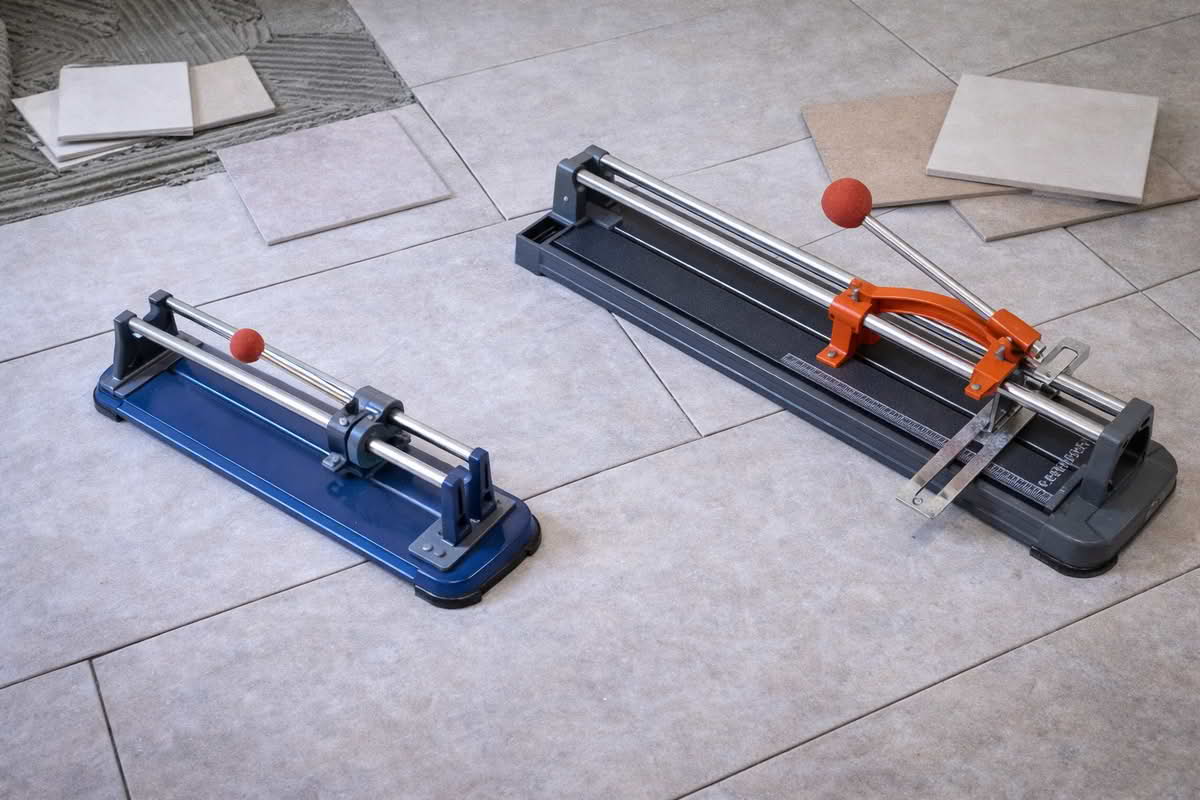
Tile Cutter Buying Guide for Ceramic, Porcelain, and Everyday Tile Projects
Tile cutters look straightforward until the first chipped edge, failed snap, or awkward large-format cut turns the project from orderly to frustrating. Many buyers assume the main question is whether the cutter is “heavy duty” enough, but that misses what matters in practice. Ceramic and porcelain do not behave the same way. Straight scoring cuts are very different from repetitive rip cuts, long plank-style cuts, or edge pieces that have to stay neat because they will be visible after grouting. A cutter that feels fine on a few soft wall tiles can become unreliable on denser floor tile or oversized formats. At the same time, buying a large and expensive tool for a modest backsplash can create more bulk and complexity than the job actually needs. The right tile cutter is the one that matches the tile material, the style of cuts, and the pace of the installation rather than the one with the biggest frame or the loudest marketing claims. This guide breaks down what really matters so you can choose a cutter that keeps the work accurate, repeatable, and lower-stress.
Tile Material and Cutting Demands
The first tile cutter decision is not brand. It is what kind of tile the tool needs to score and snap consistently. That matters because different tile materials resist the cutter in different ways. A tool that handles softer ceramic comfortably may struggle on denser porcelain, and a cutter that seems powerful enough in the aisle may still produce rough breaks if the tile body is harder or less forgiving than expected.
Ceramic tile is often the easiest place for manual cutters to succeed. It usually scores more predictably, snaps more cleanly, and places fewer demands on the cutter’s rail rigidity and breaker pressure. For many backsplash, wall tile, laundry room, and lighter-duty projects, this is why a more modest manual cutter can make sense. The work does not always require the heaviest frame or the longest bed. What it requires is repeatable scoring and a snap action that does not wander off the cut line.
Porcelain changes the equation. Denser porcelain tile usually asks more of the cutter because the score line needs to be consistent and the frame needs to stay rigid while more force is applied. A weak or flex-prone cutter can make porcelain work feel random even when the tile mark is accurate. This is where “good enough” tools often reveal their limitations. Instead of a clean break, the user gets edge chipping, partial snaps, or a tile that breaks away from the score line near the end of the cut.
Large-format and plank-style tiles complicate things further because the issue is no longer only strength. It is also control across distance. A longer tile magnifies small inaccuracies. Even a slight rail inconsistency, fence alignment problem, or wobble during scoring can become more obvious over a long cut. That means a tool chosen for larger tiles needs not only capacity on paper, but also the structural calm to keep the score line straight from one end to the other.
This is one reason buyers often confuse tool power with tool suitability. A tile cutter is not a demolition tool. It is a finish tool for repeated scoring and controlled snapping. If the tile is very hard, textured in a way that complicates scoring, or part of a layout that demands specialty cuts, the issue is not that the cutter must simply be stronger. It may be that a manual cutter is only part of the cutting solution rather than the whole one.
Choose more modest manual cutters for lighter ceramic projects where scoring is relatively forgiving.
Choose sturdier cutters for porcelain because frame rigidity and clean snap pressure matter more.
Choose longer-capacity tools for plank and large-format layouts only if they stay stable across the full cut path.
Judge the cutter by material behavior, not just by whether the box says it handles “all tile.”
Another practical issue is finish exposure. If most cut edges will be hidden at walls or under trim, minor roughness may be manageable. If many cuts will be visible at transitions, edges, or exposed layout features, the tolerance for chipping becomes much lower. In that situation, cutter quality matters more because the installation standard becomes more exacting.
Low-regret buying in this category starts with an honest assessment of the tile itself. The right cutter is the one that matches the material’s difficulty and the finish expectations of the room, not just the most affordable tool that appears to cover the nominal tile size.
Cutter Size, Capacity, and Layout
Once the tile material is clear, the next decision is whether the cutter’s size and layout support the actual project. This is where many purchases go wrong. Buyers often focus on maximum tile length because it is easy to compare, but usable capacity is not the same as real-world workflow. A cutter can technically accept a tile and still feel awkward, under-supported, or frustrating once repeated cuts begin.
Compact tile cutters are attractive for understandable reasons. They are easier to carry, easier to store, and often feel more approachable for smaller spaces such as powder rooms, backsplashes, hearth surrounds, or patch repairs. They also make sense when most cuts are short and repetitive rather than long and full-length. The tradeoff is that they become limiting quickly if the layout changes, the tiles are longer than expected, or the project includes rip cuts on larger pieces that need more bed support.
Standard manual tile cutters often offer the best middle ground for many DIY users because they can handle a broad range of ceramic and some porcelain work without becoming oversized. This size range is often the most practical if the job includes a mix of full tiles, trimmed edge pieces, and ordinary room geometry. It supports the installation without dominating the workspace. For many households, that balance matters because tiling is rarely the only activity happening in the room.
Large-format tile cutters make more sense when the project truly centers on longer tiles, wide floor spans, or layouts where repeated long cuts are unavoidable. Their main advantage is not simply that they fit larger tile. It is that they support the tile better during scoring and snapping, which improves repeatability. The tradeoff is bulk. A longer tool needs more staging space, more stable setup, and a stronger reason to justify the footprint. For small projects, that can feel excessive.
Fence design and measurement support matter as much as raw capacity. A cutter with a useful guide, a repeatable stop, and clear alignment behavior helps the user make the same cut accurately multiple times. This becomes especially important with floor layouts where a series of perimeter cuts or repeated widths needs to stay consistent. A tool that feels fast but requires constant re-measuring and hesitation can quietly slow the project more than its larger capacity helps.
Bed support is another overlooked detail. Longer or heavier tiles need support near the score line so the cut does not feel unstable. When the tile rocks, droops, or twists slightly during the process, the snap result becomes less reliable. This is why a cutter chosen only by stated tile length can still disappoint. True usability depends on how the tool supports the tile during the cut, not just whether the tile physically fits.
Tile cutter size matters less as a spec sheet number than as a workflow question: the tool needs to support the tile cleanly through marking, scoring, and snapping without feeling unstable.
Choose compact cutters for smaller tile and smaller projects where storage and maneuverability matter.
Choose mid-size cutters for the broadest mix of ordinary wall and floor tile work.
Choose large-format cutters only when longer tiles and repeated extended cuts are central to the job.
Prioritize fence alignment, repeatability, and bed support rather than comparing maximum length alone.
A useful question is whether the project is layout-limited or tool-limited. If the room requires repeated long cuts, the tool must support that reality. If the job is mostly small wall tile and occasional trimming, oversized capacity can become unnecessary clutter. The right cutter should make the dominant cut style easier, not simply expand the most extreme possible scenario.
In long-term ownership, the most satisfying cutters are usually the ones that fit the most common tile work you are likely to do rather than the single largest tile you might install once. That mindset often leads to better value and less storage regret.
Precision, Workflow, and When a Cutter Is Not Enough
Tile cutters should also be judged by how they fit into the rest of the installation process. A cutter is not only a cutting device. It shapes the pace of the layout, the confidence of repeated measurements, and the amount of cleanup and correction needed once the tiles start going down. This is why cutter selection is partly about workflow, not just about whether a tool can produce a nominal straight cut.
Precision matters because tile work is cumulative. A slightly rough or wandering cut on one perimeter piece may be manageable. Repeated small inaccuracies across a room or wall can affect joint consistency, visual alignment, and how much trimming has to be disguised near edges. A good tile cutter helps keep the installation calm. The user scores once, snaps predictably, and moves on. A poor cutter interrupts that rhythm with recuts, hesitant pressure, and uncertainty about whether the next break will stay on line.
Handle feel and scoring action matter more than they first appear. The best cutter is usually one that lets the user apply deliberate pressure without guessing how hard to push. A scoring wheel that travels smoothly and a breaker mechanism that feels controlled reduce the temptation to overcompensate. That matters because many bad cuts come from trying to force certainty out of a tool that does not feel trustworthy. Better tools do not simply cut tile better. They reduce panic pressure.
Workflow also includes dust and room disruption. Manual cutters remain attractive partly because they are quieter and cleaner than saw-based alternatives. That can be a real advantage in occupied homes, smaller remodel projects, and installations where repeated indoor cuts need to happen without creating heavy wet saw setup or dust management burdens. But that advantage only matters when the cuts themselves fall within the manual cutter’s strengths. A clean manual process is not actually efficient if it leads to breakage, hesitation, or repeated secondary finishing work.
This is where the idea of a wet tile saw alternative needs to be framed carefully. A manual cutter can reduce the need for a saw in many straight-cut ceramic and porcelain jobs, especially when most cuts are repetitive and exposed edges are limited. But it does not make saws obsolete. If the layout needs intricate corner notches, repeated narrow slivers, difficult edge refinements, or material types that do not snap reliably, a manual cutter may stop being the right primary tool. The problem is not user skill alone. It is that the cut demand has changed.
Another practical issue is breakage cost. On inexpensive tile, a few failed cuts are mainly annoying. On denser porcelain, larger-format pieces, or more expensive finish tile, failed cuts cost more than time. They can affect layout sequencing and material count. That makes cutter reliability worth more in projects where tile replacement is expensive, matching is limited, or the work pace depends on getting repeated pieces right without waste.
Prioritize smooth scoring and predictable snap control when finish quality and layout consistency matter.
Value manual cutters for quieter, cleaner workflow only when the project truly suits straight scoring cuts.
Be realistic about when a saw or other cutting method is still necessary for specialized tile shapes and harder materials.
Give more weight to reliability when tile cost or breakage risk makes failed cuts especially frustrating.
One helpful decision frame is to ask whether the cutter will be doing production work or rescue work. Production work means repeated straight cuts with consistent results. Rescue work means trying to make a manual cutter handle edge cases it was never really meant to solve. The right purchase is the one that keeps most of the project in the production category.
The long-term low-regret choice in this category is usually the cutter that handles the majority of the tile layout calmly and accurately while leaving room for other tools where specialty cuts demand them. That balance matters more than chasing either the smallest budget tool or the largest-capacity frame without regard to the actual installation workflow.
Final Recommendations — choosing the tile cutter that matches the tile and the layout
For most households, the safest approach is to choose a tile cutter by tile material, cut repetition, and project scale rather than by maximum spec alone. Compact cutters make sense for smaller ceramic jobs and limited workspace. Mid-size manual cutters usually offer the best balance for many ordinary wall and floor projects. Larger and more rigid cutters make more sense when porcelain density or large-format layout places greater demands on support and snap control. The key is to buy for the cuts you will make repeatedly, not the most extreme cut the tool might handle once.
Choose compact cutters for smaller ceramic projects where portability and storage matter more than maximum capacity.
Choose sturdier mid-size cutters for the broadest mix of common ceramic and porcelain work.
Choose large-format cutters only when longer tile and repeated extended cuts are central to the installation.
Judge every cutter by scoring consistency, support, and workflow calm rather than by size claims alone.
The long-term low-regret decision in this category is to treat the tile cutter as a layout tool, not just a cutting accessory. When the cutter matches the tile body, the room geometry, and the dominant cut style, the installation feels more controlled and less wasteful. That is what makes a tile cutter worth buying: not that it can technically cut tile, but that it helps the project stay accurate from the first score line to the final edge piece.