Laminate and Vinyl Flooring Tool Buying Guide for Cleaner Installs and Better-Fitting Floors
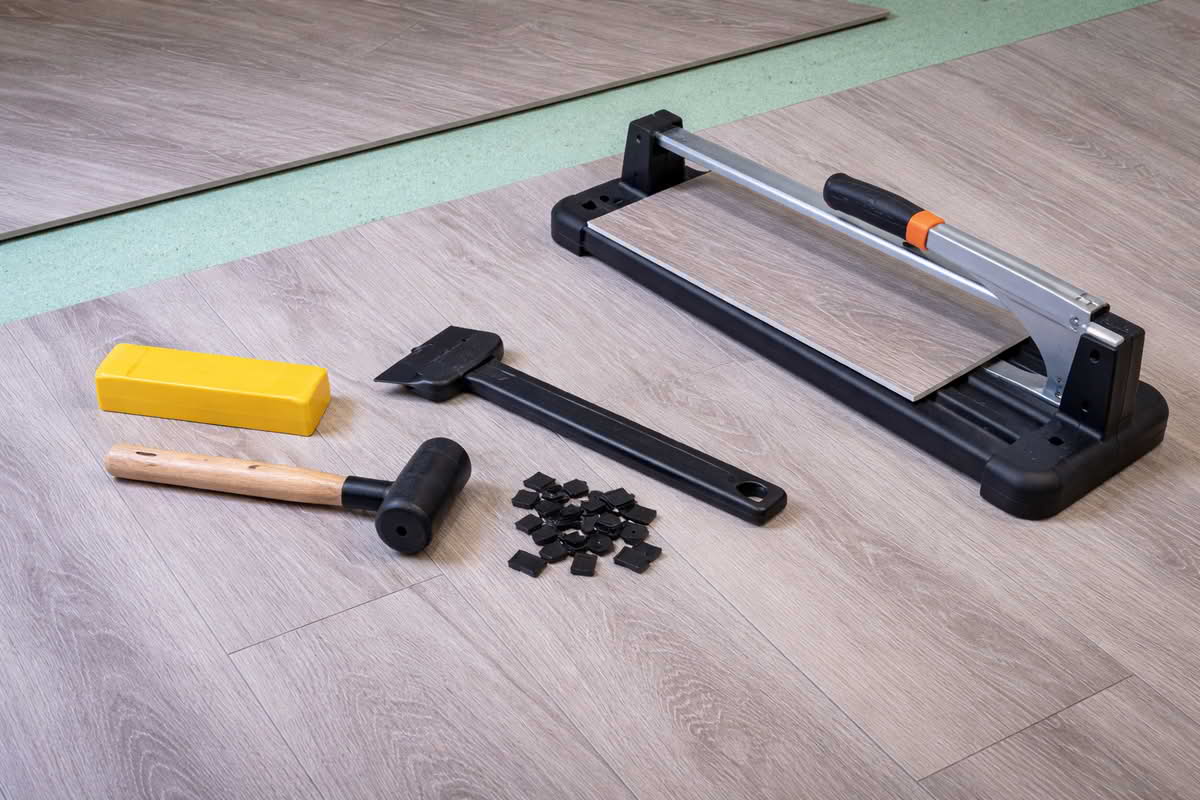
Laminate and vinyl plank flooring often gets marketed as simple click-together installation, which leads many people to underestimate how much the right tools affect the final fit. A floor can technically go down without a purpose-built tool set, but that often means rougher cuts, damaged locking edges, wider-than-expected perimeter gaps, or a project pace that feels slow and improvised. The wrong tapping block can chip plank edges. A poor pull bar can make end-row work frustrating. A cutter that seems convenient may save dust but limit the kinds of cuts the room actually demands. These are not dramatic mistakes, but they accumulate across a full floor and show up later as joints that do not sit cleanly, trim details that look rushed, or planks that were forced into place rather than installed calmly. The right flooring tools should reduce those common problems, not simply add more gear to the room. This guide explains how to choose laminate and vinyl flooring tools based on cut type, plank material, room layout, and installation workflow so the floor fits more cleanly and goes together with less unnecessary struggle.
Which Flooring Problems the Tools Need to Solve
The first flooring tool decision is not whether to buy a full installation kit. It is understanding what the tools actually need to prevent. Most laminate and vinyl plank projects run into a similar set of problems: inaccurate cuts, damaged locking edges, difficult last-row fitting, and awkward transitions around walls, door frames, and trim. The best tool choices are the ones that directly reduce those risks for the type of room and plank you are installing.
Cutting is one major category, but it is not only about getting the plank shorter. Flooring cuts need to stay clean enough that visible edges, end joints, and trim-adjacent pieces fit without splintering or ragged edges. Laminate tends to be less forgiving here because the surface layer and locking system can chip if the tool or technique is crude. Vinyl flooring is often easier to trim in some situations, but it still benefits from controlled cutting when the room includes repeated narrow pieces, vent openings, or finish-sensitive perimeter work.
Fitting is the second big category. A floor rarely fails because the first few center planks clicked together badly. The trouble usually arrives at the edges of the room, under doorway pressure, or in the last rows where direct access is limited. This is where tapping blocks, pull bars, and similar installation aids become more useful than many first-time installers expect. They are not luxury items. They help transfer force into the joint without damaging the plank face or locking profile.
Edge protection matters because click-lock flooring depends on intact connection geometry. When planks are struck too directly, levered awkwardly, or forced into place with the wrong contact point, the floor may still look installed but be more vulnerable to gap formation or poor seating later. This is why a flooring tool should be judged not just by whether it helps the piece move, but by whether it helps the piece move without damage.
The room layout also changes the problem. An open rectangular room with minimal obstructions rewards speed and repetition. A smaller room with closets, door casings, vents, and multiple transitions rewards more precise cutting and more adaptable fitting tools. The right purchase depends partly on whether the project is mostly production work or mostly detail work. Many flooring jobs are a mixture, but one side usually dominates.
Choose tools based on whether the floor is more likely to fail from bad cuts, bad joint seating, or awkward room-edge fitting.
Give extra weight to cut quality for laminate because surface and edge damage show up quickly.
Give extra weight to fitting tools when the room includes tight walls, doorways, and hard-to-reach final rows.
Judge tools by how well they protect the plank locking system, not just by whether they move the material into place.
A helpful mindset is to think of flooring tools as joint-protection and fit-control tools rather than as simple accessories. That shifts attention toward what really matters in installation: clean cuts, intact locking edges, and enough leverage to seat planks without forcing them carelessly.
Low-regret buying in this category starts by identifying whether the room’s main difficulty is cutting complexity or fitting complexity. Once that is clear, the useful tool set becomes much easier to define.
Cutting Tools, Fitting Tools, and Installation Kits
Once the main installation risks are clearer, the next step is choosing the tools that actually support the work. In this category, the biggest groups are cutters, fitting tools, and bundled installation kits. Each one solves a different part of the project, and problems usually arise when buyers assume one tool category can compensate for weaknesses in another.
Laminate cutters are appealing because they reduce dust, reduce noise, and make repeated crosscuts feel fast and controlled. For projects with lots of simple repetitive cuts, that can be a real advantage. A good cutter can keep the workflow moving and reduce the need to stage larger cutting equipment indoors. The tradeoff is that not every room is dominated by straight repetitive cuts. If the project includes many irregular shapes, narrow rip cuts, or complex trim details, a cutter may be helpful without being sufficient by itself.
Vinyl flooring tools often center less on heavy-duty cutting and more on clean trimming, fit adjustment, and edge handling. Depending on the product format, vinyl may not need the same kind of cutting force that laminate does, but it still rewards tools that keep measurements precise and edges neat. This is especially true where visible transitions, perimeter lines, and staggered end joints need to look intentional rather than roughly hand-fit.
Tapping block kits matter because they help seat planks without damaging the edge that actually carries the locking action. A poorly shaped or low-quality block can slip, bruise the plank edge, or concentrate force where it should not. A good tapping block spreads impact appropriately and helps the installer keep pressure where the joint is meant to close. This becomes more important with repeated rows, where even small edge damage can affect how smoothly later pieces connect.
Pull bars become especially useful at walls, in the final row, and near doorways where a tapping block cannot be positioned well. This is one of those tools that seems secondary until the project reaches the room edges. Then it often becomes the only practical way to draw a plank tight without prying against the wrong surface or striking the material awkwardly. In that sense, pull bars are not just convenience tools. They are edge-case tools for the part of the installation where mistakes are easiest to make.
Flooring installation kits often combine tapping blocks, pull bars, spacers, and sometimes additional minor accessories. These kits can be worthwhile when the core items are well made and actually aligned with the flooring type being installed. But they should be judged like working sets, not gift bundles. A good kit supports the real fitting tasks. A poor one simply provides a lot of pieces while leaving the most important contact tools feeling crude.
Flooring tools matter most when they protect the plank edges, support cleaner cuts, and make final-row fitting more controlled rather than more forceful.
Choose laminate cutters when the project includes many repeatable straight cuts and cleaner low-dust workflow matters.
Choose fitting tools that protect click-lock edges instead of improvising with harder or poorly shaped contact surfaces.
Choose pull bars for final rows and wall-adjacent work where direct tapping access disappears.
Judge installation kits by the quality of the block, pull bar, and spacing tools rather than by how many accessories are included.
A useful way to frame the decision is to ask whether the project is cut-heavy, fit-heavy, or balanced. Cut-heavy rooms reward better cutting tools. Fit-heavy rooms reward stronger installation kits and edge-protection tools. Balanced projects often benefit from a modest but coherent combination of both.
In long-term ownership, the most useful flooring tools are usually the ones that improve repeat steps rather than the ones that solve only one rare awkward moment. That is why good tapping tools and a sensible cutter often matter more than novelty accessories.
Workflow, Room Layout, and Low-Regret Tool Selection
Laminate and vinyl flooring tools should also be judged by how they fit the pace and rhythm of the installation. Flooring is repetitive work, and repetition changes which tools matter most. A cutter that is only slightly awkward becomes annoying after dozens of planks. A pull bar that feels marginal at first becomes essential when the room reaches its last rows. The right purchase supports not just isolated tasks, but the actual sequence of the project.
Workflow matters because flooring installations rarely happen in perfectly open, empty spaces. Furniture may be shifted nearby, door frames interrupt the run, baseboards or shoe molding influence fit, and the room itself may force the installer to work in sections. Tools that reduce staging bulk and improve movement through the room can matter more than raw capability on paper. This is one reason manual laminate cutters and compact fitting kits remain attractive for DIY work. They often keep the project calmer and less cluttered.
Room shape deserves more attention than it usually gets. In a simple rectangular room, the installation tool burden is lower because the cuts and fitting rhythm become more predictable. In rooms with angled walls, closets, multiple doors, built-ins, or open transitions into adjacent spaces, the number of partial planks and awkward finishes rises quickly. This changes the tool value equation. A project like that rewards tools that help with detail work and controlled final positioning rather than just speed across open runs.
Another important consideration is physical effort. Flooring installs involve kneeling, repeated lifting, striking, aligning, and measuring. A tool that reduces physical strain without increasing error becomes more valuable as the project lengthens. Pull bars and tapping blocks that fit the planks well are not only there to protect the material. They reduce the amount of awkward body positioning and improvised force needed to close joints at the room perimeter. That has a direct effect on finish quality because tired installers are more likely to rush the last sections.
Storage and reuse also matter. Flooring tools are often bought for a particular room, but many of them remain useful for future repairs, closet floors, laundry rooms, or another phase of the house. A small, dependable installation kit or a sensible cutter can keep paying back over time. Oversized or awkward specialty tools often do not. Low-regret buying therefore depends partly on whether the tool will be practical enough to remember, store, and actually use again.
There is also a common buying mistake in this category: assuming that if the flooring is marketed as beginner-friendly, specialized tools are optional. Some are optional. But the tools that prevent edge damage and improve final-row fit usually are not optional in any meaningful sense. They may not be glamorous, yet they are often what separates a floor that merely stays together from one that looks cleanly installed.
Choose tools that support the repeated steps of the room, not just the single hardest cut or tightest corner.
Give more weight to fitting tools in irregular rooms where edges and transitions drive the difficulty.
Value tools that reduce awkward force and body strain because fatigue affects final-row quality quickly.
Think about storage and reuse so the tool set remains practical beyond one flooring project.
A helpful decision frame is to ask whether the room will reward speed or control more. Open rooms reward fast repeatable cutting and fitting. Irregular rooms reward precise edge work and adaptable installation tools. Most projects contain both, but one usually dominates. Matching the tools to that dominant mode leads to better value and a calmer install.
The long-term low-regret decision in this category is usually the one that makes the project easier to repeat correctly, not just easier to start. When the tools support clean cuts, protected joints, and controlled perimeter fitting, the flooring install feels more deliberate and much less dependent on improvisation.
Final Recommendations — choosing flooring tools that reduce damage and improve fit
For most households, the safest approach is to choose laminate and vinyl flooring tools by installation pain points rather than by kit size alone. A cutter makes sense when repeated clean cuts drive the workflow. A tapping block and pull bar matter when joint protection and final-row fitting are likely to decide whether the floor looks clean. Installation kits make the most sense when the core fitting tools are solid and the room includes enough edge work to justify them.
Choose laminate cutters for repeated straight cuts where low-dust speed and clean edges matter.
Choose tapping block and pull bar tools that protect the locking system instead of forcing planks into place.
Choose installation kits only when the core pieces meaningfully improve fitting and edge control.
Judge every purchase by whether it helps the floor go together more accurately, not just more quickly.
The long-term low-regret decision in this category is to treat flooring tools as fit-control tools, not simple accessories. When the cutter, tapping block, pull bar, and spacing tools match the room and the plank system, the floor installs more cleanly and the risk of edge damage, poor fit, and rushed finishing drops noticeably. That is what makes these tools worth having: they help the final floor look intentional rather than merely assembled.