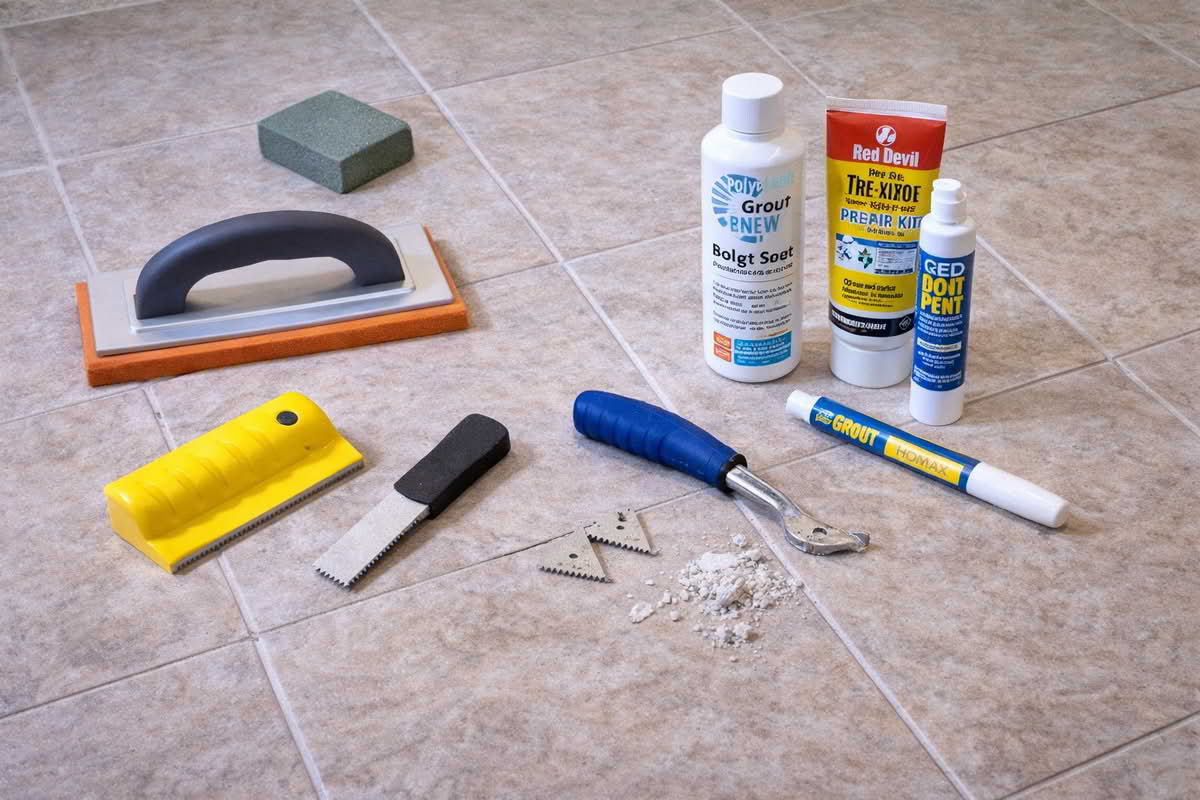
Grout Tool and Grout Repair Buying Guide for Tile Finishing, Cleanup, and Maintenance
Grout tools rarely get the same attention as tile, mortar, or cutters, but they influence whether the finished surface looks crisp or quietly uneven. A poor grout float can drag, leave shallow joints, or make cleanup harder than it should be. The wrong removal tool can chip tile edges while barely touching the failing grout. Quick-fix repair products can look attractive for stained or cracked joints, yet some are really cosmetic touch-up items rather than true repair tools. That is why grout buying goes wrong so often. People shop for “grout tools” as though they all serve the same stage of the project, when in reality grouting, touch-up, removal, sealing, and maintenance are different jobs with different risks. The right tool depends on whether you are finishing fresh tile, correcting damaged joints, refreshing appearance, or protecting grout from future staining. This guide explains how to choose grout tools and repair products based on the actual stage of the work so the result looks cleaner, lasts longer, and requires less rework later.
Fresh Grouting vs Repair Work
The first decision in this category is not which tool looks the most professional. It is whether the job is fresh grout installation or repair and maintenance. Those two situations get grouped together constantly, but they ask for very different tools. A float that works well for spreading and packing grout during a new tile job has almost nothing in common with a tool meant to remove failing joints or tidy up stained lines years later.
Fresh grouting is mainly about even packing, controlled cleanup, and keeping joint lines full without pulling grout back out as you work. In that setting, the float becomes the central tool because it determines how well grout gets pressed into the joints and how predictable the surface feels during the first passes. The goal is not simply getting grout onto the tile. It is filling the joints consistently without leaving hollow sections, weak edges, or more cleanup residue than necessary.
Repair work is a different problem entirely. Here the issue may be cracked grout, discolored grout, missing sections, pinholes, or joints that have worn down over time. In these cases, the job often begins with deciding how much of the old material needs to come out. A cosmetic top-layer product may seem like the easy answer, but if the grout has actually failed structurally in the joint, surface touch-up alone usually does not last. That is why repair work often depends more on removal tools and preparation tools than on the actual filler product itself.
There is also a middle category that confuses buyers: appearance refresh. Some tiled areas do not need full grout replacement, but they do need visual improvement. This may involve repairing a few isolated gaps, recoloring tired-looking lines, or cleaning and resealing grout that is still mostly sound. In those cases, the right purchase may be a touch-up or sealer applicator kit rather than a full removal system. The key is understanding whether the grout is worn out, cosmetically tired, or simply unprotected.
This distinction matters because grout problems are easy to over-treat or under-treat. A homeowner may buy a removal tool for a shower wall that really needs only spot repair and sealing. Another may buy a repair pen for a floor where the grout is cracked deeply enough that color touch-up will only disguise the problem briefly. Low-regret buying starts with knowing whether the grout needs packing, removal, patching, recoloring, or protection.
Choose application-oriented tools when you are finishing fresh tile and need full, even grout joints.
Choose removal-oriented tools when the old grout is cracked, loose, or missing enough material to need real repair.
Choose touch-up products only when the problem is mostly visual rather than structural.
Choose sealing tools when the grout is still sound but needs easier long-term maintenance and stain resistance.
A useful way to frame the category is to ask whether the grout problem is about installation, deterioration, or appearance. Installation points toward floats and cleanup tools. Deterioration points toward removal and refill support. Appearance points toward repair pens, sealer applicators, or cleaning-adjacent maintenance tools. Once that is clear, the shopping field becomes much easier to narrow.
In practical terms, the right grout tool is rarely the one that looks most versatile. It is the one that fits the actual stage of the tile surface in front of you. That mindset prevents the common mistake of buying a tool for the wrong phase and then forcing it into a task it was never meant to handle well.
Floats, Removal Tools, and Touch-Up Products
Once the job stage is clear, the next step is choosing the tool type that actually supports the work. This is where grout floats, removal tools, and touch-up products diverge sharply. They belong in the same general category, but they solve different problems and should be judged by different standards.
Grout float kits matter most during fresh installation and fuller regrouting work. A good float should let you pack grout firmly into the joints while still moving cleanly across the tile surface. Too soft, and it may feel vague or slow to push grout where it needs to go. Too stiff or awkward, and it can feel tiring or overly aggressive during repeated passes. Handle comfort matters more than many buyers expect because grouting is repetitive, and a float that feels slightly awkward early on tends to feel much worse by the time the room is half finished.
Float size and edge control also matter. Larger floats can move grout faster across broader surfaces, which is useful on bigger floors and repeated tile fields. Smaller or more maneuverable floats can feel better on narrow walls, tighter backsplashes, and detail-heavy spaces where a broad tool keeps bumping edges or cabinetry. The best float is not always the one that covers more area. It is the one that helps you keep joint filling steady without creating extra cleanup burden.
Grout removal tools are a very different purchase. These are most useful when the existing grout has failed enough that new material needs a sound place to bond. Hand removal tools can make sense for small repairs, isolated cracked joints, and cautious work near delicate tile where precision matters more than speed. Their advantage is control. Their weakness is time. On larger repair areas, they can become tiring and slow.
More assertive grout removal tools can be worthwhile when the repair area is larger or the existing grout is stubborn, but they also raise the risk of tile-edge damage if used carelessly or in very tight joints. This is why removal tools should be judged not only by how fast they cut grout, but by how well they let the user work without turning grout repair into tile repair. In many household settings, a slightly slower but more controllable removal process is the better choice.
Grout repair pens and touch-up products occupy the lightest end of the category. They are best understood as appearance tools rather than structural solutions. They can be useful when grout is stained, cosmetically inconsistent, or lightly worn on the surface. They are less convincing when the joint is crumbling, missing depth, or cracking through its body. Buyers are often disappointed because these products seem like universal grout refresh tools, but their real value is mostly in visual reset rather than deeper repair.
Grout tools should be chosen by task stage: floats for packing and finishing, removal tools for failed joints, and touch-up products for mostly cosmetic improvement.
Choose grout floats by room size, maneuverability needs, and how controlled the packing stage must feel.
Choose hand removal tools for smaller repairs where protecting tile edges matters more than speed.
Choose more aggressive removal options only when repair area size justifies them and the tile can tolerate careful use.
Choose repair pens and surface refresh products only when the grout problem is mainly visual, not deeply structural.
One helpful decision frame is to ask whether the tool needs to move grout, remove grout, or disguise grout. Moving grout points toward floats. Removing grout points toward removal tools. Disguising grout points toward touch-up products. Once that question is answered honestly, a lot of unnecessary purchases fall away.
In long-term ownership, the most useful grout tools tend to be the ones that support repeat maintenance without pretending every grout issue needs the same intensity of response. That balance is what separates a sensible tool kit from a drawer full of half-useful tile accessories.
Sealing, Maintenance, and Low-Regret Workflow
Grout tools should also be judged by what they do for the tiled surface after the visible repair or installation stage is over. That is where sealer applicator kits and maintenance-oriented tools become more useful than many buyers expect. In practical household use, grout problems are often less about dramatic failure and more about slow decline: staining, moisture exposure, dirt retention, and the gradual look of wear in kitchens, entries, showers, and floors.
Sealer applicator kits are most useful when the grout is basically sound but needs better protection. This is especially relevant on floors, backsplashes, and wet-area tile where daily life exposes the joints to spills, tracked-in dirt, soap residue, or repeated cleaning. The point of a good sealer applicator is not to make grout maintenance disappear. It is to make the grout less absorbent, easier to clean, and slower to look tired. For many homeowners, that produces more noticeable long-term value than buying another touch-up product after the staining has already set in.
Applicator design matters because sealer is easiest to use when it goes where intended without flooding the tile face unnecessarily. A controlled applicator can make sealing less messy and less tiring, especially across larger floor areas. This matters more than it sounds because grout maintenance often gets delayed when the tools feel overly tedious. A product that encourages you to seal properly at the right time is often more valuable than a technically fine sealer paired with awkward application.
Workflow also matters in grout repair. Small spot repairs often go best when the sequence is treated carefully: remove only what is unsound, clean the joint, refill where needed, shape the repair, and then protect it appropriately afterward. Many disappointing grout touch-ups happen because the homeowner jumps directly to recoloring or patching without addressing loose material first. That is why the right repair product cannot be separated from the right preparation tool.
Another practical issue is room standard. Utility-room tile, a mudroom floor, and a primary bath shower do not demand the same finish standard. In a lower-visibility zone, a straightforward repair tool and functional sealer strategy may be enough. In a very visible floor or shower surround, tool control and visual consistency deserve more attention because the repaired areas will stay in view every day. Buying well means matching the tool not only to grout condition, but also to the tolerance for visible imperfection.
Maintenance frequency should guide the purchase too. Some households benefit from a compact, repeat-use grout maintenance setup that includes a float for occasional repairs, a careful removal tool, and a sealer applicator. Others only need a one-time installation float and minimal repair support. This is why starter kits and assortments should be judged by repeat usefulness, not just by whether they appear comprehensive in the package.
Choose sealer applicator kits when the grout is sound enough to protect rather than fully replace.
Prioritize controlled application because messy sealing discourages regular grout maintenance.
Match grout repair intensity to the visibility and wear level of the room, not just to the existence of a flaw.
Build a grout workflow around removal, refill, cleanup, and protection rather than relying on one “miracle” repair product.
A useful question is whether the tiled surface needs correction or preservation. Correction means failing grout has to be removed or refilled first. Preservation means the grout is mostly healthy and would benefit more from sealing and light touch-up. That distinction often determines whether the next purchase should be a removal tool, a float, or a sealer kit.
The long-term low-regret decision in this category usually comes from seeing grout care as a small system rather than a one-time fix. When the tools support both correction and maintenance at the right moments, the tile lasts better visually and the need for larger repair work tends to arrive more slowly.
Final Recommendations — choosing grout tools that match the real condition of the tile joints
For most households, the safest approach is to buy grout tools by task stage rather than by package variety. Choose a grout float when the job is fresh application or fuller regrouting. Choose a grout removal tool when existing joints are cracked, loose, or missing enough material that new grout needs a sound channel to bond into. Choose repair pens and cosmetic products only when appearance is the main issue, and choose sealer applicator kits when the grout is still healthy enough to protect instead of rebuild.
Choose floats for packing and finishing new grout joints cleanly and consistently.
Choose removal tools for failed grout where surface touch-up would only disguise a deeper problem.
Choose repair pens and cosmetic refresh products only for light visual improvement.
Choose sealer applicator tools when long-term stain resistance and easier maintenance matter more than active repair.
The long-term low-regret decision in this category is to stop treating all grout issues as one kind of problem. A better match between the grout’s actual condition and the tool you buy leads to cleaner repairs, calmer maintenance, and a tiled surface that keeps looking intentional instead of patched together. When the tool fits the stage of the work, grout becomes much easier to manage before it turns into a bigger tile problem.