Weather Stripping Buying Guide for Doors, Windows, and Everyday Draft Control
Weather stripping looks simple enough that many homeowners buy the first roll or kit that seems close to the gap they want to cover. That is usually when disappointment starts. A strip that is too thin does almost nothing. One that is too thick can make a door hard to latch or a window feel jammed. Adhesive backing can fail on dusty or uneven surfaces. A product that works well on a lightly used guest room window may wear out quickly on a busy exterior door. The result is often a house that still feels drafty, plus the added frustration of peeling material, rubbing doors, or quick redo work. Good weather stripping is less about buying the most padded option and more about matching the seal type to the gap shape, the amount of traffic, and the kind of movement the opening sees every day. This guide explains how to choose weather stripping based on gap size, surface condition, durability, and installation style so the seal actually improves comfort without creating new problems.
Gap Shape and Seal Type
The first weather stripping decision is not material softness or brand reputation. It is understanding the shape of the gap you are trying to seal. Many poor results come from treating all drafts as though they behave the same way. But a flat door edge, an uneven window sash, and a gap under a door do not ask for the same seal. Good buying starts by identifying whether the opening needs compression, sweeping contact, or a flexible edge that adapts as the surface moves.
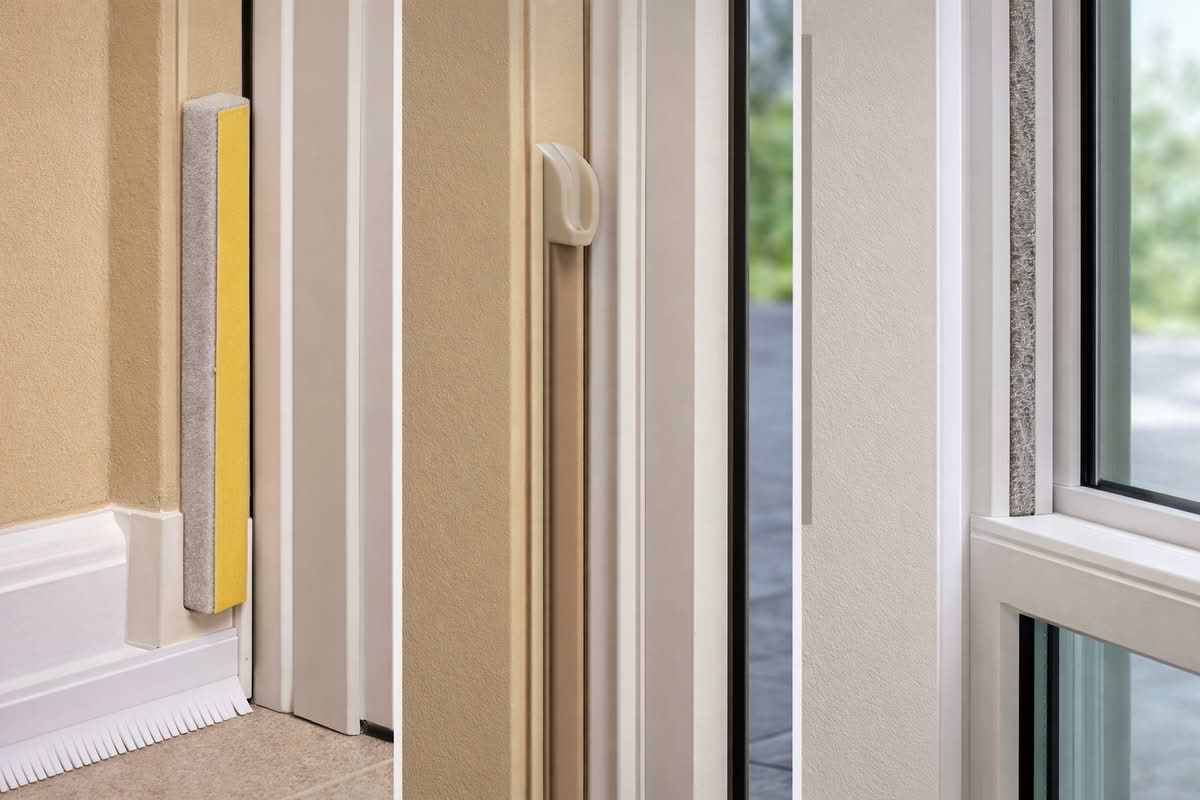
Adhesive foam weather stripping is often the entry point because it is easy to find, easy to cut, and useful for many straightforward household gaps. It works best where the surfaces are reasonably even and the seal can compress gently without too much friction. That makes it practical for some door frames, window edges, attic hatches, and utility access points. Its weakness is that it can be overused. Foam is frequently chosen for larger or more irregular gaps simply because it looks forgiving, but if it is too thick it can make closures difficult, and if it is too thin it only creates the illusion of a seal.
V-seal weather stripping makes more sense where a flexible spring-like seal is useful, especially on movable window or door edges that benefit from light but repeated contact. This style is often appealing because it can handle small variations in spacing better than simple flat foam. It tends to work well when the goal is a cleaner edge seal without bulky compression. The tradeoff is that it usually requires more careful placement. If the strip is misaligned, the opening may not close smoothly or the seal may fail to contact consistently.
Door sweeps solve a different problem entirely. They are intended for the space beneath the door, where side-jamb weather stripping cannot help. This is important because many homeowners try to fix bottom-door air leakage with thicker side seals and end up making the door harder to close without actually solving the under-door gap. A door sweep or similar bottom seal is the more logical choice when drafts, dust, light, or insects are entering beneath the slab rather than around the latch or hinge side.
Window sealing strips also need to be matched to how the window operates. A sliding window, a double-hung window, and an older uneven sash do not behave identically. Some seals are better for repeated sliding movement. Others are more appropriate for compression contact once the window is closed. Buying by “window use” alone can be too broad. Buying by the motion of the window and the consistency of the gap is much more effective.
Choose foam seals for reasonably even gaps where light compression is enough to block drafts.
Choose V-seal styles where a flexible edge needs to adapt to small movement or shifting contact.
Choose door sweeps for under-door leakage instead of trying to solve bottom gaps with side seals.
Match window weather stripping to how the window opens, closes, and moves during normal use.
A useful question is whether the gap is static or dynamic. Static gaps stay relatively consistent once the opening is shut. Dynamic gaps change slightly as the door or window moves, settles, or flexes. Static gaps can often be sealed with straightforward compression materials. Dynamic gaps usually reward more adaptive seal shapes. This distinction helps narrow the category much faster than packaging phrases such as “works on doors and windows.”
Low-regret buying starts with resisting the urge to choose the thickest seal available. In weather stripping, better fit matters more than more material. A seal that matches the opening closely will usually outperform an oversized one that looks substantial but interferes with the way the door or window actually works.
Durability, Surface Conditions, and Traffic
Once the seal type is roughly correct, the next decision is how durable it needs to be in the real location. Not every opening is used the same way. A front door, a bathroom window, and a basement access panel all create different wear patterns. Buyers often focus on whether the weather stripping seals well on day one, but long-term satisfaction usually depends on whether it keeps sealing after repeated opening, closing, rubbing, moisture exposure, and seasonal movement.
High-traffic doors deserve more durable weather stripping than occasional-use openings. A front entry door, garage man door, or frequently used patio door places repeated pressure on the material. If the seal compresses too easily, tears, shifts, or loses adhesion, the benefit fades quickly. In those places, a sturdier format is often worth more than the easiest possible installation. A slightly more involved setup that stays put is usually a better long-term choice than a simple peel-and-stick strip that performs well only briefly.
Surface condition matters just as much as the product itself. Adhesive-backed weather stripping depends heavily on a clean, dry, stable surface. Dust, old finish residue, rough paint edges, and temperature extremes can all reduce how well the strip bonds. When the adhesive fails, the product category gets blamed even though the true problem may be the mounting surface. This is especially common around older painted doors and windows where years of repainting have left uneven edges or flaky layers beneath the new strip.
Material resilience also matters in seasonal climates and exterior-facing locations. Openings that face sun, moisture, temperature swing, and frequent condensation need seals that recover their shape after compression rather than flattening permanently. A material that feels soft and effective at first may become less useful if it stays crushed after weeks or months of regular contact. This is why the softest or cheapest option is not always the best value for exterior doors and heavily used windows.
Door sweeps bring their own durability concerns. A bottom seal can wear faster if it drags heavily on rough thresholds, uneven floors, or textured exterior surfaces. If the sweep is too low, it may scrape and wear prematurely. If it is too high, it fails to seal. This makes fit more important than buyers often expect. A good door sweep is not just durable material. It is durable material positioned at the right contact level.
For windows, the durability question is often less about impact and more about repeated movement and seasonal stickiness. A strip that works on a rarely opened window may become annoying on a frequently adjusted sash if it adds too much friction. Comfort and usability matter here. A perfect seal that discourages normal window use is not always the lowest-regret solution.
Weather stripping lasts longer when the seal type matches both the shape of the gap and the amount of daily wear the opening experiences.
Choose more durable seals for entry doors and frequently used openings where compression and friction happen daily.
Be cautious with adhesive-backed products on dusty, uneven, or poorly prepared surfaces.
Prioritize shape recovery and stable adhesion in exterior-facing or seasonally stressed locations.
Do not ignore everyday usability when weather stripping a window or door that people use often.
One helpful way to think about durability is to ask what will stress the seal most: rubbing, compression, moisture, or movement. Rubbing favors tougher edge designs. Compression favors resilient materials that rebound well. Moisture favors materials and adhesives that tolerate damp conditions. Movement favors flexible seals that can adapt without peeling away. That framework is usually more useful than comparing products only by thickness or package length.
In long-term ownership, the most satisfying weather stripping is not the one that seals most aggressively during installation. It is the one that continues sealing without becoming irritating, flattened, or detached during ordinary daily use.
Installation, Fit, and Long-Term Maintenance
Weather stripping should also be judged by how realistic it is to install accurately and maintain over time. A product can be theoretically well matched to the gap and still disappoint if the installation demands more precision than the opening allows or if replacement becomes a repeating chore. The best purchase often depends on how cleanly the product fits into the ongoing maintenance rhythm of the home.
Installation accuracy matters because weather stripping failures are often fit failures. A strip cut too short leaves bypass gaps. A strip placed slightly off-line may bind on closing or miss the contact point entirely. This is especially true with door jambs and window edges, where a small alignment mistake can create uneven pressure across the opening. Simpler products are not always worse. In many households, they are better because they reduce installation error and make the result more repeatable.
Compression fit is particularly important. If the opening has to be forced shut, the seal is probably too thick, poorly placed, or simply the wrong type. Many buyers interpret resistance as proof of a tighter seal, but excessive compression can shorten product life and make the opening inconvenient to use. The goal is controlled contact, not maximum drag. Weather stripping should improve comfort without making doors slam, latches strain, or windows stick more than they already do.
Maintenance also matters because weather stripping is not a one-time purchase for most homes. Doors shift, paint builds up, thresholds wear, and seasonal movement changes how openings behave. A seal that is easy to inspect and replace can be more practical than one that seems heavier-duty but becomes difficult to adjust later. This is especially true for homeowners who expect to keep up with routine air-sealing and comfort maintenance over many years rather than treating it as a one-time project.
Visual impact is another practical concern. On some doors and windows, the weather stripping is mostly hidden. On others, it is more noticeable. Bulky foam, unevenly applied strips, or poorly fitting sweeps can make an otherwise well-kept opening look improvised. This is not just aesthetic nitpicking. Visible installation awkwardness often signals that the fit is compromised too. Clean fit and clean appearance tend to go together in this category.
It also helps to think about the seal as part of a system rather than a single fix. A drafty opening may need side seals, a bottom sweep, latch adjustment, or minor frame correction together. Weather stripping alone cannot always compensate for a warped door, damaged threshold, or badly misaligned sash. Buying well means understanding whether the product is solving the main problem or being asked to compensate for something more structural.
Choose weather stripping that you can install accurately without forcing the opening to close unnaturally.
Look for controlled contact rather than maximum compression.
Favor products that are inspectable and replaceable if you expect ongoing seasonal maintenance.
Treat weather stripping as one part of draft control, not a cure for every door or window alignment problem.
A useful buying question is whether you want the strongest immediate seal or the easiest long-term seal to live with. The strongest-feeling installation may not age well if it rubs constantly or strains the closure. A slightly lighter but correctly fitted seal often produces lower regret because it stays functional and unobtrusive for longer.
In long-term ownership, low-regret weather stripping usually comes from matching the product to the opening’s actual behavior, then installing it with enough care that the seal feels natural rather than improvised. That balance is what makes draft control feel like an upgrade instead of a recurring annoyance.
Final Recommendations — choosing the weather stripping that fits the opening instead of fighting it
For most households, the safest approach is to choose weather stripping by gap shape and daily use pattern rather than by the thickest or cheapest product on the shelf. Foam seals work well for many even, lightly compressed gaps. V-seal styles make more sense where flexible edge contact is needed. Door sweeps are the logical solution for bottom-door leakage. More durable options deserve extra weight on busy doors and frequently operated windows where wear and friction matter every day.
Choose seal type by the shape and movement of the gap, not just by whether it is a door or window.
Choose more durable weather stripping for high-traffic openings and exterior-facing locations.
Choose fit and usability over maximum thickness or aggressive compression.
Judge every product by how well it seals while still letting the opening work normally over time.
The long-term low-regret decision in this category is to treat weather stripping as a fit problem first and a material problem second. When the seal matches the opening, adheres well to the surface, and tolerates the way the door or window is actually used, the improvement in comfort feels steady rather than temporary. That is what makes weather stripping worthwhile: not just blocking air on installation day, but continuing to do it without turning the opening into a daily irritation.