Silicone Caulk and Sealant Buying Guide for Kitchens, Baths, Windows, and Exterior Gaps
Silicone caulk sounds like a straightforward category until you need it to do something specific. One product may handle constant bathroom moisture well but be awkward to paint around. Another may work outdoors yet feel too messy for detailed trim lines. Some sealants stay flexible and waterproof for years, while others are better for easier cleanup, simpler tooling, or paintable finishing work. The biggest mistake is treating every gap as the same kind of sealing problem. A tub surround, an exterior window joint, a countertop seam, and an interior trim crack do not ask for the same material behavior. This guide explains how to choose silicone caulk and related sealants based on moisture exposure, movement, adhesion, paintability, and long-term maintenance so you can match the product to the actual demands of the joint instead of relying on overly broad packaging claims.
Where Silicone Makes Sense and Where It Does Not
The first decision in this category is not brand. It is whether silicone is actually the right material family for the joint you are sealing. Many buyers use the word “caulk” as though all sealants serve the same purpose, but silicone behaves differently from acrylic, latex, hybrid, and specialty weatherproofing products. It is often chosen for its water resistance and flexibility, which can make it the right answer in wet areas and movement-prone joints. But those same traits can also make it a poor fit when paintability, very neat finishing, or easier future touch-up work matter more.
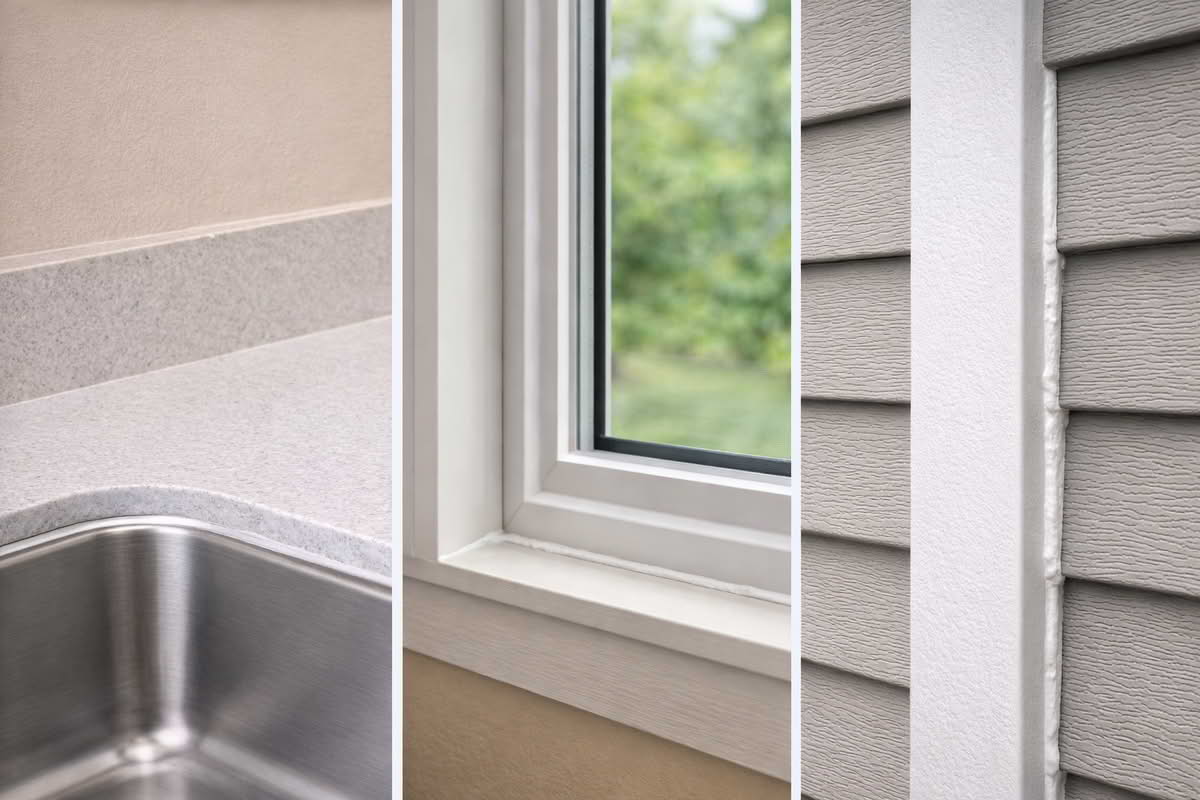
Kitchen and bath sealing is where silicone earns its reputation most clearly. Around sinks, tubs, showers, backsplashes, and other splash-prone transitions, the ability to resist moisture and remain flexible over time is valuable. These are joints that are repeatedly exposed to humidity, direct water, cleaning cycles, and subtle material movement. A product that handles those conditions reliably can prevent small gaps from turning into staining, soft trim, or hidden moisture issues. In those settings, silicone or silicone-forward sealants often make practical sense.
Exterior sealing is another common use case, but it requires more nuance. Window perimeters, siding penetrations, door trim transitions, and other outdoor joints face movement, weather, and changing temperatures. Flexibility matters here, but so do adhesion, surface compatibility, and whether the finished bead needs to be painted. A pure waterproof mindset is not enough. If the bead sits in a visible trim line and paint integration matters, some silicone-heavy products may become frustrating even if they seal well.
Interior trim and finish work is where many homeowners make the wrong assumption. They see silicone as the “stronger” option and use it where a more paint-friendly sealant would actually create a cleaner result. If the joint is mainly cosmetic, lightly moving, and likely to be painted with the surrounding trim or wall, silicone may not be the most practical choice. This does not make silicone inferior. It simply means that sealing performance is only one part of the decision. Finish integration matters too.
All-purpose waterproof sealants try to bridge these needs, and some do so better than others. They are appealing because they promise fewer product decisions and broader household usefulness. That convenience is real, especially for homeowners who do not want multiple cartridges in storage. But broad-use labeling can hide real compromises. A sealant that performs acceptably in many places may still not be the best fit for the most demanding wet zone or the most visible painted trim line.
Choose silicone-oriented products when water resistance and long-term flexibility are the main priorities.
Use more caution in visible painted trim areas where finish integration matters as much as sealing.
Judge exterior sealants by movement tolerance and surface compatibility, not just by weatherproof claims.
Do not assume the strongest or most waterproof option is automatically the best choice for every joint.
A useful way to think about sealant choice is to ask whether the joint is mainly wet, mainly visible, or mainly moving. Wet joints tend to favor moisture-resistant materials. Highly visible painted joints may favor easier finishing. Movement-heavy joints need flexibility first. Once you identify the dominant condition, the product choice becomes much more grounded.
Low-regret buying in this category starts with respecting the location. Silicone is excellent in the right setting, but it becomes less appealing when used simply because it sounds more durable on the label.
Flexibility, Adhesion, and Paintability
Once the location makes silicone plausible, the next question is how the sealant needs to behave over time. This is where flexibility, adhesion, and paintability become the main filters. These factors matter more than marketing language because they determine whether the bead stays bonded, stays neat, and still fits the finished appearance of the surrounding surface months later.
Flexibility is one of silicone’s biggest strengths. Joints around tubs, sinks, windows, and exterior trim often expand and contract slightly with use, temperature, moisture, or settling. A rigid product may look acceptable at first and then split or pull away at the edges. A flexible sealant is better able to move with the materials instead of fighting them. This is especially important where different materials meet, such as tile and tub edges, metal and siding transitions, or window frames against trim.
Adhesion matters just as much. A sealant that is highly flexible but does not bond well to the specific surface will still fail. Smooth nonporous materials, glossy finishes, painted trim, masonry-adjacent areas, and exterior substrates can all behave differently. Buyers often assume “sticks to almost anything” means real-world compatibility is no longer a concern, but good adhesion still depends on the condition of the surface, the material type, and whether the joint is being asked to resist water, air movement, or repeated cleaning.
Paintability is the category divider that creates the most confusion. Many homeowners want the moisture resistance associated with silicone and also want the finished joint to disappear under paint. That combination is not always realistic. Some silicone sealants are not intended to be painted, which means the bead remains visually distinct. In a bathroom or utility setting that may be fine. In detailed interior trim work, it can look unfinished or complicate touch-ups later. This is why paintable caulks and hybrid sealants remain relevant even when silicone sounds like the more durable option at first glance.
Kitchen and bath products often prioritize mildew resistance, water performance, and flexibility, sometimes at the expense of easier finish blending. Exterior sealants may prioritize movement and weather exposure. Paintable products may sacrifice some of the traditional silicone feel in exchange for better integration with trim and siding workflows. None of these tradeoffs are inherently wrong. They simply reflect different priorities. The best purchase depends on which compromise is most acceptable for the joint you are sealing.
This is also where partial silicone or hybrid formulas become appealing. They often try to combine easier tooling or paintability with better flexibility than basic interior caulk. These products can make sense when a project lives between categories, such as a window trim joint that needs durability but also needs to visually disappear. The caution is that “hybrid” does not guarantee perfection. It usually means the product is designed to balance conflicting demands rather than fully maximize only one.
Silicone sealants are best chosen by joint behavior, especially how much moisture, movement, and finish sensitivity the area will face over time.
Prioritize flexibility where the joint will move, expand, or face repeated moisture and temperature change.
Prioritize adhesion based on the actual substrate rather than broad stick-to-anything language.
Prioritize paintability when the seal line needs to blend into finished trim or wall surfaces.
Use hybrid or paintable options when the project needs a balance of appearance and durability rather than maximum water performance alone.
A helpful question is whether the joint is more likely to fail by cracking, peeling, or staying visually obvious. Cracking points toward flexibility needs. Peeling points toward adhesion and surface compatibility. A visually obvious bead often points toward the wrong finish choice, especially when a non-paintable product was used where a paint-integrated result mattered.
In long-term ownership, the most useful sealants are the ones whose tradeoffs you understood before opening the cartridge. That is what turns the category from confusing to manageable.
Tooling, Cleanup, and Long-Term Maintenance
Silicone sealant should also be judged by how manageable it is during application and how practical it remains over time. A product can be technically durable and still create a poor ownership experience if it is difficult to tool neatly, hard to clean up during installation, or frustrating to maintain later. This is especially important in household settings where most sealant work is visible and relatively small in scale.
Tooling behavior matters because a sealant bead is not finished when it leaves the nozzle. It still has to be shaped, pressed into the joint, and cleaned at the edges. Some silicone products stay workable long enough to make that process calmer, while others can feel unforgiving if the bead is too wide or the application pace is inconsistent. For beginners, this often creates a mismatch between the product’s long-term performance and the user’s ability to make it look neat in the first place.
Cleanup is one of the biggest practical differences between sealant types. Products designed for high water resistance can also be less pleasant to remove from adjacent surfaces once they smear or string. That matters in kitchens, baths, and trim work where the joint is narrow and the finish quality is visible at close range. A more forgiving product may sometimes produce a cleaner real-world result simply because the user can manage it more confidently.
Maintenance matters because sealant lines are rarely permanent in the sense buyers imagine. Bathrooms need periodic renewal. Exterior joints may need inspection. Window and door sealing may be revisited as paint cycles or weather exposure change the surrounding material. A sealant that is excellent in service but difficult to remove or replace later can still be worth it, but that tradeoff should be understood upfront. Products used in recurring maintenance zones should be evaluated partly by how realistic future replacement will be.
Surface preparation also shapes the long-term result. Even the right sealant can fail early if it is applied over soap residue, dust, old failing material, damp surfaces, or poorly cut-out remnants of previous caulk. Buyers sometimes interpret short service life as a product flaw when the real issue was that the joint never gave the sealant a fair starting point. This is why ease of application should be considered alongside how demanding the prep needs to be for good results.
Exterior maintenance adds another layer. A bead around siding trim or window frames may be exposed to sunlight, rain, seasonal expansion, and repainting cycles nearby. In those conditions, neat application and future compatibility matter alongside weather resistance. A sealant that performs well but leaves a visually stubborn line where paint detail matters may become more noticeable over time than expected.
Choose more forgiving tooling behavior for visible interior joints where application neatness matters as much as durability.
Respect cleanup difficulty, especially in kitchens and baths where sealant often sits against finished surfaces.
Think about future maintenance if the joint is likely to be renewed periodically.
Do not judge sealant durability without considering the prep quality of the surface underneath it.
One useful framework is to ask whether the project is a set-and-forget seal, a finish-sensitive detail, or a recurring maintenance zone. Set-and-forget exterior joints may justify a more performance-first sealant. Finish-sensitive interior lines may justify a more manageable product. Recurring maintenance zones often deserve something that balances performance with realistic future removal and replacement.
In long-term use, low-regret buying usually means choosing a sealant that fits both the joint and the user. A product that lasts well but is consistently difficult to apply neatly may not be the best household choice if the visual result matters every day.
Final Recommendations — choosing the sealant that matches the joint’s real demands
For most households, the safest choice is to buy silicone and related sealants by location and finish requirement rather than by the assumption that one cartridge can solve every sealing problem. Kitchen and bath joints usually benefit from strong moisture resistance and flexibility. Exterior joints benefit from movement tolerance and durable adhesion. Visible interior trim areas often benefit from paintable or hybrid products when appearance matters as much as sealing performance.
Choose moisture-focused silicone for wet areas where flexibility and water resistance are the real priorities.
Choose exterior-oriented sealants for outdoor joints that face weather, movement, and long-term exposure.
Choose paintable or hybrid options when the finished bead needs to integrate visually with trim or wall surfaces.
Judge every product by its full tradeoff profile: adhesion, flexibility, tooling ease, cleanup, and future maintenance.
The long-term low-regret decision in this category is to stop shopping for the strongest-sounding sealant and start shopping for the most appropriate one. When the material matches the moisture level, movement, visibility, and maintenance reality of the joint, the bead is more likely to last and more likely to look intentional. That combination is what makes a sealing job feel finished instead of merely filled.