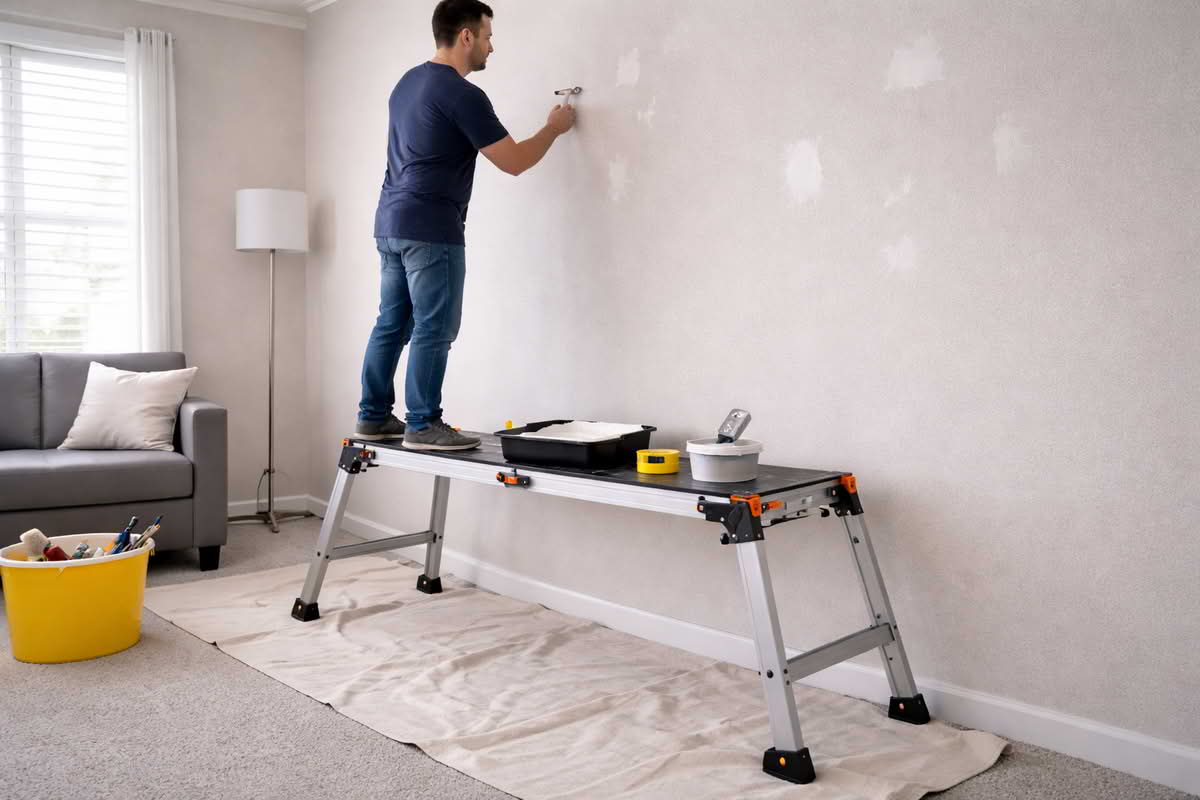
Work Platform and Scaffold Buying Guide for Painting, Drywall, and Longer-Duration Access Tasks
Ladders are excellent for reaching something quickly, but they stop being the ideal answer once the job requires you to stay in one place for more than a moment or two. That is where work platforms and light scaffold systems start to make much more sense. Painting walls and ceilings, patching drywall, sanding, trim work, window prep, and other longer-duration access tasks all become more tiring and less controlled when you are balancing on narrow ladder steps and constantly climbing down to reposition. At the same time, these products are easy to misread. Some buyers choose a scaffold when a simple folding platform would be easier to live with, while others buy a compact platform and later realize the task really needed more standing area, more mobility, or more reach. The best choice depends on how long you expect to be at height, how often you need to move sideways while working, and whether your home projects call for a quick access tool or a more stable temporary work surface. This guide focuses on standing comfort, setup, mobility, and storage so you can choose an access system that matches real project behavior rather than just maximum reach.
What work platforms and scaffolds are best at
Work platforms and portable scaffold systems are most useful when the task is not just about reaching upward, but about remaining productive once you are there. Painting a wall, cutting in along a ceiling line, patching drywall seams, sanding repairs, installing trim, or cleaning and prepping windows all involve a rhythm that ladders interrupt. You climb, work for a moment, climb down, move the ladder, and repeat. That can be tolerable for short tasks, but it becomes inefficient and tiring when the work stretches across a wider section of wall or lasts long enough that your feet and balance start competing with the job for attention.
A platform changes that rhythm by giving you a broader standing area and, in many cases, enough horizontal room to shift position without fully dismounting. That makes these products especially attractive for homeowners doing room repainting, drywall touch-up, garage finishing, trim installation, entryway work, and other projects where the same vertical band of wall or ceiling needs sustained attention. The advantage is not just comfort. It is continuity. When the tool supports your stance better, you can keep your hands, eyes, and materials focused on the work rather than on staying balanced.
Portable scaffold systems take that idea further. They become more relevant when the area of work is larger, when you need more side-to-side coverage, or when the height and duration of the project make a simple folding platform feel too limited. That does not automatically mean most homeowners need scaffold-style access. It means scaffolds solve a different access problem: they create a temporary working zone rather than just a stepping surface. For longer room-scale projects, that difference can be meaningful.
Work platforms are strongest when the task involves standing at height for longer stretches instead of just reaching briefly.
Portable scaffolds become more valuable as project width, duration, and repeated repositioning needs increase.
The main benefit is not simply more height, but better comfort and better work rhythm.
These systems work best when ladders start slowing the project down rather than helping it.
Another benefit is tool handling. On a ladder, even simple tasks such as setting down a putty knife, moving a paint tray, or holding trim pieces can feel more constrained. A platform or scaffold gives you more freedom to carry materials, shift your stance, and keep basic supplies close by. That makes certain jobs less fatiguing and reduces the number of times you climb down for small adjustments. For home projects that unfold over several hours, those savings add up faster than many buyers expect.
The category is less useful when the work is brief, highly scattered, or mainly vertical without much need to stay in one place. If you are changing smoke alarm batteries, checking a vent, or adjusting a single fixture, a step ladder is still usually the simpler answer. Work platforms and scaffolds make sense when the project rewards a temporary working surface rather than a quick access point.
The strongest purchase here is usually the one that matches how the work actually flows. If the tool lets you spend more time doing the job and less time resetting your position, it is solving the right problem.
A good work platform or scaffold helps longer wall and ceiling projects feel more stable and less interrupted than repeated ladder repositioning.
Size, mobility, and setup tradeoffs
The main tradeoff in this category is between simplicity and coverage. Compact folding work platforms are easier to carry, faster to set up, and usually easier to store. They are excellent when you need a broader standing area than a ladder but still want something that feels practical in a normal garage, closet, or shed. Their limitation is that they do not create a large working zone. If the wall section is long, the room is wide, or the project involves repeated lateral movement, you may still need to climb down and reposition more often than you hoped.
Portable scaffold systems buy more working area and, in some cases, more effective project continuity. That can be a major advantage for drywall finishing, painting long spans, ceiling work, or repeated trim installation across several feet of wall. The tradeoff is obvious: more size, more parts, more storage demand, and more setup effort. A scaffold may solve the work better once it is in place, but it has to earn that benefit by matching a project substantial enough to justify the extra handling.
Height should be evaluated differently here than it is with ladders. In a work platform or scaffold, the question is not only how high you can stand, but how naturally that standing height aligns with the task. A low platform may be perfect for baseboard prep, lower-wall work, or modest ceiling-edge painting in certain rooms. A taller setup may be necessary for larger entry spaces, higher ceilings, or more extended wall runs. But more height usually brings a bulkier system and a greater need for careful setup. Just as with ladders, more capability only helps when the job really uses it.
Compact platforms favor fast setup, easier carrying, and better storage efficiency.
Portable scaffolds favor wider work coverage and longer-duration task comfort.
More height and more platform area only add value when the project repeatedly uses them.
The right access system depends on whether your frustration comes from reach, stance comfort, or repeated repositioning.
Mobility matters as well. Some work platforms are easy to carry from room to room and reposition several times in a day. That makes them attractive for general household use where projects move between spaces. Scaffold-style systems can be more cumbersome, though some are easier to roll or shift in open areas once assembled. In smaller homes or cluttered rooms, that mobility may matter less than it does in garages, basements, or unfinished areas where you have more freedom to maneuver. Buyers should think carefully about whether the platform will mostly live in open spaces or finished rooms where every move requires more care.
Setup effort is another major ownership factor. A platform that unfolds quickly can feel genuinely practical for smaller projects because it lowers the threshold for using the right tool. A scaffold that requires more assembly may still be the correct choice for a larger job, but it will usually be less appealing for quick tasks. This is why some households benefit from a simple folding platform even if scaffolding looks more capable at first glance. Convenience shapes actual use.
Standing comfort also varies more than buyers sometimes expect. A broad stable platform can make sanding, cutting in, caulking, or patching far less tiring than ladder steps. But the shape of the standing surface, the rigidity of the deck, and the confidence you feel at working height all influence whether that comfort is real. A system that technically expands your workspace but still feels springy, crowded, or awkward may not deliver the improvement you hoped for.
The basic tradeoff pattern is clear: folding platforms buy practicality, scaffolds buy work area, and larger systems buy project continuity at the cost of more storage and setup. The best choice comes from knowing which of those friction points most often slows your work down now.
Choosing for painting, drywall, and general home projects
Painting projects often sit right at the center of this category. If your work involves cutting in along ceilings, rolling upper walls, repainting a hallway, or handling room-by-room trim and touch-ups, a folding work platform can be a strong answer because it keeps the setup lighter than a scaffold while still improving stance and reducing repeated ladder moves. For many homeowners, that balance is enough. The project becomes smoother, but the access tool still feels easy to put away at the end of the day.
Drywall work changes the priority slightly. Taping, mudding, sanding, and patching often reward a broader and more stable standing surface because the work can be repetitive, messy, and spread across a wider section of wall or ceiling. In those situations, portable scaffold systems start making more sense, especially in basements, garages, or renovation zones where there is room to assemble and use them effectively. The value grows when you spend longer continuous stretches at the same height and need room to keep materials close at hand.
General home-project users usually need to think about repeatability more than scale. If the access tool will be used for a few painting tasks, some light repair work, maybe window prep, and the occasional ceiling or trim project, a compact platform often makes more sense than a full scaffold. It fits more households, stores more realistically, and still solves one of the most common frustrations: narrow ladder standing surfaces during work that lasts longer than expected. A scaffold becomes the better answer once the projects are frequent enough, large enough, or wide enough that platform simplicity starts to feel limiting.
Painting-focused buyers often do well with folding work platforms that improve comfort without creating major setup burden.
Drywall and room-scale wall work can justify portable scaffolds because the project rewards wider standing and longer continuous access.
General home-project users usually benefit most from the simplest access tool that genuinely reduces repeated ladder repositioning.
The right choice depends on whether your work is mostly short-to-medium duration or broad enough to justify a temporary work zone.
Storage and project frequency are especially important here. A scaffold may look like the more complete answer, but if it is only used once or twice a year and takes up a disproportionate amount of garage space, it may become harder to justify. On the other hand, if you are actively remodeling, finishing a basement, repainting several rooms, or doing longer batches of trim and repair work, the productivity gain can be substantial enough to outweigh the storage cost. Buyers should be honest about whether they are solving one upcoming project or setting up for a repeated pattern of work.
Another useful distinction is whether the task demands height only or also demands side-to-side productivity. A platform helps when you mostly need better standing comfort and a modest amount of lateral movement. A scaffold helps when you want to keep working across a wider span without climbing down every few minutes. That one difference usually clarifies the category better than any feature checklist. It reflects the project rhythm directly.
The lowest-regret buying path is usually to choose the system that matches how long you actually spend at working height and how often you wish you could move sideways without resetting everything. If those frustrations happen often, the right platform or scaffold can make the entire project feel more controlled. If they happen only occasionally, simpler access is usually the better answer.
Final Recommendations — choose the access tool that improves work rhythm, not just reach
A good work platform or scaffold should make longer access tasks more comfortable, more stable, and less interrupted than a ladder-based approach. For most readers, the best choice depends on whether the project mainly needs a better place to stand or a broader temporary working zone. The right system is the one that fits the pace and width of the work without creating more setup burden than the project deserves.
Choose a folding work platform if your tasks are mostly painting, trim, patching, and indoor maintenance that benefit from better standing comfort and quick setup.
Choose a portable scaffold if your projects involve wider wall runs, drywall finishing, or room-scale work where repeated ladder repositioning becomes a major slowdown.
Choose compact indoor access systems if storage space is tight and you still want a broader, more comfortable alternative to ladder steps.
Prioritize project rhythm, storage realism, and setup effort over buying the biggest platform for occasional one-off jobs.
The lowest-regret purchase is usually the one that gets used because it clearly improves the way you work. If it makes longer tasks less tiring, keeps you more stable, and fits your home’s storage and project reality, it will provide more lasting value than a larger system chosen mainly because it seemed more comprehensive at the time.