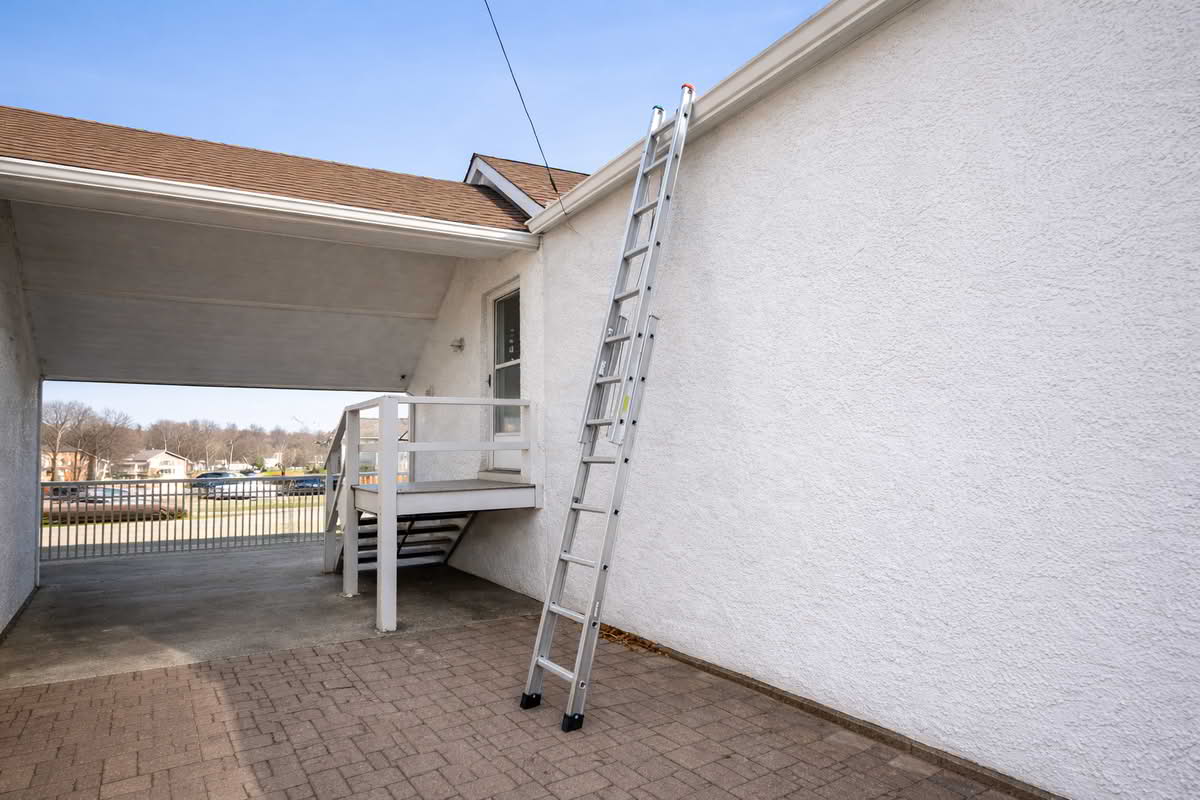
Extension Ladder Buying Guide for Exterior Maintenance, Roof Access, and Higher-Reach Home Tasks
An extension ladder is one of the clearest examples of a tool that should be bought for real use rather than vague reassurance. Many buyers know they need something taller than a step ladder, but that simple idea can lead to two opposite mistakes: buying a ladder that is too short for the actual jobs around the house, or buying a much larger ladder that becomes heavy, awkward, and unpleasant enough to handle that it rarely gets used when needed. Exterior maintenance, gutter cleaning, second-story access, roof-edge inspection, and higher-reach repairs all create demands that ordinary indoor ladders cannot solve. But extension ladders are not general-purpose convenience tools. They are larger, more physical, and more situational. The right one needs to match the height and type of exterior work you actually do, while still feeling manageable enough to carry, extend, position, and store without constant frustration. This guide focuses on height, material, weight, and ownership tradeoffs so you can choose a ladder that expands safe access instead of turning every higher-reach task into an argument with the tool itself.
What an extension ladder needs to do well
An extension ladder has a much narrower but more demanding role than a step ladder. It is there for the jobs that happen higher, farther out, and often outdoors: clearing gutters, reaching eaves, accessing roof edges, checking exterior fixtures, trimming branches near the house, painting upper siding, or handling repairs where the wall height exceeds what a step ladder can safely support. Because those jobs tend to happen less often, buyers sometimes underestimate how much the ladder’s setup and feel matter. But when you are working outdoors at higher reach, stability, confidence, and ease of positioning become even more important than they are indoors.
A good extension ladder should feel predictable at every stage of use. That includes carrying it, raising it, extending it, locking it, leaning it properly, and climbing it without wondering whether the ladder is fighting you. This is one reason why buying purely by maximum height often leads to regret. The ladder does not only need to reach the job. It also needs to behave well on the way there. If it is too heavy, too unwieldy, or awkward enough that setup feels like a separate project, ownership becomes more frustrating than most buyers expect.
Stability matters in a slightly different way here than with indoor ladders. A step ladder is self-supporting. An extension ladder depends on its angle, surface contact, and the wall or roofline it leans against. That means the ladder needs to inspire trust through rigidity, secure rung feel, and overall structure once placed. The best models do not eliminate the need for careful setup, but they do make proper setup feel more achievable and less precarious. That matters because exterior tasks already come with distractions such as uneven ground, wind, landscaping, siding texture, or awkward approach paths around the house.
An extension ladder should make higher exterior access feel controlled, not improvised.
Ease of carrying, extending, and positioning matters almost as much as final reach.
Outdoor use puts more pressure on ladder rigidity and confidence than many buyers anticipate.
The best ladder is one that supports careful setup instead of making every stage physically frustrating.
Another overlooked quality is rung comfort and overall climb feel. Exterior jobs can take longer than expected, especially if you move between gutters, lighting, siding, trim, or multiple inspection points. A ladder that feels unpleasant underfoot or awkward in body position can increase fatigue and hesitation. That does not only affect comfort. It can affect how carefully you work once you are in place. A ladder that feels solid and straightforward tends to support better project decisions because you spend less energy managing the access tool itself.
Storage and readiness also matter. Extension ladders are large enough that they can become annoying to keep unless they fit a clear storage plan. If a ladder is hard to retrieve, difficult to carry out, or awkward to reposition around the property, it may remain technically useful but practically neglected. That matters because exterior maintenance often happens in short decision windows. If the ladder is too inconvenient, the job may be delayed or approached with the wrong access tool instead.
The strongest extension ladder purchase is usually the one that turns “I need to get up there” into a manageable task rather than an exhausting setup problem. If it reaches the right areas, feels stable once placed, and remains physically tolerable to handle, it is likely well matched to home ownership.
A practical extension ladder should provide enough reach for exterior tasks while still feeling manageable to carry, extend, and position safely.
Height, material, and handling tradeoffs
The biggest buying decision in this category usually starts with height, but height should be thought of as a use-case question rather than a bragging-rights number. More length can expand access to upper stories and roof edges, but it also adds weight, bulk, and handling difficulty. Buyers often assume taller means more future-proof, yet the ownership cost of a larger ladder is real. A ladder that is theoretically more capable but harder to move, raise, and store may feel like a poor match for households that only occasionally need second-story access.
This is where many homeowners end up between two realities. They want enough reach for gutters, eaves, and roofline tasks, but they do not want a ladder that feels oversized for the property or too demanding to manage alone. The lower-regret answer is usually not the biggest ladder you can tolerate. It is the ladder that gives enough access for the tasks you actually expect, without creating so much extra weight that every use becomes physically annoying. A slight increase in convenience can matter more over time than a slight increase in theoretical height.
Material choice shapes that tradeoff in practical ways. Some ladders prioritize lighter handling, which can make a real difference when moving the ladder around the house, lifting it into position, or carrying it from storage. Others emphasize a more substantial feel, which can matter in certain work environments or personal preferences. For many homeowners, this decision comes down to whether the ladder will be moved frequently and whether carrying ease matters more than a heavier, more anchored feel. The best material choice is usually the one that supports the actual pattern of use instead of sounding better in abstract terms.
More height only helps when the property and tasks consistently need it.
Added length usually brings added weight and handling difficulty.
Material choice matters mainly through carry feel, overall weight, and how the ladder behaves during setup.
The right balance is usually enough reach with as little extra burden as the job allows.
Handling is where these tradeoffs become real. A ladder that extends farther but feels clumsy during raising and placement may not be the better everyday ownership choice. The task is not simply to own the ladder. It is to manage it safely on driveways, lawns, side yards, patios, and uneven outdoor conditions. That means extension system smoothness, rung spacing familiarity, and how the ladder feels when lifted matter a great deal. Homeowners do not usually judge their ladder after reading the spec label. They judge it when they are trying to reposition it around landscaping without scraping siding or exhausting themselves.
Compact homeowner-oriented extension ladders can be appealing because they reduce some of that burden while still covering many normal exterior tasks. Their limitation is that they may not provide enough flexibility for taller homes or more demanding roof access patterns. Larger ladders can solve those bigger reach needs, but they make more sense when the property consistently calls for them. This is why the “best” ladder depends so heavily on house size, typical maintenance work, and whether the user is comfortable handling a larger structure alone.
Storage also becomes part of the height decision. Longer ladders demand more garage wall space, shed clearance, or exterior storage planning. If the ladder does not fit naturally into the home’s storage reality, it may start to feel like a burden before it ever reaches the wall. Buyers sometimes overlook this because they focus entirely on task reach. But a ladder that fits storage well is easier to keep ready, and a ready ladder is more likely to be used when maintenance should actually happen.
The core tradeoff is simple: taller ladders buy more reach, lighter ladders buy easier handling, and more substantial ladders may buy a different feel in use. The right choice depends on whether your property needs more access or whether your ownership experience needs more manageability.
Choosing for gutter work, roof access, and general exterior maintenance
For gutter work and ordinary second-story exterior maintenance, most homeowners need a ladder that reaches the target areas without feeling oversized for the rest of the year. That often points toward a straightforward homeowner-oriented extension ladder that is long enough for upper gutter and eave access but still manageable enough to reposition around the property. In this context, the ladder’s usefulness depends not only on whether it can reach the gutters, but whether you can realistically carry it to the side yard, set it, move it, and repeat that process several times without turning a maintenance session into a full physical workout.
Roof access changes the equation because access tasks often require a little more confidence in length and placement than simple wall or gutter work. If you regularly need to reach the roof edge for inspection, leaf clearing, or maintenance, you want a ladder that supports that purpose without leaving you wishing for just a little more height. At the same time, this is exactly where buyers can overbuy. If roof access is occasional and your main recurring tasks are still gutter checks and upper-wall work, a giant ladder chosen for rare roof moments may create more daily inconvenience than practical value.
General exterior maintenance covers a wide middle zone: painting fascia, checking windows, cleaning upper siding, adjusting fixtures, or handling seasonal tasks around the house. For this kind of mixed work, balance matters more than extremes. A ladder that feels tolerable to move several times in a day and stable enough once set will usually produce a better ownership experience than a ladder chosen mainly for one specific high-reach scenario. This is especially true on properties where access paths are narrow, landscaping is tight, or ground conditions vary around the home.
Gutter and upper-wall maintenance usually call for a ladder that balances enough height with manageable movement around the property.
Roof-edge access justifies a little more reach when it is a real recurring need rather than a rare hypothetical one.
Mixed exterior maintenance often favors well-balanced homeowner ladders over maximum-length models.
The best ladder for a house is usually the one that fits both the reach needs and the way you must move around the property.
Buyers should also consider frequency honestly. Some households only need a taller ladder a few times a year. Others use one repeatedly for gutter cleaning, light exterior repairs, painting, and seasonal maintenance. If your usage is occasional, manageability matters even more because the ladder may spend long stretches in storage and then be handled without much recent practice. A simpler, easier-to-manage ladder can therefore be the safer long-term choice. If usage is regular, a slightly more purpose-built ladder may justify itself because the benefits accumulate.
Another practical question is whether the ladder will be handled by one person or shared across the household. A ladder that one person can comfortably move and set is often far more useful than one that technically offers better reach but regularly feels like a two-person problem. This matters because exterior maintenance is often done opportunistically when time, weather, or a specific issue lines up. A ladder that feels too large to deal with in the moment becomes one more reason the job gets postponed.
The lowest-regret buying path is usually to choose the ladder that makes recurring exterior work realistic. If it supports the house height you actually have, fits your storage plan, and remains manageable enough to move when needed, it will serve more real value than a larger ladder chosen mainly because it sounded like the safer all-purpose answer.
Final Recommendations — choose the ladder that matches your house, not just the highest task you can imagine
A good extension ladder should expand your exterior access without becoming so large or heavy that you avoid using it. For most readers, the best choice is one that covers regular gutter, eave, and upper-wall maintenance while still feeling realistic to carry, extend, and store. Reach matters, but only when it matches your actual property and the work you really repeat.
Choose a homeowner-oriented extension ladder if your main tasks are gutters, upper siding, exterior light fixtures, and occasional roof-edge access.
Choose a lighter-handling ladder if movement, setup, and storage convenience will shape whether the tool actually gets used.
Choose a longer ladder only if your house height and recurring tasks genuinely demand the extra reach often enough to justify the bulk.
Prioritize stable feel, realistic handling, and property fit over buying the biggest ladder for rare worst-case needs.
The lowest-regret extension ladder is usually the one that feels proportionate to your home. If it reaches the areas you actually maintain, stores without resentment, and can be positioned without excessive struggle, it will provide more real long-term value than a larger model purchased mainly because it seemed more universally capable.