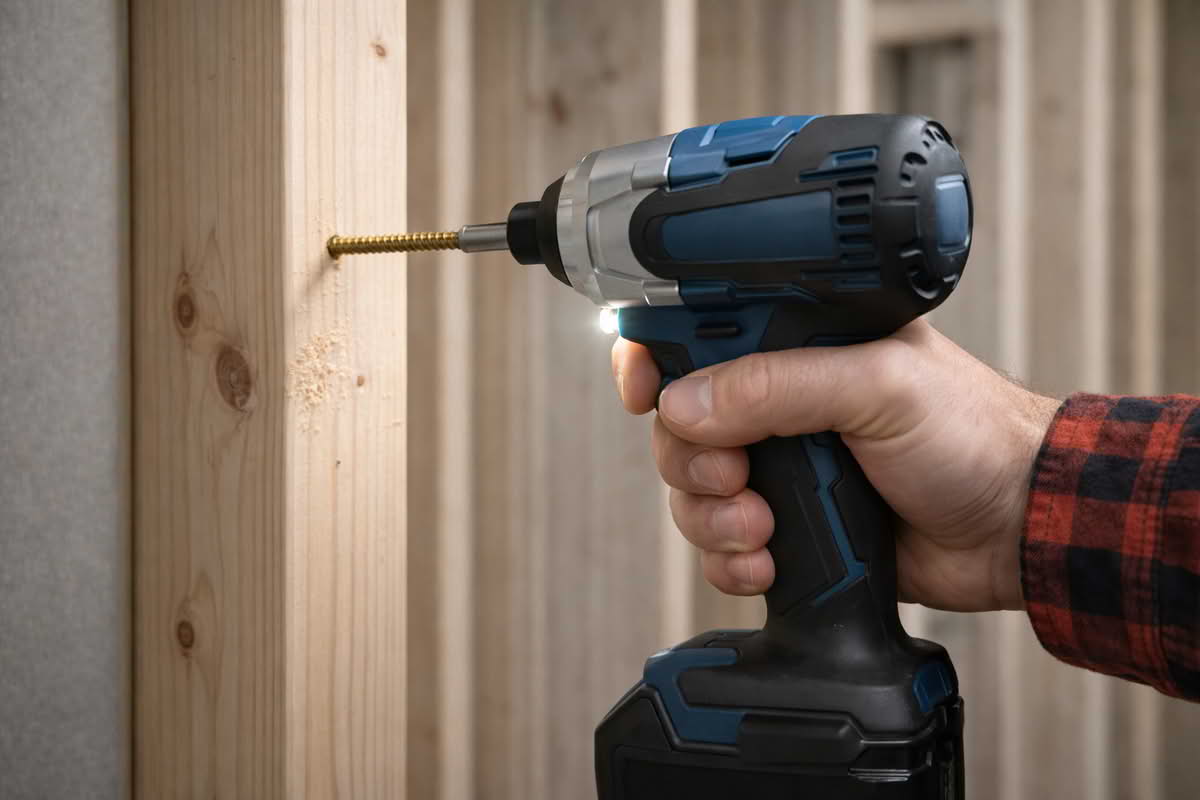
Impact Driver Buying Guide for Fastening, Deck Work, and Everyday DIY Projects
Impact drivers are easy to overestimate and just as easy to misunderstand. Some buyers assume they are simply stronger drills, while others treat them as specialty tools only useful for major construction. In practice, an impact driver sits in a very practical middle space. It can make repeated fastening easier, reduce hand strain on longer screws, and handle tougher driving jobs with less bogging down than a standard drill. But it is not the right first answer for every project, and the wrong model can feel harsher, louder, and less controlled than many homeowners actually need. The real buying challenge is not deciding whether an impact driver is powerful. Most are. It is deciding whether that power is delivered in a size, weight, and control package that fits your kinds of projects. This guide focuses on where impact drivers genuinely help, how they differ from drills in daily use, and how to choose a model that supports fastening work without becoming an unnecessarily aggressive tool for ordinary household jobs.
When an impact driver actually makes sense
An impact driver earns its value when fastening becomes the main event rather than a side task. If most of your projects involve short screws into soft material, a standard cordless drill can often manage the work well enough. But once you move into longer screws, denser lumber, repeated fastener installation, deck hardware, lag-style fastening, framing connectors, or heavier-duty assembly, the difference becomes more obvious. An impact driver applies rotational force in a way that helps it keep driving without demanding as much constant wrist effort from the user. That makes stubborn screws feel less like a fight.
This matters because many people discover the need for an impact driver only after using a drill in situations where the drill starts to stall, twist, or require too much body force to stay productive. A drill is still the more versatile first power tool for mixed household use because it can both drill holes and drive screws. But an impact driver becomes the better dedicated fastening tool once projects start leaning toward repeated screw driving or more demanding materials. That is why it is often a natural second purchase after a cordless drill rather than a replacement for one.
There is also a practical fatigue factor. If you have ever driven multiple long screws into framing, fence boards, shelving supports, or exterior wood and felt your hand and wrist tire out halfway through, you have already experienced the use case that explains the category. The value is not just raw power. It is how that power changes the feel of the work. A good impact driver helps maintain momentum on repetitive fastening jobs and reduces the sense that every screw is a small test of leverage and patience.
Impact drivers make the most sense when screw driving is frequent, repetitive, or more demanding than light assembly work.
They are usually a stronger second tool after a drill than a substitute for a drill in mixed household projects.
Long screws, denser materials, and repeated fastening are where the category's advantages show up most clearly.
The practical benefit is not only power, but also reduced effort and less stalling under load.
That said, more force is not always better. Impact drivers can feel abrupt compared with drills, especially on delicate tasks. The pulsing action that makes them effective on tougher fasteners can make them less pleasant for lighter hardware, trim-adjacent work, or situations where finesse matters more than force. This is where buyers sometimes disappoint themselves. They buy an impact driver expecting it to become the universal answer to every screw, then discover that it is best when the job actually benefits from that extra aggression.
The category is most useful when understood clearly: an impact driver is a fastening specialist that shines when the work becomes repetitive, resistant, or physically tiring with a drill. If your tasks fit that description, it can feel transformative. If your tasks are mostly picture hooks, furniture screws, and short interior fasteners, the gains may be smaller than the marketing suggests.
Impact drivers are most useful when fastening becomes repetitive, resistant, or physically tiring with a standard drill.
Size, speed, and control tradeoffs
Impact drivers are often marketed around power and speed, but those are only part of the ownership story. For many buyers, the more meaningful differences are size, trigger feel, noise, and how manageable the tool feels in real project positions. A compact model may give up some top-end force or battery endurance, but it is often easier to hold overhead, easier to fit into cabinets or corners, and less tiring during repeated use. For many home users, that tradeoff is worth making because the tool still provides far more fastening help than a drill while remaining easier to live with day to day.
Trigger control is especially important in this category. Because impact drivers deliver force more abruptly than drills, a tool with poor low-speed modulation can feel harsh when starting screws or working near finished surfaces. A smoother trigger makes it easier to seat the fastener accurately before the driver really starts working. This matters more than many buyers expect because not every fastening job is rough framing or outdoor lumber. Plenty of home projects involve brackets, cabinet screws, utility shelving, and repairs where precise starts matter just as much as final driving force.
Collet design and bit retention also deserve attention. Impact drivers are usually built around quick-change hex bit systems, which are convenient and fast. But that convenience only helps if the bit locks securely, releases cleanly, and feels stable in use. A sloppy or finicky collet adds friction to every bit swap and makes the tool feel cheaper than its performance numbers suggest. Since this is a fastening-focused category, the connection between tool and bit needs to feel trustworthy.
Compact size often improves handling and comfort without sacrificing the core advantages of the category.
Good trigger modulation matters because impact drivers can otherwise feel abrupt or overly aggressive.
Bit retention and collet quality affect daily usability more than spec sheets often imply.
The best tool is not only powerful, but also controllable enough to start and finish fasteners cleanly.
Noise and vibration are part of the tradeoff too. Impact drivers are typically louder and sharper in feel than drills. Some users do not mind that because the performance gain is obvious. Others are surprised by how intense the tool feels indoors or during longer sessions. This is not a defect so much as a category reality, but it should influence expectations. If your work is mostly inside the house and relatively light, a compact and better-controlled model may feel more appropriate than a high-output driver designed to shine in heavier fastening work.
Battery size has familiar tradeoffs here as well. Larger batteries can extend runtime and keep output steadier over longer sessions, but they also add weight and bulk to a tool category that is often chosen for its compactness. For many homeowners, shorter fastener sessions mean a smaller battery is the better comfort choice, especially if a second battery is available. Buyers who expect more deck building, fence work, or prolonged outdoor fastening may prefer the stamina of a larger pack, but that is not automatically the best setup for indoor household use.
Modes and speed settings can also separate a thoughtful impact driver from a crude one. Lower-speed or assist modes can make the tool easier to manage when starting fasteners, working with smaller screws, or trying to avoid overdriving. Higher-power modes matter when the material and screw length justify them. More modes are not inherently better, but useful mode tuning can make a driver feel less one-dimensional and more adaptable to varied home projects.
The broader lesson is that an impact driver should not be judged only by how hard it can drive a screw. It should be judged by how well it balances force with control. A model that feels confident but manageable will usually create less regret than one chosen mainly for peak output and then used mostly on jobs that do not require it.
Choosing between compact, brushless, and budget models
Once you decide an impact driver fits your projects, the next question is what kind of user you are. Compact models make the most sense when handling, storage, and everyday maneuverability matter most. They are especially appealing for homeowners who want an impact driver as a practical companion to a drill rather than as a dedicated pro-style fastening machine. In many households, a compact driver hits the most sensible balance because it still has far more fastening strength than a drill while being easier to use in tighter spaces and less tiring across shorter jobs.
Brushless models start making more sense as project frequency and fastening demands increase. The appeal is not just marketing shorthand for “better.” In regular use, a brushless impact driver can offer smoother power delivery, improved battery efficiency, and better long-term durability under heavier workloads. That matters more when the tool is part of a growing battery platform and sees frequent use in decks, fences, shop projects, or recurring home upgrades. For casual users, the difference may be helpful but not decisive. For committed DIY users, it can be worth the premium.
Budget impact drivers can be sensible purchases when the intended work is moderate and the buyer is realistic about expectations. If the tool will mostly drive common screws during furniture assembly, shelving installation, minor backyard projects, and periodic repairs, a well-chosen budget model may cover those needs without issue. The risk is that some lower-cost tools save money in the wrong places: trigger refinement, mode selection, bit retention, battery reliability, or platform support. Those compromises often show up in day-to-day use more than the headline specs do.
Compact impact drivers are usually the best match for mixed home use, tighter spaces, and buyers who value handling over maximum output.
Brushless models become more attractive when fastening work is frequent or the tool will live in a larger cordless system.
Budget models can work well for lighter use, but only if core control and battery support remain solid.
The best value depends on how often the driver will be used and how demanding the fastening jobs really are.
Combo compatibility is another important consideration. Many buyers do not shop for an impact driver in isolation. They already own a drill from the same battery platform or expect to buy one soon. In those cases, a bare-tool purchase or a platform-matched model can be the smarter route than chasing a discount on a separate battery ecosystem. The convenience of shared batteries and chargers often matters more over time than a small savings at the moment of purchase.
It is also worth thinking about project progression. An impact driver can remain useful even as your tool collection grows because its role is so specific and practical. A compact model may stay your quick-grab indoor fastening tool while larger outdoor or shop work gets handled by a stronger option later. A better brushless model may become the mainstay driver if fastening grows into a regular activity. That makes it easier to buy intentionally without feeling like the first decision must permanently cover every future scenario.
The common regret pattern in this category is buying for imagined extremes. Some buyers choose the strongest tool they can afford even though most of their work is moderate and indoor. Others buy the cheapest option and then expect refined control, long runtime, and effortless performance on demanding screws. A lower-regret approach is to match the tool to your likely projects over the next year or two, then let future needs justify future upgrades. An impact driver is a specialist, and specialists are most satisfying when they are selected for real tasks rather than hypothetical ones.
Final Recommendations — buy for fastening patterns, not just for power
A good impact driver should make your fastening work easier without turning ordinary projects into overkill. For most readers, the best option is one that balances compact size, smooth trigger control, and enough power for longer screws and repeated fastening, all within a battery platform that makes sense to live with. Peak output matters, but it should support the way you actually work rather than dominate the decision.
Choose a compact impact driver if your projects are mixed, home-oriented, and often involve fastening in tighter or awkward spaces.
Choose a brushless model if you expect regular DIY work and want better efficiency within a cordless platform you may expand.
Choose a budget model only when your fastening demands are moderate and the tool still offers acceptable trigger control and battery support.
Prioritize usable control, platform compatibility, and comfort over the most aggressive power claims on the shelf.
The lowest-regret impact driver is usually the one that fits your fastening rhythm. If it helps you drive longer screws with less effort, stays manageable indoors and outdoors, and belongs to a system you can keep using, it will deliver more real value than a louder, bulkier model chosen mainly because it looked tougher in the box.