Drill Bit and Driver Bit Buying Guide for Wood, Metal, Masonry, and Everyday Fastening
Drill bits and driver bits are often treated like minor accessories, but they shape tool performance more than many buyers realize. A good drill or impact driver can still feel frustrating if the bit dulls early, slips in the chuck, chews up fasteners, or simply does not match the material in front of you. This is one of the most common low-level buying mistakes in DIY work: spending time comparing power tools while treating the cutting or driving end as an afterthought. In practice, the bit is the part touching the work, which means it has a huge influence on speed, control, finish quality, and long-term frustration. The real goal is not to own the largest bit case. It is to choose a set or mix of sets that covers your likely materials, common fastener types, and normal repair jobs without filling a drawer with duplicates and low-value filler. This guide explains how to match bits to materials, what separates a useful set from an inflated one, and how to avoid buying bits that look comprehensive but perform poorly when actual work begins.
Matching bits to materials and fasteners
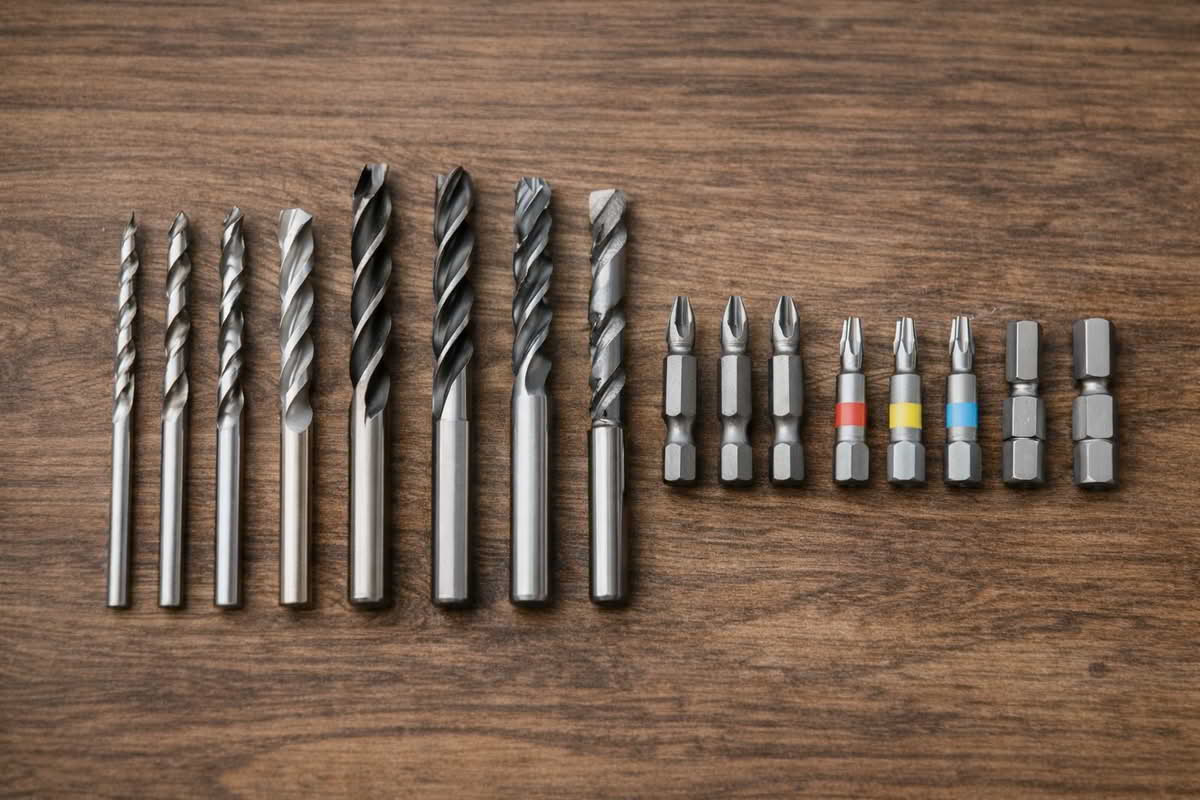
The most useful way to think about bits is not by brand first, but by job. Drill bits are for creating holes in materials such as wood, metal, masonry, plastic, or composite products. Driver bits are for turning fasteners cleanly and consistently. Those two categories overlap in storage and shopping, but they solve very different problems. One cuts. The other transfers force into a screw head. Many bit frustrations come from crossing those roles mentally and assuming a broad mixed set automatically handles everything equally well.
For drill bits, material matching matters more than many casual buyers expect. A wood bit that works well in soft lumber may perform poorly in metal. A general-purpose bit may handle light household drilling acceptably, but not especially cleanly or efficiently in tougher materials. Masonry bits are another category where the wrong choice becomes obvious quickly. If you drill occasionally into drywall-adjacent surfaces, wood studs, shelving, and common household materials, a general-purpose set can make sense. But once metal brackets, tile-adjacent hardware, brick, or concrete enter the picture, material-specific bits start making a practical difference rather than just sounding more specialized.
Driver bits follow similar logic. The first priority is matching the screw head accurately. A driver bit that is “close enough” often leads to stripped fasteners, cam-out, extra pressure, and damaged surfaces. In everyday home projects, this shows up with furniture hardware, cabinet screws, appliance panels, hinges, outlet covers, and storage systems. The most useful driver bit set is usually the one that covers the fastener types you actually see: Phillips, slotted, Torx, square, hex, and a few recurring specialty forms depending on the products in your home. Too much emphasis on uncommon formats can create clutter without improving real readiness.
Drill bits should be matched to the material, not chosen mainly by convenience or packaging claims.
Driver bits work best when the tip profile matches the fastener cleanly rather than approximately.
General-purpose sets can handle ordinary tasks, but material-specific bits matter once work becomes more demanding.
The most useful bit selection reflects the screws and materials you actually encounter, not every possible future job.
Bit length matters too. Shorter driver bits can be stronger and more compact, while longer bits help reach recessed screws or awkward hardware. The same applies to drill bits, where length affects reach, flexibility, and sometimes stability. Longer is not automatically better. Longer bits can wander more easily and feel less precise in smaller work. This is one reason mixed kits can be valuable when chosen carefully. A sensible set can cover basic length variation without forcing you to buy multiple redundant cases.
Another overlooked factor is material finish quality. Dull drill bits generate heat, cut slowly, and create rougher holes. Poorly shaped driver bits seat badly and slip sooner. A bit that lasts longer is not just more durable in abstract terms. It saves time, protects surfaces, and reduces frustration during ordinary jobs. In practical ownership, that often matters more than the raw number of included pieces.
Bit usefulness comes from matching the cutting or driving profile to the material and fastener, not from owning the most crowded case.
The broader lesson is simple: bits are not generic consumables in the way many buyers assume. They are task-matching tools. When the match is right, drilling becomes cleaner and screw driving becomes calmer. When the match is wrong, the tool often gets blamed for problems that really start at the bit.
Set design, durability, and coverage tradeoffs
Bit sets are often sold on quantity, but quantity can be misleading. A large set may look comprehensive while devoting much of its count to duplicate driver lengths, repeated low-use sizes, or multiple versions of the same basic function. That does not always make the set bad, but it means a bigger case is not automatically a better one. Many buyers discover later that the pieces they use most are only a small fraction of what they paid for, while the most valuable missing size or material-specific bit still has to be bought separately.
For drill bits, useful set design often begins with a sensible size range rather than extreme size count. A compact, well-organized set that covers common household drilling sizes can outperform a larger assortment filled with uncommon increments that see little use outside more technical work. The same is true with driver bits. A well-balanced set should offer the main fastener styles in the sizes people actually use, with enough repetition in the most common bits to account for wear, but not so much duplication that the case becomes filler-heavy.
Durability differences matter more in driver bits than many people expect because driver bits fail in familiar ways. They round over, twist under repeated impact use, lose sharp seating edges, or become worn enough that they start damaging screws. Drill bits fail differently. They dull, overheat, wander, or chip if used on materials they were not meant to handle. In both cases, the result is the same: the job gets rougher, slower, and less predictable. A slightly better bit set can therefore improve both performance and confidence even if the power tool itself stays the same.
Large sets are only useful when their added pieces genuinely expand capability instead of inflating the count.
Common sizes and sensible coverage matter more than fine-grain size density for most households.
Driver bit durability affects fastener damage and control, especially under repeated use.
Drill bit quality shows up in cleaner holes, less heat buildup, and fewer frustrating stalls.
Set storage also affects real value. Cases that keep bits visible, labeled, and easy to remove tend to stay useful longer than cases that make every selection feel cramped. This matters because bits are small enough to become disorganized quickly. A well-designed case reduces the odds of grabbing the wrong type, using a close-enough substitute, or losing a commonly used bit somewhere in the bottom of a drawer. For households that use tools intermittently rather than daily, clear storage is part of performance, not just packaging.
Impact-rated driver bits deserve separate attention because they are often marketed aggressively. Their value is real when paired with impact drivers or with heavier fastening work where repeated torque pulses punish standard bits. But not every buyer needs to convert every bit purchase into a heavy-duty system. If your work is mostly light household fastening with a drill or screwdriver, a broad everyday set may make more sense than paying mainly for impact readiness you rarely need. On the other hand, if you already use an impact driver often, choosing driver bits that are better suited to that tool can reduce wear and make the set last longer.
One of the most useful buying questions is whether the set will be a base layer or a specialist layer. A base-layer set should cover everyday household drilling and fastening cleanly. A specialist layer should solve a recurring gap such as masonry drilling, metal work, or impact fastening. Buyers often create regret when they try to make one oversized case do both jobs at once. That usually produces clutter rather than clarity.
Low-regret bit ownership usually comes from a clear structure: a dependable everyday set, a few repeated common replacements, and specialty bits only when your projects start justifying them. That is a better long-term path than buying one giant assortment in the hope that every future scenario has already been solved.
When to buy mixed sets or specialty bits
Mixed drill-and-driver kits make the most sense when you are building a first tool setup or refreshing a household accessories drawer that has become random and incomplete. They are especially practical for homeowners and renters who want one coherent case for normal repairs, assembly, wall hardware, furniture, shelving, and simple weekend projects. A well-designed mixed set can be an efficient reset because it gives you basic drilling sizes and common driver formats in one place, which reduces the need to assemble a kit piece by piece.
The limitation of mixed sets is that they usually optimize for breadth rather than depth. That is fine for ordinary home use. It becomes less fine when your projects lean repeatedly in one direction. For example, if you install a lot of deck hardware, use an impact driver heavily, or keep working with longer structural screws, a mixed set may not offer enough of the bits you actually wear out. Similarly, if you often drill into metal brackets, anchors, masonry, or harder surfaces, a general mixed case may leave you with acceptable but not especially satisfying performance. That is the moment when specialty sets begin to make more sense.
Specialty bit purchases are easiest to justify when they solve repeated friction rather than one imagined future project. A masonry set makes sense if wall anchors, brick, or concrete come up often enough to matter. A metal-focused drill bit set makes sense if brackets, appliance parts, or shop-adjacent work are recurring patterns. An impact driver bit set makes sense if your current driver bits wear quickly or if your work increasingly centers on fastening rather than mixed drilling. In each case, the bit purchase is most rational when it follows observed need.
Mixed sets are strong first purchases when you want one organized case for general household drilling and fastening.
Specialty sets make more sense once repeated projects expose a clear gap in material coverage or bit durability.
Buying based on recurring frustration is usually smarter than buying for hypothetical complexity.
A small number of focused specialty additions usually works better than one oversized all-in-one case.
There is also a maintenance question that many buyers ignore. Bits are not permanent. Even good ones wear, dull, or disappear. That means replacement logic matters. A set that includes common sizes you cannot easily replace individually may be less practical over time than a simpler system where your most-used bits are easy to identify and restock. This is especially important for driver bits, where a few sizes often absorb most of the wear. A lower-regret setup acknowledges that everyday bits are not one-time purchases.
Storage should shape the decision as well. In a small home or apartment, one mixed case may be the cleanest solution because it keeps the most-used bits consolidated. In a garage workshop or utility cabinet, separate specialty cases can be more manageable because they let you organize by project type or material without cramming everything into one crowded layout. The right format depends partly on how much room you have and how often you actually reach for the tools.
The strongest ownership path for most readers is incremental. Start with a mixed set that genuinely covers basic drilling and fastening. Use it long enough to notice what wears, what goes missing, and what kinds of materials challenge it. Then add specialty bits in response to those patterns. That approach keeps the system grounded in reality and usually avoids both overbuying and underpreparing.
Final Recommendations — buy for recurring jobs, not for maximum piece count
A good drill bit and driver bit setup should make common work cleaner, calmer, and easier to finish without mid-project improvisation. For most readers, the best starting point is a well-organized mixed set that covers everyday drilling and the fastener types most often found in home projects. From there, specialty bits should be added only when real materials or repeated wear make the need obvious.
Choose a mixed drill-and-driver set if you need broad household coverage for normal repairs, assembly, shelves, and wall hardware.
Choose impact-focused driver bits if repeated fastening with an impact driver is wearing out standard bits too quickly.
Choose specialty drilling sets for masonry, metal, or other recurring materials rather than expecting one general case to handle everything well.
Prioritize useful sizes, clear storage, and durable everyday bits over inflated counts and duplicate filler pieces.
The lowest-regret bit purchase is usually the one that feels slightly more focused and slightly less theatrical. If the set covers the materials and fasteners you actually see, stores cleanly, and leaves obvious room for purposeful additions later, it will serve you better than a larger case chosen mostly because it looked exhaustive at first glance.